
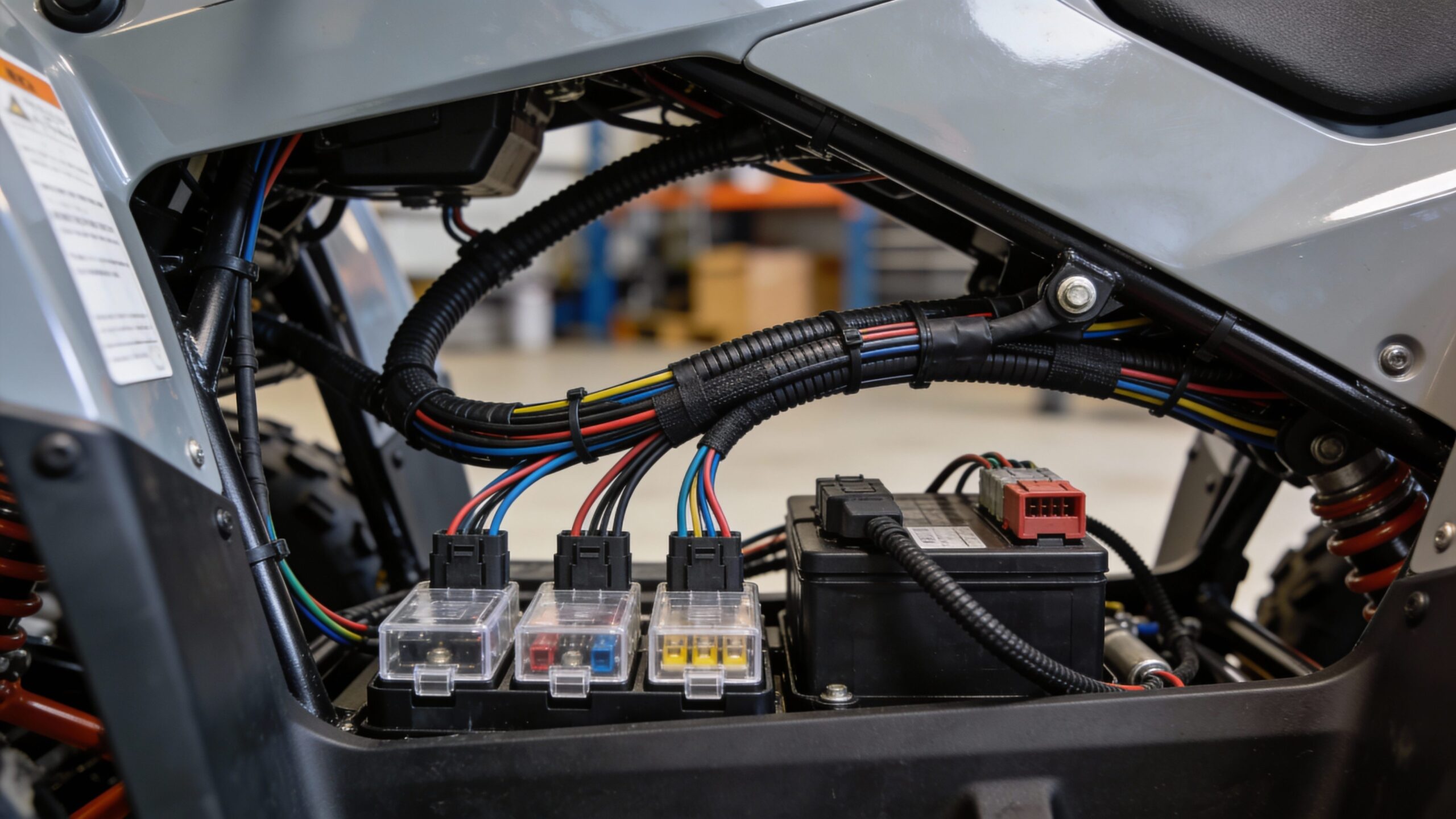
Every great ATV ride depends on an invisible network of power and signals working flawlessly beneath the plastics. Electrical systems and wiring bring your machine to life—feeding the starter, charging the battery, firing the ignition, running lights, powering accessories, and keeping sensors and safety systems talking to each other in real time. Out on the trail, electricity has to survive everything nature throws at it: vibration, mud, water crossings, heat, and constant jolts. That’s why good wiring isn’t just “nice to have”—it’s reliability you can feel every time the engine turns over on the first try. On ATV Streets, Electrical Systems & Wiring dives into the essentials of keeping power clean, connections strong, and troubleshooting calm. You’ll explore batteries, stators, regulators, relays, fuses, grounds, and harness routing—plus the smart upgrades that make modern rides safer and more capable. Whether you’re adding lights and winches, chasing a mysterious no-start, or hardening your rig for harsh weather, this category helps you understand your ATV’s electrical backbone and keep it ready for every mile ahead.
A: Check battery charge, terminals, fuses, and the starter solenoid.
A: A voltmeter should show higher voltage when running than at rest.
A: Yes for high-draw items to protect switches and wiring.
A: Shorts, pinched wires, or overloaded circuits.
A: Yes, especially if seals or connectors are compromised.
A: It helps prevent moisture intrusion and corrosion at connectors.
A: Often a bad ground, loose connector, or charging issue.
A: They can save weight and crank strong, but need proper care.
A: Use a fused lead, relay, and proper gauge wire.
A: Inspect battery terminals and measure voltage at rest and running.