
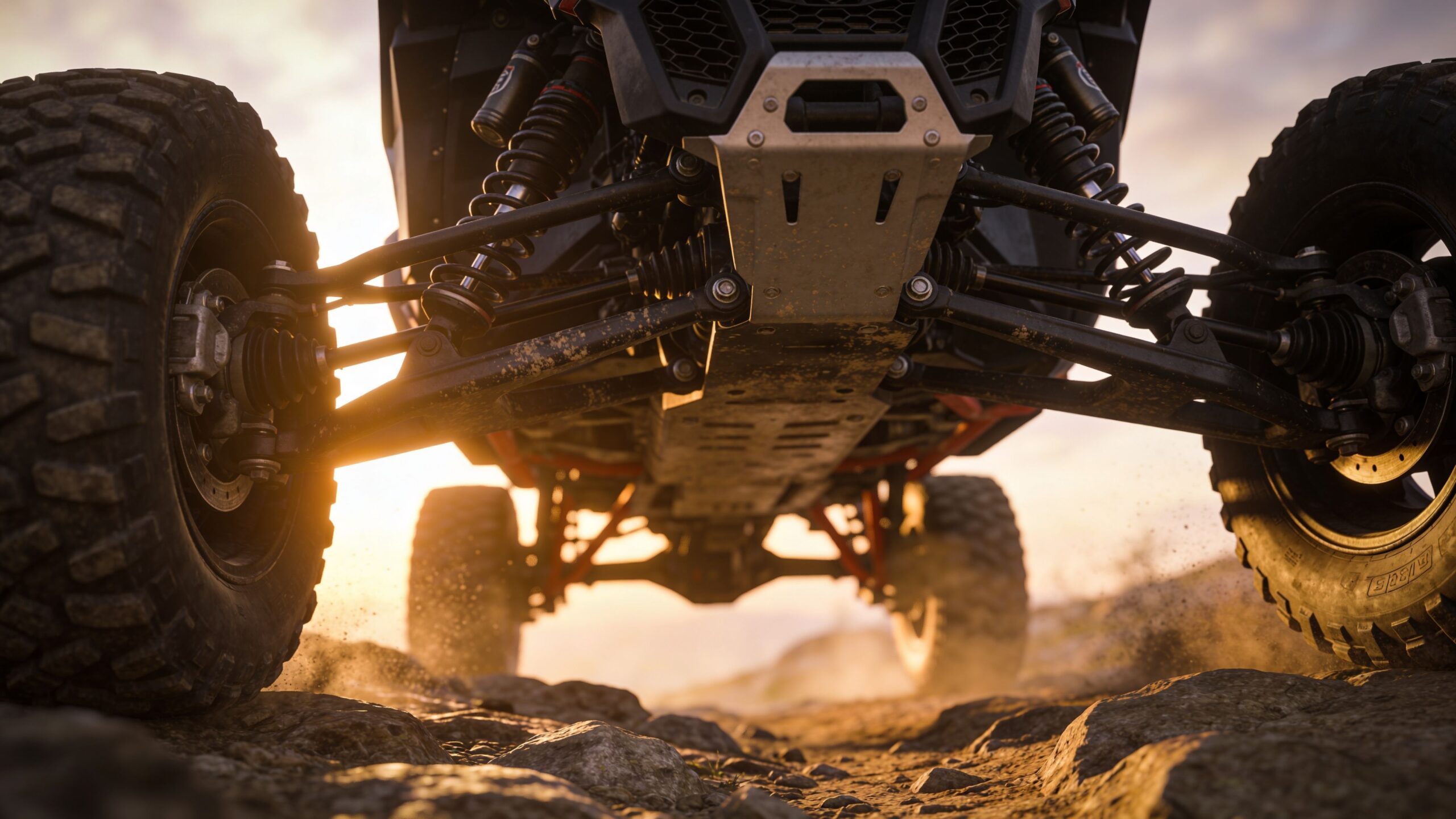
Suspension Lift & Lowering Builds are where an ATV’s stance turns into real capability. Change ride height and you don’t just change the look—you reshape how your machine climbs, corners, clears obstacles, and absorbs punishment when the trail gets rough. A lift can add ground clearance and confidence over ruts, rocks, and deep whoops. A lowering build can sharpen handling, reduce body roll, and create a planted feel for fast, smooth terrain. Either way, suspension work is a true “system” upgrade, where geometry, travel, and fitment all have to play nice. This hub brings together the guides that make those builds smart and safe: lift kits vs. spring changes, preload and sag basics, shock tuning, alignment, tire clearance, and how ride height affects steering, CV angles, and driveline stress. You’ll also learn how to avoid common mistakes—rubbing, harsh ride quality, unstable tracking, and premature component wear—before they happen. Whether you’re building for technical trails, open desert, or a dialed-in stance you can feel, Suspension Lift & Lowering Builds is your roadmap from “looks cool” to “rides right.”
A: Often yes—preload can reduce travel if used to force height.
A: Steep CV angles, steering changes, and stability trade-offs.
A: Yes—toe and camber shifts are common and affect tire wear.
A: Yes, but confirm you won’t bottom out where you ride.
A: Sometimes—measure clearance at full lock and full compression.
A: They can—weight transfer and tire contact change with geometry.
A: Look for fresh contact marks and use zip ties on shock shafts if possible.
A: Alignment and steering geometry may need correction.
A: Yes—re-torque after the first ride and periodically thereafter.
A: Start with sag, preload, and damping setup before major hardware changes.