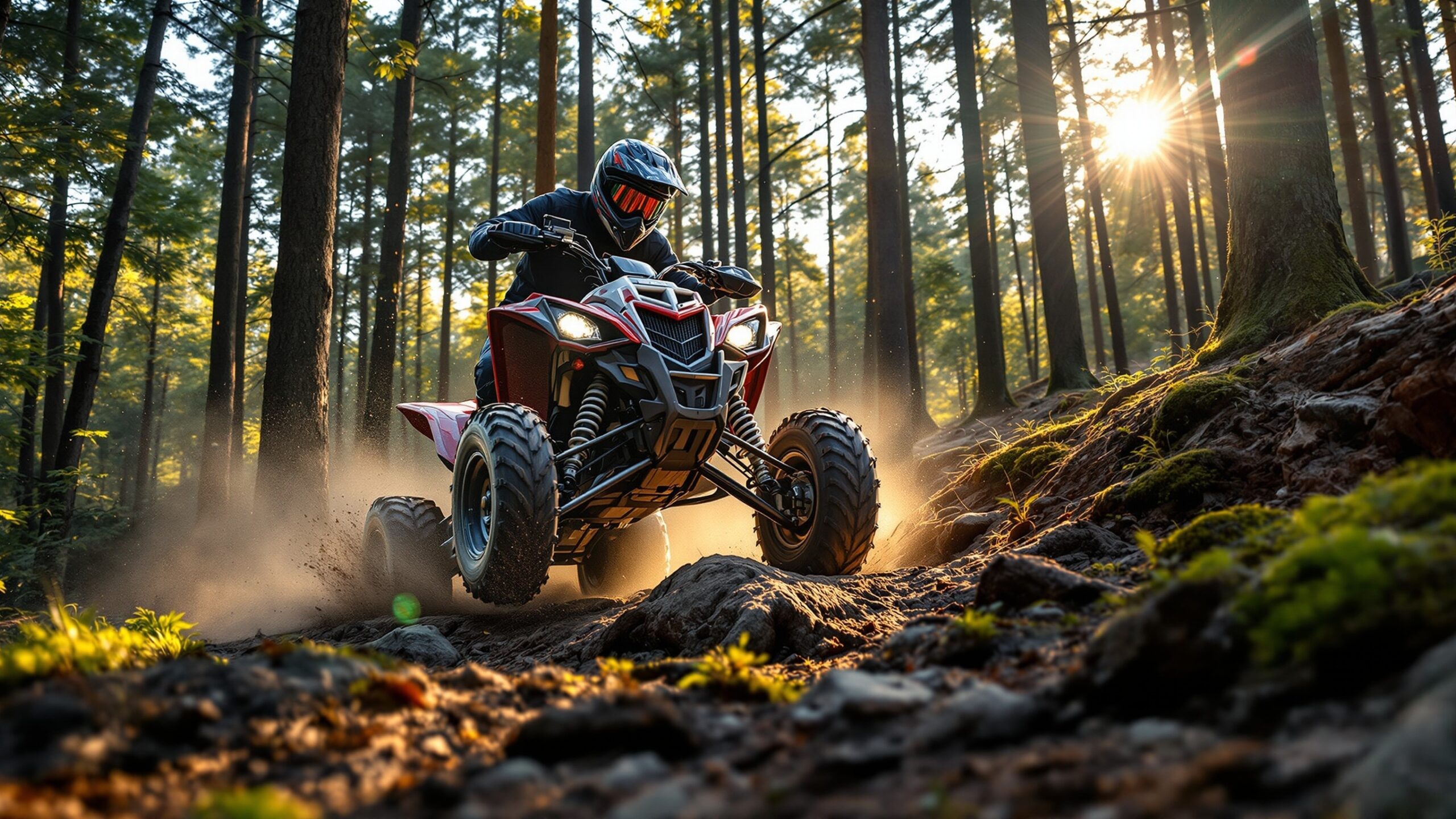
Trail riding isn’t just “go ride”—it’s a system. It’s how your machine puts power to dirt, how your suspension stays composed over chop, how your tires find grip on roots, rock, sand, and mud, and how your setup keeps you confident when the trail gets rowdy. Trail Riding Systems on ATV Streets is where those pieces come together. We break down the real-world building blocks that make an ATV feel planted, predictable, and fun: throttle control and clutch feel, driveline and gearing choices, braking and engine braking, steering geometry, chassis balance, and the little adjustments that transform a sketchy ride into a smooth one. Whether you’re dialing in for tight woods, wide desert two-tracks, mountain climbs, or mud-season ruts, you’ll find practical guides that help you tune, protect, and optimize your rig. If you want fewer surprises, more traction, and a ride that feels “locked in” from the first mile to the last, you’re in the right place.
A: Look farther ahead, smooth your inputs, and dial in tire pressure for the terrain.
A: Start with the manufacturer baseline, then adjust slightly for rocks, sand, mud, load, and speed.
A: Often too much low-speed compression, incorrect sag, or rebound packing—tune one change at a time.
A: Water, basic tools, plug kit/pump, tow strap, first aid, and a navigation plan.
A: Shift body weight back, use controlled braking, and let engine braking help—avoid locking wheels.
A: Too much speed, wrong line, low front grip, or a setup that’s too soft up front.
A: In dust, inspect every ride and clean/oil as needed—dusty conditions can clog it fast.
A: Yes—correct sag and small clicker adjustments make the ATV safer and less tiring.
A: Relax your grip, use legs as suspension, hydrate, and pace your speed early.
A: Tires, brakes, controls, fluids, fasteners, and recovery kit—quick checks prevent big problems.