
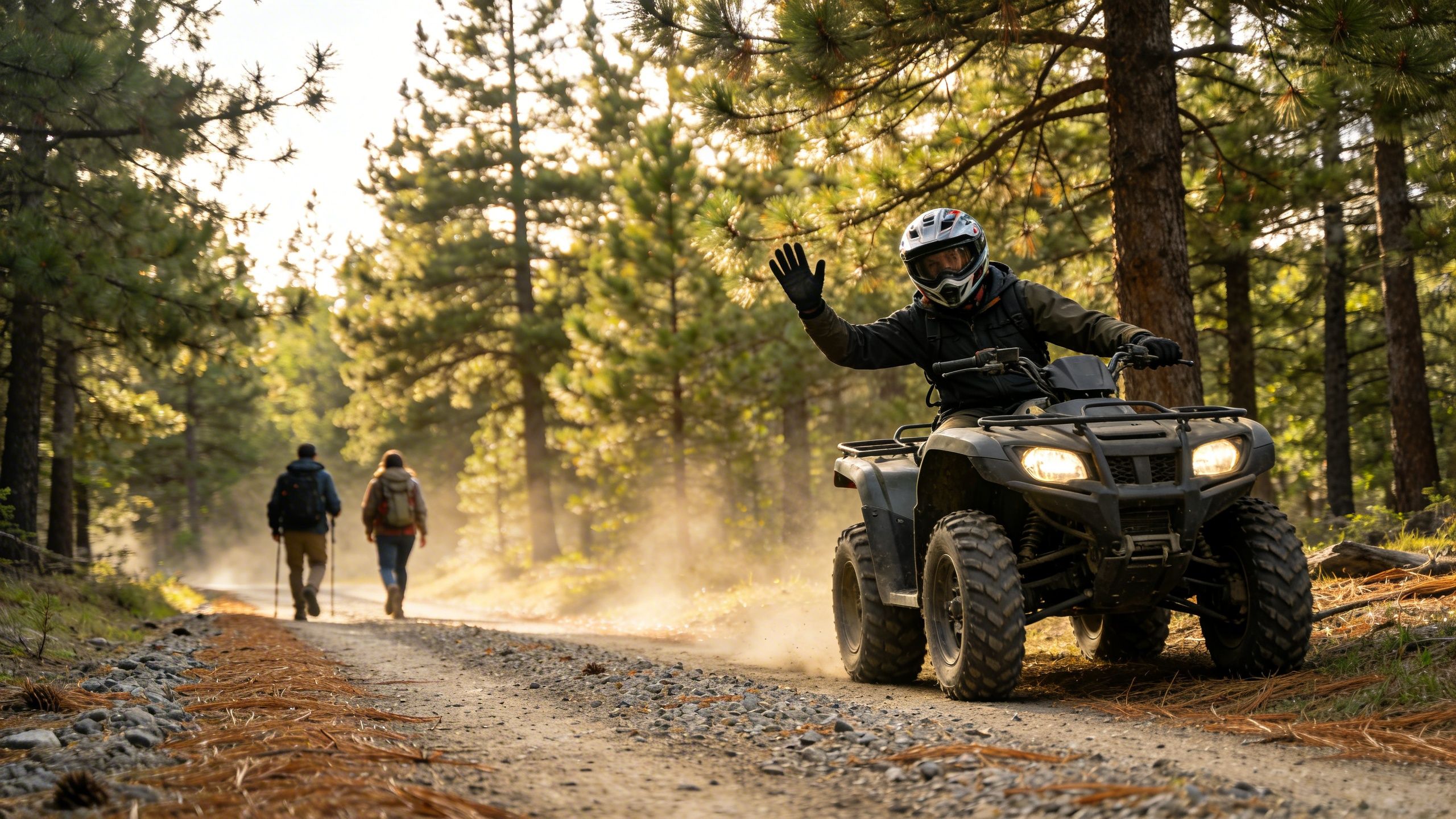
Trail Etiquette & Ethics is the quiet skill that makes every ride better—smoother trails, fewer conflicts, and more places staying open for the long haul. This ATV Streets hub is for riders who want to be fast and fun without being reckless, and adventurous without leaving a mess behind. Here you’ll find practical guides to right-of-way, passing, group spacing, and trailhead behavior, plus the unwritten rules that locals notice first: dust control near camps, throttle discipline in neighborhoods, and how to handle blind corners like someone else is always coming. We’ll dig into ethical riding choices too—staying on-route, respecting closures, avoiding trail braiding, and protecting water crossings and vegetation when conditions get soft. Expect real-world scenarios: meeting horses, sharing singletrack, approaching hikers, handling beginners in a group, and deciding when to turn back instead of forcing the trail. The goal isn’t perfection—it’s respect, consistency, and a rider culture that earns trust. When etiquette becomes second nature, the whole landscape feels bigger, friendlier, and more rideable.
A: It varies by area, but a safe default is: slow early, yield generously, and follow posted rules.
A: Signal, wait for a wave-through, pass smoothly, and avoid dusting or roosting them.
A: Slow down well in advance, give space, and be calm and predictable—stop if needed.
A: Usually no—bypasses widen trails; go through slowly if safe or turn back if it’s damaging.
A: Keep spacing, regroup at clear points, ride to the least-experienced rider, and avoid pressure.
A: Increase spacing, stagger positions, and slow only near people, corners, camps, and trailheads.
A: Create distance, don’t engage, and move to a safer spot to let them go.
A: Ask: is this legal, safe, low-impact, and respectful to others sharing the route?
A: Don’t guess—use official maps/offline layers and choose the most conservative route option.
A: Ride predictably, stay on-route, keep noise down, and leave trailheads cleaner than you found them.