
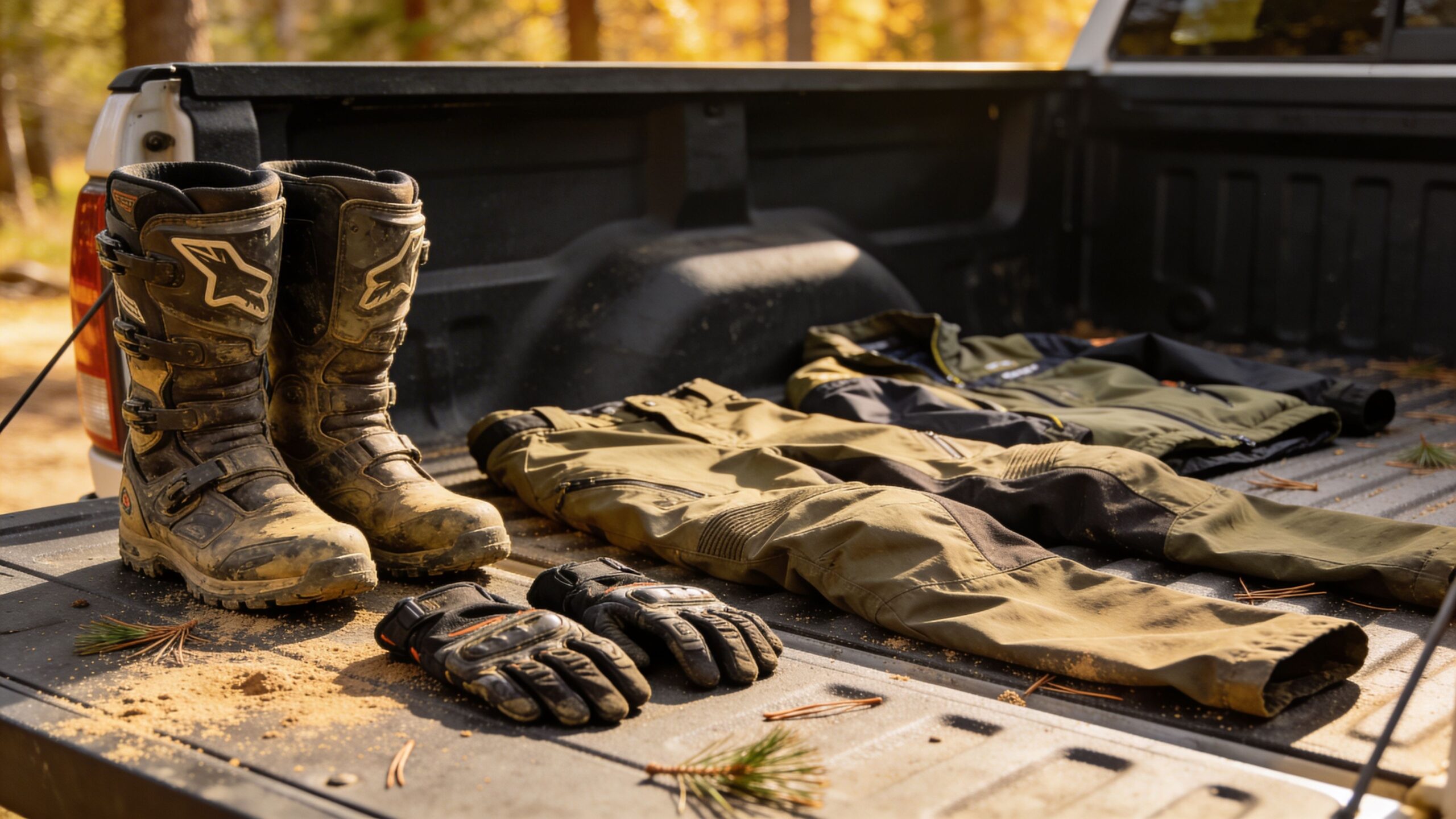
Welcome to Riding Apparel & Footwear—the layer between you and the trail that quietly decides whether a ride feels smooth… or miserable. This hub gathers our best articles on what to wear when dust, wind, rain, rocks, and long hours show up uninvited. We’ll break down fabrics that breathe without shredding, shells that block weather without turning you into a sauna, and boots that protect ankles while still letting you feel the controls. Expect real-world guidance on fit, layering, ventilation, waterproofing, and abrasion zones—plus how to choose gloves that keep grip when wet, pants that move when you stand and lean, and jackets that don’t flap like a sail at speed. We’ll also cover cold-weather strategy, hot-weather cooling, and the small details that matter: gaiters, knee protection integration, sock systems, and how to keep mud out of everything you own. Whether you’re trail cruising, work riding, or exploring all day, the right apparel turns effort into confidence. Gear up smarter, ride longer, and finish the day comfortable enough to plan the next one.
A: For protection and ankle support, yes—boots reduce injury risk and improve stability on pegs.
A: Snug enough to avoid snagging, flexible enough to stand and bend, with room for knee protection.
A: Base layer + mid layer + shell, with vents and quick-adjust pieces for temperature swings.
A: If you ride in real rain or wet brush, waterproofing matters; otherwise breathability may keep you happier.
A: Some palms lose grip when soaked—look for materials designed to stay tacky in wet conditions.
A: Proper fit, moisture-wicking socks, and avoiding seams that rub—plus break boots in before long rides.
A: Better base layers and a windproof shell—windchill is usually the real enemy.
A: Use gaiters or secure cuffs, and avoid loose pant legs that funnel debris downward.
A: When it’s dusty or oily—dirt reduces breathability and waterproof performance over time.
A: Supportive boots, grippy gloves, durable pants, and a wind/rain shell—then layer for temperature.