The Hidden Geometry Behind Every Great ATV Ride
ATV suspension geometry is one of the most important parts of how a machine feels, yet it is often overlooked until something feels wrong. Riders may notice twitchy steering, uneven tire wear, poor cornering grip, or a machine that refuses to track straight, but the cause often begins with small angles built into the suspension and steering system. Camber, caster, and toe may sound like workshop terms, but they shape how an ATV handles every bump, rut, climb, and turn. The beauty of suspension geometry is that it works constantly, whether the rider thinks about it or not. Every time the suspension compresses, the tires lean, the steering responds, and the chassis transfers weight. A well-set ATV feels planted, predictable, and confident. A poorly aligned ATV can feel nervous, heavy, unstable, or tiring. Understanding these angles helps riders appreciate why setup matters just as much as horsepower, tires, or suspension travel.
A: Follow the manual and inspect sooner after harsh riding.
A: A new feel, sound, smell, leak, heat issue, or warning light.
A: Yes. Mud adds grit, moisture, heat, and hidden wear.
A: No. Restore the baseline first, then decide if upgrades are useful.
A: Yes, especially after water, rocks, towing, heat, or heavy loads.
A: Dates, hours, parts, fluids, settings, and symptoms are all useful.
A: Use caution on safety, sealing, steering, suspension, brake, and drivetrain parts.
A: Working does not mean healthy; inspect when symptoms change.
A: Get help for uncertain brakes, steering, wiring, fuel leaks, or structural issues.
A: Inspect early, fix small problems, and test before riding remote terrain.
What ATV Suspension Geometry Really Means
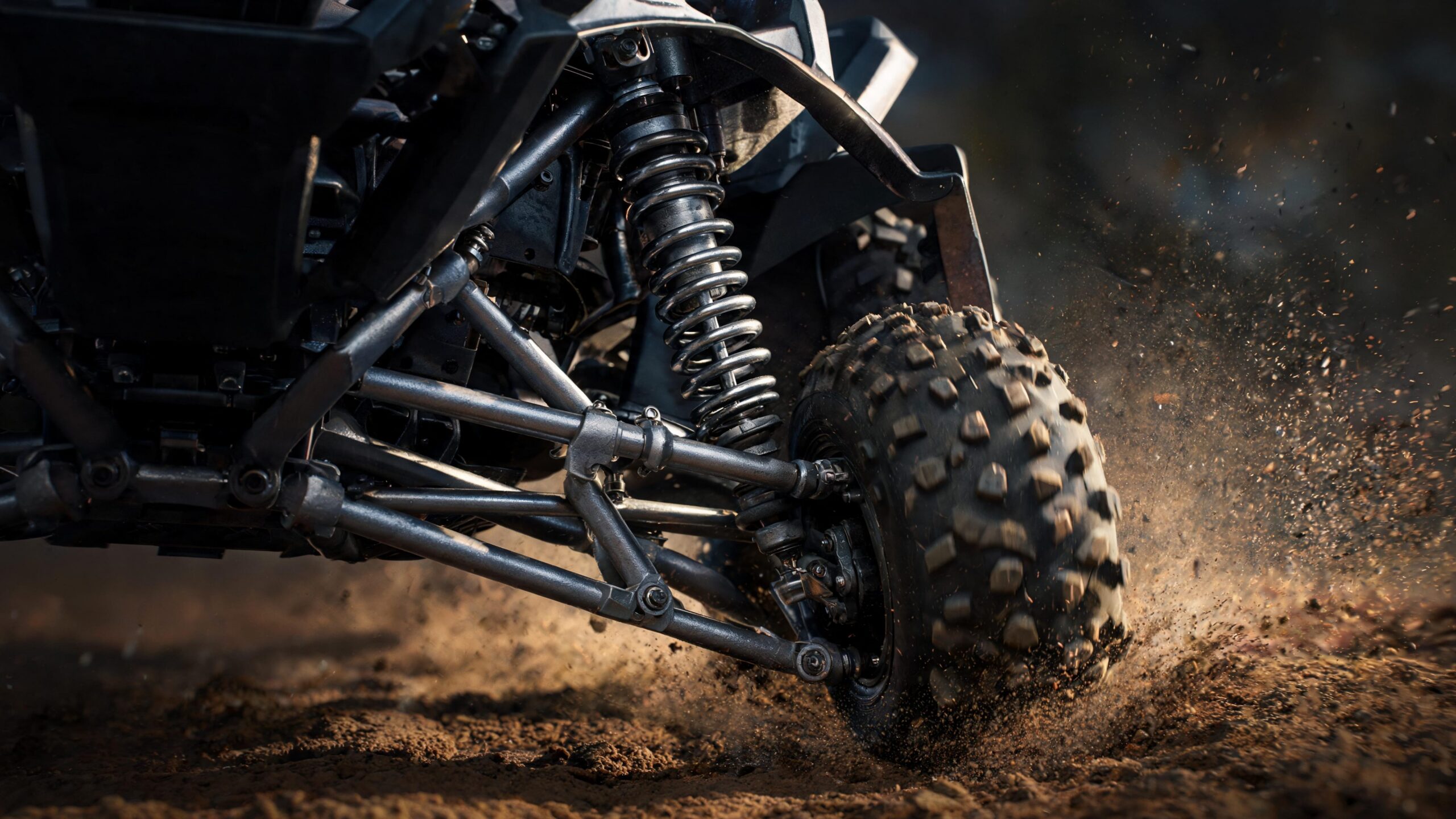
Suspension geometry describes the angles, positions, and movement paths of the components that connect the wheels to the chassis. On an ATV, this includes A-arms, ball joints, tie rods, steering knuckles, shocks, hubs, and frame mounting points. These parts do not simply hold the wheels in place. They determine how the wheels move as the ATV corners, brakes, accelerates, and travels across uneven ground.
Unlike a simple static measurement, ATV geometry changes dynamically while riding. As the suspension compresses into a turn or extends over a bump, the wheel angle can shift. That means a setup that looks fine at rest may behave very differently under load. This is why professional builders, racers, and serious trail riders pay close attention to suspension geometry instead of treating alignment as a one-time adjustment.
Camber Explained
Camber is the inward or outward tilt of the tire when viewed from the front of the ATV. If the top of the tire leans inward toward the machine, that is negative camber. If the top of the tire leans outward, that is positive camber. Most performance-oriented ATV setups use some negative camber because it helps the tire maintain better contact during aggressive cornering. When an ATV turns, weight transfers to the outside tires. Without proper camber, the outside tire may roll onto its outer edge, reducing grip and making the ATV feel vague or unstable. Negative camber helps counteract that movement by positioning the tire so it can stay flatter under cornering force. This improves bite, steering precision, and confidence when pushing hard through turns.
Why Camber Matters for Grip
Camber directly affects the tire contact patch, which is the portion of the tire touching the ground. A larger, more controlled contact patch improves traction, braking, and steering response. When camber is poorly set, the ATV may ride on the inside or outside edge of the tire, wasting available grip and increasing uneven tire wear.
Too much negative camber can also create problems. The ATV may feel sharp in corners but unstable in straight-line riding, and the inside edges of the front tires may wear quickly. Too little camber can make the front end feel lazy or prone to pushing wide in corners. The ideal setting depends on riding style, terrain, tire type, suspension travel, and chassis design.
Caster Explained
Caster is the angle of the steering axis when viewed from the side of the ATV. Imagine a line running through the upper and lower ball joints. If that line tilts rearward at the top, the ATV has positive caster. This angle plays a major role in straight-line stability, steering return, and how confidently the ATV tracks across rough ground. Positive caster helps the front wheels naturally return to center after a turn. It also improves high-speed stability because the wheels want to follow a straight path. This is one reason many performance ATVs feel more planted at speed when caster is properly set. Caster gives the steering a self-centering character that helps the rider maintain control through chop, ruts, and fast trail sections.
The Tradeoff Between Stability and Steering Effort
While positive caster improves stability, too much caster can make steering heavier. Riders may notice that the handlebars require more effort, especially in tight woods, technical rock sections, or slow-speed maneuvering. This is where suspension setup becomes a balancing act. More caster can make an ATV feel confident at speed, but less caster can make it easier to steer in tight spaces.
The best caster setting depends on how the ATV is used. Desert riders and high-speed trail riders often appreciate extra stability. Woods riders may prefer quicker steering response. Utility riders need predictable control with manageable steering effort, especially when carrying cargo or using larger tires. Caster is not about one perfect number; it is about matching the geometry to the job.
Toe Explained
Toe describes whether the front tires point slightly inward or outward when viewed from above. Toe-in means the front edges of the tires point toward each other. Toe-out means the front edges point away from each other. Even tiny toe changes can dramatically alter how an ATV feels. A slight amount of toe-out is common on many sport ATVs because it can make steering feel quicker and more responsive. However, too much toe-out can make the machine twitchy and unstable at speed. Toe-in can help straight-line tracking, but too much can make the ATV feel sluggish and increase tire scrub. Because toe is easy to knock out of adjustment from impacts, it is one of the first things to check when handling feels strange.
Why Toe Affects Tire Wear So Quickly
Toe has a direct relationship with tire scrub. If the tires are not pointing in compatible directions, they fight each other as the ATV rolls forward. This creates drag, heat, and uneven wear. On pavement or hardpack surfaces, incorrect toe can destroy tire edges surprisingly fast.
Off-road riders sometimes ignore tire wear because ATV tires are built for abuse, but bad toe does more than wear rubber. It can reduce acceleration, increase steering effort, hurt fuel efficiency, and make the machine wander. A proper toe setting keeps the front end predictable and helps the tires work with the suspension instead of against it.
How Camber, Caster, and Toe Work Together
Camber, caster, and toe are often discussed separately, but they work as a system. Changing one setting can affect how the others feel on the trail. For example, a machine with aggressive negative camber and quick toe-out may carve hard in corners but feel nervous on high-speed straights. An ATV with stable caster and conservative toe may track beautifully but feel slower to turn. The best setup depends on the complete personality of the machine. Tire size, wheel offset, suspension travel, shock tuning, rider weight, trail surface, and intended use all influence the ideal geometry. This is why copying another rider’s settings does not always produce the same results. Geometry is personal, practical, and deeply connected to how the ATV is ridden.
Geometry Under Suspension Compression
One of the most important things to understand is that suspension geometry changes as the ATV moves. When the front suspension compresses, the A-arms travel through an arc. This can alter camber and toe during the ride. If the geometry is well designed, the tires remain stable and predictable throughout the suspension stroke.
Poor geometry can create bump steer, where the wheels change direction as the suspension moves up and down. This makes the ATV feel like it is steering itself over bumps. On rough trails, bump steer can be exhausting and dangerous because the rider must constantly correct unwanted movement. Good suspension design minimizes these changes so the ATV remains composed.
The Role of A-Arms and Steering Knuckles
A-arms are central to ATV front suspension geometry. Their length, angle, mounting points, and relationship to the steering knuckle determine how the wheel moves. Wider or longer A-arms can increase stability and improve travel, but they must be designed carefully to avoid poor camber curves or steering issues. Steering knuckles also play a major role because they connect the hub, ball joints, and tie rods. Their shape influences steering angle, leverage, and wheel movement. Aftermarket suspension components can improve performance, but only when they are engineered as a complete system. Random part combinations can create geometry problems that look impressive in the garage but feel terrible on the trail.
Wheel Offset and Geometry Changes
Wheel offset changes the position of the tire relative to the hub and suspension. Many riders install wider wheels or different offsets to improve stance, clearance, or style. However, offset can change steering feel, scrub radius, and stress on suspension components.
A wider stance can improve stability, but it may also increase steering effort and place more leverage on ball joints, tie rods, and wheel bearings. It can also change how the tire reacts when hitting rocks or ruts. Before changing wheels, riders should consider how offset interacts with factory geometry. A good-looking stance is not always a better-handling stance.
Suspension Geometry and Cornering Confidence
Cornering is where suspension geometry becomes easy to feel. A well-set ATV turns in cleanly, holds a line, and lets the rider apply throttle with confidence. The front tires bite instead of sliding, and the chassis communicates what is happening underneath. If geometry is wrong, cornering becomes unpredictable. The front end may push wide, dart into ruts, or feel unstable as weight transfers. Riders often try to fix these issues with tire pressure or shock changes, but alignment may be the real cause. Camber helps tire contact, caster helps stability, and toe shapes steering response. Together, they decide whether the ATV feels sharp or sloppy.
Suspension Geometry and Straight-Line Stability
High-speed stability depends heavily on caster and toe. When an ATV feels nervous on a straight trail, the problem may not be the engine, tires, or rider. The front wheels may be fighting each other, or the caster may not provide enough self-centering force.
A stable ATV lets the rider relax slightly without constantly correcting the handlebars. This is especially important in desert terrain, fast fire roads, and open trails where small steering mistakes become bigger at speed. Proper geometry allows the machine to track forward cleanly while still responding when the rider asks it to turn.
Geometry for Rocks, Ruts, Mud, and Sand
Different terrain exposes different geometry strengths and weaknesses. Rocky terrain rewards suspension articulation and predictable steering because each wheel is constantly reacting to uneven surfaces. Rutted trails punish bad toe and bump steer because the front wheels are forced into channels. Mud riding benefits from stability and predictable tire contact. Sand requires smooth weight transfer and confidence at speed. No single setup is perfect for every surface, but understanding geometry helps riders make better compromises. A trail rider who switches from tight woods to dunes may need a different feel than a rider who spends every weekend crawling rocky hills. The goal is not to chase extreme numbers. The goal is to create a balanced ATV that behaves predictably in the conditions that matter most.
Signs Your ATV Geometry May Be Off
Riders can often feel geometry problems before they measure them. If the ATV pulls to one side, darts over bumps, wears tires unevenly, feels twitchy at speed, or refuses to hold a line, alignment should be inspected. Bent tie rods, worn ball joints, damaged A-arms, loose bushings, or incorrect toe settings can all create handling issues.
Crashes, hard impacts, oversized tires, lift kits, and aftermarket wheels can change geometry. Even a minor collision with a rock or stump can bend steering parts enough to affect handling. Checking geometry after rough rides is a smart habit, especially for aggressive riders or machines used in technical terrain.
Why Lift Kits Can Change Handling
Lift kits are popular for mud riders and utility ATV owners who want extra ground clearance. However, lifting an ATV changes suspension angles. A lift can alter camber, increase stress on axles, affect steering geometry, and change how the machine corners. A lifted ATV may clear deeper ruts, but it can also feel taller, less stable, and more prone to body roll. Riders should understand that geometry changes are part of the tradeoff. A proper lift setup should be matched with careful alignment, correct tire sizing, and realistic expectations about handling.
Why Factory Settings Are a Compromise
Factory ATV geometry is designed for broad use. Manufacturers must account for different riders, terrain, cargo loads, speeds, and safety expectations. That means factory settings are usually balanced rather than extreme. They are intended to work well enough for many situations, not perfectly for one specific riding style.
Performance riders may benefit from fine-tuning alignment, upgrading suspension components, or adjusting setup for racing conditions. Recreational riders may simply need to maintain factory geometry and keep worn parts replaced. Either way, understanding the purpose behind the settings helps riders make smarter decisions.
The Rider’s Role in Suspension Geometry
Even perfect geometry cannot replace good riding technique. Body position, throttle control, braking input, and line choice all affect how suspension loads and unloads. A rider who leans correctly, anticipates terrain, and uses smooth inputs will get more performance from the same geometry than a rider who fights the machine. That said, good geometry makes good technique easier. When the ATV responds predictably, the rider can focus on the trail instead of correcting unstable handling. The best setups create trust between rider and machine, allowing both to work as one system.
Why ATV Geometry Is Worth Understanding
ATV suspension geometry may seem technical, but it has a very simple purpose: keeping the tires pointed, planted, and predictable. Camber helps the tires grip. Caster gives the ATV stability and steering return. Toe controls how sharply and cleanly the front end responds. Together, these settings define much of the machine’s personality.
For riders who want more comfort, speed, control, and confidence, geometry is one of the most valuable areas to understand. It turns vague handling problems into solvable setup questions. It also reveals why the best ATV builds are not just powerful or aggressive-looking; they are balanced, measured, and engineered to work with the terrain.