The Origins of All-Terrain Vehicles
The story of all-terrain vehicles begins in the late 1960s, when manufacturers sought to create machines capable of navigating environments that traditional vehicles could not handle. Early designs focused on utility rather than recreation, aiming to provide reliable transportation across snow, mud, and uneven terrain. The concept was simple but powerful: lightweight machines with wide tires that could distribute weight and maintain traction in challenging conditions. The earliest commercially successful ATV designs came from Japan, where engineers experimented with unconventional wheel configurations and low-pressure tires. These machines were not initially intended for sport or leisure but rather for practical use in remote areas. However, their unique capabilities quickly attracted attention, setting the stage for a new category of off-road vehicles that would evolve rapidly in both design and purpose.
A: Follow the manual and inspect sooner after harsh riding.
A: A new feel, sound, smell, leak, heat issue, or warning light.
A: Yes. Mud adds grit, moisture, heat, and hidden wear.
A: No. Restore the baseline first, then decide if upgrades are useful.
A: Yes, especially after water, rocks, towing, heat, or heavy loads.
A: Dates, hours, parts, fluids, settings, and symptoms are all useful.
A: Use caution on safety, sealing, steering, suspension, brake, and drivetrain parts.
A: Working does not mean healthy; inspect when symptoms change.
A: Get help for uncertain brakes, steering, wiring, fuel leaks, or structural issues.
A: Inspect early, fix small problems, and test before riding remote terrain.
The 1970s: The Rise of the Three-Wheeler
The 1970s marked the true birth of the ATV as a recognizable vehicle, driven largely by the introduction of three-wheeled designs. These machines featured a single front wheel for steering and two rear wheels for stability and propulsion. Their simplicity and affordability made them accessible to a wide audience, and they quickly gained popularity in North America.
Despite their growing appeal, three-wheelers presented significant challenges in terms of handling and safety. Their narrow front stance and high center of gravity made them prone to tipping, especially during aggressive riding. Nevertheless, they became cultural icons of the era, representing freedom, adventure, and the early spirit of off-road exploration. This decade laid the foundation for the ATV market, even as it revealed the need for improved design.
The Early 1980s: Innovation Meets Demand
As demand for ATVs increased, manufacturers began investing heavily in research and development. The early 1980s saw rapid advancements in engine performance, suspension systems, and overall durability. Riders were no longer satisfied with basic transportation; they wanted machines that could handle speed, jumps, and rugged terrain with confidence. During this period, ATVs began to diversify into different categories, including sport and utility models. Sport ATVs emphasized speed and agility, while utility models focused on hauling capacity and reliability. This shift reflected a growing understanding of rider needs and marked the beginning of specialized ATV design. Innovation was no longer optional—it became the driving force behind the industry.
The Mid-1980s: The Shift to Four Wheels
One of the most significant turning points in ATV history came in the mid-1980s, when manufacturers transitioned from three-wheelers to four-wheeled designs. This change was largely driven by safety concerns, as four wheels provided greater stability and reduced the risk of rollovers. The new configuration allowed for wider stances, improved weight distribution, and more predictable handling.
The introduction of four-wheel ATVs transformed the industry almost overnight. Riders quickly embraced the enhanced control and confidence these machines offered. At the same time, manufacturers continued to refine suspension systems and frame geometry, ensuring that the new designs could handle both recreational and work-related tasks. This era marked the beginning of the modern ATV as we know it today.
The 1990s: Refinement and Expansion
The 1990s were characterized by refinement rather than reinvention. Manufacturers focused on improving existing designs, making ATVs more reliable, comfortable, and versatile. Engine technology advanced significantly, with better fuel efficiency and increased power output becoming standard features. During this decade, ATVs expanded into new markets and applications. Farmers, hunters, and outdoor workers began adopting these machines for their practicality, while recreational riders continued to push the limits of performance. The introduction of automatic transmissions and improved ergonomics made ATVs more accessible to beginners, broadening their appeal. This period solidified the ATV’s role as both a tool and a source of entertainment.
The 2000s: Technology Takes the Lead
The early 2000s ushered in a wave of technological innovation that redefined what ATVs could do. Electronic fuel injection replaced traditional carburetors, providing more precise control over engine performance and improving reliability in varying conditions. Suspension systems became more sophisticated, allowing for smoother rides over rough terrain.
Manufacturers also began integrating advanced features such as four-wheel drive systems, locking differentials, and enhanced braking technologies. These innovations made ATVs more capable than ever before, enabling riders to tackle challenging environments with confidence. At the same time, design aesthetics evolved, with sleeker bodywork and more aggressive styling reflecting the growing influence of motorsports.
The 2010s: Performance and Precision
By the 2010s, ATVs had reached a new level of performance and precision. High-performance sport models featured powerful engines, advanced suspension setups, and lightweight materials that enhanced speed and agility. Utility ATVs, on the other hand, became increasingly robust, with improved towing capacity and durability. This decade also saw the rise of electronic rider aids, including traction control and selectable drive modes. These features allowed riders to customize their experience based on terrain and skill level. The integration of digital displays and onboard diagnostics further enhanced usability, making ATVs more intuitive and user-friendly. Innovation was no longer just about power—it was about control and adaptability.
The Modern Era: Versatility and Innovation
Today’s ATVs represent the culmination of decades of innovation and design evolution. Modern machines are incredibly versatile, capable of handling everything from high-speed racing to heavy-duty work tasks. Advanced materials and manufacturing techniques have improved durability while reducing weight, resulting in more efficient and reliable vehicles.
Electric ATVs are beginning to emerge as a new frontier, offering quiet operation and reduced environmental impact. While still in the early stages, this technology has the potential to reshape the industry once again. Meanwhile, ongoing advancements in suspension, drivetrain, and safety systems continue to push the boundaries of what ATVs can achieve.
The Role of Design in ATV Evolution
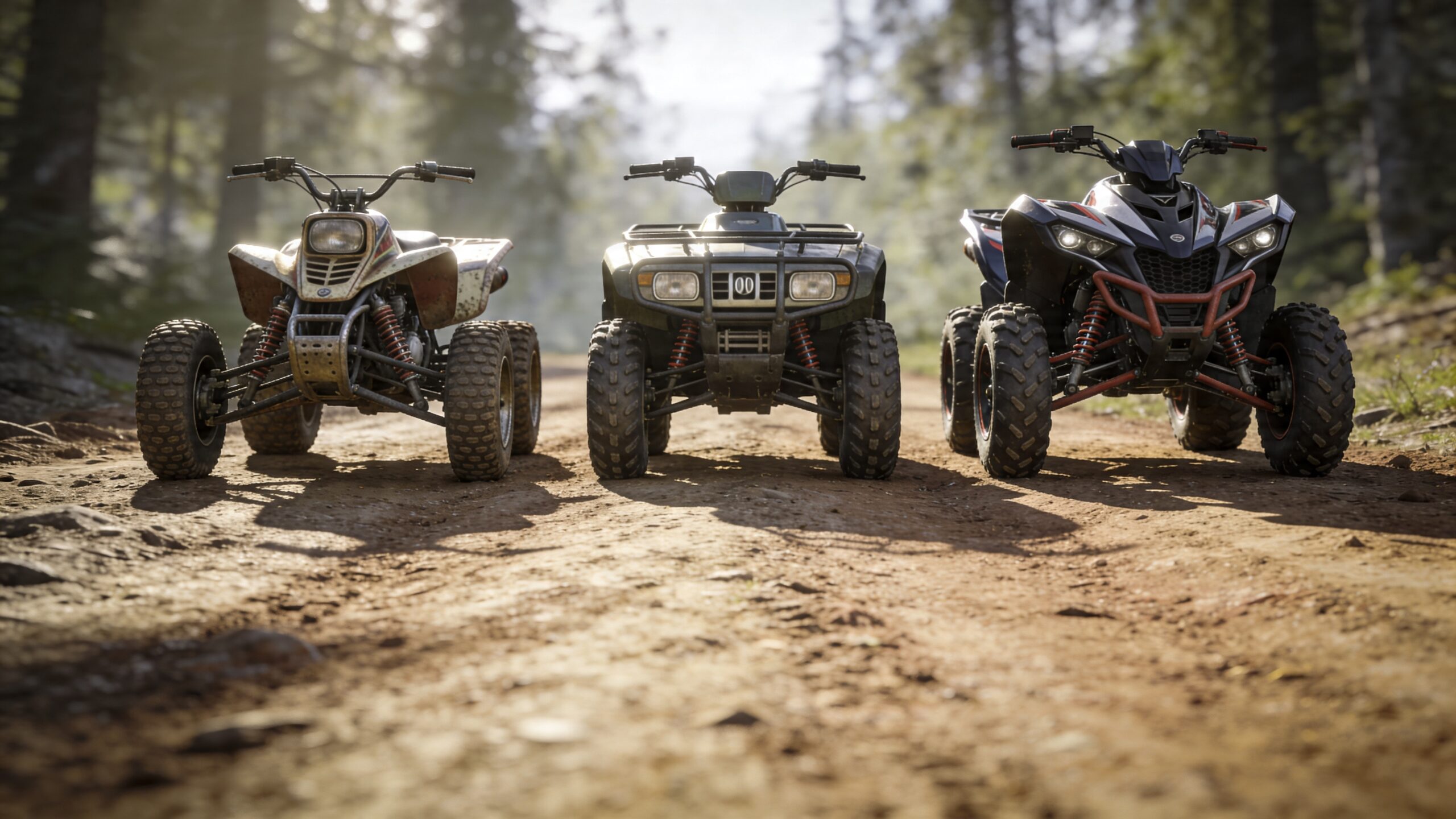
Design has played a crucial role in the evolution of ATVs, influencing not only performance but also rider experience. Early models prioritized function over form, but modern ATVs balance both aspects seamlessly. Ergonomics have improved dramatically, with better seating positions, handlebar placement, and control layouts enhancing comfort and reducing fatigue. Aesthetic design has also become more important, reflecting the identity and branding of different manufacturers. Aggressive lines, bold colors, and distinctive styling cues help differentiate models in a competitive market. At the same time, functional design elements such as improved airflow and protective bodywork contribute to overall performance and durability.
Cultural Impact and the Future of ATVs
ATVs have become more than just machines; they are a central part of off-road culture and outdoor lifestyles. From trail riding and racing to work applications and recreational use, these vehicles have shaped how people interact with the outdoors. Their evolution reflects broader trends in technology, safety, and consumer expectations.
Looking ahead, the future of ATVs is likely to be defined by continued innovation and sustainability. Electric powertrains, smarter electronics, and improved safety features will play a key role in shaping the next generation of machines. As the industry evolves, one thing remains clear: ATVs will continue to adapt, innovate, and inspire riders for years to come.