The Beginning of the All-Terrain Idea
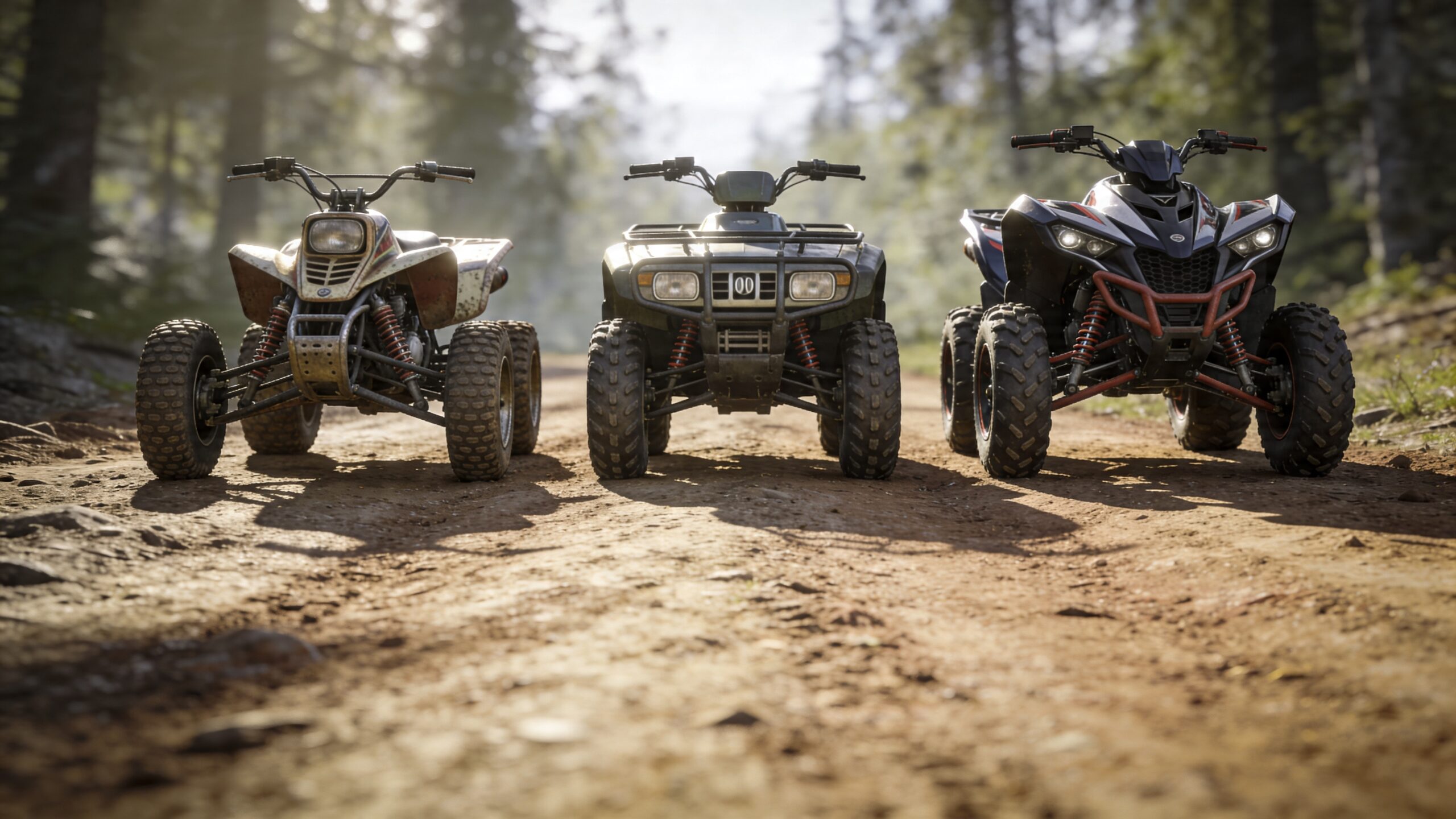
The history of ATVs begins with a simple challenge: how do you build a small vehicle that can travel where ordinary roads end? Before ATVs became recreational icons, the idea behind them was rooted in utility. Manufacturers wanted lightweight machines that could move across mud, sand, snow, and uneven ground without the bulk of a truck or the limited balance of a motorcycle. That practical need created the foundation for one of the most interesting off-road vehicle categories in modern history. In the late 1960s and early 1970s, engineers began experimenting with compact off-road machines that used large, low-pressure tires for flotation and grip. These early designs did not resemble today’s polished ATVs, but they introduced the basic formula that would shape the industry: a small footprint, rider-controlled steering, and the ability to handle terrain that defeated conventional vehicles. What started as a practical concept soon became a cultural phenomenon.
A: Follow the manual and inspect sooner after harsh riding.
A: A new feel, sound, smell, leak, heat issue, or warning light.
A: Yes. Mud adds grit, moisture, heat, and hidden wear.
A: No. Restore the baseline first, then decide if upgrades are useful.
A: Yes, especially after water, rocks, towing, heat, or heavy loads.
A: Dates, hours, parts, fluids, settings, and symptoms are all useful.
A: Use caution on safety, sealing, steering, suspension, brake, and drivetrain parts.
A: Working does not mean healthy; inspect when symptoms change.
A: Get help for uncertain brakes, steering, wiring, fuel leaks, or structural issues.
A: Inspect early, fix small problems, and test before riding remote terrain.
The 3-Wheeler Era Takes Off
When people think about early ATV history, they usually think of the 3-wheeler. These machines became the face of the category in the 1970s and early 1980s. With one wheel up front and two in the rear, they were compact, unusual, and exciting. They offered a sense of freedom that was different from motorcycles and smaller off-road bikes. Riders could explore fields, trails, dunes, and rural land in a way that felt adventurous and new.
The 3-wheeler quickly became popular because it was accessible and relatively simple. It was not just a machine for work. It was also fun, fast enough to feel thrilling, and different enough to stand out. Families, outdoor enthusiasts, and younger riders were drawn to the format. For many people, the 3-wheeler was their first real introduction to off-road powersports, and it helped create the foundation of ATV culture in North America.
Why Early 3-Wheelers Captured Public Attention
Part of the appeal of early ATVs was their visual identity. They looked unlike anything else on the market. Their balloon-style tires, upright handlebars, and exposed mechanical layout gave them a rugged, experimental feel. They looked ready for terrain that would stop other machines, and that image alone helped fuel demand. In a time when off-road recreation was expanding, the 3-wheeler arrived at exactly the right moment. There was also something deeply appealing about their versatility. Riders could use them around farms, on private land, or as weekend recreational vehicles. They were smaller and easier to store than many alternatives, yet capable enough to handle rough conditions. That mix of practicality and excitement made the category grow quickly, even before manufacturers had fully refined the formula.
The Limits of the 3-Wheel Design
As popular as 3-wheelers became, their design had serious limitations. The narrow front end and tall riding posture could create instability, especially during sharp turns, off-camber riding, or aggressive maneuvering. On loose terrain, that instability could become even more pronounced. Riders often learned through experience that these machines demanded caution and skill, but public enthusiasm frequently outran safety awareness.
The core issue was not that 3-wheelers were incapable, but that they could be unforgiving. Their handling characteristics were different from what many riders expected. As more machines entered the market and more inexperienced riders climbed aboard, safety concerns increased. That tension between popularity and design limitations became one of the defining turning points in ATV history.
Manufacturers Begin Pushing Innovation
As the market expanded, major manufacturers saw enormous opportunity. They began introducing better engines, more robust frames, improved suspension layouts, and features aimed at making ATVs more capable and appealing. Competition accelerated development, and brands worked hard to stand out by improving reliability, comfort, and performance. This period was crucial because it transformed ATVs from novelty machines into a fast-moving segment of the powersports world. Innovation was no longer just about creating an off-road vehicle. It was about solving real problems and broadening the ATV’s use cases. Could it handle tougher trails? Could it carry more gear? Could it appeal to sports riders and workers alike? Those questions pushed the category forward and led directly to the biggest shift in ATV history.
The Move From Three Wheels to Four
The transition from 3-wheelers to 4-wheel ATVs changed everything. Four wheels offered a wider stance, better balance, and more predictable handling. That extra contact patch gave riders more confidence, especially on uneven terrain and in turns. Once the 4-wheel format proved itself, it became clear that it was not just an alternative. It was the future of the category.
The move to four wheels was driven by both design logic and market pressure. Riders wanted better control, and manufacturers needed a platform that could deliver stronger performance with fewer compromises. The 4-wheel ATV allowed engineers to rethink suspension geometry, weight distribution, and overall ergonomics. It also opened the door to more specialized machine types, which would define the next era of ATV development.
How 4-Wheel ATVs Redefined Stability
One of the greatest strengths of the 4-wheel ATV was stability. The wider footprint helped reduce the unpredictability that troubled many 3-wheel machines. Riders could shift weight more effectively, navigate rough terrain with greater confidence, and push the machine in ways that felt safer and more controlled. This was a huge leap not just in function, but in rider trust. That improved stability made ATVs more approachable to a broader audience. It gave new riders a better chance of adapting quickly, while also allowing experienced riders to go faster and explore more challenging terrain. The machine felt more planted, more balanced, and more versatile. This change helped transform ATVs from a risky novelty into a lasting segment of off-road transportation and recreation.
The Rise of Utility ATVs
As 4-wheel designs matured, ATV makers began dividing their machines into clearer categories. One of the most important was the utility ATV. These models were built for work as much as recreation. They added cargo racks, towing capacity, durable tires, and dependable power delivery for practical use in agriculture, hunting, ranching, and land management. Suddenly, the ATV was not only fun. It was a serious tool.
Utility ATVs helped expand the market far beyond recreational trail riders. Farmers used them for chores, outdoor workers used them to access remote areas, and property owners used them to move supplies efficiently. This practical value gave the category lasting strength. Even people with little interest in racing or sport riding could see the clear advantage of a compact, go-anywhere vehicle built to work hard.
The Growth of Sport ATVs
While utility ATVs were gaining traction, sport ATVs were developing their own identity. These machines focused on speed, lighter weight, sharper handling, and stronger acceleration. They appealed to riders who wanted excitement, competition, and performance-driven design. Sport ATVs benefited from better suspension travel, more responsive engines, and styling that reflected their aggressive purpose. Sport riding and ATV racing played an important role in pushing engineering forward. Riders demanded faster throttle response, improved control in jumps and corners, and machines that could survive repeated hard use. In many ways, the sport side of the industry forced rapid technical progress, and some of those advancements later influenced utility models as well. Performance became a major part of ATV design culture.
The 1990s and the Era of Refinement
By the 1990s, the ATV industry had moved beyond its earliest growing pains and entered a period of refinement. Manufacturers focused on making machines more dependable, more comfortable, and more specialized. Engine performance improved, but so did ergonomics, ride quality, and durability. The category matured, and that maturity made ATVs more appealing to a wider range of riders.
This was also the decade when ATVs became more polished as consumer products. Controls became more intuitive, fit and finish improved, and manufacturers better understood how to design for different needs. Riders could now choose between work-focused models, trail-oriented all-rounders, and performance-focused sport machines. That growing range of options helped cement the ATV as a serious, lasting market segment.
Suspension, Comfort, and Ride Control Improve
One of the most important technical areas of improvement throughout ATV history has been suspension. Early ATVs could feel harsh, unpredictable, or crude when ridden over rough terrain. As design evolved, suspension travel increased, damping improved, and chassis layouts became more sophisticated. These changes dramatically improved control, comfort, and confidence. Better suspension did more than smooth out the ride. It also helped ATVs corner more predictably, maintain traction more effectively, and handle heavier workloads. For sport riders, it meant greater stability at speed. For utility riders, it meant less fatigue during long days on rough ground. Suspension evolution is one of the clearest examples of how ATV design moved from basic function to true performance engineering.
Engine Technology Changes the Experience
ATV engines have changed significantly over the decades. Early machines relied on simple designs that prioritized function over refinement. As the market became more competitive, manufacturers introduced more powerful, smoother, and more efficient engines. Displacement options expanded, throttle response improved, and reliability became a bigger selling point.
Later developments such as electronic fuel injection helped take engine performance even further. EFI improved cold starts, altitude compensation, fuel metering, and overall consistency. Combined with stronger cooling systems and better drivetrain engineering, modern ATV engines became far more dependable and capable than their early ancestors. The machine no longer just ran. It responded with precision.
Design Becomes More Purposeful
ATV styling changed dramatically over time, but those changes were never just cosmetic. Early designs were simple and open, with little concern for body shaping beyond basic function. As machines evolved, bodywork became more integrated, more protective, and more expressive. Fender shapes, front ends, rack systems, and side panels began to reflect the intended purpose of each machine. This design evolution also improved rider comfort and machine durability. Better seating positions reduced fatigue. Smarter control layouts improved rider confidence. Protective plastics shielded components from debris and weather. By the modern era, ATV design had become a blend of performance engineering, practical durability, and visual identity. The machine looked sharper because it was better thought through in every direction.
Safety Becomes Central to ATV Development
Safety became a much bigger part of ATV design as the industry matured. Early marketing often emphasized freedom and excitement more than rider education. Over time, that changed. Manufacturers, regulators, advocacy groups, and training organizations placed greater emphasis on helmets, rider instruction, age-appropriate models, and responsible operation. The conversation shifted from pure thrill to informed use.
Modern ATV design reflects that change. Wider stances, better brakes, improved suspension control, stronger frames, and more predictable handling all contribute to safer riding. While ATVs still demand skill and respect, the machines themselves have become more stable and more refined. Safety did not slow innovation. It helped shape smarter innovation.
The Modern ATV Machine
Today’s ATVs are the result of decades of engineering lessons, rider feedback, and changing expectations. A modern ATV can be remarkably specialized or impressively versatile. Some are built to tow, haul, and work in harsh conditions. Others are designed for trails, dunes, racing, or long recreational rides. Across the board, they are stronger, more stable, and more advanced than the machines that came before them. Modern machines benefit from features that earlier riders could barely imagine, including advanced braking systems, selectable drive modes, independent suspension, power steering, digital instrumentation, and improved durability throughout the chassis. These features do not just make ATVs more impressive on paper. They make them easier to control, more comfortable to ride, and better suited to the demands of real-world terrain.
Electric ATVs and the Next Chapter
The next major chapter in ATV history may be electric power. Electric ATVs are still emerging, but they already suggest where the industry could go next. Quiet operation, instant torque, and fewer moving parts make them appealing for certain work and recreational uses. For riders who value low noise and a different kind of power delivery, they represent a meaningful shift.
Even so, the future will likely include a mix of traditional and new technologies. Combustion-powered ATVs remain deeply established because of their range, familiarity, and proven durability. But just as the category once moved from three wheels to four, and from crude designs to sophisticated machines, it will continue adapting. ATV history has always been about innovation responding to rider needs.
Why ATV History Still Matters
Understanding ATV history helps explain why modern machines look and perform the way they do. Every improvement in stability, suspension, safety, and versatility came from earlier successes and earlier flaws. The path from the 3-wheeler era to today’s advanced machines tells a bigger story about engineering, outdoor culture, and the constant push to build better off-road vehicles. The complete history of ATVs is not just about machines changing shape. It is about an idea evolving through risk, demand, innovation, and design. From the quirky excitement of early 3-wheelers to the powerful and capable ATVs of today, the category has never stopped moving forward. That is what makes ATV history so compelling. It is still being written.