Why Engine Type Matters in ATV Design
ATV performance is often discussed in terms of horsepower, torque, and displacement, but engine type is just as important. The number of cylinders in an engine changes how power is produced, how smoothly the machine runs, how much space the engine occupies, and how the ATV feels across different riding conditions. A single-cylinder engine behaves differently from a twin, and both differ substantially from a multi-cylinder design, even when displacement figures appear similar. That difference comes from how combustion events are distributed and how engine architecture affects balance, weight, airflow, cooling, and mechanical complexity. Engine type is not a cosmetic detail or a minor spec-sheet variation. It shapes the basic character of an ATV, influencing everything from low-speed crawling control to sustained high-rpm performance. Understanding these differences makes it much easier to see why manufacturers choose different layouts for utility models, sport machines, and specialized high-performance platforms.
A: Follow the manual and inspect sooner after harsh riding.
A: A new feel, sound, smell, leak, heat issue, or warning light.
A: Yes. Mud adds grit, moisture, heat, and hidden wear.
A: No. Restore the baseline first, then decide if upgrades are useful.
A: Yes, especially after water, rocks, towing, heat, or heavy loads.
A: Dates, hours, parts, fluids, settings, and symptoms are all useful.
A: Use caution on safety, sealing, steering, suspension, brake, and drivetrain parts.
A: Working does not mean healthy; inspect when symptoms change.
A: Get help for uncertain brakes, steering, wiring, fuel leaks, or structural issues.
A: Inspect early, fix small problems, and test before riding remote terrain.
What an Engine Cylinder Actually Does
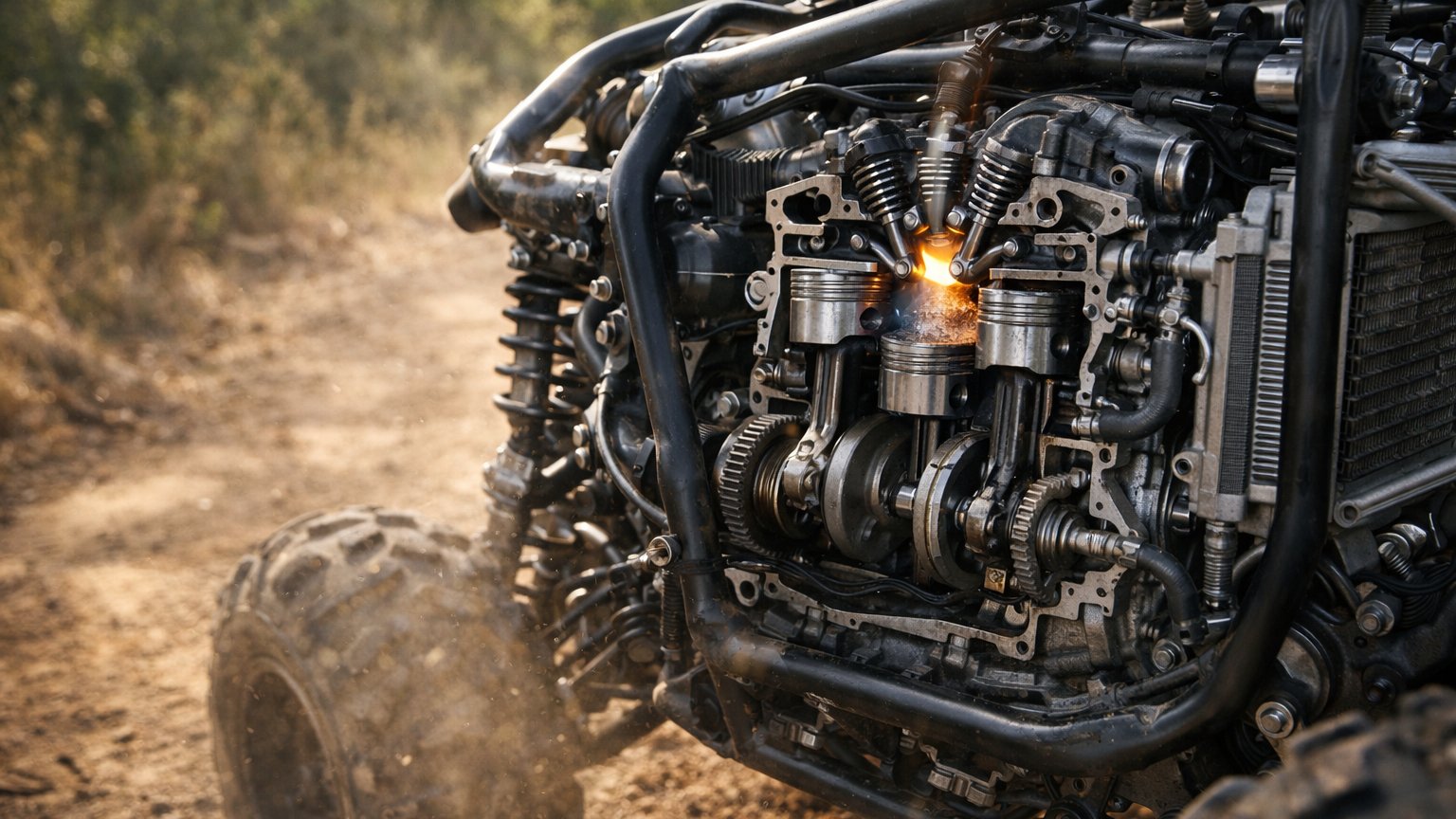
A cylinder is the chamber where combustion takes place. Inside it, a piston moves up and down as the engine pulls in air and fuel, compresses the mixture, ignites it, and expels exhaust. Each time that sequence happens, the engine creates force that is transferred through the connecting rod to the crankshaft, turning combustion into rotational motion.
When an engine has more than one cylinder, it can spread that work across multiple combustion chambers. That changes the rhythm of power delivery. Instead of one large pulse happening at wider intervals, the engine can create more frequent combustion events with smaller individual pulses. This shift affects smoothness, responsiveness, vibration, rev characteristics, and often overall efficiency at certain operating ranges. The question is not simply how many cylinders an engine has, but what that cylinder count allows the engine to do.
Defining Single-Cylinder ATV Engines
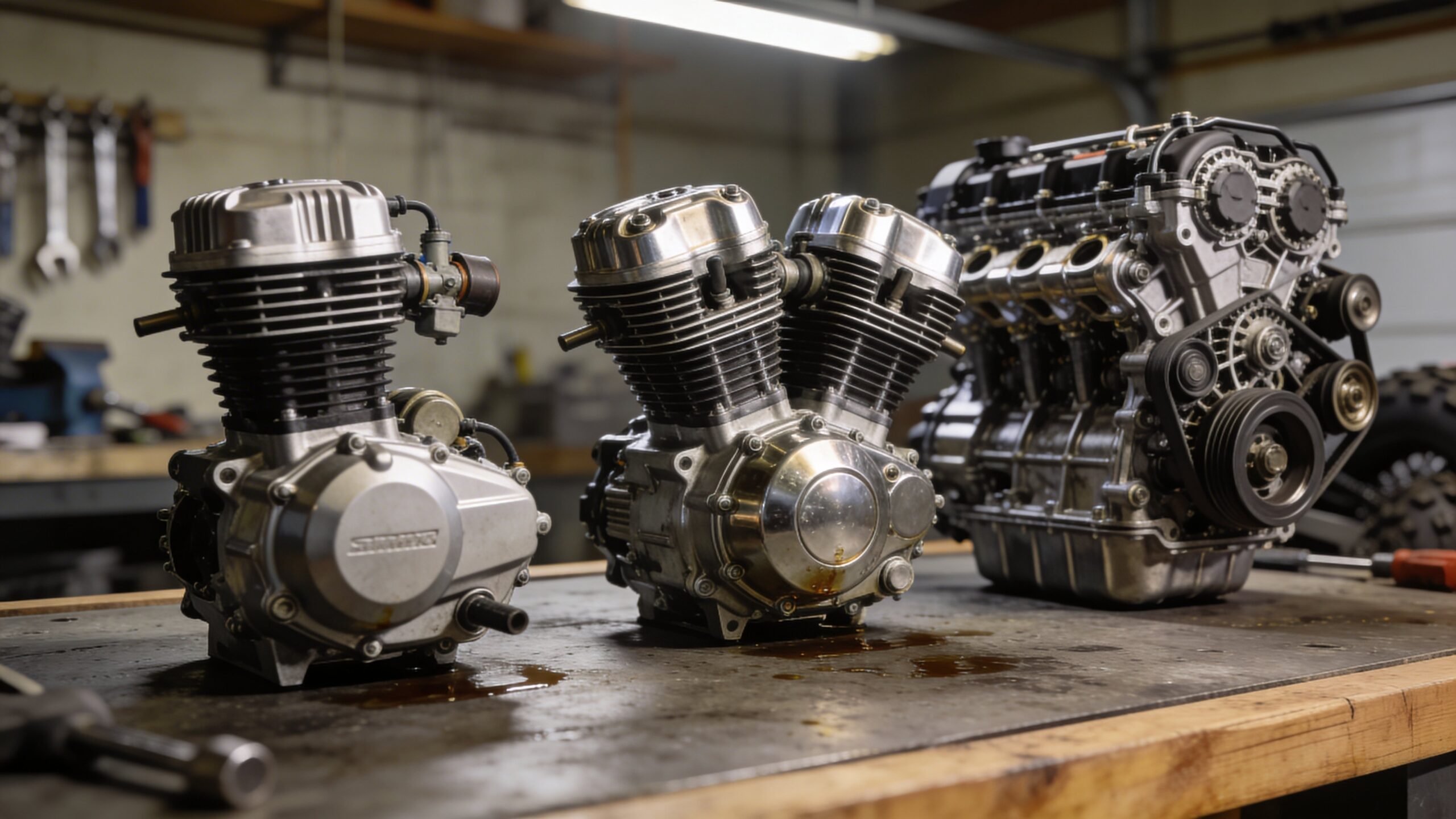
A single-cylinder ATV engine uses one cylinder and one piston to create all of its power. This is the simplest common engine layout in the ATV world, and it has remained important because it offers strong packaging efficiency, lower weight, and fewer moving parts. With only one combustion chamber to manage, the design is compact and mechanically straightforward. That simplicity has clear engineering benefits. Single-cylinder engines are often easier to cool, lighter to install in smaller chassis, and less expensive to manufacture and maintain. They also tend to produce a distinct power character, often emphasizing low-end and midrange torque rather than exceptionally smooth, high-rpm power. This makes them especially well suited to work-focused ATVs, entry-level models, and machines that prioritize traction and controllable response over outright top-end performance.
How Single-Cylinder Engines Deliver Power
Because a single-cylinder engine relies on one large piston, each combustion pulse tends to feel more pronounced. That usually creates a strong, direct connection between throttle input and rear-wheel response, especially at lower engine speeds. In off-road use, that kind of immediate torque can be useful when climbing, pulling loads, or moving through technical terrain where precise traction matters more than speed.
The tradeoff is that a single-cylinder engine usually has more noticeable vibration and less refined power delivery than layouts with more cylinders. The larger reciprocating mass creates stronger inertial forces, and because there are fewer overlapping power events, the engine often feels coarser as rpm rises. These engines can be extremely effective, but their strength lies in simplicity and usable grunt rather than silky, sustained high-speed refinement.
The Core Idea Behind Twin-Cylinder Engines
A twin-cylinder ATV engine uses two cylinders instead of one, allowing the engine to divide displacement and power production across two pistons. This changes the mechanical balance of the engine and usually creates more frequent power strokes. Depending on the layout, twins may be configured in parallel, V-shaped, or horizontally opposed arrangements, though V-twins and parallel twins are the most recognizable in ATV-related applications. The advantage of a twin-cylinder design is that it often bridges the gap between strong real-world torque and improved smoothness. With two cylinders sharing the workload, engineers can reduce the size of each piston, improve breathing characteristics, and create a broader, more refined powerband. A twin does not abandon low-end usability, but it typically feels more composed and more eager to rev than a comparable single-cylinder engine.
How Twin-Cylinder Engines Change the Riding Character
In practical terms, twin-cylinder engines usually produce smoother acceleration, reduced vibration, and a more layered power delivery. Instead of the bold, widely spaced firing feel associated with many singles, twins can provide a steadier flow of power. That matters when an ATV needs to transition cleanly from crawling speeds to faster sections of trail, or when a rider wants a machine that feels less harsh over long sessions.
This added smoothness often makes a twin-cylinder ATV feel more refined and more capable at sustained speed. It can also support larger-displacement applications without becoming as mechanically abrupt as a very large single. The cost of that improvement is usually added size, weight, complexity, and manufacturing expense. Still, for many machines, a twin offers one of the most balanced solutions in engine architecture.
Understanding Multi-Cylinder ATV Engines
A multi-cylinder engine, in this context, refers to engines with more than two cylinders. In broader powersports engineering, this category can include inline-three, inline-four, or other more complex configurations. These layouts are less common in mainstream ATV applications than single or twin-cylinder designs, but they represent an important engineering direction because they demonstrate what happens when refinement, rev potential, and power density are pushed further. By spreading displacement across three or more cylinders, engineers can use smaller pistons, lighter reciprocating masses, and more frequent combustion events. This often allows the engine to run smoother, rev higher, and produce power in a more continuous fashion. Multi-cylinder designs can create impressive responsiveness and strong top-end output, but they also demand more space, more cooling attention, and more intricate packaging within the chassis.
Why Multi-Cylinder Engines Feel Different
The most noticeable characteristic of a multi-cylinder engine is smoothness. With more cylinders firing in sequence, the gaps between power strokes become shorter, which creates a more continuous flow of torque. The engine often feels less lumpy and less mechanically abrupt, especially as speed climbs. This smoothness can improve rider comfort and give the ATV a more sophisticated power character.
Another major difference is rev behavior. Multi-cylinder engines often build power with a freer, more progressive feel at higher rpm. That makes them appealing in performance-focused contexts where rapid acceleration and upper-range power matter. The downside is that the engine may feel less immediate at very low rpm compared with a torque-heavy single, and the overall vehicle package may become heavier, more complex, and more expensive to engineer.
Torque Delivery Across Different Cylinder Counts
Torque is one of the most important performance qualities in an ATV because off-road riding often rewards controllable force rather than absolute speed. Single-cylinder engines are typically associated with strong low-rpm torque and a very direct response. Their large piston displacement per cylinder tends to create bold combustion pulses that feel substantial at slow and moderate speeds. Twin-cylinder engines often broaden that torque delivery. Instead of concentrating the engine’s personality at the bottom of the rev range, they can produce useful low-end force while also extending stronger performance into the midrange and upper range. Multi-cylinder engines may deliver torque in a smoother and more progressive way, but depending on tuning, they can shift the sensation of urgency upward in the rev band. This is why engine type matters so much in real use: it changes not only how much force is available, but where and how that force arrives.
Smoothness, Vibration, and Mechanical Balance
Vibration is one of the clearest differences between these engine types. A single-cylinder engine has the hardest time achieving natural smoothness because one piston creates strong reciprocating forces with fewer opportunities to cancel them. Balance shafts and engine mounts can reduce the effect, but the fundamental rhythm remains more pronounced.
Twin-cylinder engines often improve this substantially, particularly when crankshaft design and firing order are tuned for balance. Multi-cylinder engines can go further still, since the motion of multiple pistons and more frequent firing events help smooth the engine’s overall operation. Less vibration is not only a comfort advantage. It can also reduce fatigue, improve perceived refinement, and lessen the stress transferred through the chassis and surrounding components.
Size, Packaging, and ATV Chassis Design
Engine size is not measured only by displacement. Physical packaging matters just as much. A single-cylinder engine is often compact and easier to position within a small or narrow ATV frame. That helps with weight distribution, service access, and cooling airflow, and it can allow designers to keep the machine lighter and simpler. As cylinder count rises, packaging becomes more demanding. A twin-cylinder engine generally requires more width or length, more intake and exhaust routing, and more support for cooling and structural mounting. Multi-cylinder layouts increase those demands further. This affects chassis geometry, center of gravity, and even bodywork proportions. Engine choice therefore influences not just how the machine runs, but how it is built from the ground up.
Cooling Demands and Thermal Management
Every engine creates heat, but cylinder count affects how that heat is generated and managed. A single-cylinder engine concentrates combustion in one main chamber, which can create significant localized heat loads, especially in large-displacement configurations. However, the overall system is simpler, which can make cooling easier to design in certain cases.
Twin and multi-cylinder engines distribute combustion across more chambers, but they also create more total surface area, more components, and more thermal complexity. Cooling passages, radiator sizing, and airflow management often become more critical as engines grow in sophistication. High-performance multi-cylinder designs in particular depend on careful thermal control to maintain durability and stable output over a wide operating range.
Weight, Complexity, and Maintenance Implications
One reason single-cylinder engines remain so relevant is that they offer clear mechanical efficiency in the broader sense of design. Fewer cylinders mean fewer pistons, rods, valves, spark plugs, and related moving parts. That typically lowers overall engine weight and reduces complexity in both manufacturing and servicing. Twin and multi-cylinder engines add components and precision requirements. More cylinders mean more valvetrain parts, more intake and exhaust routing, and often more complex tuning and diagnostics. This does not automatically make them unreliable, but it does mean there is more engineering involved and often more to inspect, cool, and maintain. The benefits in performance and refinement are real, but they come with structural and service implications that should not be ignored.
Which Engine Type Fits Utility ATVs Best
Utility ATVs usually prioritize traction, dependability, manageable power, and strong real-world torque. In that environment, single-cylinder engines often make excellent sense. Their straightforward design, compact footprint, and low-rpm pulling character align well with machines expected to work in mud, climb under load, or move slowly through uneven terrain.
Twin-cylinder engines can also fit utility roles, especially when added smoothness and broader power delivery are desired. In larger or more premium utility machines, a twin may offer a more refined experience without sacrificing practical performance. Multi-cylinder engines are generally less central to this category because their benefits often exceed what most work-focused ATV platforms actually need.
Which Engine Type Fits Sport and Performance ATVs Best
Performance-oriented ATVs usually place greater value on responsiveness, higher-rpm power, and smooth acceleration under aggressive riding. That tends to favor twin-cylinder and, in more specialized contexts, multi-cylinder designs. A twin can deliver a versatile blend of punch and refinement, making it a strong fit for riders who want speed without giving up useful torque. Multi-cylinder engines, where used, lean further into the performance side of the equation. Their ability to sustain power smoothly at higher rpm can create a more dramatic and sophisticated top-end character. The tradeoff is that these engines may be less compact and less naturally focused on the low-speed simplicity that makes singles so effective in more utilitarian settings.
Why Manufacturers Do Not Use One Layout for Everything
If one cylinder count were ideal in every respect, ATV engineering would have converged around it long ago. Instead, manufacturers continue using different layouts because each architecture solves a different design problem. A single-cylinder engine offers simplicity, compactness, and strong usable torque. A twin expands refinement and broadens the powerband. A multi-cylinder design pushes smoothness and top-end performance further.
The correct choice depends on the intended machine, target rider, cost structure, chassis dimensions, and performance priorities. Engineering is often about selecting the most effective compromise rather than chasing a single absolute best answer. Cylinder count is a clear example of that principle in action. The design that works beautifully in a compact utility ATV may be the wrong solution for a machine built around speed and sustained high-output riding.
The Best Way to Understand Cylinder Count
The easiest way to interpret engine types is to stop thinking about cylinder count as a prestige marker and start seeing it as a design tool. More cylinders do not automatically mean a better engine, and fewer cylinders do not mean an outdated one. Each layout carries a different mechanical rhythm, balance strategy, and power personality. Single-cylinder engines excel when directness, simplicity, and low-speed effectiveness matter most. Twins succeed when a machine needs more refinement and a broader, smoother power delivery. Multi-cylinder engines shine when the goal moves toward high-rpm smoothness, dense performance, and advanced engineering sophistication. Once those roles become clear, ATV engine design becomes much easier to understand.
Final Thoughts on Single vs Twin vs Multi-Cylinder ATV Engines
ATV engine types are not just variations in complexity. They are fundamentally different approaches to producing power. A single-cylinder engine concentrates force into a simple, compact package that often feels immediate and useful in demanding terrain. A twin-cylinder engine distributes that work more smoothly, creating a more balanced and refined power character. A multi-cylinder engine takes the process further, emphasizing continuous power delivery, rev potential, and mechanical sophistication.
For beginners, the most important takeaway is that cylinder count shapes the engine’s personality as much as displacement does. For more advanced readers, the deeper lesson is that cylinder architecture influences nearly every engineering outcome, from thermal management and vibration control to packaging and ride character. Whether the goal is utility, versatility, or performance, the number of cylinders remains one of the clearest signals of what an ATV engine is designed to do.