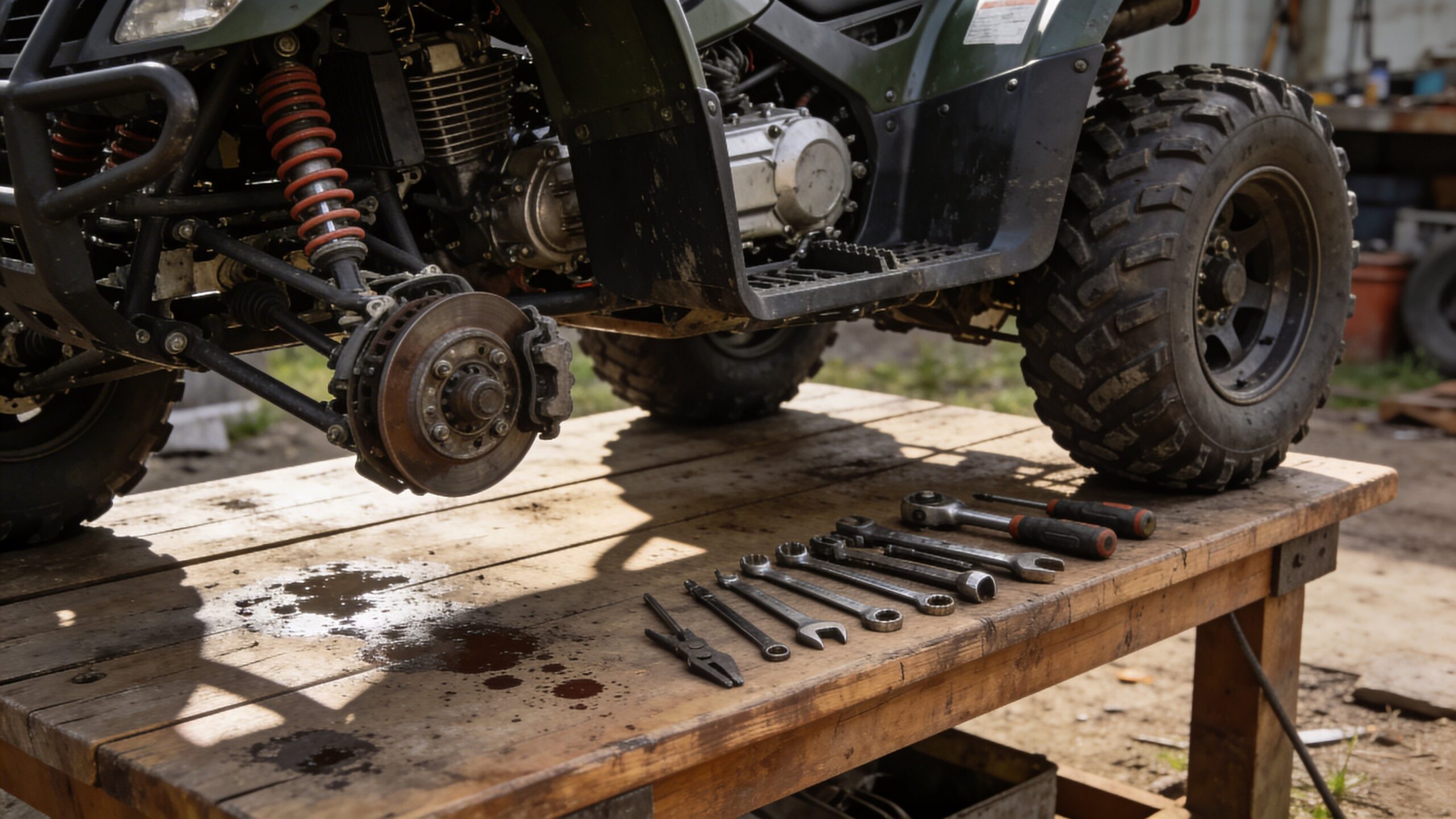
Why Routine ATV Maintenance Matters More Than You Think
Owning an ATV is about freedom, capability, and reliability—but none of those qualities last without consistent care. Every ride introduces wear, whether from dust clogging filters, water stressing electrical components, or vibration loosening hardware. A structured ATV maintenance checklist ensures small issues never grow into expensive failures, preserving both performance and safety. Routine maintenance is not just about preventing breakdowns—it directly impacts how your ATV feels on every ride. Smooth throttle response, consistent braking, and stable handling all depend on systems that are clean, lubricated, and properly adjusted. When maintenance becomes a habit rather than a reaction, your ATV transforms from a machine you worry about into one you trust completely.
A: Follow the manual and inspect sooner after harsh riding.
A: A new feel, sound, smell, leak, heat issue, or warning light.
A: Yes. Mud adds grit, moisture, heat, and hidden wear.
A: No. Restore the baseline first, then decide if upgrades are useful.
A: Yes, especially after water, rocks, towing, heat, or heavy loads.
A: Dates, hours, parts, fluids, settings, and symptoms are all useful.
A: Use caution on safety, sealing, steering, suspension, brake, and drivetrain parts.
A: Working does not mean healthy; inspect when symptoms change.
A: Get help for uncertain brakes, steering, wiring, fuel leaks, or structural issues.
A: Inspect early, fix small problems, and test before riding remote terrain.
Understanding Maintenance Intervals: Time, Hours, and Conditions
ATV maintenance schedules are built around two key factors: time and usage. Some tasks are best performed after a certain number of riding hours, while others depend on environmental exposure. A machine used for light trail riding requires a different maintenance rhythm than one working daily in mud, sand, or heavy loads.
The most effective approach blends both methods. Hour-based maintenance ensures internal systems like oil and filters are serviced on time, while condition-based checks respond to real-world wear. Riding in extreme environments accelerates maintenance needs, making post-ride inspections just as critical as scheduled service intervals.
Pre-Ride Inspection: Your First Line of Defense
Before every ride, a quick inspection can prevent the majority of trail-side problems. This is not about deep maintenance but about spotting early warning signs. Tire pressure, brake responsiveness, and fluid levels should always be checked before turning the key. A pre-ride check also builds familiarity with your ATV. Subtle changes—like unusual vibrations or slightly reduced braking power—are easier to detect when you regularly observe your machine. This awareness is one of the most powerful tools in preventing unexpected failures.
After Every Ride: Cleaning and Immediate Care
Post-ride maintenance is where many ATV owners fall short, yet it is one of the most important steps in long-term care. Dirt, mud, and debris trap moisture and accelerate wear on critical components like chains, bearings, and seals. Cleaning your ATV after each ride is not just about appearance—it is essential protection.
Drying and inspecting the machine after cleaning helps identify damage early. Water intrusion, loose bolts, or worn components often reveal themselves during this stage. Addressing these issues immediately prevents them from escalating into larger mechanical problems.
Weekly Maintenance: Keeping Systems in Balance
Weekly maintenance focuses on maintaining system integrity rather than fixing problems. This includes checking lubrication points, inspecting cables, and ensuring moving parts operate smoothly. Components like the chain, throttle cables, and suspension linkages benefit greatly from consistent attention. This level of maintenance keeps your ATV predictable and responsive. When systems are properly lubricated and adjusted, wear is distributed evenly, extending the life of expensive components. Weekly care acts as a bridge between daily checks and deeper service intervals.
Monthly Maintenance: Deeper System Checks
Monthly maintenance shifts the focus toward internal systems and long-term reliability. Oil condition, air filter cleanliness, and brake wear should all be evaluated at this stage. These components directly influence engine performance and safety, making them critical to monitor.
This is also the time to inspect structural elements such as the frame, mounts, and suspension components. Small cracks, loosened fasteners, or early signs of wear can be addressed before they compromise the machine. Monthly checks provide a comprehensive snapshot of your ATV’s overall health.
Seasonal Maintenance: Preparing for Changing Conditions
Seasonal transitions bring new challenges that require specific preparation. Cold weather affects battery performance and fluid viscosity, while summer heat increases stress on cooling systems. Adjusting your maintenance routine to match the season ensures consistent performance year-round. Storage periods also require special attention. Preparing your ATV for downtime involves stabilizing fuel, protecting internal components, and preventing corrosion. Proper seasonal maintenance ensures your ATV is ready to perform immediately when the next riding season begins.
Engine and Oil Maintenance: The Core of Longevity
The engine is the heart of your ATV, and its longevity depends heavily on proper oil maintenance. Regular oil changes remove contaminants that would otherwise cause internal wear. Clean oil ensures smooth operation, efficient cooling, and optimal performance.
Monitoring oil levels and condition between changes is equally important. Changes in color, consistency, or smell can indicate underlying issues. Staying attentive to these signals allows you to address problems early, protecting the most valuable component of your ATV.
Air Intake and Filtration: Protecting Internal Systems
Air filters play a critical role in preventing dirt and debris from entering the engine. In dusty or sandy environments, filters can become clogged quickly, reducing airflow and performance. Regular cleaning and replacement are essential for maintaining engine efficiency. A clean intake system also improves fuel combustion and reduces strain on internal components. Neglecting this area can lead to reduced power and increased wear. Proper filtration is one of the simplest yet most impactful aspects of ATV maintenance.
Drivetrain and Chain Care: Maintaining Power Transfer
The drivetrain is responsible for transferring engine power to the wheels, making its maintenance essential for performance. Chains, belts, and gears require regular inspection and lubrication to function properly. Neglecting these components can lead to uneven wear and potential failure.
Keeping the drivetrain clean and properly tensioned ensures smooth power delivery. This not only improves ride quality but also reduces stress on the engine. A well-maintained drivetrain contributes to both efficiency and longevity.
Brakes and Safety Systems: Non-Negotiable Maintenance
Brakes are one of the most critical safety systems on any ATV. Regular inspection of pads, rotors, and fluid levels ensures reliable stopping power. Even minor issues in the braking system can have serious consequences, especially in off-road environments. Maintaining brake performance requires both visual inspection and functional testing. Ensuring consistent responsiveness and addressing any irregularities immediately is essential for safe operation. This is one area where maintenance should never be delayed.
Electrical System and Battery: Ensuring Reliability
Modern ATVs rely on electrical systems for ignition, lighting, and diagnostics. The battery and wiring must be kept in good condition to ensure reliable operation. Corrosion, loose connections, or weak batteries can lead to unexpected failures.
Regular inspection of electrical components helps prevent these issues. Keeping connections clean and ensuring the battery is properly charged extends the life of the system. Reliable electrical performance is essential for both convenience and safety.
Suspension and Handling: Maintaining Ride Quality
Suspension components play a key role in how your ATV handles terrain. Regular inspection of shocks, springs, and linkages ensures stability and comfort. Worn suspension not only reduces ride quality but also increases stress on other components. Proper maintenance of suspension systems improves control and reduces fatigue during long rides. Keeping these components in optimal condition enhances both performance and safety, making every ride more enjoyable.
Tires and Wheels: The Foundation of Every Ride
Tires are the only point of contact between your ATV and the terrain, making their condition critical. Regularly checking tire pressure, tread wear, and alignment ensures optimal traction and stability. Uneven wear can indicate underlying issues that need attention.
Maintaining proper tire condition improves handling, fuel efficiency, and safety. Wheels and bearings should also be inspected to ensure smooth rotation and prevent unexpected failures. Strong tire and wheel maintenance forms the foundation of a reliable ATV.
Building a Maintenance Routine That Works
The most effective ATV maintenance checklist is one that fits seamlessly into your routine. Consistency is more important than complexity. By integrating maintenance into your riding habits, you ensure tasks are completed regularly without becoming overwhelming. Creating a structured schedule tailored to your riding style and conditions makes maintenance manageable and effective. Over time, this routine becomes second nature, allowing you to focus on the ride while knowing your ATV is always ready for the next adventure.