Understanding the Purpose of an ATV Engine
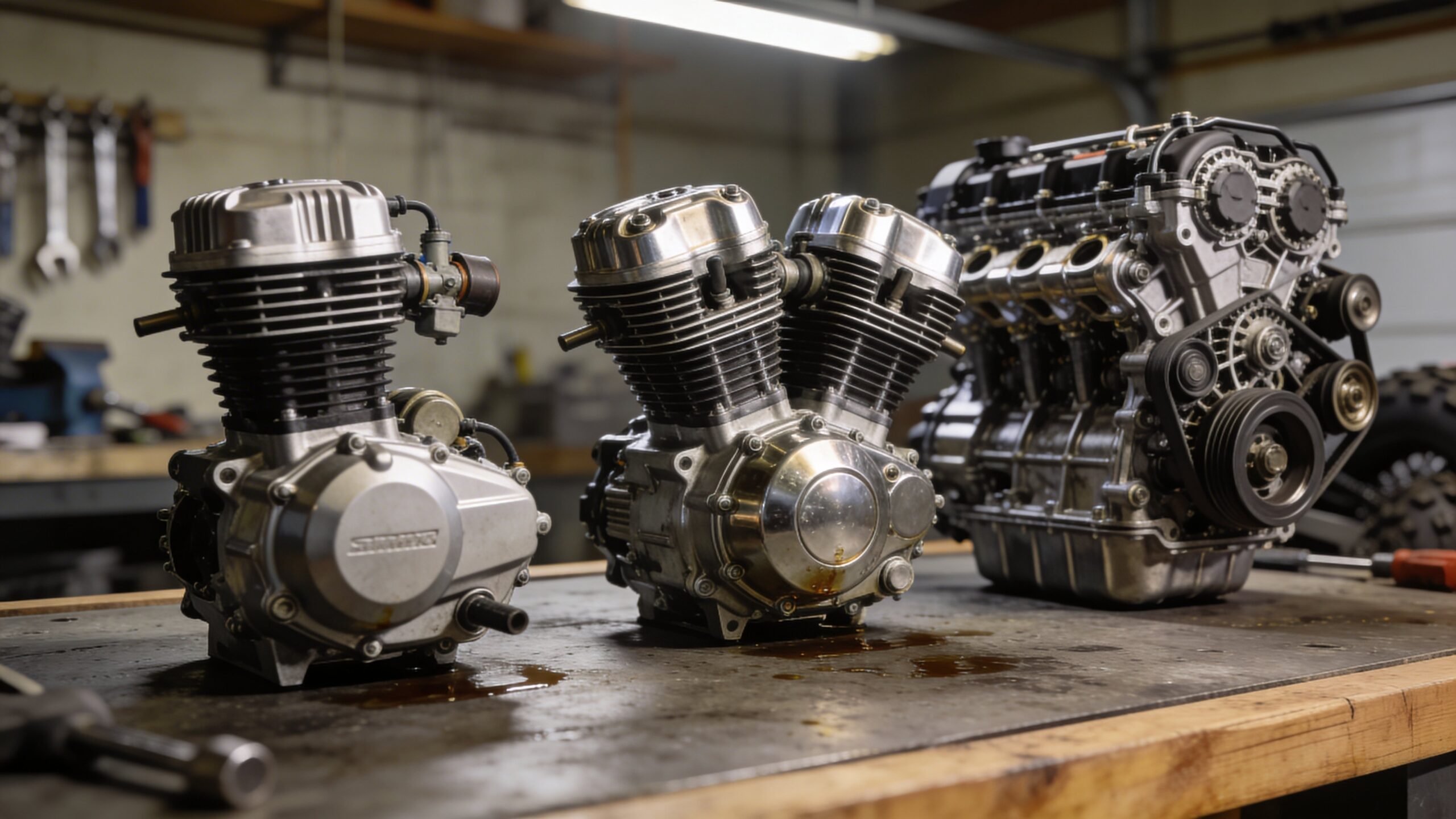
At its core, an ATV engine exists to convert stored chemical energy into controlled mechanical motion. Fuel carries energy in a dense form, and the engine’s job is to release that energy in a precise, repeatable way. This transformation happens through combustion, where fuel and air ignite inside a confined space, generating pressure that moves internal components. Unlike simpler mechanical systems, an ATV engine must balance multiple priorities simultaneously. It must produce usable torque for uneven terrain, maintain reliability under dust and heat, and deliver consistent power across varying speeds. This combination of demands shapes every aspect of its design, from cylinder layout to cooling strategy.
A: Follow the manual and inspect sooner after harsh riding.
A: A new feel, sound, smell, leak, heat issue, or warning light.
A: Yes. Mud adds grit, moisture, heat, and hidden wear.
A: No. Restore the baseline first, then decide if upgrades are useful.
A: Yes, especially after water, rocks, towing, heat, or heavy loads.
A: Dates, hours, parts, fluids, settings, and symptoms are all useful.
A: Use caution on safety, sealing, steering, suspension, brake, and drivetrain parts.
A: Working does not mean healthy; inspect when symptoms change.
A: Get help for uncertain brakes, steering, wiring, fuel leaks, or structural issues.
A: Inspect early, fix small problems, and test before riding remote terrain.
The Four-Stroke Combustion Cycle Explained
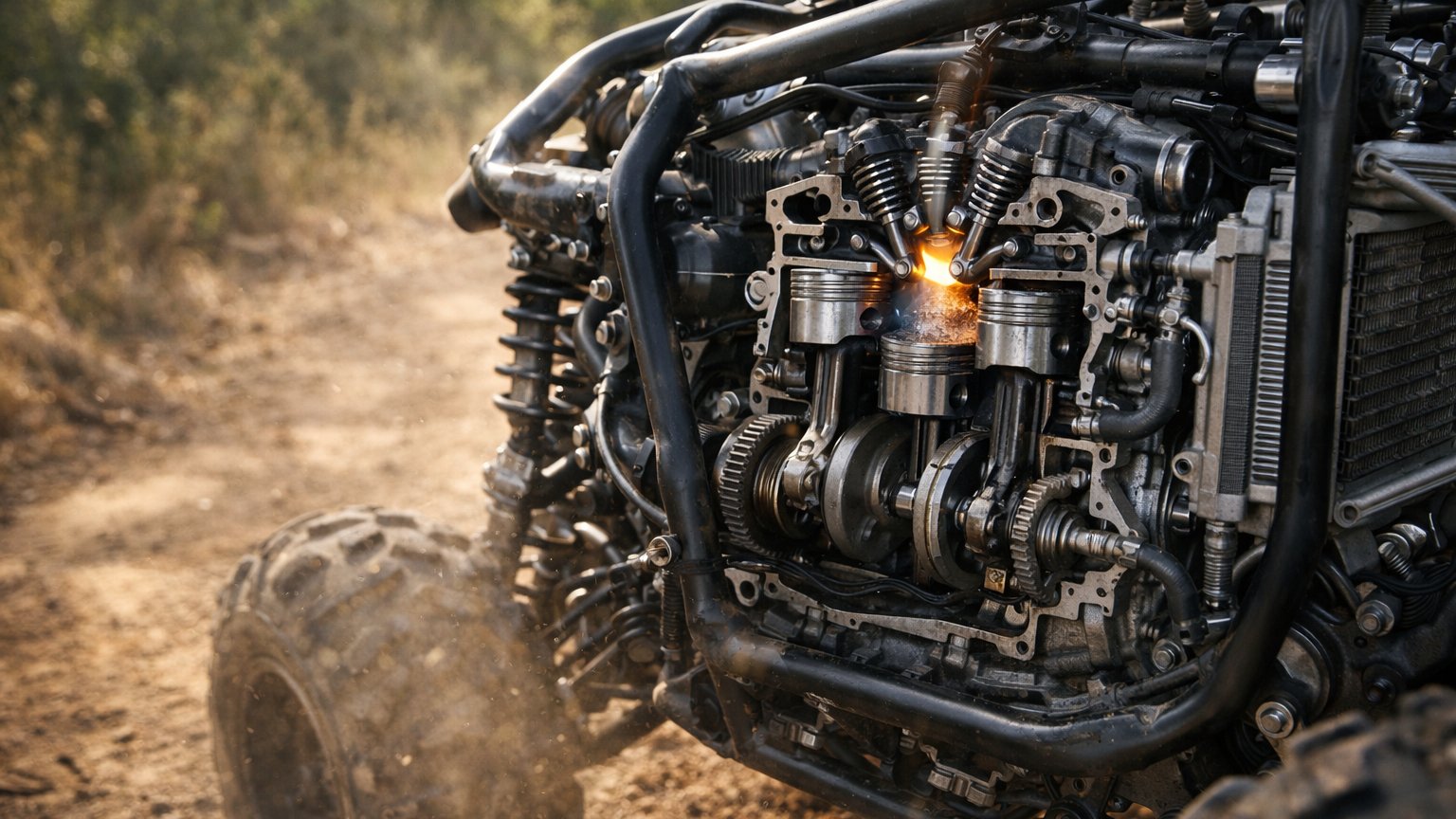
Most modern ATV engines operate on a four-stroke cycle, a repeating sequence that converts fuel into motion. The cycle consists of intake, compression, combustion, and exhaust, each playing a distinct role in energy conversion. During intake, a mixture of air and fuel enters the cylinder. Compression follows, squeezing this mixture to increase its energy potential.
The ignition phase triggers combustion, rapidly expanding gases that push the piston downward. This downward motion becomes rotational force through the crankshaft. Finally, the exhaust stroke clears out spent gases, preparing the system to repeat the cycle. This continuous loop is what sustains engine operation and produces consistent power output.
Key Components That Drive Motion
An ATV engine is built around a coordinated set of mechanical parts that translate combustion into rotation. The piston moves up and down within the cylinder, driven by expanding gases. This motion is transferred through the connecting rod to the crankshaft, which converts linear motion into rotational energy. Supporting systems ensure that this motion remains stable and controlled. Bearings reduce friction, while the engine block provides structural rigidity. The cylinder head houses valves and passages that regulate airflow, ensuring that combustion occurs efficiently and predictably across every cycle.
Air and Fuel: The Foundation of Combustion
The quality of combustion depends heavily on the mixture of air and fuel entering the engine. Air supplies oxygen, while fuel provides the energy source. The ratio between these two elements must be carefully controlled to achieve efficient combustion without excessive heat or incomplete burning.
Modern ATV engines often use fuel injection systems to manage this balance with precision. Sensors monitor conditions such as temperature and airflow, allowing the system to adjust fuel delivery in real time. This ensures consistent performance across different altitudes, temperatures, and riding conditions.
Ignition and Timing Control
Ignition is the moment where potential energy becomes kinetic force. A spark plug ignites the compressed air-fuel mixture at a carefully timed point in the engine cycle. This timing is critical, as early or late ignition can reduce efficiency or cause mechanical stress. Advanced systems use electronic control units to optimize ignition timing dynamically. By adjusting spark timing based on engine speed and load, the system maintains smooth operation and prevents issues such as detonation. This precise control is a defining feature of modern ATV engine design.
Managing Heat in Harsh Environments
Combustion generates significant heat, and without proper management, that heat can damage internal components. ATV engines use cooling systems to regulate temperature and maintain stable operation. Air-cooled designs rely on airflow across fins, while liquid-cooled systems circulate coolant through internal passages.
The choice of cooling method reflects the intended use of the ATV. High-performance or heavy-duty models often use liquid cooling for greater temperature control, while simpler designs may rely on air cooling for reduced complexity. In both cases, managing heat is essential for durability and consistent performance.
Lubrication and Friction Reduction
As internal components move rapidly against each other, friction becomes a major concern. Lubrication systems distribute oil throughout the engine, forming a protective layer between moving parts. This reduces wear, dissipates heat, and ensures smooth operation under load. Oil pathways are carefully engineered to reach critical areas such as bearings, pistons, and camshafts. The effectiveness of this system directly impacts engine longevity, making lubrication one of the most important aspects of engine architecture.
Valvetrain Systems and Airflow Control
The valvetrain regulates the flow of air and exhaust gases into and out of the engine. Valves open and close in precise synchronization with the piston’s movement, ensuring that each phase of the combustion cycle occurs at the correct time.
Different valvetrain configurations, such as single overhead cam and dual overhead cam systems, influence how efficiently the engine breathes. Improved airflow allows for more complete combustion, increasing both power and efficiency. This makes valvetrain design a key factor in overall engine performance.
Engine Displacement and Power Output
Engine displacement, often measured in cubic centimeters, represents the total volume of all cylinders combined. Larger displacement engines can process more air and fuel per cycle, typically resulting in greater power output. However, displacement alone does not determine performance. Other factors, such as compression ratio and airflow efficiency, play equally important roles. A well-designed smaller engine can outperform a larger one if its internal systems are optimized. Understanding displacement in context is essential for evaluating engine capability.
Torque vs Horsepower in Real Riding Conditions
Torque and horsepower describe different aspects of engine performance. Torque represents the twisting force produced by the engine, while horsepower reflects how quickly that force can be applied over time. In ATV applications, torque is particularly important for climbing, towing, and navigating rough terrain.
Horsepower becomes more relevant at higher speeds, where sustained power output determines acceleration and top-end performance. The balance between these two characteristics is shaped by engine design, including stroke length and airflow dynamics.
The Role of the Crankshaft and Rotational Energy
The crankshaft is the central component that converts piston motion into usable rotational energy. As the piston moves downward during combustion, the crankshaft rotates, transferring energy to the drivetrain. This rotation is what ultimately drives the wheels. Crankshaft design influences how smoothly the engine operates. Heavier crankshafts can improve stability, while lighter designs allow for quicker acceleration. The balance between these characteristics depends on the intended use of the ATV.
Fuel Delivery Systems: Carburetors vs Injection
Older ATV engines often rely on carburetors, which use pressure differences to mix air and fuel. While simple and effective, carburetors are less precise than modern systems. Fuel injection, by contrast, uses electronic controls to deliver exact amounts of fuel based on real-time conditions.
This precision improves efficiency, reduces emissions, and enhances throttle response. As a result, fuel injection has become the standard in modern ATV engine design, offering greater adaptability across different environments.
Exhaust Systems and Gas Flow Dynamics
After combustion, exhaust gases must be expelled efficiently to make room for the next cycle. The exhaust system manages this process, guiding gases out of the engine while minimizing resistance. Proper exhaust flow improves engine efficiency and prevents performance losses. The design of exhaust pathways also influences sound and heat distribution. By optimizing these pathways, engineers can enhance both performance and durability without compromising reliability.
Engine Balance and Vibration Control
As internal components move rapidly, they generate forces that can cause vibration. Engine balance systems counteract these forces, improving comfort and reducing mechanical stress. Techniques such as counterweights and balance shafts are commonly used to achieve this stability.
Reducing vibration is not only about rider comfort. It also protects internal components from long-term wear, contributing to the overall longevity of the engine.
Materials and Structural Design
Modern ATV engines use a combination of materials chosen for strength, weight, and heat resistance. Aluminum alloys are commonly used for engine blocks due to their balance of durability and lightweight properties. Steel components provide strength in high-stress areas such as crankshafts and connecting rods. Advancements in coatings and surface treatments further enhance performance. These technologies reduce friction, improve heat resistance, and extend component life, reflecting the continuous evolution of engine design.
How Engine Design Shapes Riding Experience
The architecture of an ATV engine directly influences how it feels to ride. Engines designed for high torque deliver strong low-speed performance, ideal for technical terrain. High-revving designs prioritize speed and responsiveness, offering a different kind of riding experience.
These characteristics are not accidental. They are the result of deliberate design choices involving stroke length, airflow, and rotational mass. Understanding these factors provides insight into why different ATVs behave the way they do.
Advanced Concepts: Efficiency and Optimization
At a deeper level, engine design focuses on maximizing efficiency while minimizing losses. Concepts such as volumetric efficiency describe how effectively the engine fills its cylinders with air. Higher efficiency leads to better combustion and improved performance. Engineers also analyze factors such as thermal efficiency and friction losses. By refining these elements, modern ATV engines achieve higher performance without sacrificing reliability, demonstrating the sophistication of contemporary engineering.
The Evolution of ATV Engine Technology
ATV engines have evolved significantly over time, moving from simple mechanical systems to highly controlled, sensor-driven designs. Advances in materials, electronics, and manufacturing have allowed for greater precision and consistency.
This evolution reflects a broader trend in engineering, where data and control systems play an increasingly important role. Modern engines are not just mechanical devices; they are integrated systems that combine hardware and software to achieve optimal performance.
Bringing It All Together
An ATV engine is a complex system where every component and process works in coordination. From the initial intake of air and fuel to the final rotation of the crankshaft, each stage contributes to the overall function of the machine. Understanding these interactions reveals how energy is transformed into motion. By examining the architecture and design of ATV engines, it becomes clear that performance is not defined by a single factor. Instead, it emerges from the balance of airflow, combustion, heat management, and mechanical precision. This integrated approach is what allows ATV engines to perform reliably across demanding environments.