Forest And Woodland ATV Riding Is About Reading Tight Trails Early
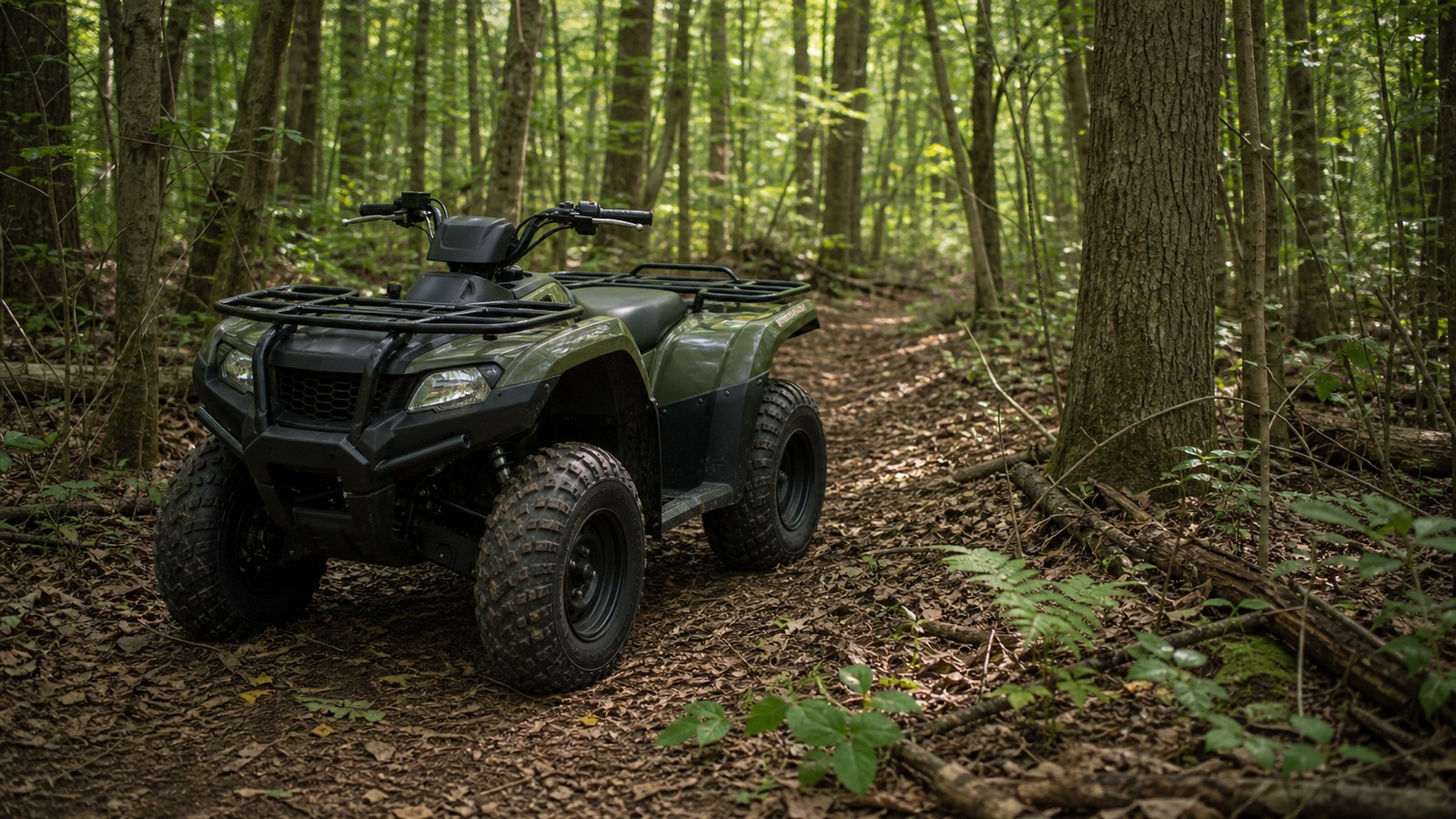
Woodland trails can look calm, but they demand attention. Roots, wet leaves, stumps, narrow turns, blind corners, wildlife, and mixed trail users can appear quickly. A smart forest rider uses controlled speed, smooth throttle, early braking, quiet line choice, and steady group communication. Riding well in the woods means seeing problems before the front tires reach them and leaving the trail in good condition for the next rider.
A: Follow the manual and inspect sooner after harsh riding.
A: A new feel, sound, smell, leak, heat issue, or warning light.
A: Yes. Mud adds grit, moisture, heat, and hidden wear.
A: No. Restore the baseline first, then decide if upgrades are useful.
A: Yes, especially after water, rocks, towing, heat, or heavy loads.
A: Dates, hours, parts, fluids, settings, and symptoms are all useful.
A: Use caution on safety, sealing, steering, suspension, brake, and drivetrain parts.
A: Working does not mean healthy; inspect when symptoms change.
A: Get help for uncertain brakes, steering, wiring, fuel leaks, or structural issues.
A: Inspect early, fix small problems, and test before riding remote terrain.
Ride Within Sight Distance
Forest riding demands speed discipline because sight lines are short. A turn may hide a downed branch, a rider stopped in the trail, a hiker, a rut, or an animal. The rider should always be able to stop within the distance they can see.
This habit matters more than engine size or suspension quality. A fast ATV cannot fix a blind corner. Slowing early keeps the rider from turning every surprise into an emergency.
Reading Roots, Leaves, And Ruts
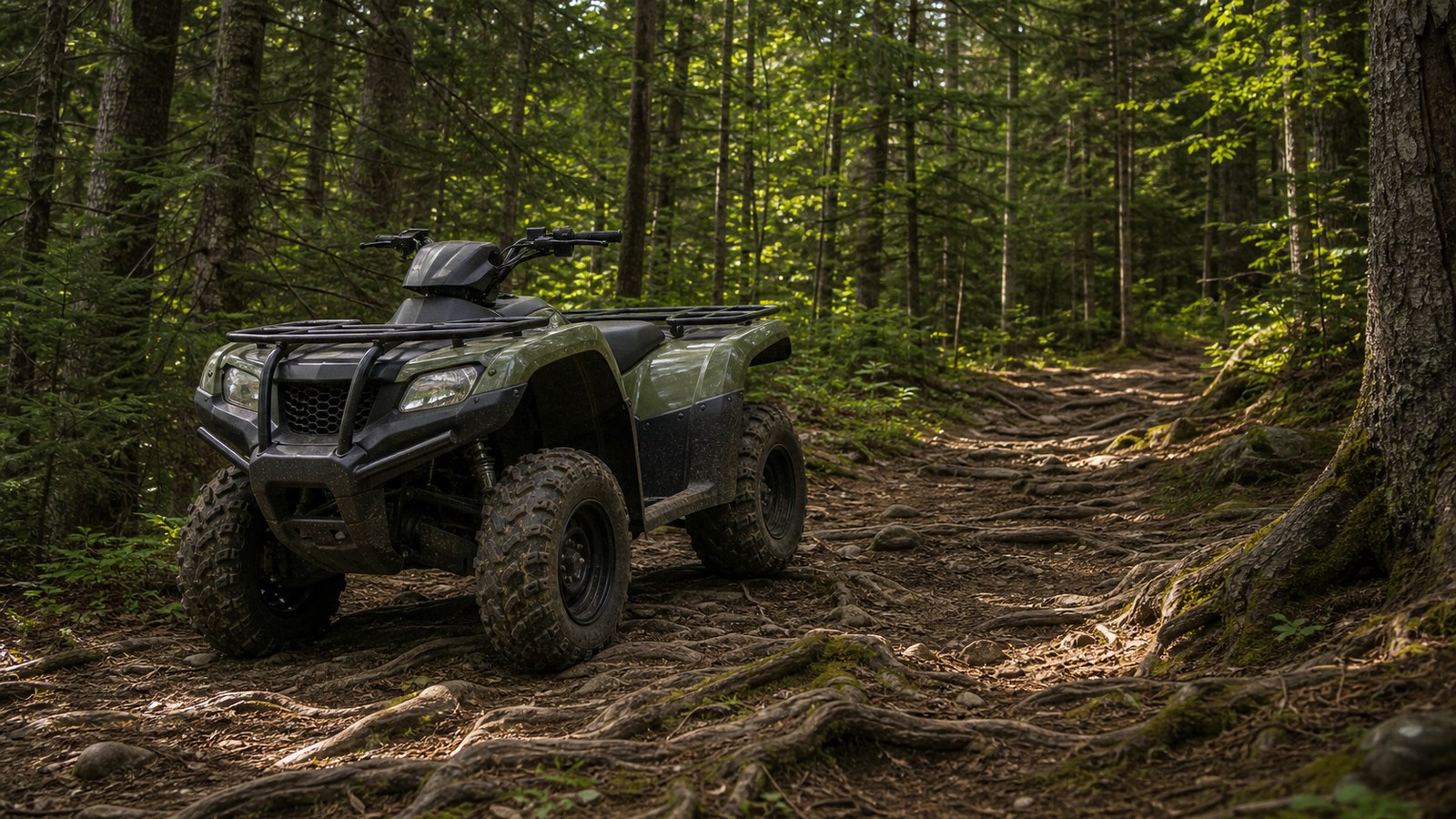
Roots can be slick, especially when wet or angled across the trail. Leaves can hide rocks, holes, ice, and mud. Ruts can steer the ATV even when the bars are pointed elsewhere. The rider should look ahead and choose smooth lines before the front tires are committed.
Standing with bent knees can help over rough roots and small impacts. Smooth throttle keeps tires from spinning and damaging the trail. Braking should happen before the roughest section whenever possible.
Throttle And Braking In Tight Woods
Tight woods reward gentle throttle. Sudden acceleration can push the ATV wide, throw debris, or break traction on roots. Early braking gives the rider time to turn without grabbing the brakes mid-corner. The goal is flow, not speed.
Beginners should practice slow turns and controlled stops before joining faster forest rides. A rider who feels rushed in the woods will look down, react late, and make the ATV feel harder to control.
Climbs, Descents, And Sidehills
Wooded hills often include roots, loose leaves, and narrow lines. Climb with steady throttle and a clear path. Descend slowly with smooth braking and body position. Avoid stopping sideways on steep or slick ground when possible.
Sidehills require patience. The rider should keep movements smooth and avoid sudden steering. If the route feels wrong, stop in a safe place and choose another line rather than forcing the ATV across questionable ground.
Group Riding In Forests
Groups need spacing in the woods. Dust, leaves, and blind turns make tailgating dangerous. Riders should stop at intersections and wait until the next rider knows the route. Radios or hand signals can help, but the basic rule is simple: do not lose the rider behind you.
The pace should fit the least experienced rider. Forest trails can pressure beginners because there is little room to recover. A good group protects newer riders from rushing.
Respecting The Trail
Forest trails are easy to damage when wet. Spinning through soft sections, widening muddy areas, and cutting around obstacles can create erosion and closures. Stay on legal routes and ride through the intended trail when it is safe, or turn around when it is not.
Respect also includes noise and shared use. Slow near homes, camps, horses, hikers, and trail crews. The way riders behave affects whether access remains open.
Wildlife And Other Users
Animals can appear suddenly in wooded areas. So can hikers, bicycles, horses, and other ATVs. The rider should slow in areas with poor visibility and avoid assuming the trail is empty. A quiet, controlled approach gives everyone more time.
When passing others, follow local rules and communicate calmly. Dusting or startling other users creates conflict and risk. Trail courtesy is part of riding skill.
After-Ride Review
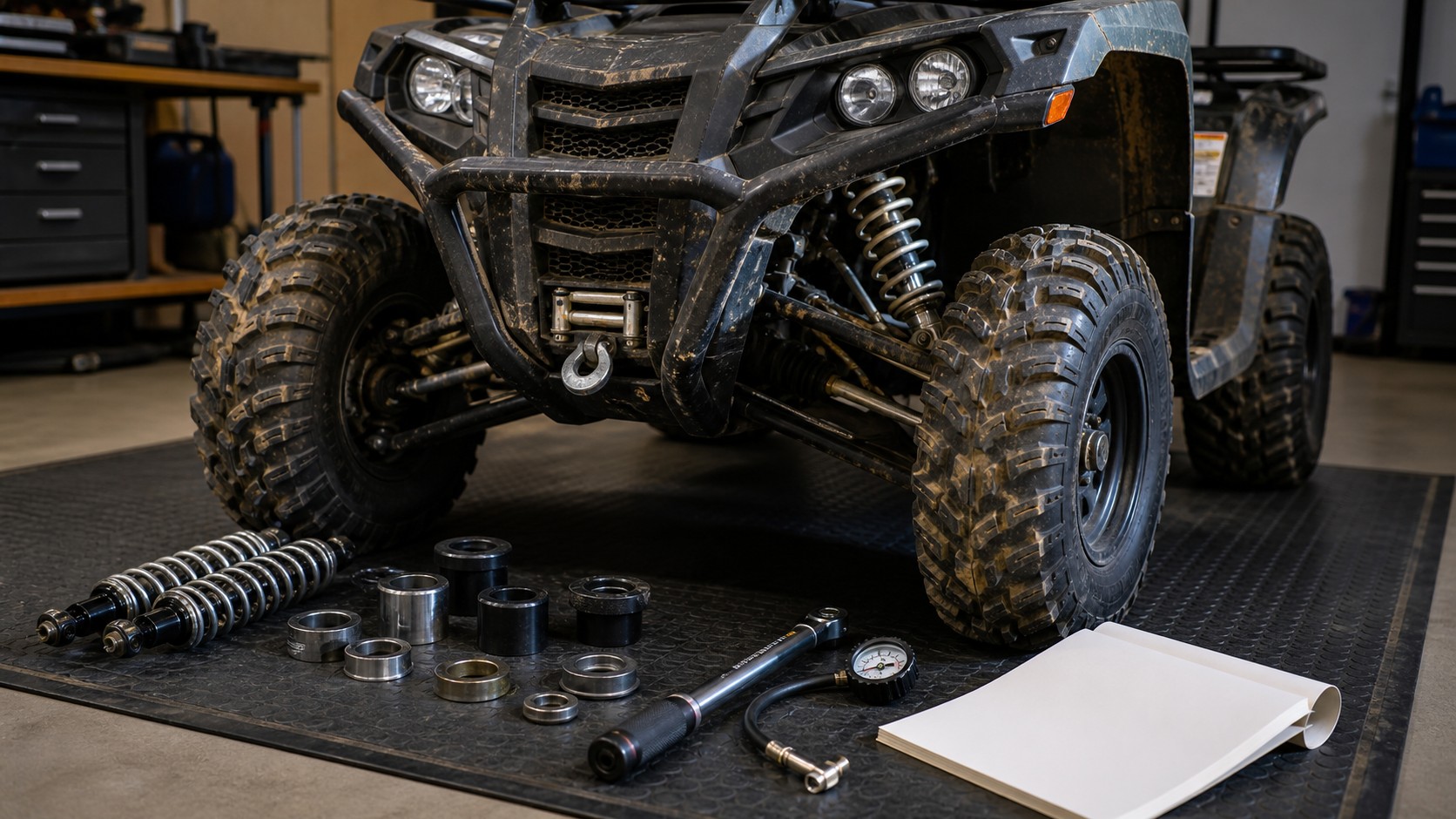
After a woodland ride, inspect for branch damage, tire cuts, mud around brakes, loose racks, and debris near hot parts. Review any moments that felt rushed or uncertain. Those moments show what to practice next.
A short review helps riders improve. Forest riding is full of small decisions, and better habits come from noticing them.
Bottom Line
Forest and woodland ATV riding is about reading the trail early and staying within control. Roots, leaves, ruts, blind turns, and shared users all reward patience.
Ride smoothly, communicate with the group, respect the land, and inspect the machine afterward. That system keeps woods riding enjoyable and sustainable.
FAQ
How fast should I ride in the woods?
Ride slowly enough to stop within the distance you can see.
Are wet leaves dangerous on an ATV?
Yes. Wet leaves can hide slick roots, rocks, holes, and ice.
What is the biggest woodland riding mistake?
Riding too fast for sight distance is one of the biggest mistakes.
Managing Fatigue In The Woods
Forest riding can be tiring because the rider is always making small corrections. Roots, turns, shade, brush, and surface changes keep the rider busy. Fatigue shows up as late braking, target fixation, stiff arms, and sloppy throttle.
Short breaks help. So does reducing speed before the rider feels worn out. A good woodland rider protects attention because attention is what keeps tight trails smooth.
Riding After Rain
After rain, forest trails can change quickly. Roots become slick, leaves mat together, ruts deepen, and puddles hide holes. A section that was easy last week may need a slower line today. Riders should avoid assuming familiarity equals safety.
Wet trail ethics matter too. Spinning through soft ground can damage routes and widen muddy areas. If the trail is too wet to ride without tearing it up, choose another route or another day.
Teaching New Riders In The Woods
New riders should start on wider, simpler woodland trails before tight technical routes. The coach should set a calm pace, stop before intersections, and explain one skill at a time. Looking ahead, braking early, and standing over roots are good first lessons.
A beginner who feels pressured in the woods may chase the rider ahead instead of reading the trail. The group should prevent that. Good forest riding is easier when every rider has space and time.
Final Woodland Riding Standard
Ride the woods at a speed that leaves room for surprise. That single standard protects the rider, the machine, other users, and the trail itself.
The best forest riders are smooth. They do not need to tear through the trail to enjoy it. They read early, move calmly, and leave the route ready for the next person.
How To Build A Woodland Riding Rhythm
A smooth woodland rhythm starts with scanning. Look through the turn, identify roots or ruts, set speed early, and use gentle throttle through the rough section. The rider should avoid waiting until the front tires hit the problem before deciding what to do.
That rhythm also includes listening. Forest trails can hide other users, and engine noise can mask nearby movement. Slowing near blind corners, intersections, camps, and trailheads gives everyone more room. A rider who expects the trail to be shared makes better decisions.
The best pace is one that leaves the rider relaxed enough to keep reading. If every corner feels late, the ATV is moving too fast for the woods. Smoothness is the signal that the pace is right.
What To Do When The Trail Gets Worse
If a trail becomes wetter, narrower, steeper, or more rutted than expected, the rider should pause before pressing ahead. Check whether there is a legal and safe turnaround. Consider the least experienced rider in the group. Look at daylight and weather. A decision made early is usually easier than one made after everyone is tired.
Do not widen muddy sections by riding around them unless the route specifically allows it. If the trail cannot be ridden without damage, turn back. Protecting the trail protects future access and prevents the ATV from being forced into unstable edges.
If the group continues, slow the pace and increase spacing. One rider sliding on roots or stopping in a rut can affect everyone behind them. Communication keeps a difficult section from becoming chaotic.
Final Forest Riding Checklist
Before riding in the woods, set a simple standard: the rider must be able to stop within sight distance. That rule controls speed better than any number. It adjusts naturally for blind corners, dust, shade, leaves, rain, and group traffic. If the trail cannot be seen clearly, the ATV should slow.
During the ride, keep body movement relaxed and early. Stand over roots, brake before turns, look through corners, and avoid sudden throttle on slick ground. If the rider feels rushed, the pace is wrong. Smooth woodland riding should feel attentive, not frantic.
After the ride, think about any close calls. A hidden stump, late stop, slick root, or missed intersection is useful feedback. The next ride should adjust for what the trail taught today.
Practical Woodland Riding Scenarios
If the trail narrows between trees, the rider should slow before entering and keep the bars smooth. Clipping a tree with a tire, handlebar, or cargo box can redirect the ATV suddenly. A controlled pace leaves room to correct.
If leaves cover the trail, assume they may hide roots, rocks, holes, or ice. Ride as though the visible surface is incomplete. Braking earlier and standing lightly over rough sections keeps the ATV calmer.
If a beginner is following, the lead rider should reduce pace and stop at intersections. The goal is not to prove how fast the route can be ridden. The goal is to keep the group together and let the newer rider learn the trail.
If a muddy section is getting wider because riders go around it, pause and choose the responsible option. Sometimes that means riding the intended line slowly. Sometimes it means turning back. Protecting the trail is part of riding well.
A final woodland habit is simple: leave enough room for what you cannot see yet. That single idea improves speed choice, group spacing, braking, and respect for other trail users.
It also keeps the rider from turning every blind corner into a reaction test. Forest trails are most enjoyable when the ATV is moving smoothly enough for the rider to notice roots, wildlife, intersections, and surface changes before they become urgent.