ATV Suspension Service Timing Depends On Terrain, Load, Wear, And Ride Feel
ATV owners should handle suspension setup and service whenever ride feel changes, after hard impacts, before heavy seasonal use, and at the intervals recommended in the manual. Mud, rocks, racing, towing, plowing, and heavy cargo shorten the timeline. Tires, bushings, shocks, alignment, and steering parts should be inspected regularly because suspension problems affect control.
A: Follow the manual and inspect sooner after harsh riding.
A: A new feel, sound, smell, leak, heat issue, or warning light.
A: Yes. Mud adds grit, moisture, heat, and hidden wear.
A: No. Restore the baseline first, then decide if upgrades are useful.
A: Yes, especially after water, rocks, towing, heat, or heavy loads.
A: Dates, hours, parts, fluids, settings, and symptoms are all useful.
A: Use caution on safety, sealing, steering, suspension, brake, and drivetrain parts.
A: Working does not mean healthy; inspect when symptoms change.
A: Get help for uncertain brakes, steering, wiring, fuel leaks, or structural issues.
A: Inspect early, fix small problems, and test before riding remote terrain.
Use Ride Feel As A Clock
Suspension service is not only calendar-based. Ride feel is a clock too. If the ATV begins to clunk, wander, bottom, dive, lean, pull, or feel harsh, inspection should happen now. Waiting for a scheduled date can let small wear become damage.
Riders know their machines. A change in steering effort, tire wear, or comfort is useful information. Treat it as a maintenance reminder.
Every-Ride Awareness
Every ride should include basic awareness: tire condition, obvious leaks, loose parts, uneven stance, and new noises. The rider does not need to measure alignment before each ride, but they should notice whether the ATV looks and feels normal.
A quick bounce, glance at shock bodies, and look at tires can catch obvious problems. The more remote or difficult the ride, the more valuable that check becomes.
After Hard Hits
Hard impacts should move suspension inspection forward. Rocks, stumps, jumps, hidden holes, and deep ruts can bend arms, tie rods, wheels, or mounts. A new pull, crooked handlebar, or clunk after impact should not be ignored.
Inspect before adjusting. If a part is bent, changing settings only hides the issue briefly. Structural and steering-related damage needs correct repair.
Monthly And Seasonal Checks
Monthly checks should include bushings, joints, tie rods, bearings, shock leaks, hardware, and tire wear. Seasonal checks should be deeper, especially before plowing, hunting, long trips, racing, or heavy work.
Plow season and cargo-heavy use can change sag and stress front components. Mud season can accelerate bushing and bearing wear. Maintenance timing should follow the season’s demands.
Shock Service
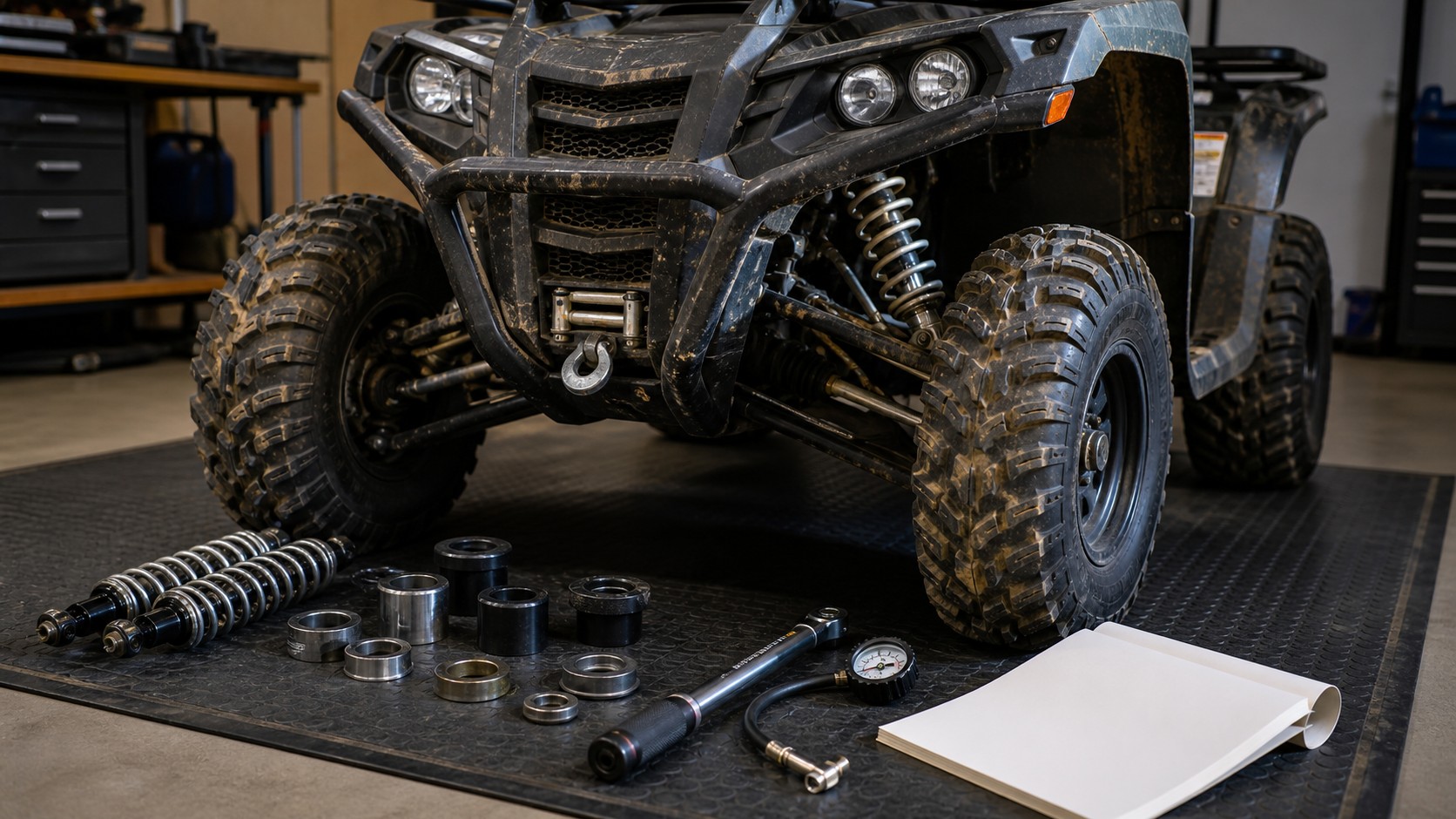
Shocks wear internally and externally. Leaks, fading damping, bent shafts, damaged bushings, and weak springs all affect control. Some shocks can be rebuilt; others are replaced. The correct choice depends on the machine and shock design.
Riders who ride fast, carry loads, or hit rough terrain frequently should inspect shocks more often. A shock that has lost control can make the ATV feel unstable even when other parts are sound.
Grease And Hardware
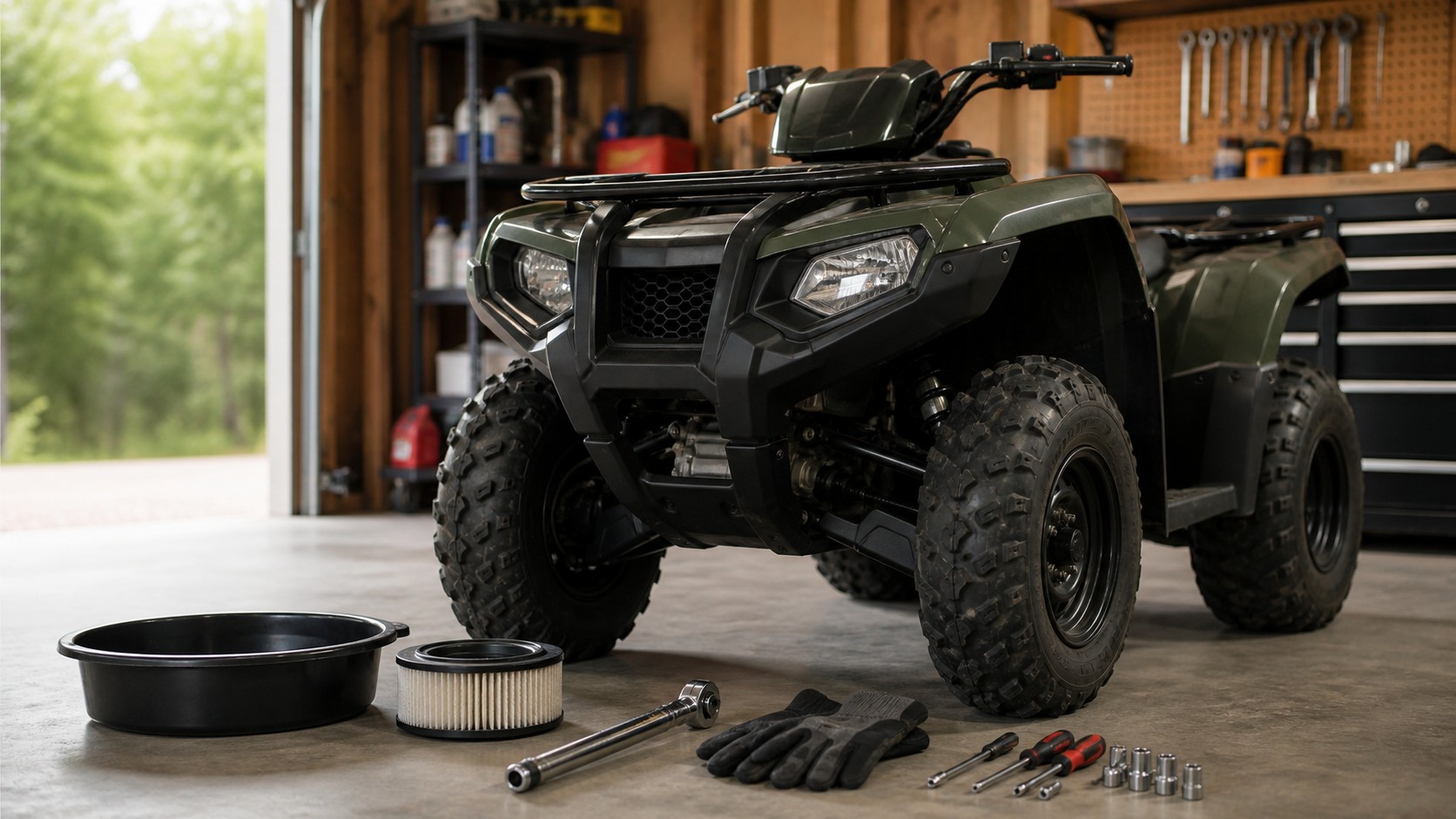
Grease fittings should be serviced where the machine provides them. Hardware should be checked with the correct torque process. Loose bolts can enlarge holes and damage mounts. Over-tightened hardware can crush bushings or bind movement.
Good service respects movement. Suspension parts must be secure, but they also need to move through their intended range without binding.
Tire Wear Clues
Uneven tire wear can point toward alignment, worn parts, bent components, or pressure problems. Feathering, cupping, one-sided wear, or rapid wear after an impact all deserve inspection.
Do not replace tires without asking why they wore that way. New tires on the same worn or misaligned front end will repeat the pattern.
Harsh Use Intervals
Mud, rocks, racing, towing, plowing, and heavy cargo shorten suspension service intervals. Water and grit enter wear areas. Extra weight changes spring load. Fast impacts heat shocks and stress mounts.
If harsh use is normal, inspect sooner than a casual rider would. The manual is the baseline, but the machine’s workload decides whether the baseline is enough.
When To Get Help
If the ATV has structural damage, severe steering looseness, shock failure, or uncertain alignment, professional help may be worth it. Suspension and steering affect safety directly. Guessing can make the machine harder to control.
A good technician can identify worn parts, measure alignment, and separate setup problems from damaged components.
Bottom Line
ATV owners should handle suspension setup and service whenever the manual calls for it, whenever harsh use demands it, and whenever ride feel changes. Terrain, load, impacts, and wear all affect timing.
The best schedule is active rather than passive. Inspect regularly, respond to symptoms, record settings, and repair worn parts before they affect control.
Practical Service Triggers
Service should move forward after a hard impact, sudden steering change, new clunk, shock leak, uneven tire wear, water-heavy ride, mud-heavy ride, or change in load. These triggers are more important than waiting for a convenient date.
A rider who responds to triggers keeps the ATV closer to baseline. That makes future setup easier because problems do not stack on top of each other.
Final Practical View
Suspension timing is part schedule and part observation. The manual gives intervals, but terrain and ride feel tell the owner when attention is needed sooner.
Handled well, suspension service protects tires, steering parts, shocks, bearings, rider comfort, and safety. It is one of the clearest ways to keep an ATV reliable year-round.
Timing By Symptom
Suspension service should happen immediately when symptoms appear. Clunks, leaks, wandering, uneven tire wear, harsh impacts, repeated bottoming, crooked handlebars, or changed steering effort all mean the schedule has moved forward. The ATV is giving a service signal.
Symptoms should be handled before upgrades. A new shock or lift kit cannot fix a loose joint or bent tie rod. Diagnosis comes first, then setup.
Timing By Season
Before plow season, inspect front suspension, steering, bearings, tires, and preload because plows add weight and repeated pushing loads. Before hunting or long trail season, inspect shocks, bushings, racks, tires, and alignment because loaded rides expose weakness. Before racing or fast rides, inspect everything more closely.
Seasonal inspection should happen early enough for a test ride. Last-minute suspension work can leave loose hardware or settings that need correction.
Timing By Terrain
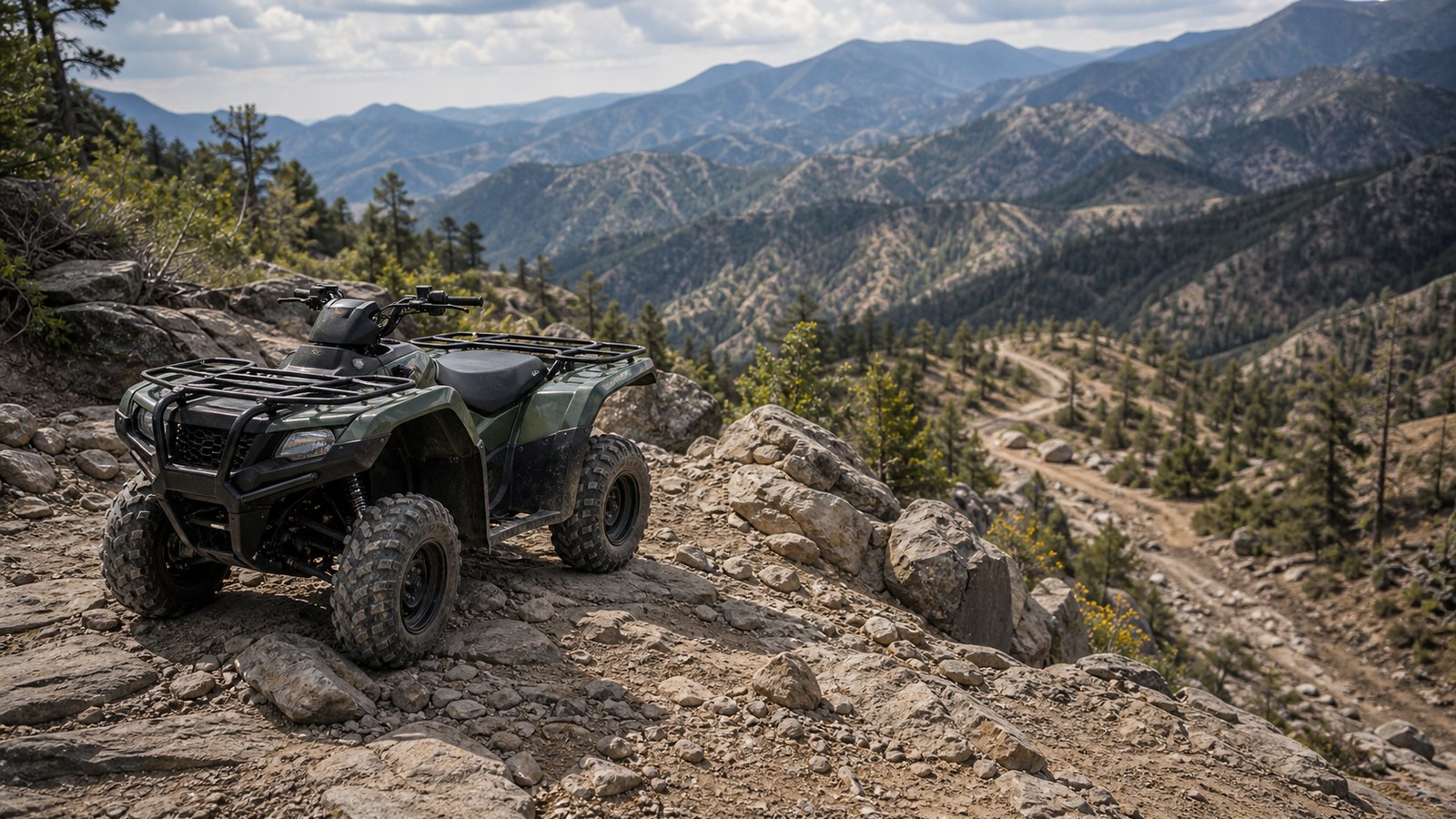
Rocky terrain stresses arms, mounts, wheels, tires, and skid areas. Mud accelerates bushing and bearing wear. Sand and whoops heat shocks and expose damping weakness. Work terrain adds cargo and slow repeated loads. Each terrain has its own service clock.
A rider who changes terrain should change inspection habits too. The same ATV may need more attention after one rough ride than after several easy rides.
Timing By Ownership Goal
An owner who wants long-term reliability should inspect before failure. That means checking bushings before they damage mounts, replacing torn boots before joints fail, and servicing shocks before control fades. Waiting until the ride is obviously poor usually costs more.
A resale-minded owner should keep records of suspension service and settings. Buyers value a machine that tracks straight, rides quietly, and has proof of care.
Service Timing For Work ATVs
Work ATVs often need suspension attention sooner than recreational riders expect. Carrying tools, spraying, towing, plowing, and crawling over uneven ground all load springs, shocks, bushings, steering parts, and bearings. Low speed does not mean low stress.
Before heavy work seasons, inspect front and rear suspension carefully. Set preload for the load, check steering play, look for leaking shocks, and confirm tires are in good condition.
Service Timing For Trail ATVs
Trail ATVs should be inspected after rough rides, long weekends, and any impact that changes feel. Rocks, roots, ruts, jumps, and whoops can loosen hardware or bend parts. Mud and water can accelerate wear even when speed is low.
A trail rider should pay attention to fatigue. If the machine suddenly feels harder to control, harsh, or vague, suspension wear may be part of the reason.
Service Timing For Modified ATVs
Lift kits, larger tires, wheel spacers, heavy bumpers, cargo boxes, and plows can change suspension load and geometry. Modified ATVs should be inspected more often because parts may be working outside the original baseline.
After a modification, inspect after the first ride and again after several rides. Look for rubbing, loose hardware, odd tire wear, changed steering, or new noises.
Setting A Personal Interval
A personal interval should combine manual guidance with real observation. For example, inspect quickly every ride, inspect deeper monthly during active use, check after hard hits, and review setup before seasonal work. Severe use shortens the schedule.
The exact interval matters less than consistency. A rider who checks often will catch symptoms early. A rider who waits for failure will usually spend more money and lose more riding time.
Final Timing Advice
Suspension service should never be treated as cosmetic comfort only. It affects steering, braking, traction, tire wear, rider fatigue, and safety. When timing is uncertain, inspect sooner.
The ATV should feel predictable. If it stops feeling predictable, the suspension and steering deserve attention before the next demanding ride.
Why Early Service Saves Money
Early suspension service saves money because worn parts damage neighboring parts. A loose bushing can wear a mount. A bad bearing can damage a hub. A torn boot can ruin a joint. A leaking shock can reduce control until tires, brakes, and rider confidence all suffer.
This is why service timing should respond to small symptoms. A minor clunk today is easier to handle than a loose front end later.
Record What Changed
When suspension is adjusted or repaired, record what changed. Note tire pressures, preload settings, damping clicks where available, parts replaced, and ride impressions. If the ATV feels better, the owner can repeat the setup. If it feels worse, the owner knows where to look.
Records are especially helpful when more than one person rides the ATV or when the machine changes between work and recreation.
Final Suspension Reminder
The safest service interval is the one that catches wear while the ATV still feels mostly normal. Waiting until steering is loose or shocks are leaking badly usually means the machine has already been harder to control for some time, especially on rough trails, steep descents, and loaded work days.
FAQ
How often should ATV suspension be serviced?
Follow the manual, inspect regularly, and service sooner after hard impacts, mud, racing, towing, plowing, or ride-feel changes.
What are signs suspension needs service?
Clunks, leaks, wandering, bottoming, harshness, uneven stance, steering play, and uneven tire wear are common signs.
Should I inspect after a hard hit?
Yes. Check arms, tie rods, wheels, bearings, mounts, shocks, and alignment feel after significant impacts.