ATV Suspension Service Keeps Steering, Traction, Comfort, And Safety Predictable
Suspension setup and service keep an ATV reliable by controlling ride height, damping, bushings, ball joints, tie rods, bearings, shocks, springs, and alignment. A worn suspension can make the machine wander, clunk, bottom, dive, or feel harsh. Good setup starts with tire pressure and healthy parts before changing preload or chasing upgrades.
A: Follow the manual and inspect sooner after harsh riding.
A: A new feel, sound, smell, leak, heat issue, or warning light.
A: Yes. Mud adds grit, moisture, heat, and hidden wear.
A: No. Restore the baseline first, then decide if upgrades are useful.
A: Yes, especially after water, rocks, towing, heat, or heavy loads.
A: Dates, hours, parts, fluids, settings, and symptoms are all useful.
A: Use caution on safety, sealing, steering, suspension, brake, and drivetrain parts.
A: Working does not mean healthy; inspect when symptoms change.
A: Get help for uncertain brakes, steering, wiring, fuel leaks, or structural issues.
A: Inspect early, fix small problems, and test before riding remote terrain.
Start With Tires
Suspension setup should begin with tire pressure and tire condition. Tires are the first suspension component the ground touches. Uneven pressure, worn tread, mismatched tires, bent wheels, or damaged sidewalls can make an ATV pull, bounce, wander, or feel harsh.
Many riders adjust shocks before checking tires. That can hide the real issue. Set tire pressure to the correct range for the machine and use before judging suspension behavior.
Inspect Before Adjusting
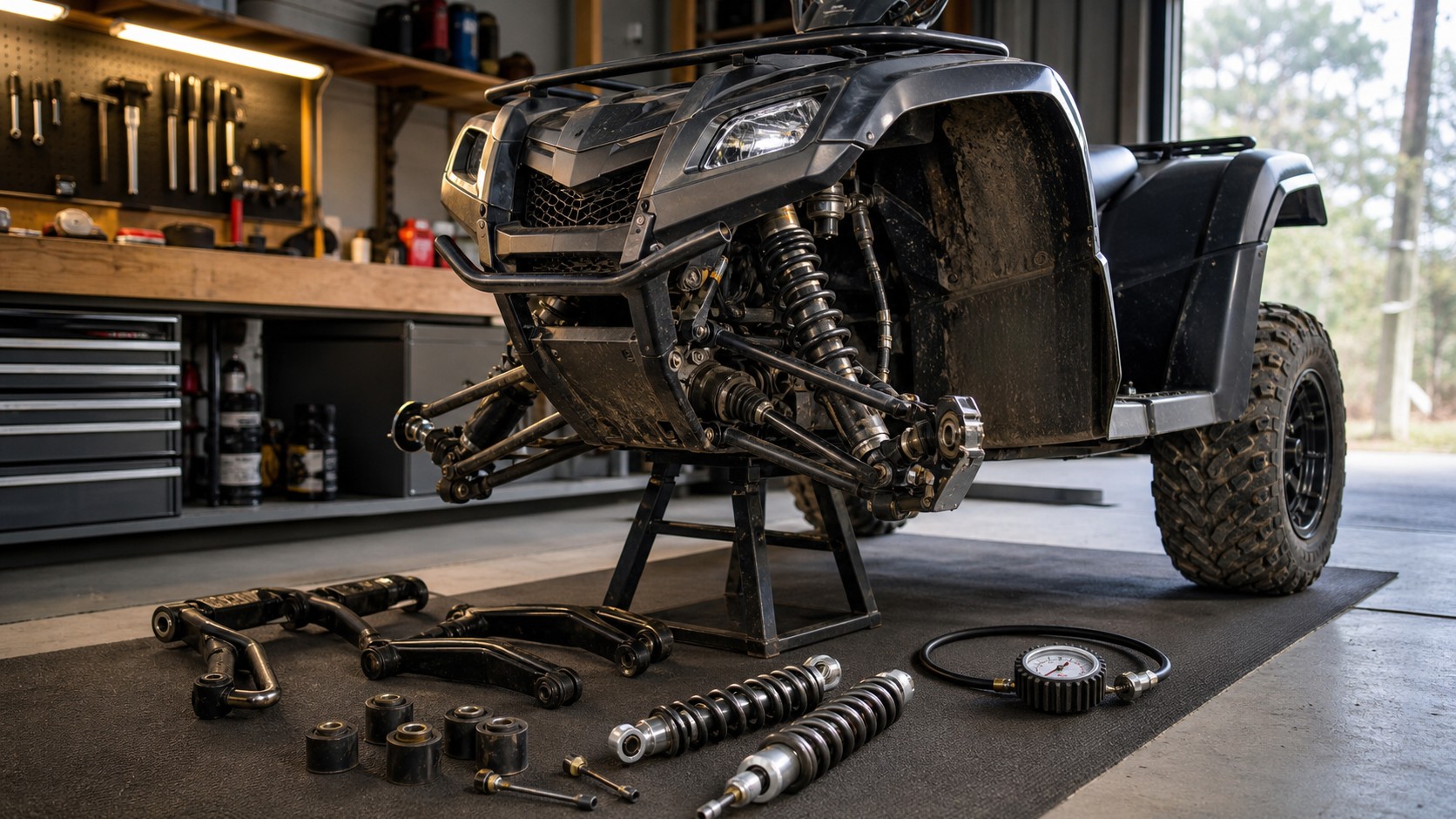
Suspension adjustments only help if the parts are healthy. Worn bushings, ball joints, tie rods, wheel bearings, shock mounts, and bent arms can make settings meaningless. A leaking shock cannot be tuned back to health.
Before changing preload or damping, inspect the front and rear end carefully. Compare left and right sides. Look for loose hardware, torn boots, uneven stance, and shiny areas where parts are rubbing.
Ride Height And Sag
Ride height affects clearance, steering, and stability. Springs support the ATV, rider, cargo, and accessories. Too much sag can reduce clearance and bottoming resistance. Too much preload can make the ride harsh and reduce useful travel.
Setup should reflect load. A machine used with cargo, plow equipment, or a passenger on a model designed for two-up use may need different preload than a solo trail machine.
Damping And Control
Damping controls how quickly suspension compresses and rebounds. Too little damping can feel bouncy. Too much can feel harsh and reduce traction. Some ATVs offer adjustments; many basic models do not. Even non-adjustable shocks need inspection and replacement when worn.
Good damping keeps tires in contact with the ground. That improves braking, steering, and rider confidence. Comfort and control are connected.
Bushings, Bearings, And Joints
Bushings allow controlled movement. Bearings support rotation. Ball joints and tie rods connect steering and suspension. When these parts wear, the ATV may clunk, wander, shimmy, or wear tires unevenly.
Small looseness becomes larger damage if ignored. Replacing a worn bushing or joint early can protect mounting points, tires, and rider safety.
Alignment
Toe and steering alignment affect tracking. Bent tie rods, worn joints, uneven tires, and frame damage can all change alignment. If the ATV pulls, darts, or scrubs tires, alignment should be checked after mechanical wear is addressed.
Use manual specs and measure carefully. Random adjustment can make handling worse. A straight baseline is more valuable than guessing.
Terrain-Specific Setup
Rocks reward control and tire contact. Mud rewards clearance but still needs stability. Fast trails reward damping and bottoming resistance. Work use rewards load support and predictable steering. No single setup is perfect everywhere.
Make one change at a time and test familiar terrain. If several settings change together, the rider may not know what improved or caused a new problem.
Service After Impacts
Hard impacts can bend arms, wheels, steering parts, or frame mounts. After hitting a rock, stump, rut, or jump hard enough to change feel, inspect before riding aggressively again. New noises and pulls are clues.
Do not assume the ATV is fine because it still moves. Suspension damage can show up later as tire wear, loose joints, or cracked mounts.
Records And Settings
Record preload positions, damping clicks where equipped, tire pressures, rider load, cargo, and terrain notes. These records make setup repeatable. They also help identify when ride feel changes because of wear rather than settings.
For owners who switch between work and trail use, records prevent constant guessing. A known good setup saves time.
Bottom Line
Suspension setup and service keep ATV control predictable. Start with tires, inspect wear, set ride height, adjust carefully, and service worn parts before chasing upgrades.
A reliable suspension makes the machine safer, smoother, and less tiring. The goal is not maximum height or softness; it is controlled tire contact.
Why Setup Should Be Repeatable
Suspension setup should be repeatable. If tire pressure, preload, load, and damping settings change randomly, the rider cannot tell whether the ATV improved or simply feels different. Records help keep changes organized.
Repeatability is especially useful for owners who switch between trail riding, plowing, hunting, and cargo work. The ATV may need different settings, but those settings should be deliberate.
Final Practical View
Good suspension service makes an ATV feel predictable. It steers cleanly, absorbs bumps without drama, keeps tires planted, and does not punish the rider with clunks or harshness.
The best setup is not extreme. It is healthy, balanced, adjusted for the load, and maintained before worn parts take over the ride feel.
Setting Up For Rider And Load
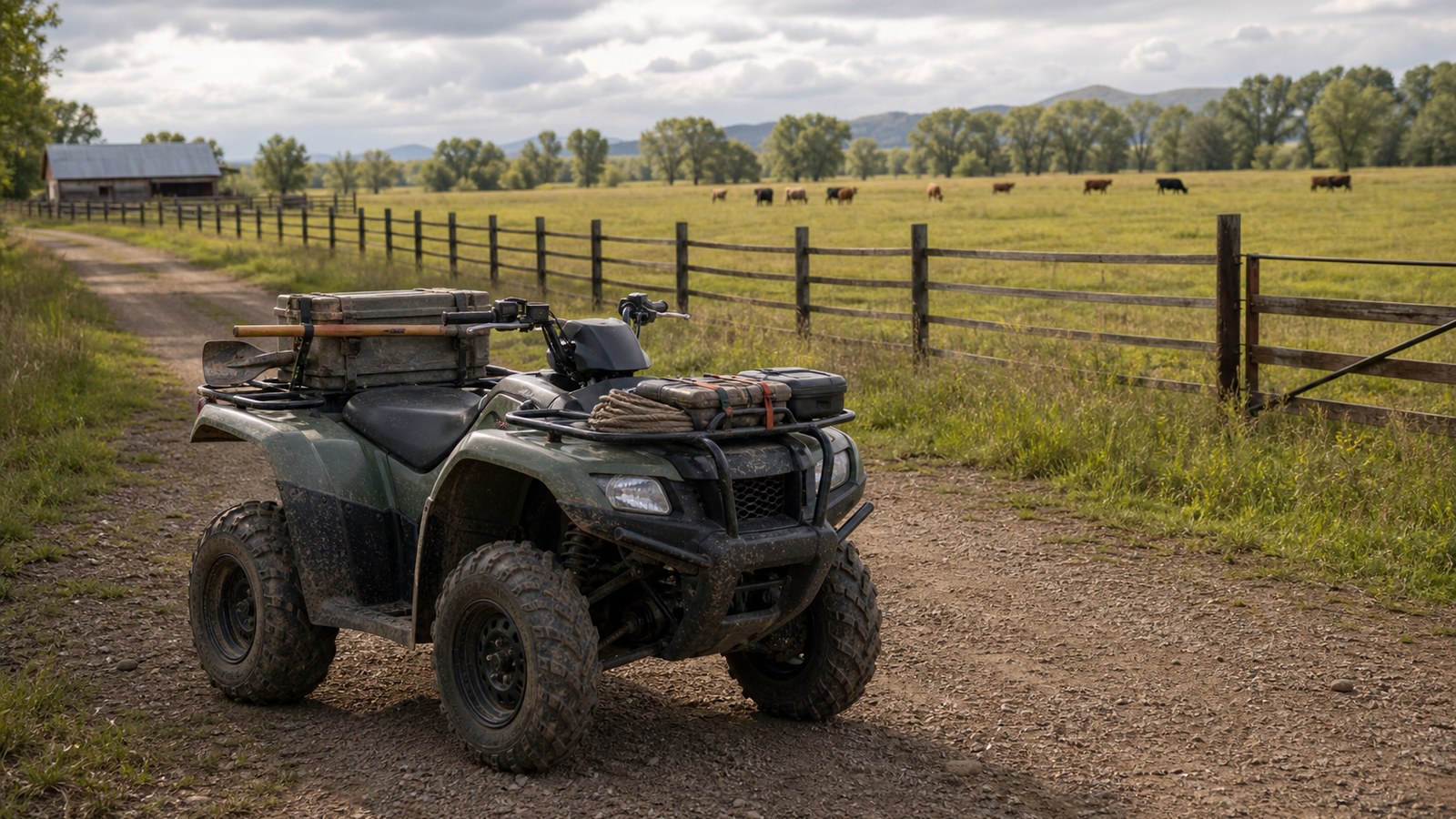
Suspension setup should match the rider, cargo, accessories, and terrain. A machine used solo on trails may need different preload than the same ATV carrying tools, hunting gear, a sprayer, or plow equipment. Extra weight changes sag, steering, braking, and bottoming resistance.
Set the ATV up for the real load, then test it in familiar terrain. If the front feels light, the rear squats, or the machine pushes in turns, load placement and preload may need review.
Why Worn Parts Ruin Setup
Worn parts make setup confusing. A rider may keep adding preload, changing tire pressure, or blaming shocks when the real problem is a worn bushing, loose ball joint, bent tie rod, or bad wheel bearing. Settings cannot overcome mechanical looseness.
A good service routine restores the baseline first. Once tires, bearings, joints, bushings, and shocks are healthy, adjustments become meaningful again.
Common Mistakes
A common mistake is lifting the ATV for clearance without considering stability and angles. Another is using tire pressure to hide suspension problems. A third is copying another rider’s settings without matching weight, tires, terrain, and speed.
Setup should be deliberate. Change one thing at a time, ride the same section, and record the result. That process is slower than guessing, but it produces a machine the rider can understand.
Service And Safety
Suspension and steering are safety systems. Loose steering, broken mounts, leaking shocks, cracked arms, or severe bearing play should be repaired before hard riding. These problems affect braking, turning, and how the ATV responds to obstacles.
If a repair involves structural mounts, alignment uncertainty, or major shock service, professional help may be the better choice. Reliable suspension is worth doing correctly.
Front Suspension Checks
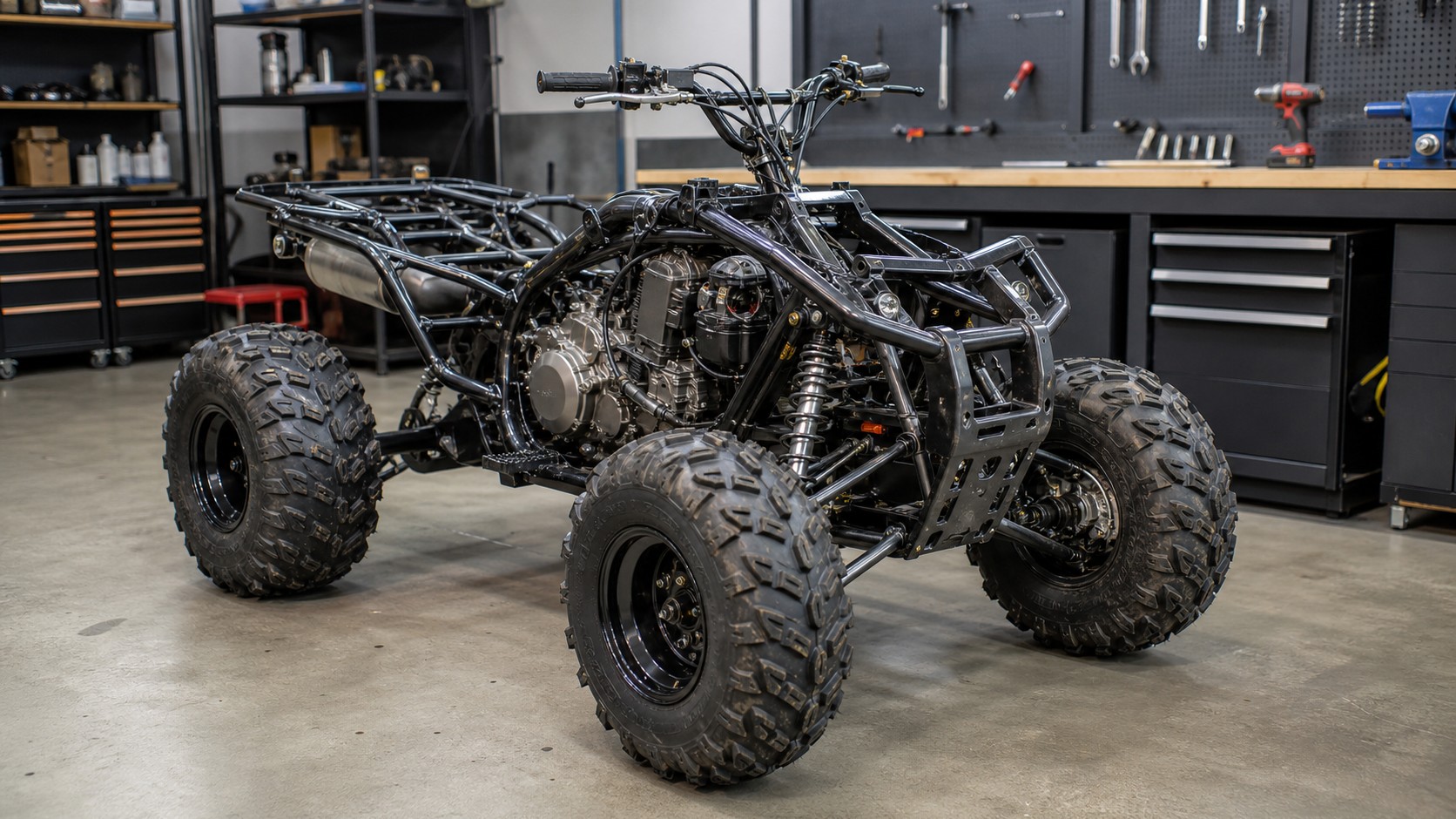
Front suspension service should include A-arm bushings, ball joints, tie rods, steering stem, wheel bearings, shock mounts, springs, and tire condition. A problem in any of these areas can feel like poor suspension setup. The ATV may dart, pull, clunk, or feel nervous over bumps.
Compare both sides carefully. One side sitting differently, wearing a tire faster, or showing fresh impact marks can point toward the problem. Symmetry is a useful clue.
Rear Suspension Checks
Rear suspension service depends on the machine design, but shocks, swingarms or rear arms, bushings, bearings, axles, mounts, and drivetrain clearances all matter. A rear shock leak, worn bushing, or loose bearing can make the ATV squat, hop, or feel unstable.
Cargo and towing often stress the rear suspension. If the ATV is used for work, inspect load-related areas more often and set preload for the actual load rather than an empty machine.
How Suspension Affects Braking
Suspension changes braking because weight moves as the ATV slows. If the front end dives too much, steering can feel nervous. If worn parts let wheels move unpredictably, braking distances and control can suffer. If shocks are harsh, tires may skip instead of gripping.
Good suspension keeps tires in contact with the ground during braking. That makes brake maintenance and suspension maintenance connected.
How Suspension Affects Tire Life
Poor alignment, worn bushings, bad bearings, bent parts, and incorrect pressure can wear tires quickly. Tire wear is often one of the first visible signs that suspension or steering service is overdue.
When replacing worn tires, inspect the cause of the wear. New tires installed on a loose or misaligned machine will often repeat the same pattern.
Final Setup Advice
Make setup changes slowly. Start from a healthy baseline, set tire pressures, note current preload or damping, then change one item. Ride familiar terrain and write down the result. This simple discipline makes suspension understandable.
A predictable ATV is easier and safer to ride than one set up by guesses. Suspension service is what keeps that predictability alive.
Maintenance Before Upgrades
Many suspension complaints are maintenance problems, not upgrade problems. New shocks, lift kits, or tires may not help if bushings are worn, bearings are loose, or alignment is wrong. Repairing the baseline first makes any upgrade decision clearer.
A stock suspension in good condition often rides better than a modified suspension built on worn parts. Reliability starts with health, then setup, then upgrades if they are still needed.
Loaded Riding Examples
A hunting rider with cargo may need more preload and slower speeds. A plow owner may need front-end inspection and spring support. A trail rider may need comfort and tire contact. A sport rider may need damping control and bottoming resistance. Each use case asks different things from the same basic system.
Because loads change, suspension setup should not be frozen forever. Recheck sag, pressure, and feel when the ATV’s job changes.
Final Suspension Reminder
A good suspension service plan keeps the ATV close to its original baseline. When the machine tracks straight, absorbs bumps cleanly, and responds the same way on both sides, the rider can focus on terrain instead of compensating for hidden wear.
FAQ
What should I check before adjusting ATV suspension?
Check tire pressure, worn bushings, ball joints, tie rods, bearings, shocks, wheels, and alignment clues first.
Does preload make suspension stiffer?
Preload mainly changes ride height and sag. It can affect feel, but it is not a full replacement for correct spring rate or damping.
Why does my ATV wander?
Wandering can come from tire pressure, worn steering or suspension parts, alignment, bent parts, bearings, or frame damage.