Farm And Ranch ATVs Need Utility Setup More Than Flash
A farm or ranch ATV is working equipment. The best setup helps with traction, towing, cargo, fencing, livestock checks, irrigation routes, snow, mud, and repeated short trips without making the machine harder to control. Tires, suspension, racks, hitch equipment, lighting, winch support, storage, and maintenance should all match daily work. A good utility setup is steady, serviceable, and practical.
A: Follow the manual and inspect sooner after harsh riding.
A: A new feel, sound, smell, leak, heat issue, or warning light.
A: Yes. Mud adds grit, moisture, heat, and hidden wear.
A: No. Restore the baseline first, then decide if upgrades are useful.
A: Yes, especially after water, rocks, towing, heat, or heavy loads.
A: Dates, hours, parts, fluids, settings, and symptoms are all useful.
A: Use caution on safety, sealing, steering, suspension, brake, and drivetrain parts.
A: Working does not mean healthy; inspect when symptoms change.
A: Get help for uncertain brakes, steering, wiring, fuel leaks, or structural issues.
A: Inspect early, fix small problems, and test before riding remote terrain.
Start With The Work
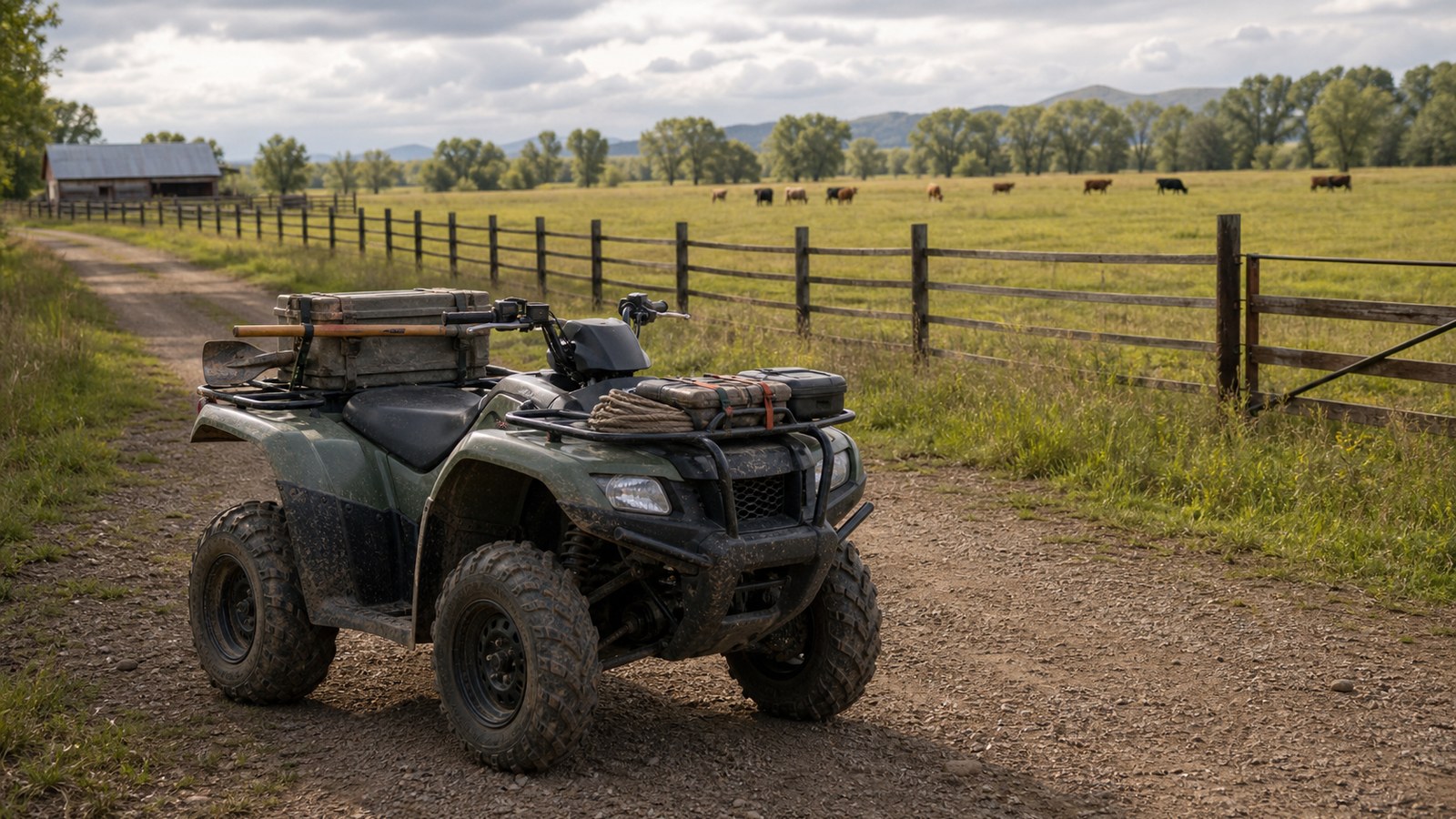
A farm or ranch ATV should be built around the jobs it performs most often. Checking fence lines, moving mineral blocks, opening gates, carrying tools, pulling a small trailer, checking irrigation, or reaching livestock all ask for different details. The setup should make those repeated jobs easier without exceeding the ATV’s limits.
The best utility setup is usually moderate. A machine with sensible tires, secure storage, good lights, a proper hitch, and well-maintained brakes can be more useful than a heavily modified ATV that is hard to steer, hard to service, or too tall for sidehills.
Tire Choice For Utility Work
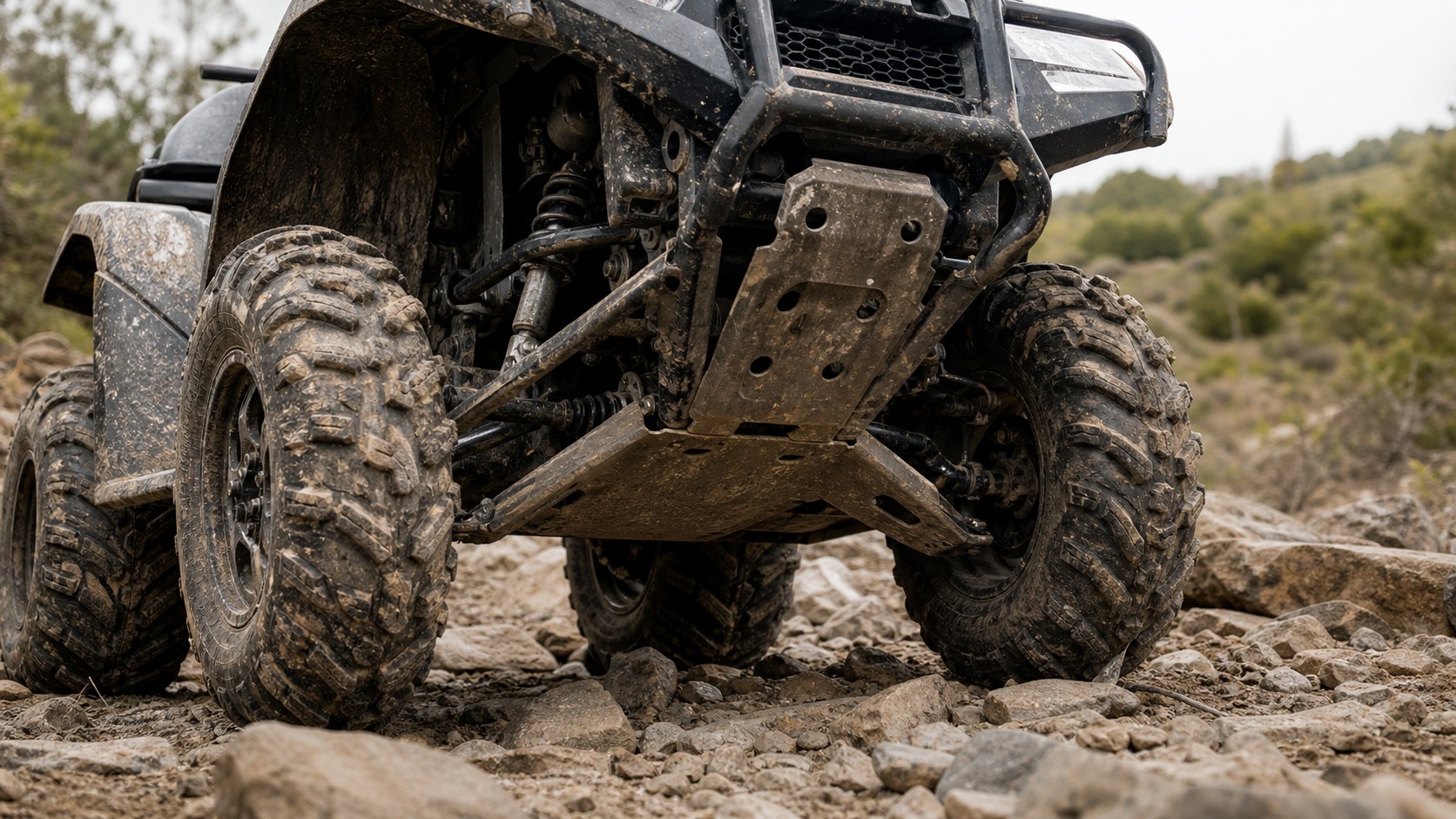
Farm and ranch tires need durability more than drama. Pasture thorns, wire, gravel, rocks, stubble, mud, and hard lanes can all damage weak tires. A good utility tire should resist punctures, steer predictably, and provide enough traction for wet grass or soft ground.
Extreme mud tires may be useful on swampy properties, but they can be heavy and rough on daily routes. All-terrain utility tires often fit mixed farm use better because they balance grip, ride comfort, and drivetrain stress.
Cargo And Tool Storage
Racks are useful only when the load stays within the rating and remains secure. Tools, sprayers, feed, fencing supplies, and chains should not slide around or block rider movement. Heavy items should sit low and balanced. A storage box should make the ATV more organized, not top-heavy.
Front and rear weight affect steering and braking. A rear-heavy ATV may push or climb awkwardly. A front-heavy ATV may steer hard and ride poorly. Loaded work should always be slower than empty riding.
Towing And Hitch Use
Towing is common on farms, but engine power is not the same as towing safety. The hitch point, tongue weight, brakes, terrain, cooling, and transmission range all matter. Owners should use the rated hitch and stay within the manual’s towing limits.
Wet grass, slopes, and loose soil change towing dramatically. A trailer that feels easy on flat gravel may push the ATV downhill or sink in a pasture. Plan routes and take smaller loads when conditions are poor.
Livestock And Noise
ATVs around livestock should be predictable. Sudden throttle, loud exhaust, sharp turns, and crowding animals near gates can create dangerous situations. A quiet, controlled machine is often more useful than a louder or faster one.
Riders should leave room for animals to move and avoid placing the ATV where it blocks an escape path. Utility riding around stock is about calm pressure, not speed.
Lighting And Early Chores
Farm work often happens early, late, or in poor weather. Good lights help the rider see gates, ruts, animals, equipment, and people. Auxiliary lights can be useful, but they should be aimed responsibly and wired correctly.
Electrical accessories should not exceed the ATV’s charging capacity. A winch, plow, sprayer, lights, and heated grips may all ask for power. Battery health becomes part of the setup.
Maintenance For Work Machines
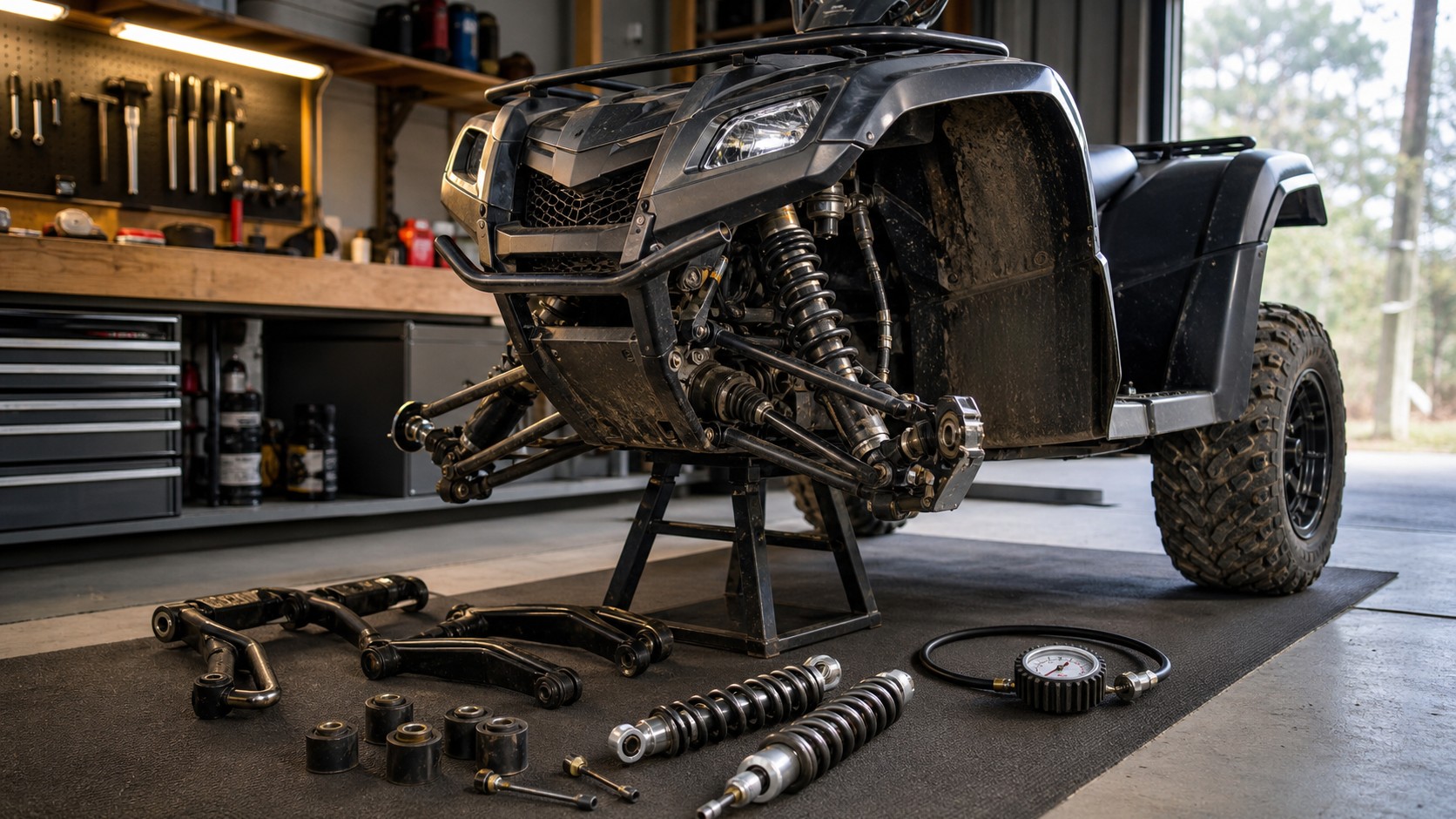
Farm ATVs often live hard lives because they make many short trips in dust, mud, manure, grass, and weather. Short trips may not fully warm the machine, and repeated starts wear batteries. Air filters, brakes, tires, fluids, CV boots, chains, belts, and cooling areas need regular attention.
A work ATV should have records. Knowing when fluids, filters, brakes, and tires were serviced prevents guesswork. Downtime during a busy season can cost more than routine maintenance.
Bottom Line
The best farm and ranch ATV setup is practical, durable, quiet, and easy to service. It carries tools, pulls reasonable loads, handles rough ground, and stays predictable around livestock.
Build for the daily job, respect ratings, and keep maintenance ahead of failure. A dependable ATV is worth more than one that only looks tough.
FAQ
What tire is best for farm ATV use?
A durable utility or all-terrain tire usually works best unless the property is dominated by deep mud.
Can an ATV tow farm trailers?
Yes within the manufacturer’s towing and tongue-weight ratings, using the proper hitch and careful routes.
What matters most for a farm ATV?
Reliability, cargo security, traction, braking, and easy maintenance matter more than speed.
Real Farm Setup Examples
A fence-checking ATV needs different priorities than a plow machine. Fence work rewards durable tires, compact tools, secure storage, quiet operation, and enough fuel range to cover the property. A snow or grading setup may need a winch, front-end strength, lights, battery health, and repeated low-speed cooling. A sprayer ATV needs stable cargo placement and careful weight control.
The right setup should match the job that happens every week. If the ATV carries fencing tools more often than it pulls trailers, storage and tire durability may matter more than maximum towing capacity. If it spends winter pushing snow, electrical health and plow hardware deserve more attention than trail comfort.
Many farm ATVs do several jobs, so the setup should avoid extremes. Heavy tires, tall lifts, and oversized boxes can reduce day-to-day usefulness. A moderate machine that starts, stops, turns, and carries predictable loads usually earns its keep better than a showy build.
Avoiding Farm ATV Abuse
Work machines often fail because they are treated as indestructible. Riders overload racks, tow from unsafe points, cross wet sidehills with high cargo, skip air-filter service in dust, and ignore weak brakes because the next chore feels urgent. Those habits shorten the ATV’s life and raise risk.
A better routine is simple: inspect before the day, use the right vehicle for heavy work, take smaller loads, and fix small problems before they stack up. The ATV is valuable because it is convenient. Keeping it convenient requires maintenance discipline.
Farm and ranch owners should also think about who else uses the machine. Shared ATVs need clear rules about keys, loads, fuel, damage, and maintenance notes. A written log can prevent one person’s rough ride from becoming the next person’s breakdown.
Final Utility Setup Check
Before calling a farm ATV setup complete, ask whether it improves traction, carrying, towing, lighting, recovery, and service access without making the machine harder to control. If an accessory blocks movement, adds top-heavy weight, or hides maintenance points, reconsider it.
The best farm setup feels ordinary in daily work. It starts easily, carries what it should, stops with confidence, and comes back ready for the next chore. That is the kind of performance utility riders actually need.
Seasonal Farm Setup
Farm and ranch work changes with the season, and the ATV setup should change with it. Spring may bring mud, soft lanes, calves, and fence repairs. Summer may bring dust, heat, sprayers, and long daylight chores. Fall may bring hunting use, leaf cover, and shorter days. Winter may add plows, chains, cold starts, and icy tracks. A setup that worked in July may need attention before January.
Seasonal changes should be handled before the busy period begins. Check battery strength before cold weather. Inspect sprayer mounts before spraying season. Service the air filter more often in dust. Look over winch cables and plow mounts before the first storm. Utility ATVs are most valuable when they are ready before the work arrives.
A seasonal checklist also helps shared machines. If several people use the ATV, everyone should know what setup is installed, what loads are allowed, and what service is due. Clear routines prevent the machine from being used beyond its current condition.
Choosing Accessories That Earn Their Place
Every accessory on a work ATV should earn its weight. A front basket may be useful for small tools, but too much front weight can make steering heavy. A rear box keeps gear dry, but a tall loaded box can make sidehills feel worse. A winch helps with recovery, but it adds electrical demand and needs safe use. Lights help with chores, but poor wiring creates problems.
The best accessories solve repeated problems. If the same tool is needed every day, give it secure storage. If the same muddy crossing causes trouble, improve tires or route planning. If the ATV is often used after dark, upgrade lighting carefully. Avoid parts that only make the machine look more serious.
After adding accessories, test the ATV with normal loads in easy terrain. Make sure steering, braking, body movement, and service access still feel right. A farm ATV should become more useful after upgrades, not more awkward.
Safety Around Work Sites
Farm ATVs often move near people, livestock, trailers, tractors, gates, and buildings. That makes controlled speed important. A rider should slow near blind barn corners, yards, feed areas, and places where children or workers may appear. The ATV may be smaller than a truck, but it still needs space to stop.
Parking matters too. Park on stable ground, use the brake when appropriate, and avoid leaving the ATV where it can roll, block a gate, or be struck by equipment. Remove keys if children or guests are nearby. Work sites are familiar, which can make people too casual.
A good farm ATV setup supports this slower, practical riding. It should have lights that work, brakes that feel strong, tires that hold air, and cargo storage that does not spill tools into pedals or controls.
Final Farm Setup Review
The final farm setup review should be practical. Can the ATV carry the tools used most often without exceeding rack limits? Can it pull the normal trailer route without straining or sliding? Are the tires durable enough for the ground but not so heavy that they punish steering? Are lights, winch, storage, and hitch parts installed cleanly? Can the rider still move freely?
If the answer is yes, the setup is doing its job. If the ATV feels awkward, overloaded, loud, or hard to service, the build needs adjustment. Utility value comes from repeated dependable use, not from one impressive feature.