Better ATV Materials Improve Performance When They Match The Job
Materials, metals, and composites improve ATV power, handling, and reliability by controlling weight, flex, heat, corrosion, impact resistance, and service life. The best material is not always the lightest or most expensive. A good ATV uses the right material in the right place so the machine can steer accurately, carry load, protect parts, and survive real terrain.
A: Follow the manual and inspect sooner after harsh riding.
A: A new feel, sound, smell, leak, heat issue, or warning light.
A: Yes. Mud adds grit, moisture, heat, and hidden wear.
A: No. Restore the baseline first, then decide if upgrades are useful.
A: Yes, especially after water, rocks, towing, heat, or heavy loads.
A: Dates, hours, parts, fluids, settings, and symptoms are all useful.
A: Use caution on safety, sealing, steering, suspension, brake, and drivetrain parts.
A: Working does not mean healthy; inspect when symptoms change.
A: Get help for uncertain brakes, steering, wiring, fuel leaks, or structural issues.
A: Inspect early, fix small problems, and test before riding remote terrain.
Materials Turn Design Into Real Behavior
Materials affect power, handling, and reliability because they decide how parts carry load, resist heat, control flex, and survive impact. A strong engine still depends on wheels, mounts, frames, belts, bushings, and fasteners made from materials suited to the job.
A poor material choice can show up as vibration, flex, heat damage, corrosion, cracking, or extra weight. A good choice may feel invisible because the ATV simply works as expected.
Power And Rotating Weight
Rotating parts matter because the engine has to accelerate them. Wheels, tires, hubs, clutches, belts, chains, and shafts all affect how quickly power feels at the ground. Heavy or poorly matched parts can make the ATV feel dull even if the engine is strong.
Lightweight parts can help, but only when durability remains appropriate. A wheel that saves weight but bends easily is not an upgrade for rocky trails. Power gains should not come at the expense of finishing the ride.
Handling And Flex
Frames, suspension arms, bushings, mounts, and wheels all influence handling through stiffness and compliance. Too much unwanted flex can make steering vague. Too little compliance in the wrong part can transfer harshness and stress elsewhere.
Rubber and polymer bushings are especially important. They absorb vibration and allow controlled movement, but worn bushings create looseness. Handling precision is partly a material-maintenance issue.
Reliability And Corrosion
Reliability depends on materials resisting their environment. Steel needs coatings. Aluminum needs inspection for corrosion and fatigue. Rubber needs protection from cracking and tearing. Plastics need secure mounting. Bearings and seals need clean lubrication.
Mud, salt, fertilizer, sand, water, and UV light all attack materials in different ways. A rider who understands those attacks can clean and inspect the right areas after each kind of ride.
Heat Resistance
ATVs generate heat around engines, exhausts, brakes, belts, and electrical systems. Materials near those areas must tolerate temperature without softening, melting, cracking, or losing strength. Heat shields, hoses, plastics, wiring insulation, and belts all matter.
If a body panel warps, a hose hardens, or a belt smells repeatedly, heat may be changing the material. That is a reliability clue, not just a cosmetic issue.
Protection Parts
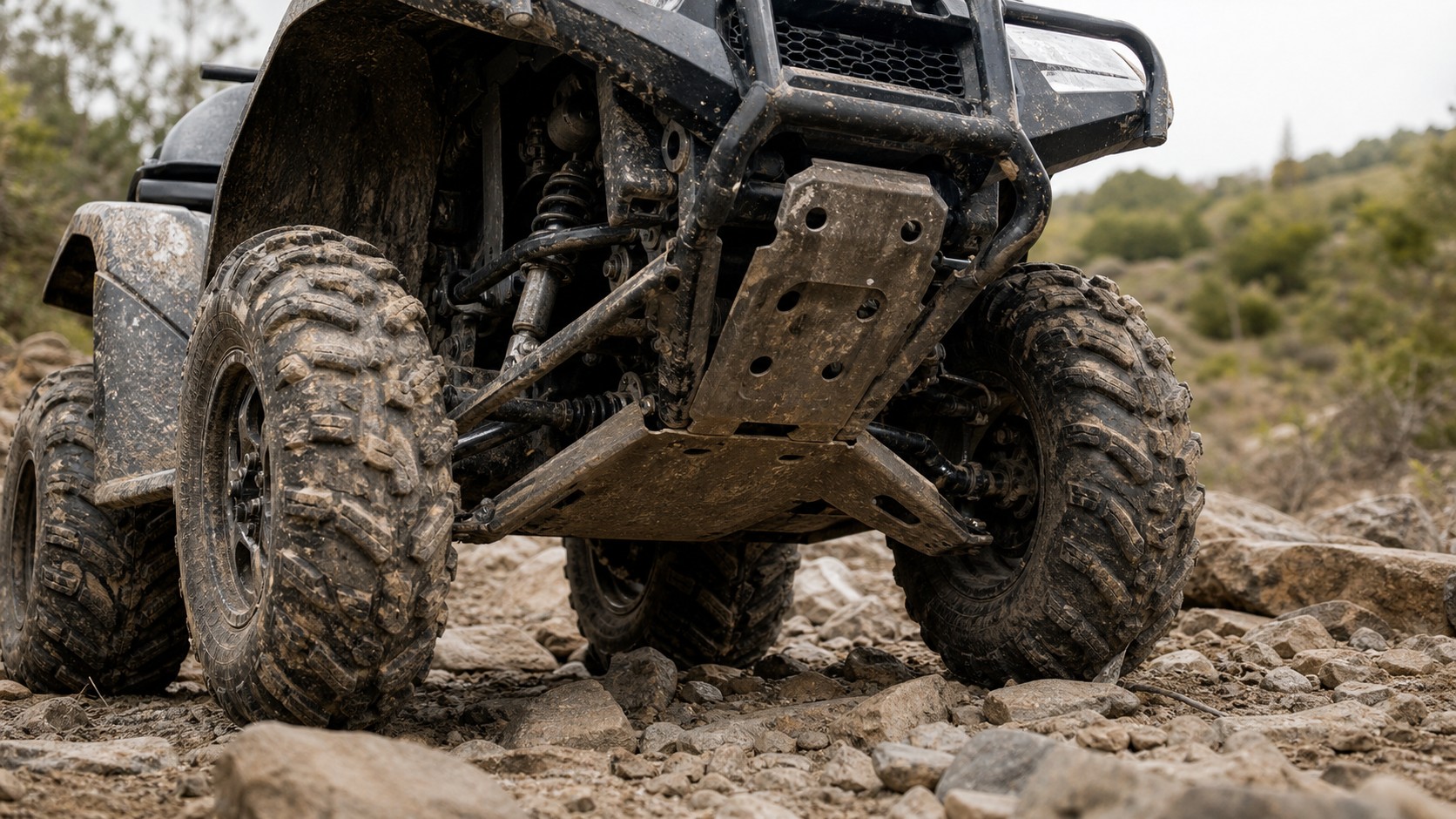
Skid plates, A-arm guards, bumpers, handguards, and floorboards use materials to protect more expensive systems. Aluminum, steel, plastic, and composite guards each have different strengths. Some slide well over rocks; some dent; some flex; some add weight.
Protection should be chosen for terrain. A thick skid plate may be valuable in rocks but unnecessary weight for light trail riding. A bumper that blocks airflow or overloads mounts can create new problems.
Aftermarket Quality
Aftermarket parts vary widely. Material claims can sound impressive while fit, hardware, coating, and engineering remain weak. A part should mount cleanly, preserve service access, avoid rubbing, and spread force properly.
Poorly fitted parts can damage the ATV even if the material itself is strong. Brackets, fasteners, and contact points deserve as much attention as the main plate or tube.
Used ATV Material Clues
A used ATV’s materials tell its history. Rust in seams, cracked plastics, torn boots, bent wheels, worn bushings, polished rub marks, and heat-browned parts all reveal use. These clues are more reliable than a fresh wash.
Look for patterns. One cracked panel may be normal. Multiple damaged mounts, corrosion under racks, and mismatched wheels may point to harder use than the seller describes.
Maintenance That Preserves Materials
Wash corrosive mud and salt, dry trapped areas, touch up chipped paint, replace torn boots, grease fittings where equipped, and inspect heat-damaged parts. Store the ATV out of direct sun when possible to protect plastics and rubber.
Use correct torque on fasteners. Over-tightening can crush plastics or distort brackets. Under-tightening lets parts move and wear through coatings.
Bottom Line
Materials improve ATV power, handling, and reliability when they match the job. Weight, stiffness, heat resistance, corrosion control, flexibility, and serviceability all matter.
The best materials are not chosen by hype. They are chosen because they make the machine easier to control, easier to maintain, and harder to damage in real terrain.
Choosing Upgrades Wisely
A good upgrade should solve a clear problem. If rocks are damaging the underside, skid protection makes sense. If rubber bushings are worn, replacing them restores handling. If wheels are bending repeatedly, stronger wheels may be justified. If the only reason is appearance, the benefit is weaker.
Every added part has a cost in weight, complexity, money, or service access. Strong material choices improve the ATV when the tradeoff is understood.
Final Practical View
Materials improve performance by making the ATV lighter where it can be light, stronger where it must be strong, flexible where it should absorb movement, and protected where the environment is harsh.
The smartest owners look beyond marketing words. They inspect how a part is built, how it mounts, how it wears, and whether it makes the machine more reliable in real use.
Performance Tradeoffs
Every material choice is a tradeoff. A heavier steel guard may protect well but add weight to the front of the ATV. A lighter aluminum guard may slide well over obstacles but dent under sharp impact. A flexible plastic skid may be quiet and slick but less resistant to heat or gouging in some uses. None of these choices is automatically right.
The rider should ask what failure would cost. If a skid plate prevents case damage in rocks, the added weight may be worthwhile. If a decorative part adds weight and blocks service access without protecting anything important, it may hurt ownership more than it helps.
Handling Through Wheels And Tires
Wheels and tires are material decisions that strongly affect handling. Tire carcass stiffness, rubber compound, tread depth, wheel strength, and total weight all change how the ATV accelerates, brakes, steers, and absorbs bumps. Heavier tires can make power feel softer and suspension feel busier.
A stronger tire may be worthwhile in rocks or stubble, but it may ride harsher. A lighter tire may feel lively, but it may puncture more easily. The best choice depends on terrain and how far the rider is from help when a tire fails.
Heat, Friction, And Wear
Materials near heat and friction need special respect. Belts, brake pads, hoses, plastics, wiring insulation, exhaust shields, and seals all live near temperature changes. When they overheat, they may glaze, harden, warp, crack, or lose strength.
Repeated heat damage should lead to diagnosis. A melted panel, cooked belt smell, brittle hose, or discolored shield may point to blocked airflow, dragging brakes, poor clutching, or missing protection. Replacing the damaged part without fixing heat can repeat the failure.
Owner Inspection Routine
A useful material inspection can happen during washing. As mud comes off, look for chipped coatings, torn boots, cracked plastics, bent wheels, loose guards, rubbed wires, and shiny contact marks. The machine often shows where materials are being stressed.
Make inspection part of cleanup rather than a separate chore. The owner is already close to the machine, and fresh damage is easier to notice before the ATV is parked and forgotten.
How Materials Affect Fatigue
Material choices can change rider fatigue. Heavy tires, loose bushings, harsh guards, vibrating panels, and flexing mounts all make the ATV harder to ride for long periods. A machine that feels tight and quiet often lets the rider stay relaxed and make better decisions.
Fatigue is part of performance. If an upgrade adds noise, harshness, steering effort, or vibration, it may reduce the rider’s ability to control the ATV even if the part looks stronger.
Reliability Starts With Fit
Fit is part of material performance. A strong skid plate that rubs a brake line is a problem. A bumper that blocks airflow can create heat. A rack that concentrates load at a small bracket can crack the frame. Good parts respect the machine around them.
Before keeping an upgrade, inspect after the first few rides. Look for rubbed paint, loose bolts, trapped mud, bent brackets, or new noises. The ATV will usually show whether the part fits the job.
Practical Upgrade Priorities
Start with parts that protect reliability: tires suited to terrain, quality boots and bushings, good skid protection where needed, corrosion control, and properly rated racks or hitches. Cosmetic parts can wait until the machine is mechanically sound.
The best material upgrades make the ATV easier to maintain and harder to damage. They do not simply add expensive words to a build list.
Final Reliability Check
After adding or replacing material-based parts, inspect them after the first ride, then again after several rides. New rub marks, loose hardware, trapped mud, changed steering feel, or added vibration are signs that the part may not be working with the ATV as well as expected.
A strong material still needs a good installation. Correct torque, proper spacers, clean mounting surfaces, and protected nearby wiring or hoses decide whether the upgrade helps over time.
Final Material Note
The strongest material decision is the one that still looks sensible after a season of use. If the part protects something important, stays tight, does not trap damaging debris, and keeps service easy, it is doing useful work.
FAQ
Do lighter ATV parts always improve performance?
No. Lighter parts help only when they remain strong enough for the terrain and load.
How do materials affect handling?
Materials affect weight, flex, vibration, bushings, wheels, and suspension mounting precision.
Are aftermarket materials better than stock?
Sometimes, but fit, engineering, hardware, and service access matter as much as the material claim.