Emerging ATV Technologies Are Useful When They Improve Control, Safety, Or Reliability
New ATV technology can include electronic power steering, ride modes, EFI improvements, connected displays, GPS tools, advanced lighting, smart diagnostics, semi-active suspension, electric drivetrains, and better battery systems. The useful question is whether the technology makes the ATV easier to ride, maintain, recover, or trust in real conditions. Novelty alone is not enough.
A: Follow the manual and inspect sooner after harsh riding.
A: A new feel, sound, smell, leak, heat issue, or warning light.
A: Yes. Mud adds grit, moisture, heat, and hidden wear.
A: No. Restore the baseline first, then decide if upgrades are useful.
A: Yes, especially after water, rocks, towing, heat, or heavy loads.
A: Dates, hours, parts, fluids, settings, and symptoms are all useful.
A: Use caution on safety, sealing, steering, suspension, brake, and drivetrain parts.
A: Working does not mean healthy; inspect when symptoms change.
A: Get help for uncertain brakes, steering, wiring, fuel leaks, or structural issues.
A: Inspect early, fix small problems, and test before riding remote terrain.
Technology Should Solve Real Problems
Emerging ATV technology is useful when it improves control, information, safety, reliability, or ownership. A new display, ride mode, electric drivetrain, or suspension system should answer a real need. If it only adds complexity, the rider may not be better off.
The best technology fades into the ride. It helps the ATV start better, steer easier, light the trail, diagnose faults, manage power, or reduce maintenance surprises without demanding constant attention.
Electronic Power Steering
Electronic power steering reduces steering effort, especially with 4WD engaged, larger tires, slow technical riding, or long days. It can reduce fatigue and make a heavy utility ATV feel more manageable.
Power steering is not a substitute for correct tire pressure, healthy front-end parts, or good technique. If steering feels strange, inspect tires, alignment, joints, and electrical health before blaming the assist unit alone.
Ride Modes And Throttle Settings
Ride modes can change throttle response, power delivery, engine braking, traction behavior, and sometimes steering or suspension settings. They let one ATV feel calmer for work and sharper for open terrain.
Modes help only when the rider understands them. A sport setting on wet roots may make control worse. A work setting may be better for towing or tight trails. Technology should match terrain, not ego.
Displays And Diagnostics
Modern displays can show temperature, voltage, service reminders, fault codes, drive mode, fuel range, and trip data. This information can help riders catch problems early.
Data still needs interpretation. A warning light or code points toward a system, not always a single failed part. Owners should use the manual and basic checks rather than replacing parts blindly.
GPS And Connected Tools
GPS, route tracking, and connected apps can improve trip planning and recovery. Offline maps are important because cell service often disappears where ATVs are used. Mounts, charging, weather protection, and backup navigation matter.
Technology should not erase traditional planning. Riders still need to know legal access, fuel range, daylight, weather, and bailout routes. A dead phone should not end the ability to navigate.
Lighting Advances
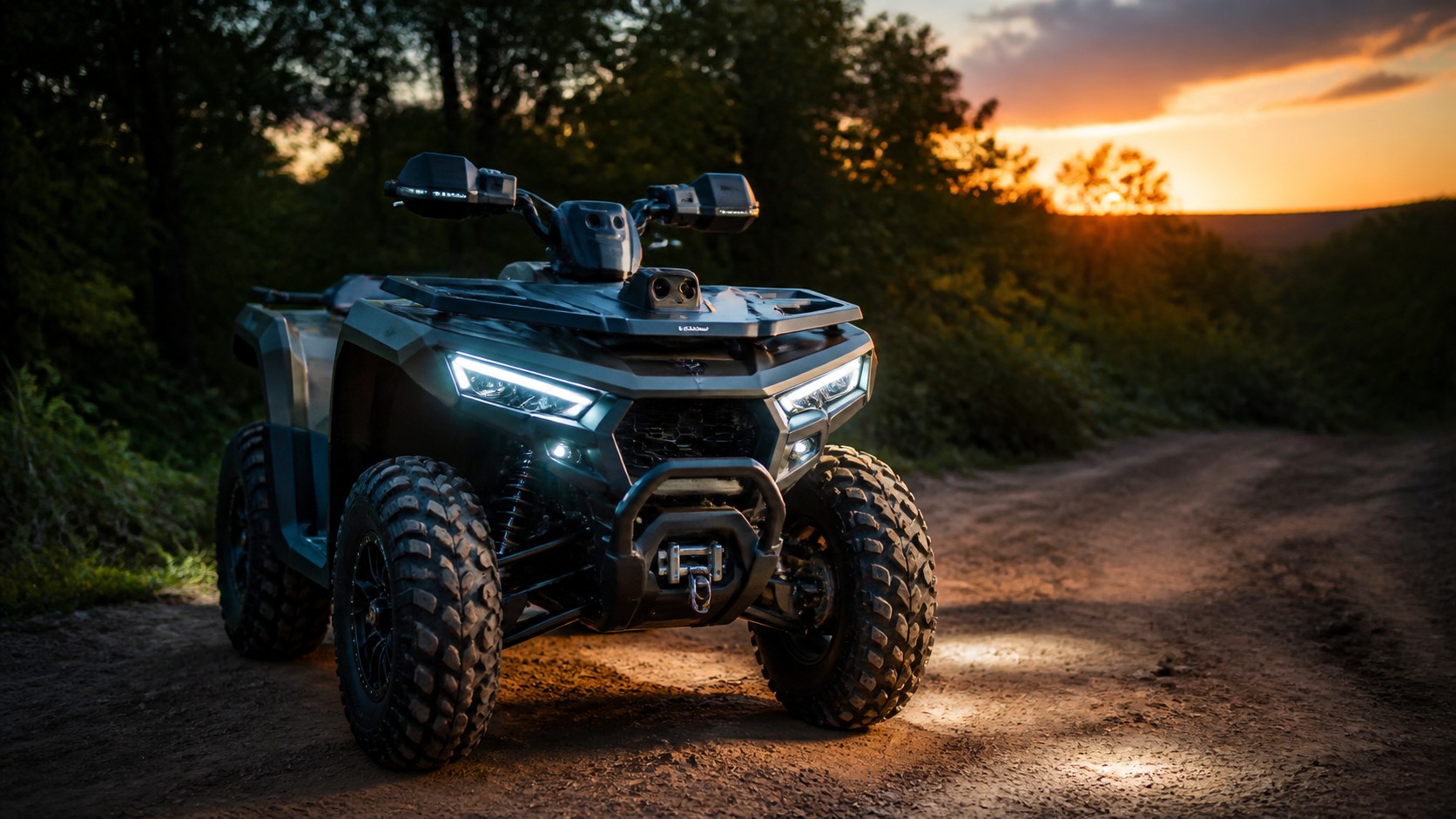
LED lighting can improve visibility while drawing less power than older options. Good lighting helps night riding, work chores, loading, and recovery. Aim and beam pattern matter as much as brightness.
Poorly aimed lights can blind other riders or reflect off dust and snow. Wiring must be fused and weatherproof. A light upgrade should improve control, not overload the electrical system.
Electric ATVs
Electric ATVs offer quiet operation, instant torque, fewer engine fluids, and potential benefits for hunting, property work, indoor facilities, and sensitive areas. They also raise questions about range, charging, battery life, cold weather, towing, weight, and repair support.
Range should be judged under real load, terrain, and temperature. A light-duty number on flat ground may not match mud, hills, cargo, or winter use.
Semi-Active And Adjustable Suspension
Some machines are moving toward more adjustable or electronically managed suspension. The promise is better control across changing terrain, load, and speed. The risk is cost and complexity when sensors, wiring, or specialized shocks need service.
Riders should ask whether the feature is serviceable locally and whether replacement parts are available. A brilliant system that cannot be repaired easily may not be ideal for hard use.
Buying Emerging Tech
Buy technology with support. Dealer knowledge, parts availability, warranty coverage, software updates, and documentation matter. First-generation features can be exciting, but they may also have unknown repair paths.
A test ride should include the settings the owner will actually use. If a feature is confusing in the driveway, it may not help on the trail.
Bottom Line
Emerging ATV technologies are best when they make the machine more controllable, informative, safe, or reliable. Power steering, ride modes, diagnostics, GPS, lighting, electric drivetrains, and suspension systems can all help when matched to real use.
Technology should reduce uncertainty. The rider still needs maintenance, judgment, training, and a machine that can be serviced after the novelty wears off.
Training Still Matters
No electronic feature replaces rider training. Power steering can reduce effort, but it does not choose a safe line. GPS can show a route, but it does not confirm whether a trail is legal or passable. Ride modes can soften response, but they do not correct poor body position.
Technology works best when it supports a skilled rider. The rider remains responsible for speed, terrain judgment, maintenance, and respecting machine limits.
Final Practical View
Emerging ATV technology should earn trust slowly. Test features close to home, learn the settings, read the manual, and keep mechanical basics maintained. A new feature is valuable only if it keeps helping after the first ride.
The best technology makes the ATV easier to control, diagnose, light, navigate, or maintain. Everything else is decoration until it proves useful.
What To Test Before Trusting A Feature
Any new technology should be tested close to home before it is trusted on a remote ride. Try each ride mode, steering setting, display function, navigation setup, light setting, winch control, and charging arrangement in ordinary conditions. Learn what normal behavior looks like.
Testing should include failure thinking. What happens if the phone dies? What if a display warning appears? What if the battery is low? What if the rider changes modes accidentally? Knowing the answer prevents confusion on the trail.
Technology And Maintenance Skills
New features can reduce some tasks while adding others. EFI may reduce carburetor fuss, but it adds sensors, pumps, injectors, and voltage needs. Electric power steering reduces effort, but it depends on wiring and assist components. GPS improves planning, but it needs charging and map management.
Owners should learn the systems they buy. Reading the manual, knowing fuse locations, understanding warning icons, and keeping software or service records can make advanced technology practical instead of intimidating.
Choosing Proven Versus New
Proven technology has known strengths, known problems, and established repair paths. New technology may offer better performance but less long-term information. Early adopters may accept that tradeoff; riders who need dependable work machines may prefer mature systems.
A good buying decision considers dealer support, parts availability, warranty coverage, service tools, and how long the owner plans to keep the ATV. The newest feature is not always the best long-term value.
Human Factors
Technology can distract as well as help. A display full of data may draw attention away from terrain. A navigation screen can tempt riders to stare down. A bright light bar can create glare. Ride modes can be forgotten until the ATV responds unexpectedly.
Good setup reduces distraction. Mount screens where they can be glanced at, aim lights carefully, choose simple default modes, and learn controls before the ride. Technology should support attention, not compete with it.
Reliability Questions For New Features
Before buying a technology feature, ask what happens when it fails. Can the ATV still be ridden? Is there a manual fallback? Are parts available? Can a local shop diagnose it? Is the system protected from water and vibration? These questions matter more than a short demo.
For remote riders, failure behavior is especially important. A feature that improves comfort but can disable the machine without local support may be a poor fit for isolated work or long trail rides.
Electric Power And Charging Reality
Electric accessories and electric ATVs both depend on energy planning. For accessories, the question is charging output and battery reserve. For electric machines, the question is ride distance, load, terrain, temperature, and charger access. Range changes when the ATV is worked hard.
Owners should avoid comparing best-case claims to worst-case use. Towing, mud, cold weather, hills, and heavy accessories all reduce margin. Good planning uses conservative numbers.
Practical Tech Adoption
The best way to adopt new ATV technology is gradually. Learn the controls, test settings in familiar terrain, keep records, and confirm that the feature still works after mud, water, vibration, and storage. A feature that cannot survive normal use is not ready for trust.
Technology should make riding clearer. If it creates distraction, confusion, or service uncertainty, simpler equipment may be the better choice for that rider.
What Owners Should Keep Simple
Even on technology-heavy ATVs, the basics remain simple: tires, brakes, battery, fluids, filters, cooling, wiring, and rider judgment. A new screen or mode cannot compensate for poor maintenance. The owner should treat technology as support for fundamentals.
When a feature is not needed for the ride, leaving it in a familiar setting can be wise. Consistency helps the rider notice when the machine changes for a real reason.
Final Technology Note
The best ATV technology is easy to explain after using it: it made steering easier, information clearer, lighting better, route planning safer, or maintenance more predictable. If the benefit cannot be named in real riding terms, the feature may not deserve priority.
Support Note
Support should be part of the purchase decision. Manuals, dealers, diagnostic access, parts, warranty terms, and user familiarity all decide whether new technology remains helpful after the first few rides.
Owner Confidence
Confidence comes from knowing what a feature does, when it helps, and how to keep riding if it stops helping. That knowledge matters more than the number of settings in the display.
FAQ
What ATV technology is most useful?
Useful technology solves real problems such as steering effort, visibility, diagnostics, navigation, or controlled power delivery.
Are electric ATVs practical?
They can be for some property, hunting, or quiet-use situations, but range, charging, cold weather, and support matter.
Should I buy first-generation ATV tech?
Only if support, warranty, parts availability, and the real benefit make sense for your use.