Reliable ATV Wiring Makes Power, Handling, And Accessories Work The Way They Should
Electrical systems improve an ATV when they deliver stable voltage, clean signals, dependable starting, correct charging, and safe accessory power. A weak battery, poor ground, overloaded circuit, or corroded connector can make a strong machine feel unreliable. Good wiring supports fuel injection, ignition, lighting, winches, fans, sensors, and trail confidence.
A: Follow the manual and inspect sooner after harsh riding.
A: A new feel, sound, smell, leak, heat issue, or warning light.
A: Yes. Mud adds grit, moisture, heat, and hidden wear.
A: No. Restore the baseline first, then decide if upgrades are useful.
A: Yes, especially after water, rocks, towing, heat, or heavy loads.
A: Dates, hours, parts, fluids, settings, and symptoms are all useful.
A: Use caution on safety, sealing, steering, suspension, brake, and drivetrain parts.
A: Working does not mean healthy; inspect when symptoms change.
A: Get help for uncertain brakes, steering, wiring, fuel leaks, or structural issues.
A: Inspect early, fix small problems, and test before riding remote terrain.
Electrical Reliability Is Performance
Electrical reliability may not sound like a performance upgrade, but it changes how confidently an ATV works. Stable voltage supports fuel injection, ignition, charging, lighting, cooling fans, power steering where equipped, and accessories. When voltage drops or connections fail, the rider loses consistency.
A machine with clean wiring starts better, runs more predictably, and lets the rider focus on terrain instead of wondering whether a fan, pump, or light will quit. That consistency is the reason electrical condition belongs in any serious discussion of power and reliability.
Starting And Charging
The battery, starter, solenoid, cables, grounds, stator, and regulator all work together. A weak battery can cause slow cranking. A poor ground can make the starter seem bad. A weak charging system can let the ATV start at home and fail after lights, fan use, or winching.
Charging voltage should be tested with the engine running and accessories considered. A battery replacement may solve the symptom for a few rides, but if charging is weak, the problem returns.
Fuel Injection And Ignition
Fuel-injected ATVs rely on clean electrical signals. Sensors, fuel pumps, injectors, coils, and control modules all need stable power and clean grounds. Low voltage can mimic fuel starvation, rough running, or hard starting.
Ignition also depends on wiring health. Heat, vibration, and water can damage connectors or insulation. When an ATV misfires only in wet conditions or after bumps, electrical inspection should move high on the list.
Cooling Fans And Heat Control
Electric fans are part of the cooling system. If a fan relay, fuse, connector, switch, sensor, or ground fails, the ATV can overheat even when the radiator is clean. Electrical faults can therefore become engine reliability problems.
Owners should confirm fan operation during maintenance. A fan that spins freely by hand still needs power, ground, and control. Testing the circuit prevents guessing.
Lights, Winches, And Accessory Load
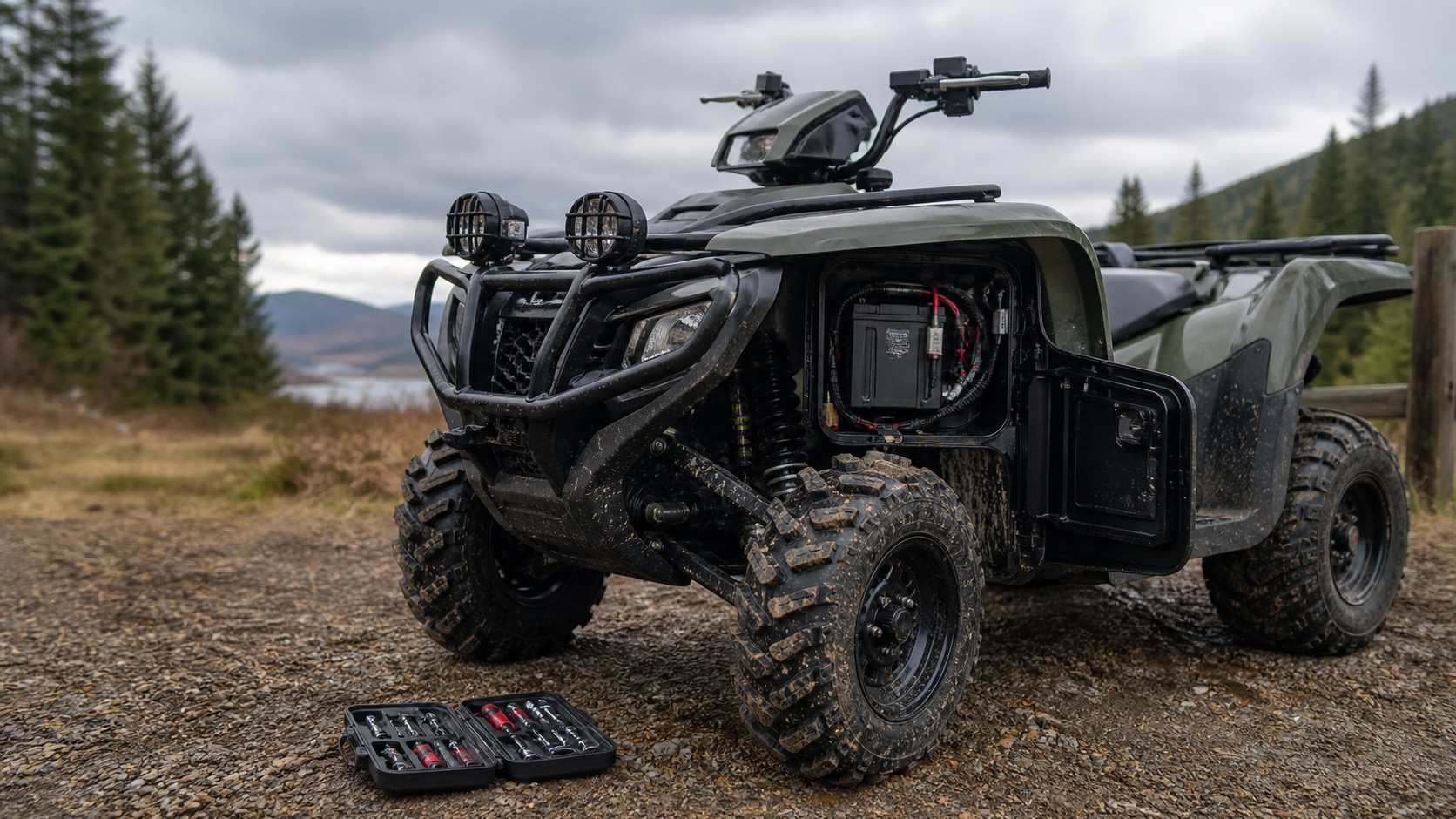
Lights help the rider see and be seen. Winches help recovery. Heated grips, sprayers, GPS units, and light bars can be useful. But each accessory adds load and wiring risk. Proper fuses, relays, wire size, switches, and routing matter.
Unfused battery leads and poor splices are common causes of trouble. A neat accessory installation should look deliberate, with protected wiring, clean terminals, and no rubbing near heat or moving parts.
Handling And Rider Confidence
Electrical failures can affect handling indirectly. Dim lights reduce night control. A dead fan may force the rider to stop in a poor place. A power steering issue can change steering effort. An intermittent misfire can upset traction on a climb.
A reliable electrical system keeps the ATV predictable. Predictability gives the rider more attention for braking, line choice, and body position.
Water And Mud Protection
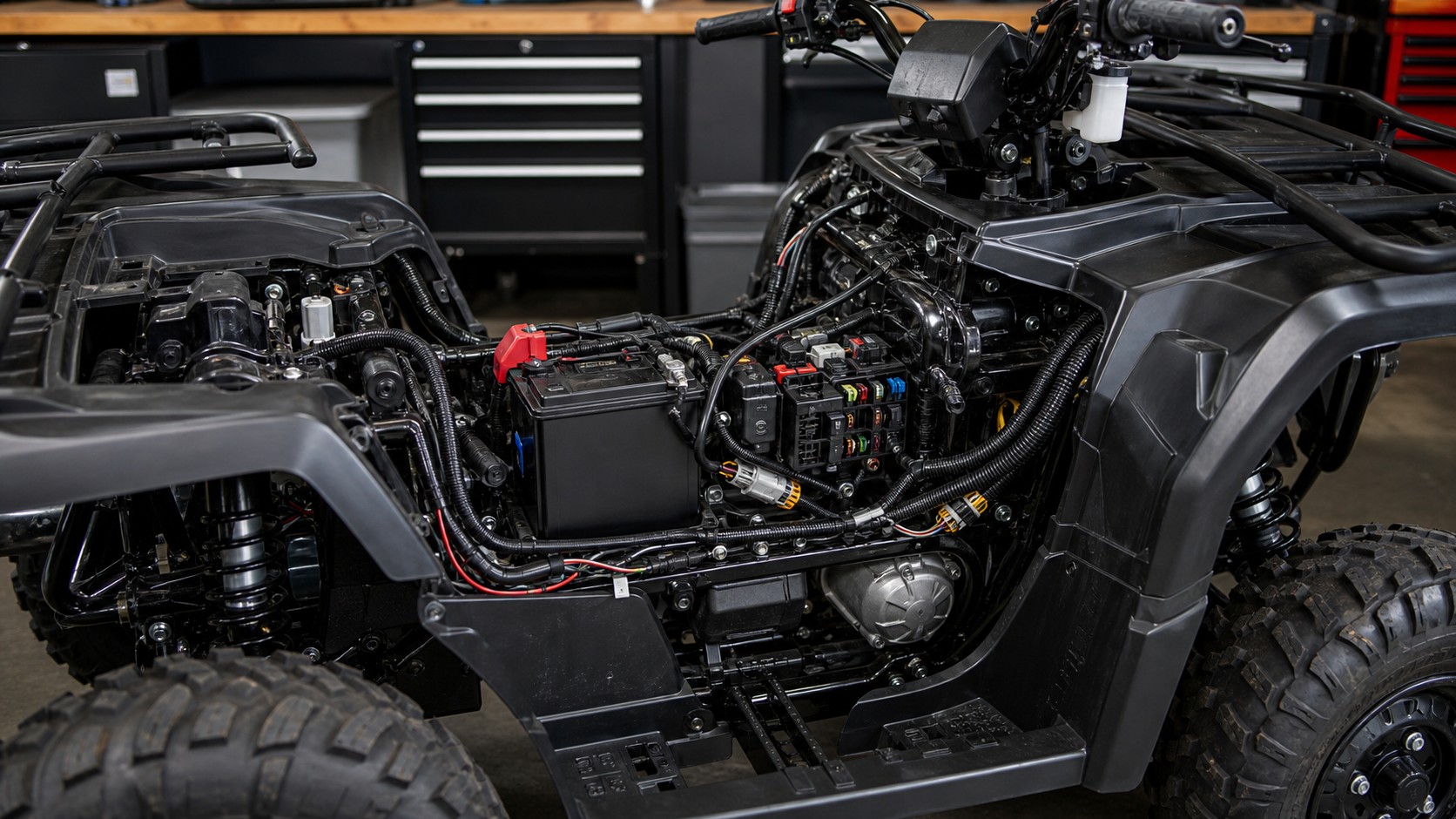
ATVs see water, mud, dust, and vibration. Connectors need to be seated and protected. Grounds should be clean and tight. Harnesses should be secured so they do not rub through insulation.
After deep water or heavy mud, inspect exposed connectors, fan wiring, winch cables, and battery terminals. Corrosion that starts small can become an intermittent fault later.
Diagnosis Order
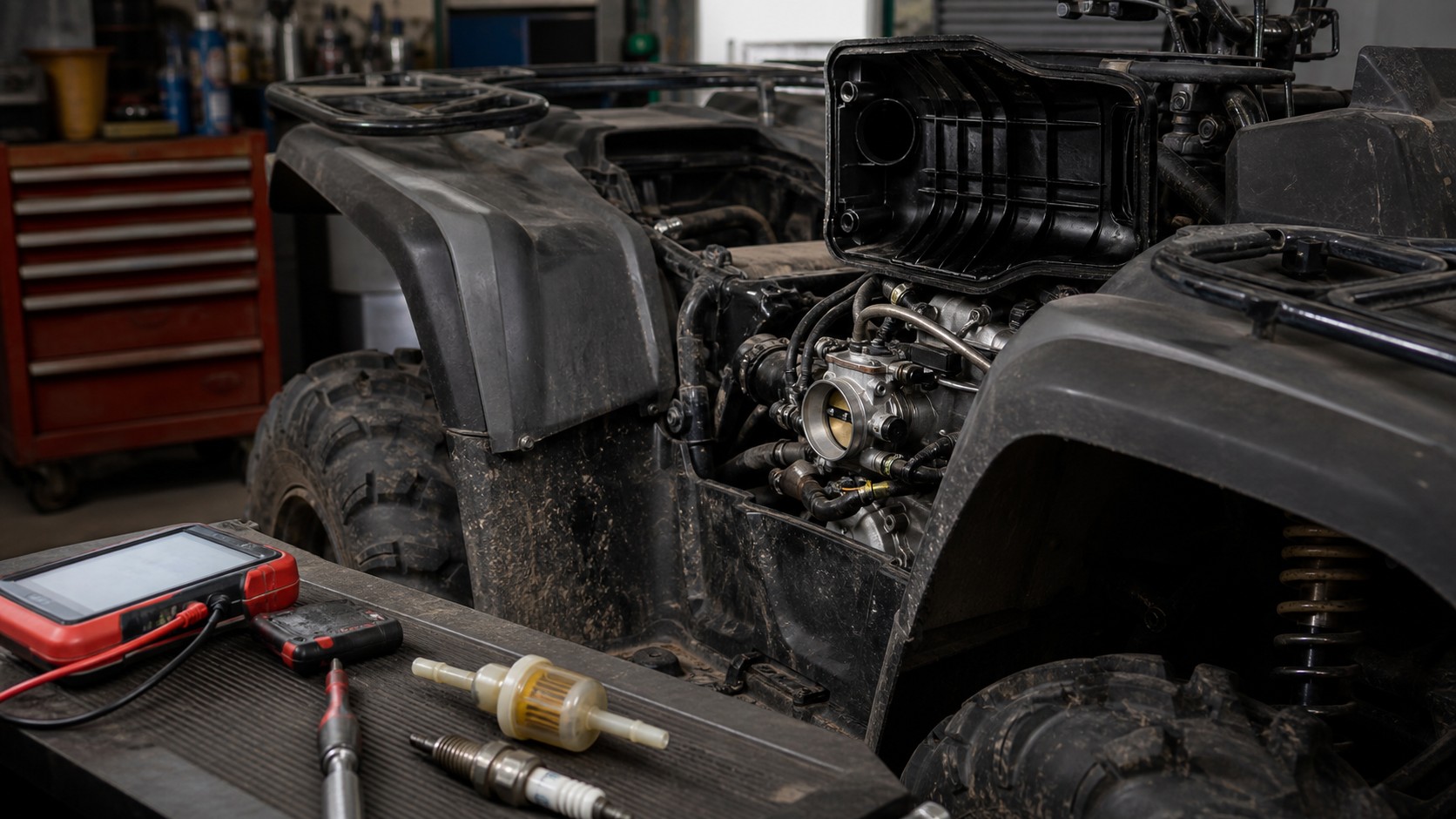
Start with the basics: battery, terminals, grounds, fuses, relays, and visible harness damage. Then test voltage at the component and follow the wiring diagram. Replacing parts before testing often adds cost without solving the fault.
Good diagnosis asks when the symptom happens. Cold, hot, wet, after bumps, under accessory load, or during fan operation are useful clues. The pattern often points toward the circuit that needs attention.
Ownership Habits
Keep the battery charged during storage, inspect wiring after accessory work, replace damaged connectors properly, and avoid routing wires where suspension, steering, exhaust, or cargo can hurt them. Electrical maintenance is mostly prevention.
When adding accessories, document what was added and where the fuse is. A small note can save time months later when troubleshooting a problem.
Bottom Line
Electrical systems and wiring improve ATV power, handling, and reliability by keeping every dependent system supplied with clean, stable power. Starting, charging, ignition, EFI, fans, lights, and accessories all depend on it.
A well-wired ATV feels calm because the rider is not managing random faults. Clean power, clean grounds, correct fusing, and protected routing are basic performance equipment.
Used ATV Electrical Checks
Used buyers should look closely at wiring before trusting a machine. Check battery age, terminals, fuse box condition, accessory wiring, winch cables, light switches, and any splices near the bars or racks. Messy wiring can reveal rushed repairs.
Run the ATV long enough for the fan to operate, then restart it hot. Test lights, winch controls where safe, brake lights if equipped, and display functions. Intermittent electrical faults often need heat and vibration before they appear.
How Electrical Health Supports Power
Power begins with combustion, but combustion on a modern ATV often depends on electricity. The fuel pump needs voltage, injectors need clean commands, coils need strong signals, and sensors need stable reference values. If voltage falls or connections corrode, the engine may hesitate, misfire, start hard, or shut off under load.
This is why a battery or ground problem can feel like an engine problem. The rider may chase fuel, spark plugs, or tuning when the real issue is resistance in a cable or a weak charging system. Electrical testing keeps diagnosis honest.
How Wiring Affects Cooling And Reliability
Cooling fans, temperature sensors, warning lights, and relays are electrical parts. A clean radiator cannot protect the engine if the fan circuit fails during slow work. A good coolant level does not help if the temperature signal is wrong or the fan relay never closes.
Fan wiring deserves special attention because it lives near heat, water, and mud. If an ATV overheats only during slow riding, confirm fan operation before assuming the engine or radiator is the only problem.
Accessory Planning
Accessories should be planned as a system. A winch, light bar, heated grips, sprayer, and phone charger may each look small in isolation, but together they can exceed what the charging system can comfortably support. Load matters most at idle and low rpm, where charging output may be limited.
Good accessory planning includes fuses close to power, relays for heavier circuits, weatherproof switching, proper wire size, and secure routing. It also includes restraint. Not every open spot on the handlebar needs another powered device.
Field Symptoms To Notice
Slow cranking, dim lights, flickering displays, random warning lights, a fan that does not run, a winch that kills the engine, or a machine that restarts poorly when hot are all useful clues. Intermittent symptoms should be written down with conditions: wet, hot, cold, after bumps, or with accessories on.
Those notes make troubleshooting faster. Electrical faults often hide when the machine is sitting still in a clean garage. The conditions that trigger the symptom may be the best diagnostic tool available.
Repair Quality Matters
Electrical repairs should be weather resistant and mechanically supported. Crimp connectors should be appropriate for the wire and environment. Solder, heat shrink, sealed connectors, loom, and strain relief may be appropriate depending on the circuit. Bare twisted wires under tape are not trail repairs that should become permanent.
A repair should also preserve serviceability. Future owners and mechanics need to know what was changed. Labeling accessory circuits and keeping wiring tidy can prevent hours of confusion later.
Buying Decisions
When comparing ATVs, electrical simplicity and parts support matter. A machine with common batteries, accessible fuses, clear harness routing, and available diagrams is easier to own than one with hacked accessories and mystery wiring. The cleaner machine may be worth more even if it has fewer add-ons.
Ask whether the ATV has had charging problems, water damage, fan repairs, ECU codes, or accessory rewiring. A seller who can explain the electrical history gives the buyer more confidence than a seller who only says the battery is new.
Maintenance Schedule Thinking
Electrical checks should be tied to normal service. At oil changes, inspect terminals, main grounds, fuse boxes, fan connectors, and accessory wiring. Before winter storage, charge and test the battery. Before night rides, check lights and switches. Before mud rides, look at exposed connectors.
This routine is not complicated, but it prevents the pattern that causes many failures: a small corroded connection is ignored until it becomes a no-start problem far from home.
Final Practical View
The electrical system is the nervous system of a modern ATV. It does not replace mechanical strength, but it allows the engine, cooling, lighting, starting, and accessories to behave consistently. A rider who maintains wiring is protecting more than convenience.
For most owners, the best electrical upgrade is not a bigger accessory. It is a healthy battery, clean grounds, sealed connectors, correct fusing, and wiring routed with enough care to survive real trail vibration.
One Last Owner Check
Before a long ride, confirm the ATV cranks strongly, charges correctly, lights work, the fan can run, and accessory wiring is secure. These checks are quick, but they protect the systems that most often strand a rider when vibration and heat expose a weak connection.
Final Practical Note
Electrical work rewards patience. When a problem appears, avoid jumping from one replacement part to the next. Measure voltage, check grounds, inspect connectors, and confirm the circuit under the same conditions that caused the symptom. That method saves money and makes the ATV more dependable over time.
FAQ
How does wiring affect ATV reliability?
Clean wiring supports starting, charging, ignition, fuel injection, fans, lighting, and accessories without intermittent faults.
What should I check first for electrical problems?
Start with the battery, terminals, grounds, fuses, relays, and visible harness damage.
Can accessories cause electrical trouble?
Yes. Poorly fused or overloaded accessories can drain batteries, melt wiring, or create intermittent faults.