Bogging, Stalling, And Backfiring Usually Point To Fuel, Air, Spark, Heat, Or Load
An ATV that bogs, stalls, or backfires is telling the rider that combustion or load control is not stable. Common causes include dirty air filters, stale fuel, carburetor problems, weak fuel pumps, vacuum leaks, spark plug issues, low voltage, sensor faults, overheating, exhaust leaks, or drivetrain load. The right fix starts with when the symptom happens.
A: Follow the manual and inspect sooner after harsh riding.
A: A new feel, sound, smell, leak, heat issue, or warning light.
A: Yes. Mud adds grit, moisture, heat, and hidden wear.
A: No. Restore the baseline first, then decide if upgrades are useful.
A: Yes, especially after water, rocks, towing, heat, or heavy loads.
A: Dates, hours, parts, fluids, settings, and symptoms are all useful.
A: Use caution on safety, sealing, steering, suspension, brake, and drivetrain parts.
A: Working does not mean healthy; inspect when symptoms change.
A: Get help for uncertain brakes, steering, wiring, fuel leaks, or structural issues.
A: Inspect early, fix small problems, and test before riding remote terrain.
Start With When It Happens
Bogging, stalling, and backfiring are easier to diagnose when the rider notes the condition. Does it happen cold, hot, at idle, under throttle, in water, after bumps, at full load, or only after storage? The timing narrows the cause.
A symptom that appears after bumps may be wiring or fuel slosh. A hot symptom may be heat, valves, ignition, or fuel delivery. A full-throttle bog differs from an idle stall. Details matter.
Air Filter And Intake Problems
A dirty air filter can make the ATV feel weak or rich. A leaking intake boot or poorly sealed airbox can make it run lean and risk engine damage. Water in the airbox can cause stumbling or stalling. Rodent nests can restrict airflow after storage.
Air checks are simple and should happen early. The engine cannot run cleanly if the intake path is blocked, leaking, wet, or contaminated with dust.
Fuel Quality And Delivery
Stale fuel, water contamination, clogged filters, blocked tank vents, dirty carburetor jets, weak fuel pumps, and failing injectors can all cause bogging or stalling. Storage problems are especially common when old fuel sits in carburetors or tanks.
Fuel symptoms may change with throttle. A machine that idles but bogs under load may not be getting enough fuel. A machine that smells rich or fouls plugs may be getting too much or burning poorly.
Carburetor Versus EFI Clues
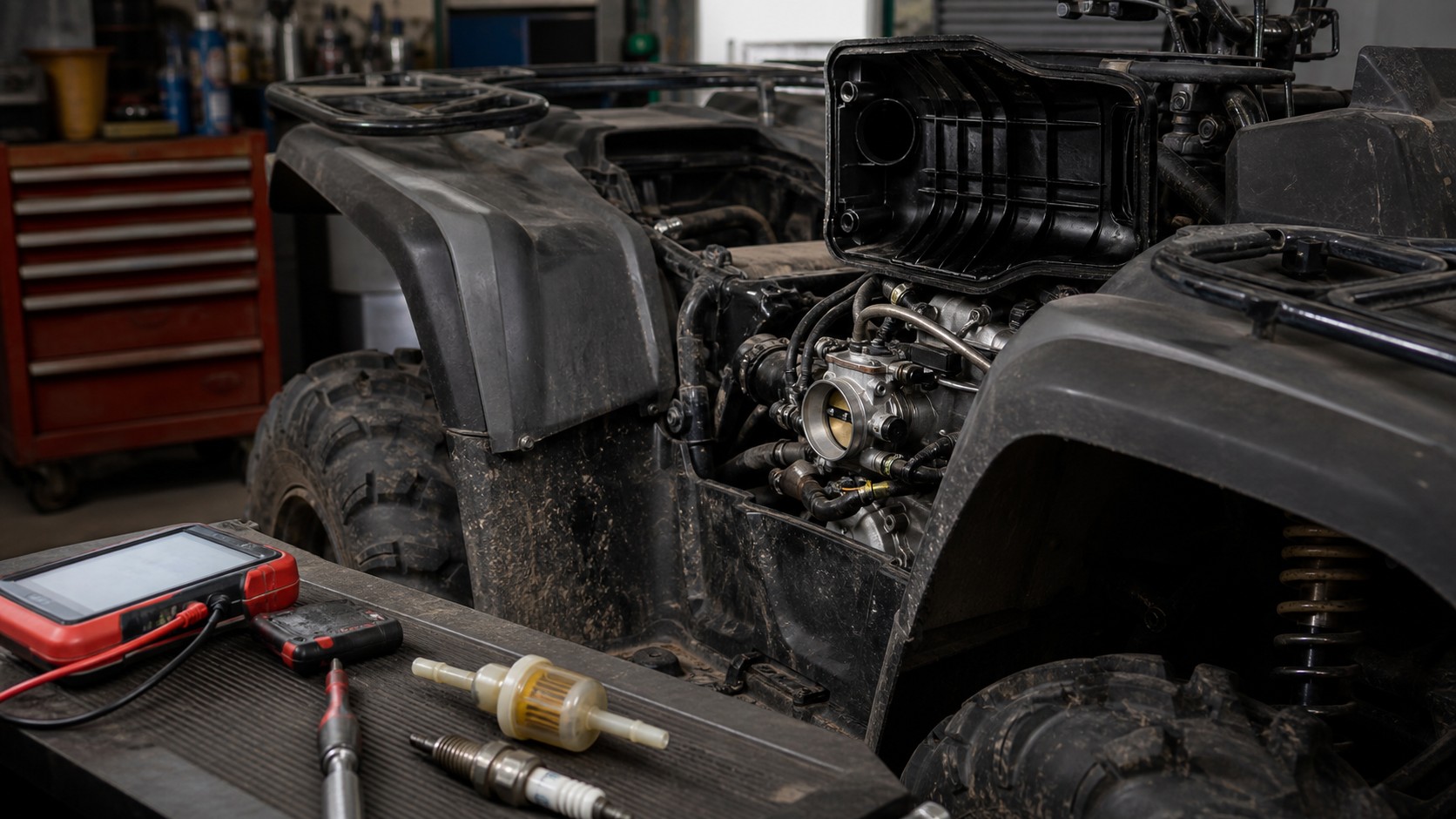
Carbureted ATVs may need choke/enrichment checks, jet cleaning, float inspection, idle adjustment, and vacuum leak diagnosis. EFI ATVs need battery voltage, pump pressure, injector function, sensor signals, and code checks where available.
The systems differ, but the logic is similar: fuel must arrive in the correct amount at the correct time. Maintenance basics should be verified before deeper work.
Spark And Electrical Faults
Weak spark, fouled plugs, damaged wires, poor grounds, failing coils, low voltage, and wet connectors can cause misfire, stalling, or backfire. Electrical faults often appear after washing, water crossings, heat, or vibration.
If the ATV cuts out suddenly, then restarts, electrical diagnosis should be considered. Fuel problems often fade or surge; electrical problems can feel like a switch was flipped.
Backfiring And Exhaust Leaks
Backfiring or popping can come from lean conditions, ignition problems, exhaust leaks, valve issues, or recent intake and exhaust changes. Some popping on deceleration may be less serious than loud backfires under load, but any new or severe symptom deserves attention.
Exhaust leaks near the head can pull oxygen into the exhaust and create popping. Loose or damaged exhaust parts should be inspected before assuming the ECU or carburetor is wrong.
Heat And Load
Overheating can change running behavior. A hot engine may lose power, stall, or trigger protective behavior on some machines. CVT belt heat or drivetrain load can also make the ATV feel like the engine is bogging when the drivetrain is actually slipping or dragging.
If symptoms appear during towing, mud, sand, or slow heavy work, check cooling, belt condition, drive range, and clutching. The engine may not be the only system involved.
Recent Changes
Recent changes are powerful clues. New exhaust, intake, tune, jetting, fuel, spark plug, battery, tires, clutch parts, or accessories can all introduce running problems. If the ATV ran well before a change, review that change first.
This does not mean every new part is bad. It means installation, compatibility, and adjustment should be verified before unrelated parts are blamed.
Safe Troubleshooting
Troubleshooting should be safe. Avoid testing around fuel vapors, hot exhaust, moving belts, or spinning wheels. Let hot parts cool before reaching near them. Use stands and tools correctly when inspection requires access.
If the ATV backfires loudly, leaks fuel, loses power in traffic areas, or stalls unpredictably on hills, stop riding until the cause is understood.
Bottom Line
ATV bogging, stalling, and backfiring usually trace back to fuel, air, spark, heat, load, or recent changes. The fastest diagnosis begins with when and how the symptom appears.
Start with maintenance basics, use fresh fuel, inspect intake and spark, check voltage, read codes where available, and test before replacing parts.
Maintenance Fixes Many Running Problems
A surprising number of bogging, stalling, and backfiring complaints improve after basic service. Fresh fuel, clean air filter, correct spark plug, clean carburetor, healthy battery, sealed intake, clean connectors, and correct idle settings can restore normal behavior.
This is why diagnosis should begin with maintenance history. If the ATV has not been serviced recently, tuning or major part replacement may be premature.
Final Practical View
Running problems are not all the same. A bog under load, a stall at idle, a backfire on deceleration, and a cutout after bumps point to different paths. The rider’s job is to notice the pattern.
Once the pattern is clear, testing becomes faster and safer. Fuel, air, spark, heat, load, and recent changes give the owner a sensible map.
Bogging Under Load
Bogging under load often means the engine cannot get the right fuel-air-spark combination when demand rises. A dirty air filter, restricted fuel flow, clogged main jet, weak fuel pump, failing injector, vacuum leak, or ignition weakness can all show up when the rider asks for more power.
Load can also come from the drivetrain. A slipping belt, dragging brake, wrong range, oversized tires, or stuck drivetrain component can make the ATV feel like the engine is bogging. Check both engine and load before replacing parts.
Idle Stalls
Stalling at idle points toward a different set of possibilities. Carburetor idle circuits, throttle body cleanliness, idle speed, air leaks, weak battery voltage, sensor signals, valve clearance on some engines, or safety switches may be involved. Fuel that is old or contaminated can make idle unstable.
A machine that idles poorly but runs at higher throttle may need cleaning or adjustment rather than major repair. Start with maintenance history and obvious intake, fuel, and electrical checks.
Backfire Patterns
A pop on deceleration, a loud bang under load, and a backfire through the intake are different clues. Deceleration popping may involve lean conditions or exhaust leaks. Backfire under load can point to ignition, timing, fueling, or valve issues. Intake backfire deserves careful attention.
Recent exhaust, intake, jetting, or tuning changes should be reviewed first. If the symptom appeared immediately after a change, compatibility or installation may be the fastest path to the answer.
Heat, Sensors, And Voltage
Modern ATVs can run poorly when sensors receive bad information or voltage is unstable. A weak battery, poor ground, failing temperature sensor, dirty connector, or charging issue may create symptoms that feel like fuel trouble. Heat can make marginal electrical parts fail intermittently.
When symptoms appear only hot, after water, or after rough bumps, electrical and sensor checks deserve attention. A fuel-only diagnosis may miss the trigger.
Diagnostic Order
A practical order begins with maintenance: fresh fuel, clean air filter, correct spark plug, charged battery, clean terminals, and visible inspection. Then move to when the symptom happens. After that, test fuel delivery, spark quality, intake leaks, exhaust leaks, heat, and drivetrain load.
This order prevents the common mistake of treating every running problem as a carburetor or ECU problem. Many symptoms are caused by simpler conditions around the engine.
Examples By Riding Condition
If the ATV bogs only in deep mud, belt heat, intake restriction, water intrusion, or load may be involved. If it stalls when warm at idle, idle circuit, sensor, valve, or heat-sensitive electrical issues may matter. If it backfires after an exhaust install, leaks or fueling changes should be checked.
If it cuts out after bumps, wiring, connectors, kill switch circuits, or fuel movement in the tank may be clues. Matching the symptom to the condition is the core of diagnosis.
Why Fresh Fuel Matters
Old fuel loses volatility and can leave deposits. Carburetor passages are small enough that deposits create major symptoms. EFI injectors and pumps can also suffer from contamination. Water in fuel creates hard starting, stumbling, corrosion, and poor combustion.
If a machine has been stored, drain or replace questionable fuel according to safe practices. Do not build a diagnosis on bad fuel and expect clear answers.
When Professional Help Makes Sense
Professional help makes sense when symptoms involve severe backfire, suspected valve or timing issues, repeated overheating, fuel leaks, uncertain electrical faults, or anything that affects safe control. A shop with diagnostic tools can test compression, fuel pressure, sensors, and ignition more efficiently.
Getting help is not a failure. It can be cheaper than replacing parts blindly or damaging the machine by riding through symptoms.
Prevention After Repair
After a running problem is fixed, prevention matters. If stale fuel clogged the carburetor, improve storage habits. If mud blocked airflow, change the cleaning routine. If a connector failed after water, protect the wiring better. The repair should teach the next maintenance step.
A short test ride after repair should include the condition that caused the symptom if it can be repeated safely. Idle, low throttle, load, hot restart, and rough terrain can all reveal whether the problem is truly gone.
Reading Multiple Symptoms Together
Sometimes an ATV has more than one symptom. Bogging plus belt smell may point toward drivetrain load. Stalling plus dim lights may point toward voltage. Backfiring plus recent exhaust work may point toward leaks or fueling. Combining clues is better than treating each symptom separately.
The owner should write down the pattern before changing parts. Good notes can turn a confusing problem into a clear diagnostic path.
FAQ
Why does my ATV bog under throttle?
Common causes include dirty air filters, fuel delivery problems, stale fuel, clogged jets, weak pumps, intake leaks, or drivetrain load.
What causes ATV backfiring?
Backfiring can come from lean mixtures, ignition faults, exhaust leaks, timing issues, valve problems, or recent intake/exhaust changes.
Why does my ATV stall only when hot?
Heat-sensitive electrical parts, fuel delivery issues, valves, overheating, or sensor problems may be involved.