Mountain And Rock Crawling Rewards Patience, Planning, And Precise ATV Control
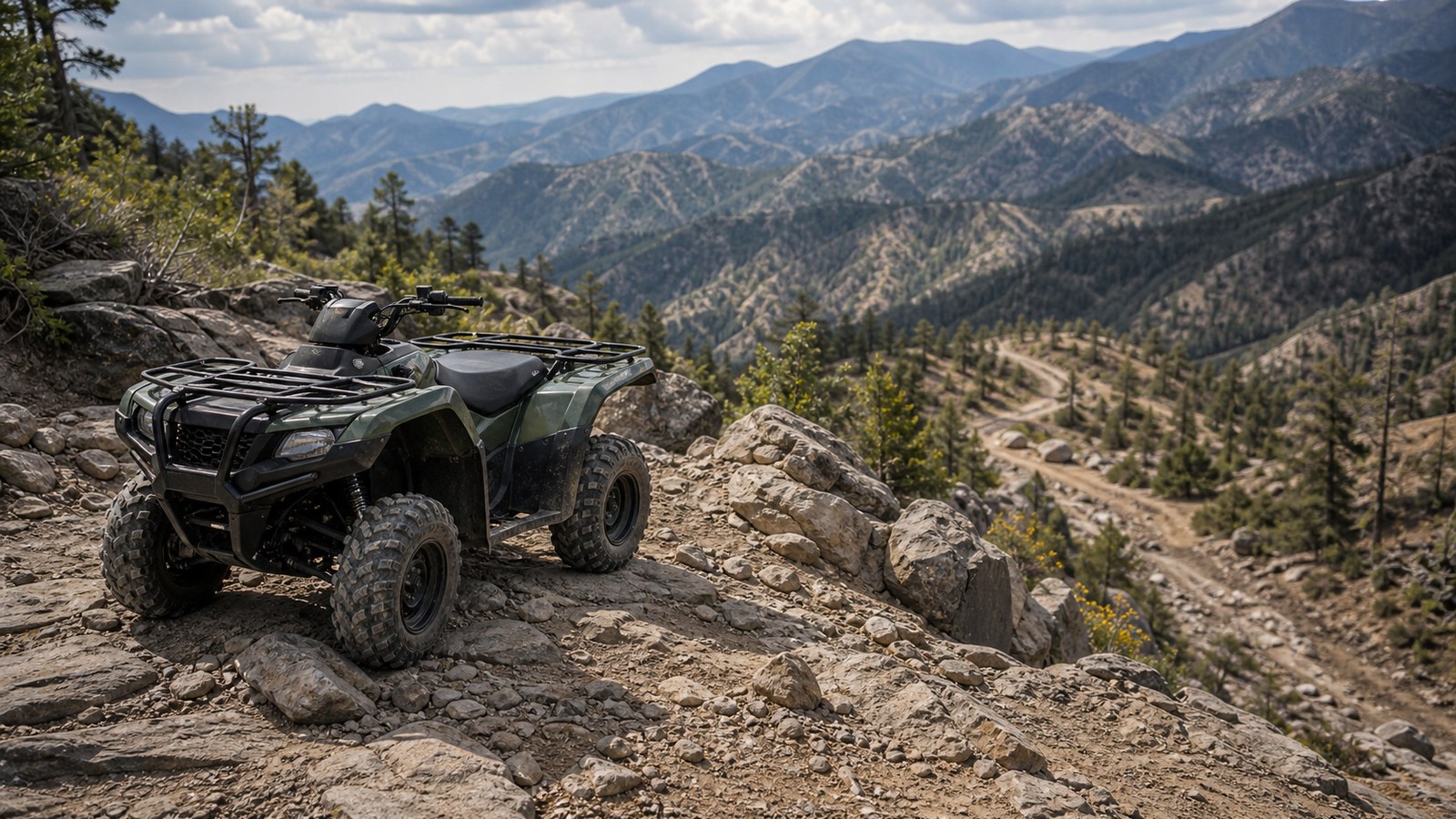
Mountain trails and rock crawling are not won by speed. They ask the rider to choose lines carefully, manage throttle smoothly, protect the ATV from impacts, control descents, and know when a route is beyond the machine or the group. A smart mountain rider treats tires, suspension, brakes, recovery gear, weather, cargo, and body position as one system. The goal is steady progress without breaking parts or stacking risk.
A: Follow the manual and inspect sooner after harsh riding.
A: A new feel, sound, smell, leak, heat issue, or warning light.
A: Yes. Mud adds grit, moisture, heat, and hidden wear.
A: No. Restore the baseline first, then decide if upgrades are useful.
A: Yes, especially after water, rocks, towing, heat, or heavy loads.
A: Dates, hours, parts, fluids, settings, and symptoms are all useful.
A: Use caution on safety, sealing, steering, suspension, brake, and drivetrain parts.
A: Working does not mean healthy; inspect when symptoms change.
A: Get help for uncertain brakes, steering, wiring, fuel leaks, or structural issues.
A: Inspect early, fix small problems, and test before riding remote terrain.
Start With The Line
Mountain and rock crawling begins before the ATV moves. The rider should look at the obstacle, find the entry, identify where each tire needs to go, and decide where to stop if the line fails. Rushing into a ledge or boulder field leaves fewer choices.
A good line keeps the ATV stable, avoids high-centering, protects vulnerable parts, and leaves room for correction. The most impressive line is not always the smartest one. Often the best line is the calmest path through rough ground.
Use Low-Speed Control
Technical terrain rewards slow precision. Low range, smooth throttle, gentle braking, and careful steering help the tires stay planted. Sudden throttle can bounce the ATV, break traction, or load axles and belts. Sudden braking can unsettle descents or loose rock.
The rider should practice creeping over small obstacles before attempting larger ones. Feeling how the ATV climbs, drags, and settles at low speed builds confidence for harder routes.
Climbs And Descents
Climbs should be approached with a clear plan and enough momentum, but not reckless speed. The rider should know whether the top is clear and whether turning around is possible. If traction fades, forcing the throttle can make the situation worse.
Descents need even more patience. Use low range and engine braking where appropriate, keep service brakes smooth, and avoid locking wheels on loose rock. A loaded ATV needs more room and a more conservative line.
Tires, Pressure, And Protection
Durable tires with good sidewalls matter in rocks. Pressure affects grip and impact resistance, so riders should avoid guessing wildly. Too much pressure reduces contact; too little can damage wheels or lose beads. Carry tire repair tools.
Skid plates, A-arm guards, and handguards can protect the ATV from common impacts. Protection should be installed securely and checked after the first ride. Armor that rattles loose or traps debris creates new problems.
Weather And Elevation
Mountain weather can change quickly. Rain, snow patches, wind, and temperature drops may appear above the trailhead. Elevation can affect engine performance and rider stamina. Pack layers, water, navigation, and communication even when the ride looks short.
A route that is easy in dry weather can become slick or dangerous after rain. Turning around before conditions stack up is part of good mountain judgment.
Group Strategy
Groups should stop before technical sections and discuss the line. Only one rider should enter a difficult obstacle at a time. Spotters should use clear signals, stand in safe positions, and avoid crowding the ATV. If the rider does not understand the signal, stop.
The group should ride at the pace of the least experienced rider. Pressure causes mistakes. A rider who skips an obstacle today can learn it later with a better setup or more practice.
Recovery And Repair Planning
Rock and mountain rides should include recovery gear, tire repair, tools, first aid, water, and communication. Winches and straps should be attached only to safe points. Keep hands and bodies away from tensioned lines.
A small issue can become serious on a remote climb. A torn tire, broken lever, overheated belt, or weak brake may be manageable near camp but dangerous miles into a mountain route. Preparation protects the whole group.
After-Ride Inspection
After a technical ride, inspect tires, wheels, skid plates, suspension arms, steering parts, brakes, CV boots, frame tubes, and racks. Look for cuts, bends, leaks, loose hardware, and fresh impact marks. Rocks leave clues.
Fix damage before the next ride. Technical confidence depends on a machine that remains predictable. Ignoring small damage invites larger trouble on the next obstacle.
Bottom Line
Mountain and rock crawling are about control, not force. The rider who chooses clean lines, uses smooth inputs, and maintains the ATV will usually go farther than the rider who relies on throttle and armor.
Build the ATV for stability, protection, braking, and recovery. Then ride it with patience. That is the smarter way through rough country.
FAQ
What matters most in rock crawling?
Line choice and low-speed control matter most. Parts help, but patience decides the ride.
Should I lift my ATV for rocks?
Moderate clearance can help, but too much lift can reduce stability and strain parts.
What should I carry in the mountains?
Tools, tire repair, recovery gear, water, first aid, communication, navigation, and weather-appropriate layers.
Spotting And Communication
Spotters are useful only when the rider and spotter agree on signals before the obstacle. Hand signals should be simple: stop, driver, passenger, forward, reverse, and hold. A spotter should stand where the rider can see them and where the ATV cannot slide or roll into them.
If a signal is unclear, the rider should stop. Guessing while balanced on rocks or a steep climb is a poor trade. Good communication slows the moment down and keeps the group from turning one tricky obstacle into a larger problem.
Machine Limits
Every ATV has limits. Ground clearance, wheelbase, width, tire size, cooling, belt strength, brakes, and rider skill all decide what the machine can do. A route that works for a highly modified ATV may not be appropriate for a stock utility machine with cargo.
Riders should avoid comparing themselves to machines built for different terrain. The smart question is whether this ATV, with this rider and this group, can complete the section cleanly and return safely.
Common Mountain Mistakes
Common mistakes include climbing without seeing the top, descending too fast, carrying high cargo, ignoring weather, following a more experienced rider blindly, and using throttle to solve balance problems. Each mistake reduces the rider’s options.
The better habit is to pause before technical sections. Look, plan, communicate, and choose the easiest safe line. Technical riding is more satisfying when it is deliberate rather than lucky.
Final Rock Riding Standard
A good mountain ride ends with the ATV still straight, the group still calm, and the rider knowing what worked. If a section required luck, it should be treated as a lesson, not a new normal.
Rock crawling and mountain riding can be deeply rewarding because every clean line feels earned. The safest riders earn that feeling through preparation and restraint.
What To Practice Before A Hard Mountain Ride
Practice should happen before the difficult trip. Riders should rehearse slow starts, controlled stops, backing up, using low range, turning around on a mild slope, and easing over small rocks. These simple drills teach how the ATV responds when the rider has time to think.
A rider should also practice stopping and restarting on uneven ground where it is safe. Mountain routes often require pauses at gates, switchbacks, or obstacles. If the rider can restart calmly without spinning or rolling backward, technical trails feel less stressful.
Practice with the gear carried on real rides. Cargo changes balance, and recovery equipment adds weight. A machine that feels perfect empty may feel different with tools, water, and a storage box installed.
How To Protect The Trail And The Machine
Rock and mountain routes can be fragile. Spinning tires on climbs, cutting switchbacks, and widening trails around obstacles can damage access. A smart rider chooses clean lines that reduce wheelspin and avoids creating new paths around hard sections.
Protecting the machine means the same thing in a different form. Less wheelspin, fewer impacts, and smoother braking reduce stress on tires, axles, belts, brakes, and suspension. Careful riding is not timid; it is efficient.
When the route is too wet, blocked, or damaged, the right decision may be to come back later. Responsible riders keep trails open by refusing to turn every obstacle into a throttle contest.
Final Mountain Riding Checklist
Before a mountain or rock ride, check tire pressure, brakes, steering, skid plates, recovery points, cargo straps, fluids, and communication. Confirm the route, the weather, the daylight window, and the skill level of every rider in the group. Technical trails leave less room for forgotten basics.
During the ride, keep decisions small and early. Stop before hard sections, choose a line, communicate clearly, and let one rider through at a time. If the ATV starts to smell hot, lose braking confidence, or take repeated impacts, pause and inspect. Mechanical warnings should not be treated as background noise.
After the ride, inspect before memory fades. Rock damage can be subtle: a sliced sidewall, bent wheel lip, torn boot, loose skid plate, or brake line rub may not announce itself immediately. A careful post-ride check is what makes the next mountain ride safer.
Practical Mountain Scenarios
On a rocky climb, the rider should stop below the obstacle, watch the surface, and decide whether the tires can stay planted. If loose rock covers the line, more throttle may only scatter traction. A slower line with better tire placement can be safer than a direct charge.
On a narrow shelf trail, the rider should keep cargo secure and avoid sudden steering. Looking far ahead helps maintain a smoother path. If another rider is coming, stop in the widest safe place rather than trying to squeeze past on unstable ground.
On a steep descent, the rider should choose low range where appropriate, keep braking smooth, and avoid locking the tires. A heavy ATV with tools or camping gear needs more room. Descents are where poor preparation shows quickly.
At the end of the day, the rider should ask whether the ATV felt controlled or merely lucky. Controlled rides can be repeated. Lucky rides are warnings to change the setup, the line, or the route next time.