An ATV That Will Not Start Needs A Calm, Ordered Diagnostic Check
When an ATV will not start, the fastest path is not guessing parts. Start with simple clues: battery strength, kill switch position, fuel, fuses, neutral or brake interlocks, spark, air, and whether the engine cranks. A no-crank problem, slow-crank problem, and cranks-but-will-not-fire problem point to different systems, so the checklist should follow the symptom.
A: Follow the manual and inspect sooner after harsh riding.
A: A new feel, sound, smell, leak, heat issue, or warning light.
A: Yes. Mud adds grit, moisture, heat, and hidden wear.
A: No. Restore the baseline first, then decide if upgrades are useful.
A: Yes, especially after water, rocks, towing, heat, or heavy loads.
A: Dates, hours, parts, fluids, settings, and symptoms are all useful.
A: Use caution on safety, sealing, steering, suspension, brake, and drivetrain parts.
A: Working does not mean healthy; inspect when symptoms change.
A: Get help for uncertain brakes, steering, wiring, fuel leaks, or structural issues.
A: Inspect early, fix small problems, and test before riding remote terrain.
Identify The Starting Symptom
The first diagnostic question is whether the engine cranks. A no-crank ATV points toward battery, switches, fuses, starter relay, starter motor, cables, grounds, or safety interlocks. A cranking ATV that will not fire points toward fuel, spark, air, compression, sensors, or timing.
Separating those conditions prevents wasted work. Replacing a spark plug will not fix a dead starter circuit. Replacing a battery will not fix a clogged carburetor unless the battery was part of the actual symptom.
Battery And Connections
A weak battery is one of the most common causes of starting trouble. Check resting voltage, cranking behavior, terminal tightness, corrosion, and main grounds. A battery can show decent voltage with no load and still fail when the starter asks for current.
Loose or dirty cables create voltage drop. The rider may hear clicking, slow cranking, or nothing at all. Cleaning and tightening terminals should happen before deeper diagnosis.
Switches, Fuses, And Interlocks
Kill switches, keys, brake switches, neutral switches, tether switches where equipped, fuses, and relays can all prevent starting. Confirm the obvious controls before assuming a major failure. Many no-start problems begin with a switch in the wrong position or a blown fuse.
Safety interlocks should not be permanently bypassed. They exist to prevent unintended movement or unsafe starting. If an interlock fails, repair it correctly rather than defeating the safety system.
Starter Circuit
If the battery is strong and controls are correct, the starter circuit comes next. The solenoid or relay should receive a control signal and deliver current to the starter. Bad cables, poor grounds, worn starter brushes, or a failing solenoid can stop cranking.
Testing voltage at each point is better than guessing. A click at the relay does not prove the starter is good, and silence does not prove the starter is bad. The circuit has to be followed.
Fuel Checks
If the ATV cranks but will not start, fuel is a major branch. Check fuel level, fuel age, fuel valve position where equipped, tank venting, fuel lines, pump sound on EFI models, and carburetor condition on carbureted models. Stale fuel causes many storage-related starting issues.
Carburetors can gum up jets and passages. EFI systems need pump pressure and stable voltage. Both systems need clean fuel and unobstructed delivery.
Spark And Ignition
Spark checks should be done safely and according to the manual. A fouled plug, damaged plug wire, weak coil connection, bad ground, low voltage, or wet connector can prevent ignition. Spark problems may appear after washing, water crossings, or storage.
A new plug is inexpensive on many machines, but it should not be the only test. Plug condition also tells a story: wet, dry, black, white, or damaged plugs point toward different causes.
Air And Flooding
The engine needs clean air. A blocked air filter, rodent nest, collapsed intake, or water in the airbox can prevent starting or make the engine run poorly. After deep water or long storage, inspect the intake path before repeated cranking.
Flooding can happen when too much fuel enters the engine. The symptom may include fuel smell, wet plug, or attempts to fire without catching. Follow the manual for clearing a flooded engine.
Hot, Cold, And Wet Clues
When the problem happens matters. Cold-only starting trouble may point to battery strength, choke, enrichment, fuel quality, or compression. Hot-only trouble may point to heat-sensitive electrical parts, vapor issues, or tight valves on some engines. Wet-only trouble often suggests connectors, plug caps, switches, or grounds.
Write down the pattern. The pattern is often more useful than the first part someone suggests replacing.
When To Stop Guessing
If basic checks do not identify the issue, use the service manual and proper test tools. Compression, fuel pressure, sensor signals, starter current draw, and charging system tests may be needed. Guessing gets expensive quickly.
If fuel leaks, wiring heat, severe backfire, or unsafe starter behavior appears, stop and get proper repair help. A no-start problem should not become a fire or injury risk.
Bottom Line
An ATV that will not start should be diagnosed by symptom: no crank, slow crank, or cranks but will not fire. Battery, connections, switches, fuel, spark, air, and safety interlocks are the first branches.
Work in order, test before replacing parts, and use the manual for the exact machine. Calm diagnosis is faster than random parts swapping.
Storage-Related No-Starts
Many no-start problems appear after storage. Fuel gets stale, carburetor passages gum up, batteries weaken, rodents damage wiring, and rubber parts dry out. An ATV that ran perfectly months ago may need fuel, battery, and intake checks before deeper diagnosis.
Pre-storage maintenance prevents many of these issues. Fresh treated fuel where appropriate, a maintained battery, a clean machine, and protected storage make the first start of the season much easier.
Final Diagnostic Habit
The best no-start habit is order. Confirm the symptom, check the simple items, test the circuit or system, then replace parts only when evidence points there. This keeps a small problem from turning into a pile of unnecessary parts.
A no-start ATV is frustrating, but it is usually logical. Battery, switches, fuel, spark, air, compression, and timing all leave clues when approached calmly.
A No-Crank Diagnostic Path
If the ATV does not crank, begin with the battery and controls. Confirm the key, kill switch, gear position, brake lever requirement, tether where equipped, and battery connections. Then check fuses and whether the starter relay clicks. These simple checks often solve the problem quickly.
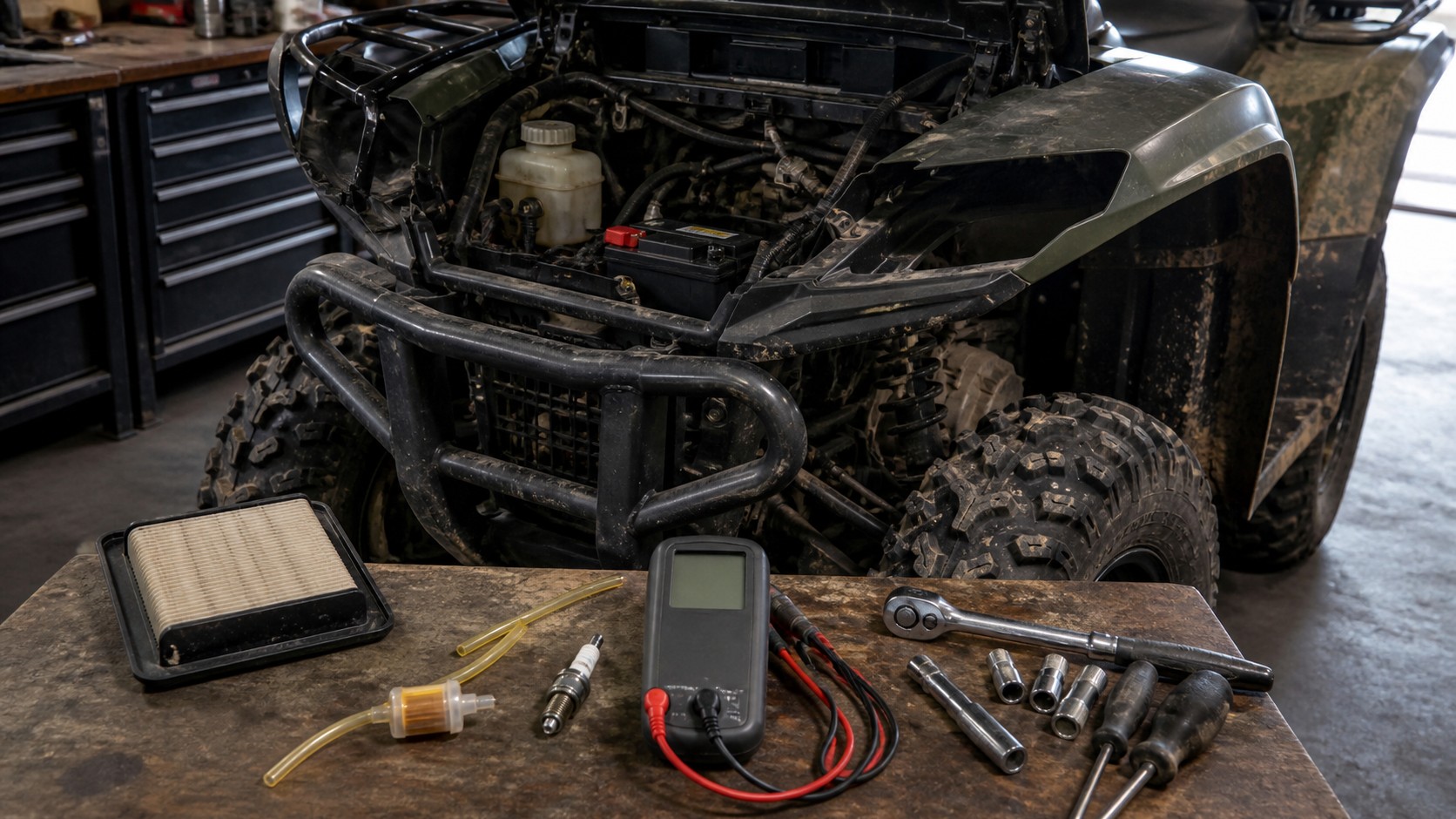
If the relay clicks but the starter does not spin, test voltage at the starter side of the circuit. If there is no click, check whether the relay receives a signal. A wiring diagram and multimeter are more useful than replacing the starter immediately.
A Cranks-But-Will-Not-Start Path
If the engine cranks normally but will not fire, think fuel, spark, air, compression, and timing. Confirm fuel is fresh and reaching the system. Listen for the fuel pump on EFI models. Inspect the airbox and filter. Check the spark plug condition and ignition connection.
Do not crank endlessly. Repeated cranking can drain the battery, flood the engine, or overheat starter components. Short tests with observations are better than long attempts with no information.
Common Seasonal Causes
After storage, stale fuel and weak batteries are common. Carbureted machines may have clogged jets or stuck floats. EFI machines may have weak pump pressure or voltage issues. Rodents may block intake paths or chew wiring. Moisture can corrode connectors.
A seasonal no-start should begin with storage-related checks before assuming a major engine problem. Many machines need fresh fuel, battery care, intake inspection, and basic cleaning before they wake up reliably.
When The ATV Starts Then Dies
An ATV that starts briefly and dies may have fuel flow problems, blocked tank venting, choke or enrichment issues, dirty idle passages, weak pump output, sensor faults, or electrical interruptions. The brief start is a clue that some systems are working, but not long enough to keep running.
Watch whether it dies when the throttle is touched, when it warms up, when the brake is released, or when the fan starts. Those conditions point toward different branches of diagnosis.
Using Sound As A Clue
Starting sounds tell a story. A single click often points toward low voltage, poor connections, relay issues, or starter circuit trouble. Rapid clicking usually suggests the battery cannot supply enough current. Slow cranking may mean weak battery, voltage drop, thick oil in cold weather, or starter drag. Normal cranking with no firing points away from the starter and toward fuel, spark, air, or compression.
These clues are not final diagnoses, but they keep the owner moving in the right direction. Listening carefully before replacing parts is a useful habit.
Fuel System Examples
A carbureted ATV that sat with old fuel may crank strongly but refuse to start because pilot jets are blocked. It may start only with choke, die when throttle is applied, or leak from the carburetor overflow. An EFI ATV may crank but not start if the pump does not prime, pressure is low, or voltage is too weak for the pump and injector system.
Fresh fuel is a basic test, but fuel quality is not the whole system. Delivery, pressure, venting, and metering all matter.
Electrical Examples
Wet connectors can stop spark or sensor signals after washing. A loose ground can let the dash light up but fail under starter load. A cracked fuse may open intermittently. A safety switch can prevent cranking when it is dirty, misadjusted, or damaged.
Electrical examples are frustrating because they may work once and fail later. Repeating the test under the same conditions that caused the problem is often necessary.
Compression And Mechanical Limits
If battery, fuel, spark, and air are present but the ATV still will not start, mechanical checks may be needed. Compression, valve clearance on some engines, timing, and internal condition can all affect starting. These checks require the correct procedure for the model.
Mechanical diagnosis should not be the first guess, but it should not be ignored after the basics have been proven. A service manual becomes important here.
Final No-Start Reminder
A no-start diagnosis should end with the cause, not just a temporary start. If the ATV starts after charging the battery, confirm the charging system. If it starts after fresh fuel, clean the system that held old fuel.
FAQ
What is the first thing to check when an ATV will not start?
Identify whether it cranks. Then check battery, terminals, switches, fuses, fuel, spark, and air in order.
Can a weak battery cause EFI problems?
Yes. EFI systems need stable voltage for the fuel pump, injectors, sensors, and control module.
Should I bypass safety switches?
Do not permanently bypass safety systems. Diagnose and repair failed interlocks correctly.