Beginners Should Treat ATV Weight And Load Ratings As Control Information
Weight, dimensions, and load ratings are not boring spec-sheet details. They tell a beginner how large an ATV will feel, how much room it needs to turn, how it may behave with cargo, and when towing or racks become unsafe. A new rider should learn these basics before loading gear, pulling a trailer, or buying a machine that looks impressive but feels too large for slow control.
A: Follow the manual and inspect sooner after harsh riding.
A: A new feel, sound, smell, leak, heat issue, or warning light.
A: Yes. Mud adds grit, moisture, heat, and hidden wear.
A: No. Restore the baseline first, then decide if upgrades are useful.
A: Yes, especially after water, rocks, towing, heat, or heavy loads.
A: Dates, hours, parts, fluids, settings, and symptoms are all useful.
A: Use caution on safety, sealing, steering, suspension, brake, and drivetrain parts.
A: Working does not mean healthy; inspect when symptoms change.
A: Get help for uncertain brakes, steering, wiring, fuel leaks, or structural issues.
A: Inspect early, fix small problems, and test before riding remote terrain.
Why Beginners Need These Numbers
Beginners often judge ATVs by appearance, but weight and dimensions explain how the machine will feel in slow control. A large utility ATV may look secure but feel heavy during tight turns. A smaller ATV may feel easy but lack capacity for cargo or a larger rider. The numbers help predict those tradeoffs.
Learning these basics also prevents unsafe loading. New riders may assume racks can carry anything that fits. They cannot. The owner’s manual gives limits because cargo changes steering, braking, and stability.
Fit Before Features
A beginner should sit on the ATV, stand on the footrests, reach the brakes, and turn the bars fully. If the rider feels stretched or cramped, the ATV will be harder to control. If the ATV feels too tall or wide while parked, it may feel overwhelming on uneven ground.
Fit is especially important during recovery from mistakes. A rider who can move naturally can shift weight, brake smoothly, and steer calmly. A rider fighting the machine reacts late.
Understanding Load Ratings
Rack ratings, towing ratings, tongue weight, and rider capacity are separate limits. Do not combine them casually or assume one strong number makes every other limit irrelevant. An ATV may tow a certain amount but carry much less on a rack. A hitch may accept only a limited tongue load.
Beginners should start with light loads and learn how the ATV changes. Add cargo gradually, secure it well, and practice stopping and turning before doing real work. The first loaded ride should not be on the hardest hill on the property.
Cargo Placement
Where cargo sits matters. High cargo raises the center of gravity. Rear cargo can lighten steering. Front cargo can make steering heavy and reduce suspension response. Unsecured cargo can shift suddenly and unsettle the ATV.
Keep loads low, balanced, and tied down. Use storage boxes and racks designed for the machine. If the ATV feels different, slow down. Handling changes are information, not something to ignore.
Towing For Beginners
Towing adds complexity because the trailer has its own weight and momentum. Start on flat ground with light loads. Practice wide turns, smooth braking, and backing where safe. Use low range when the manual recommends it, and avoid steep slopes or sidehills until the rider understands how the trailer behaves.
Never let engine strength override the towing rating. An ATV may be able to pull more than it can safely stop or control. Ratings exist because braking, hitch load, cooling, and stability all matter.
Transport And Storage
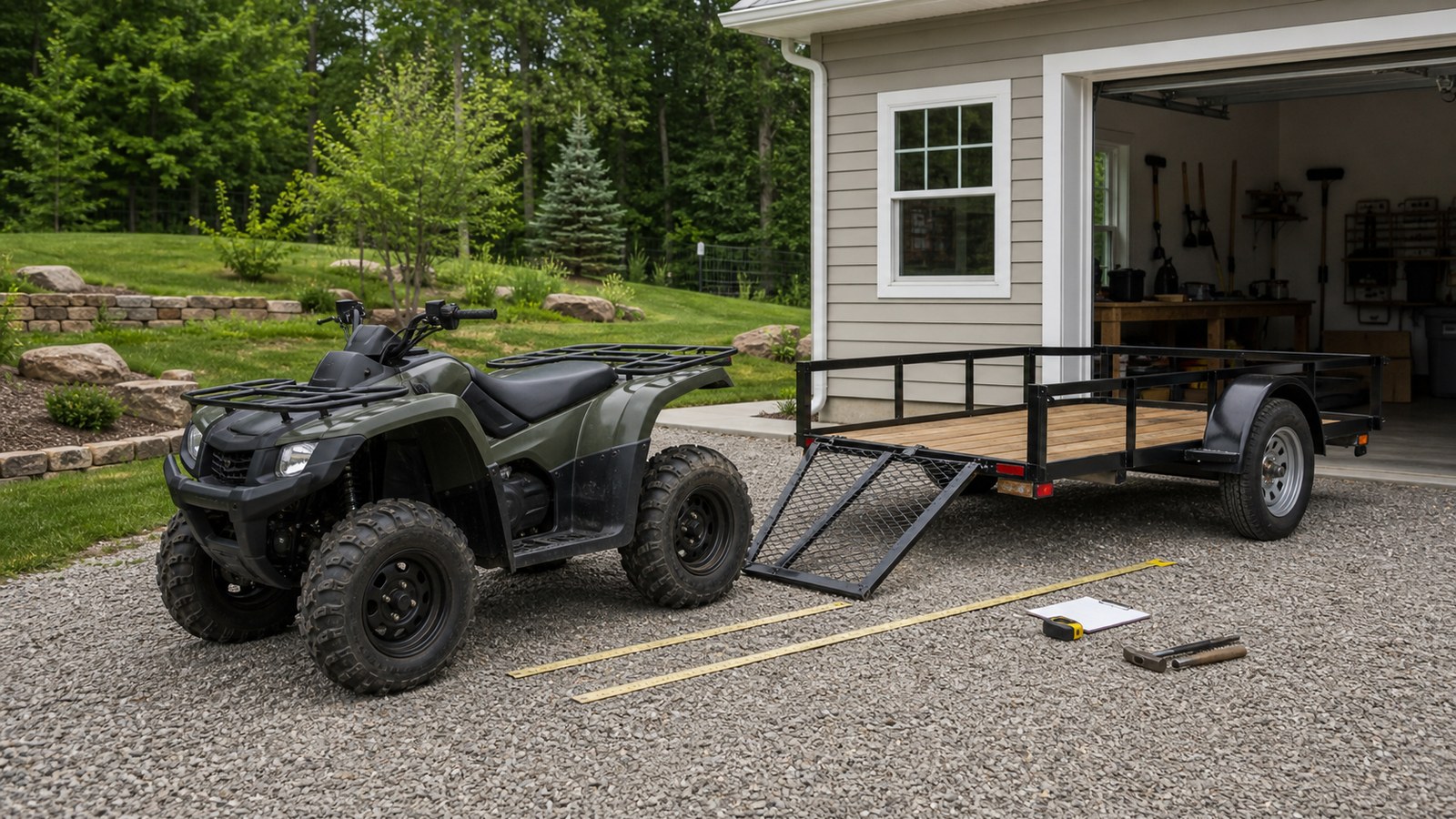
Beginners should measure before buying. Trailer deck width, ramp rating, garage depth, gate openings, and storage space all matter. A machine that technically fits but leaves no working room can make every ride frustrating. Accessories may add width or length after purchase.
Loading practice is part of ownership. Ramps should be rated, secured, and used on level ground when possible. A new rider should not learn loading in a hurry before the first trail day.
Common Mistakes
Common mistakes include overloading racks, towing from the wrong point, carrying a passenger on a single-rider ATV, ignoring tire pressure, and assuming a heavier ATV is automatically safer. Stability depends on speed, terrain, cargo, slope, and rider movement.
Another mistake is buying too much ATV for a new rider. A huge machine may have impressive ratings, but if the rider avoids using it or feels tense at low speed, it is not a good learning tool.
Bottom Line
Weight, dimensions, and load ratings help beginners choose and use ATVs with better control. They explain fit, cargo limits, towing behavior, and transport needs.
A new rider should practice empty, add load slowly, follow the manual, and stop when handling feels wrong. Respecting the numbers makes the ATV more useful and less surprising.
FAQ
What load should a beginner start with?
Start empty, then add light secured cargo gradually after practicing turns and stops.
Can engine power replace towing ratings?
No. Towing ratings include braking, hitch load, cooling, stability, and chassis limits.
Should beginners buy the largest ATV?
Usually no. The ATV should fit the rider and feel manageable before capacity becomes the priority.
Practice Empty First
A beginner should learn the ATV empty before adding cargo or a trailer. Empty practice teaches normal steering, braking, acceleration, and turning. Once that feel is familiar, light cargo makes the differences easier to notice. Starting loaded hides the baseline and can make the rider think unstable handling is normal.
Use a simple practice area and add one change at a time. A small rear load, then a front load, then a very light trailer can teach more than one overloaded chore. The rider should stop and adjust whenever the ATV feels heavy, vague, or tippy.
Reading The Owner’s Manual
The owner’s manual explains payload, rack limits, towing limits, tongue weight, tire pressure, passenger rules, and proper hitch use. These numbers vary by model. A beginner should not rely on a friend’s ATV, a forum comment, or a seller’s memory when the manual gives the actual limit.
Manuals also explain how load affects operation. They may recommend reduced speed, low range, tire checks, or different terrain choices. Those details are part of safe ownership, especially for riders still building control habits.
Beginner Buying Examples
A new rider with a small property and light chores may be happier with a manageable mid-size ATV than a huge utility model. A larger adult on hilly land may need more chassis and braking capacity than a small recreational ATV provides. A rider who must haul tools every week should prioritize ratings and stability from the start.
These examples show why the best beginner ATV is not one fixed size. It is the machine that fits the rider today and handles the normal job without strain. Beginner-friendly does not mean underpowered; it means controllable and appropriate.
Bottom Line For Beginners
Weight, dimensions, and ratings are practical riding information. They tell a beginner how the ATV may feel, what it can carry, what it can tow, and how much caution to use when loaded.
A beginner who respects those limits will learn faster and make better purchases. The machine will feel less mysterious, and every loaded ride will be based on control rather than guesswork.
How To Build Confidence With Loads
Beginners should treat cargo practice like riding practice. Start with the ATV empty, then add a small secured load and repeat the same turns and stops. Notice how steering, braking, and suspension change. Add weight slowly over multiple sessions rather than jumping directly to the maximum rating.
This process teaches respect without fear. A loaded ATV is not automatically dangerous, but it is different. The rider who learns those differences in open terrain will be calmer when carrying tools, camping gear, feed, or hunting equipment on a real route.
Why Passengers Change Everything
Passenger weight is different from cargo because it moves and sits high. Most ATVs are designed for one rider unless specifically labeled for two-up use. A passenger on the wrong machine can make steering, braking, and climbing much harder. Beginners should not treat an empty seat area or rear rack as permission to carry another person.
If two people need to ride together, choose a machine built for that purpose or consider a side-by-side. Manufacturer passenger guidance should be followed exactly. This is one of the clearest places where ratings protect real people, not just parts.
Choosing A Manageable Machine
A beginner-friendly ATV should be large enough for the rider and job but not so large that every slow maneuver feels tense. Manageability shows up when turning around, loading on a trailer, backing out of storage, and riding slowly around obstacles. Those ordinary moments make up a lot of ownership.
If two ATVs can both do the job, the one that fits better and feels calmer may be the better beginner choice. Confidence built on control is more useful than extra capacity that the rider is not ready to use.
Maintenance With Loaded Riding
Loaded riding asks more from tires, brakes, suspension, driveline, and cooling. Beginners who use racks or tow should inspect those systems more often. Tire pressure should be correct, brakes should feel strong, and hitch hardware should be tight. A loose rack or worn brake becomes more serious with weight added.
The owner’s manual gives the baseline, but harsh use may justify more frequent checks. A good habit is to inspect after heavy work while the memory of how the ATV felt is still fresh. If something felt different, look for the reason before the next ride.
A Beginner Loading Drill
A simple loading drill can teach a new owner a lot. Ride a slow loop empty. Add a small rear load and repeat the same loop. Add a small front load and repeat it again. Notice how the bars, brakes, and suspension feel different. Then remove the load and feel the baseline return. That contrast makes ratings easier to respect.
The same idea works with a small trailer. Practice starts, stops, wide turns, and backing in an open space before hauling anything important. If the trailer pushes, bounces, or swings more than expected, reduce speed and load. Learn the feel before adding hills or uneven ground.
Bottom Line
Beginners should treat payload and towing as skills, not just chores. The ATV may be capable, but the rider still has to learn how weight changes control. Practice, ratings, and patience keep useful work from becoming a surprise.