An ATV VIN Check Helps Buyers Confirm Identity, History, And Red Flags
Checking an ATV VIN before buying a used quad is one of the simplest ways to avoid expensive surprises. The vehicle identification number can help confirm the make, model, year, title status, recall information, theft concerns, and whether the machine in front of you matches the paperwork. A VIN check does not replace mechanical inspection, but it gives buyers a factual starting point before money changes hands.
A: Follow the manual and inspect sooner after harsh riding.
A: A new feel, sound, smell, leak, heat issue, or warning light.
A: Yes. Mud adds grit, moisture, heat, and hidden wear.
A: No. Restore the baseline first, then decide if upgrades are useful.
A: Yes, especially after water, rocks, towing, heat, or heavy loads.
A: Dates, hours, parts, fluids, settings, and symptoms are all useful.
A: Use caution on safety, sealing, steering, suspension, brake, and drivetrain parts.
A: Working does not mean healthy; inspect when symptoms change.
A: Get help for uncertain brakes, steering, wiring, fuel leaks, or structural issues.
A: Inspect early, fix small problems, and test before riding remote terrain.
Why A VIN Check Matters
A used ATV can look clean and still have identity problems. A VIN check helps confirm that the machine matches the seller’s story, paperwork, and model information. It can also help identify theft reports, title issues, recalls, and registration complications depending on available records and local systems.
This check is especially important because ATVs are often used on private land, sold casually, and stored for years. Paperwork may be missing or incomplete. A buyer should resolve those questions before handing over cash.
Finding The VIN
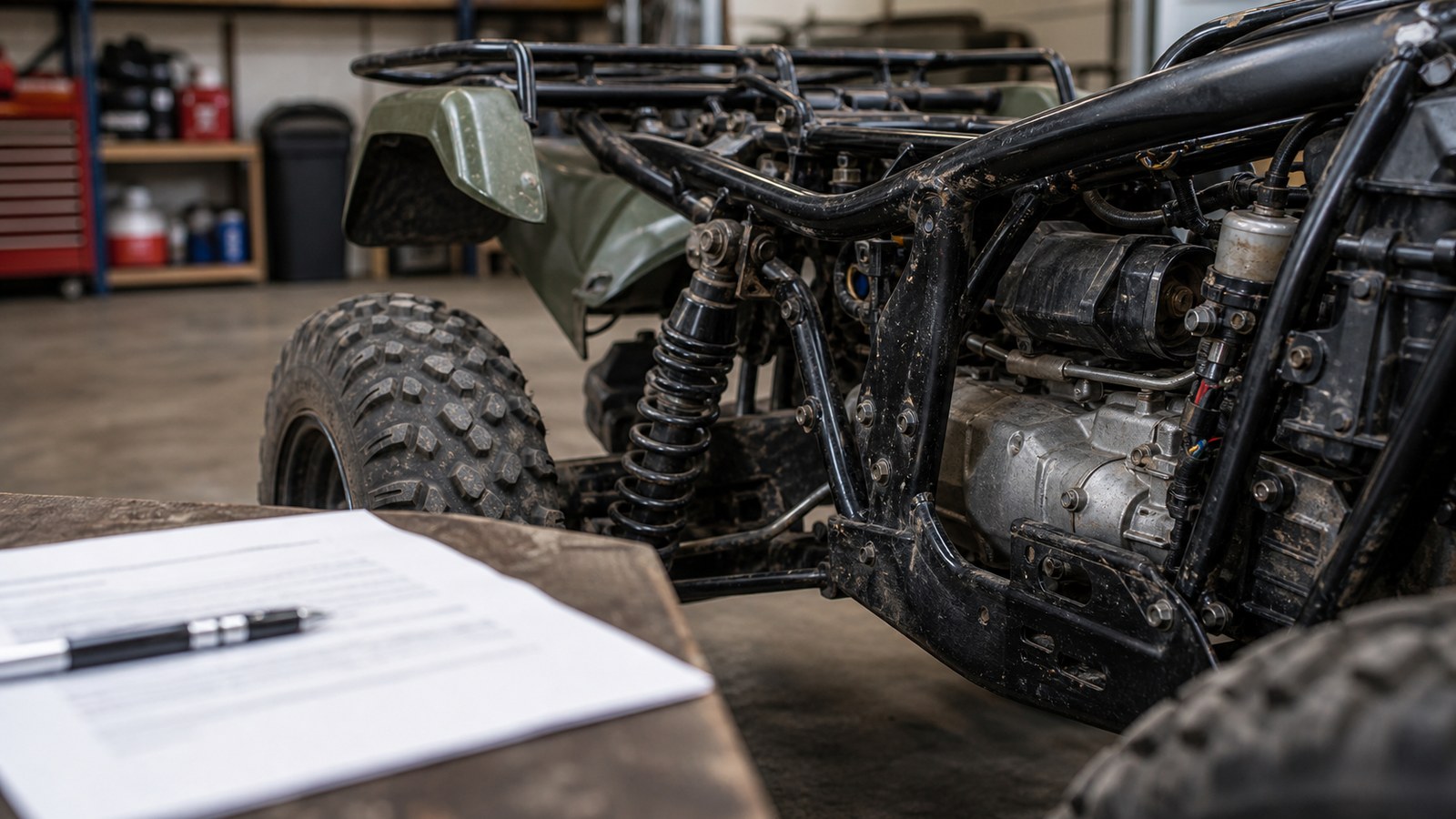
VIN locations vary by manufacturer and model, but the number is commonly stamped on the frame. Dirt, paint, guards, or accessories may hide it. The owner’s manual, dealer parts diagrams, or manufacturer support can help locate the correct stamping. Stickers can be useful, but the stamped frame VIN matters most.
Clean the area gently and read every character carefully. Photograph the VIN in good light. If characters are hard to read, do not guess. A single wrong digit can point to the wrong machine or hide a mismatch.
Matching Paperwork
The VIN on the ATV should match the title, registration, bill of sale, lien release, and any service records. Names, dates, and seller identity should make sense. If the paperwork belongs to a different person, the seller should be able to explain the chain of ownership clearly.
Where titles or registration are required, missing documents can create serious trouble. A cheap ATV with paperwork problems may become impossible to register or resell. Buyers should check local rules before deciding missing paperwork is acceptable.
Checking For Theft And Liens
A VIN can be used with official or reputable lookup channels to check for reported theft or other issues. Local law enforcement or registration agencies may be able to advise on proper steps. Some manufacturers or dealers can help confirm model information or recall status.
A lien is another concern. If money is still owed on the ATV, the buyer may not receive clear ownership. The seller should provide proof that any lien has been released. Vague promises are not the same as clean paperwork.
Red Flags In Person
Walk away from ground-off, restamped, covered, or deliberately hidden VINs. Be cautious when a seller refuses to provide the VIN before meeting, pressures for cash immediately, avoids paperwork, or gives changing explanations about ownership. A price far below normal market value deserves extra checking.
Mismatched plastics or replacement frames are not always proof of theft, but they require explanation. A hard-used ATV can have replaced parts. The VIN and paperwork should still tell a coherent story.
Mechanical Inspection Still Matters
A VIN check does not prove the ATV is mechanically sound. Buyers still need to inspect the engine, transmission, brakes, steering, suspension, frame, tires, electrical system, fluids, and controls. A legal ATV can still be worn out. A clean title does not fix a slipping belt or bent frame.
If you are not comfortable inspecting an ATV, bring someone who is or arrange a professional look. The cost of a pre-purchase inspection can be small compared with hidden drivetrain, engine, or frame repairs.
A Practical Buying Sequence
Ask for the VIN, title status, exact model, hours or miles, service history, and reason for selling before meeting. Check the number through appropriate channels. When you arrive, verify the frame VIN matches the paperwork. Then inspect condition and test controls.
Only after identity and condition both make sense should price become the final question. This order protects the buyer from becoming emotionally committed before the facts are clear.
Bottom Line
Checking an ATV VIN is a basic used-buying safeguard. It helps confirm identity, paperwork, ownership, and possible red flags before money changes hands.
A clean VIN check should be paired with a careful mechanical inspection. Together, those steps give buyers the best chance of purchasing a used quad that is both legitimate and worth owning.
FAQ
Where is an ATV VIN located?
It varies by brand and model, but it is commonly stamped on the frame. Check the manual or ask a dealer if unsure.
Is a bill of sale enough for a used ATV?
That depends on local rules and title requirements. Confirm before buying.
Should I buy an ATV with a damaged VIN?
No. A damaged, altered, hidden, or mismatched VIN is a serious red flag.
Questions To Ask The Seller
Ask for the VIN, title status, exact year and model, hours or miles, service history, modifications, lien status, and reason for selling. A serious seller should understand why those questions matter. Evasive answers do not automatically prove wrongdoing, but they do raise the risk.
Ask whether the seller’s name is on the paperwork. If not, ask why. Some legitimate sales involve family members or recent purchases, but the story should be clear and supported by documents. Confusion around ownership is a reason to slow down.
How To Verify Model Information
The VIN can help confirm model year and identity, but buyers should also compare visible details. Plastics, engine size, decals, frame, drivetrain, and equipment should match the claimed model. A machine advertised as one trim but built like another deserves questions.
Dealers and manufacturer resources can often help decode model information or locate VIN stamping points. This is useful when buying older ATVs, modified machines, or quads with missing stickers. The goal is a consistent identity from frame to paperwork.
Why A Low Price Needs More Checking
A low price is not always a problem. Sellers may need space, cash, or a quick sale. But a price far below the local market should make the buyer more careful. Theft, title trouble, hidden mechanical damage, liens, or missing paperwork can all hide behind a tempting price.
The buyer should stay patient. If the VIN is clean, paperwork matches, condition is good, and the seller is legitimate, the deal can move forward. If the seller pushes urgency while basic facts remain unclear, walking away is the safer choice.
After The Purchase
After buying, keep copies of the bill of sale, title, registration, VIN photo, seller information, and any service records. Register or transfer ownership according to local rules as soon as possible. Delays can create problems if paperwork is lost or the seller becomes unreachable.
A post-purchase service baseline is wise too. Change fluids where appropriate, inspect brakes and tires, service the air filter, check the battery, and look over the drivetrain. A clean identity and a clean maintenance start make used ownership much calmer.
What A VIN Check Cannot Tell You
A VIN check can help with identity, paperwork, recalls, theft concerns, and model information, but it cannot guarantee mechanical condition. It does not prove the engine was maintained, the frame is straight, the brakes are healthy, or the transmission is strong. Buyers need both identity verification and condition inspection.
This distinction matters because a clean history can create false confidence. A legitimate ATV can still be abused. A careful buyer checks the VIN, then inspects the machine as though repairs could still be hiding under clean plastics.
Meeting The Seller Safely
Used ATV meetings should be practical and unrushed. Meet where the VIN can be inspected in good light. Bring a flashlight, phone, notepad, and someone knowledgeable if possible. Avoid situations where the seller pressures for quick cash before paperwork and identity are checked.
The seller should be willing to show the VIN, paperwork, cold start, controls, and basic condition. If the ATV is buried in a trailer, covered in mud, or positioned so the VIN cannot be read, ask for time to inspect it properly. A good seller should understand.
Paper Trail After Purchase
After buying, keep the bill of sale, title or registration documents, seller contact information, VIN photos, and service records together. Transfer title or registration promptly where required. Waiting can create avoidable problems if paperwork is lost or the seller becomes difficult to reach.
The first service after purchase should create a maintenance baseline. Even if the seller says everything was done, inspect fluids, brakes, air filter, tires, battery, lights, and drivetrain. A clean paper trail plus a clean service baseline makes used ATV ownership much less uncertain.
If The VIN Raises Questions
If the VIN is hard to read, mismatched, or missing from paperwork, pause the purchase. Ask the seller for clarification and supporting documents. Contact a dealer, registration office, or appropriate local authority if needed. Do not let the excitement of a deal push past an identity problem.
If the seller becomes defensive, refuses photos, changes the story, or insists that paperwork does not matter, the risk is increasing. There will be other ATVs. A buyer should not inherit a title, theft, lien, or registration problem just to save money today.
Bottom Line
A VIN check is a simple step that protects the buyer from confusion and fraud. It should happen before payment, before transport, and before emotional commitment. When the number, paperwork, seller story, and machine condition all agree, the used ATV purchase is on much firmer ground.
Final Buyer Protection Tip
Keep the VIN photo, seller messages, bill of sale, and title documents together from the start. If a question appears later, organized records make it easier to prove what was represented at the sale and what machine changed hands.