ATV Title Problems Can Turn A Cheap Used Quad Into A Costly Mistake
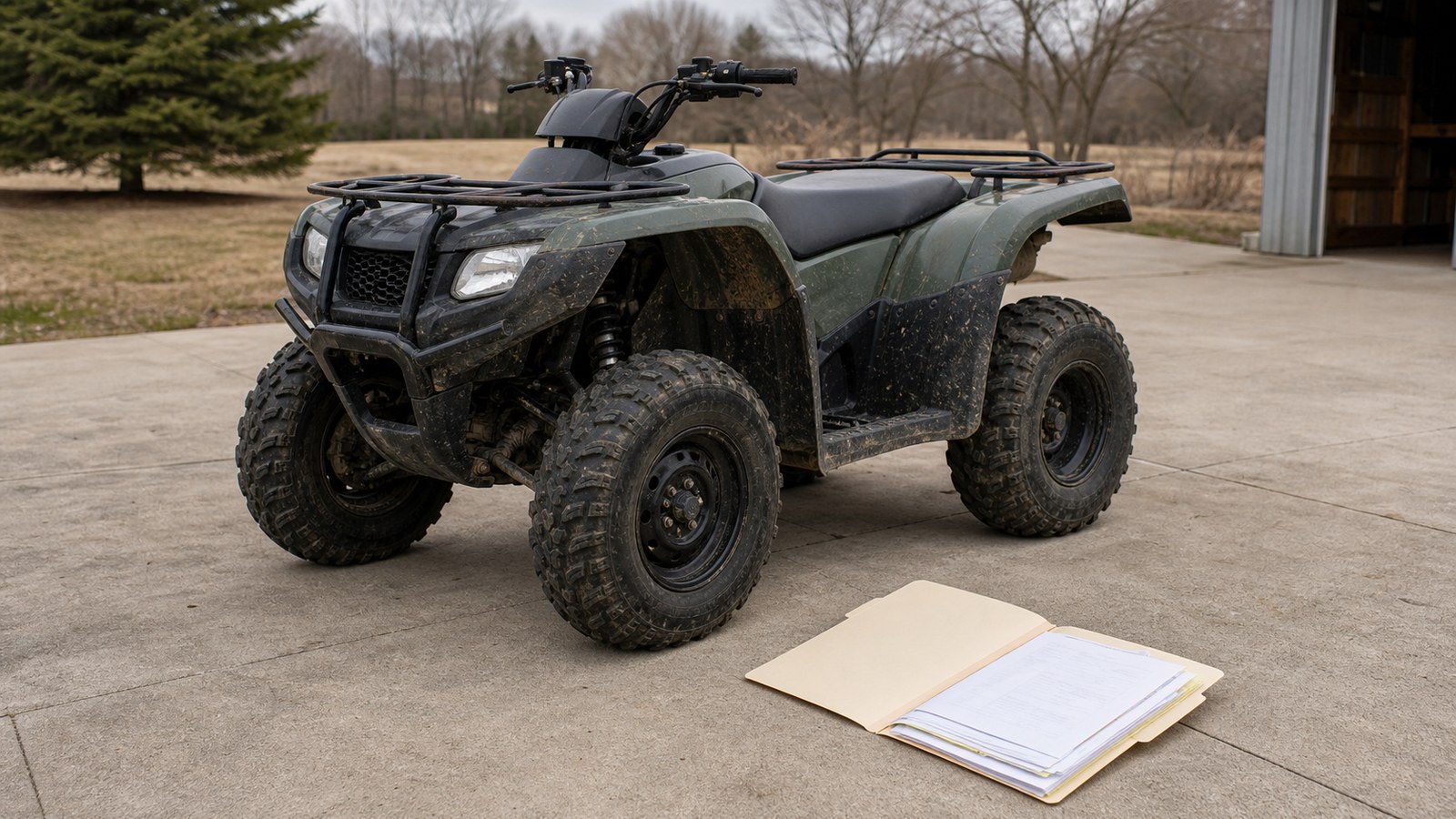
ATV title problems are ownership problems, not just paperwork problems. A missing title, mismatched VIN, open lien, salvage history, out-of-state document, or unclear seller identity can affect registration, resale, insurance, and whether you legally own the machine. A used ATV may run well and still be risky if the documents do not match the frame. Buyers should slow down, verify the paperwork, and walk away when the story does not hold together.
A: Follow the manual and inspect sooner after harsh riding.
A: A new feel, sound, smell, leak, heat issue, or warning light.
A: Yes. Mud adds grit, moisture, heat, and hidden wear.
A: No. Restore the baseline first, then decide if upgrades are useful.
A: Yes, especially after water, rocks, towing, heat, or heavy loads.
A: Dates, hours, parts, fluids, settings, and symptoms are all useful.
A: Use caution on safety, sealing, steering, suspension, brake, and drivetrain parts.
A: Working does not mean healthy; inspect when symptoms change.
A: Get help for uncertain brakes, steering, wiring, fuel leaks, or structural issues.
A: Inspect early, fix small problems, and test before riding remote terrain.
Why Title Problems Matter
A title problem can follow an ATV long after the seller is gone. If the paperwork is missing, mismatched, or tied to a lien, the buyer may struggle to register, insure, finance, or resell the machine. In some places, an ATV without clear documents may be difficult to use legally on public trails even if it runs perfectly.
Paperwork also protects the buyer from identity issues. A stolen ATV, swapped frame, or incorrect VIN can create legal and financial problems. A clean engine sound does not prove clean ownership. The title story must match the machine in front of you.
Common Title Problems
The most common problem is a missing title where one is required. Sellers may say the ATV was always used on private land, that the title was lost, or that a bill of sale is enough. Sometimes that is manageable, and sometimes it is not. Local rules decide the risk, not the seller’s confidence.
Other problems include open liens, salvage or rebuilt history, out-of-state documents, mismatched owner names, incorrect VIN digits, and paperwork from a previous owner who never completed transfer. Each issue needs a clear answer before payment.
VIN Matching
The stamped frame VIN should match the title, registration, bill of sale, and any service records. Read every character in good light and compare slowly. Similar characters can be misread, and one wrong digit can point to a different machine. A photo helps avoid mistakes.
A damaged, ground-off, restamped, painted-over, or hidden VIN is a serious warning sign. Do not accept a casual explanation without proof. The VIN is the ATV’s identity, and identity should be clear before the deal moves forward.
Lien And Loan Issues
An open lien means someone else may still have a financial claim on the ATV. A seller might physically possess the machine without having clear title. Buyers should ask for lien release paperwork when the title indicates a lien or when the seller says a loan was paid off.
Do not rely on promises that documents will arrive later unless you are willing to carry that risk. Money should change hands only when ownership transfer is clear. A delayed title can become a long, expensive headache.
Bill Of Sale Limits
A bill of sale is useful because it records the parties, price, date, VIN, and machine description. It is not always enough to prove ownership or register the ATV. Some states and agencies require a title, prior registration, notarization, or specific forms.
A good bill of sale should match the title and include accurate identifying information. It should not be used to paper over a missing or questionable VIN. If the official documents are weak, the buyer should pause and verify local requirements.
Out-Of-State And Private-Land ATVs
Out-of-state paperwork can be legitimate, but it needs extra checking. Requirements vary, and a document accepted in one state may not transfer smoothly in another. Buyers should call the relevant agency before buying if they plan to register or ride on public land.
Private-land ATVs can also be tricky. A machine may have years of casual ownership with little paperwork. That does not automatically make it bad, but it does make verification more important. The buyer needs a path to clear ownership.
Safe Buying Sequence
Ask for the VIN, title status, seller name, lien status, and registration history before meeting. At the meeting, compare the frame VIN to the documents. Confirm the seller’s identity and get a signed bill of sale. Only then should condition and price become the final focus.
If anything feels rushed, unclear, or inconsistent, slow down. A good used ATV deal should survive careful questions. A bad deal often depends on the buyer being too excited to ask them.
After Purchase
After buying, transfer ownership promptly where required and keep copies of all documents. Store VIN photos, seller messages, title paperwork, registration, and bill of sale together. Organized records protect resale and make future questions easier to answer.
Create a mechanical baseline too. Clear paperwork does not prove good condition. Inspect fluids, brakes, tires, suspension, drivetrain, lights, and controls so ownership starts with both legal clarity and practical confidence.
Bottom Line
ATV title problems are avoidable when buyers verify before paying. The VIN, title, bill of sale, seller story, lien status, and local rules should all agree.
If the paperwork does not make sense, the safest choice is to pause or walk away. Another ATV will appear. A title problem can linger much longer than the excitement of a cheap price.
FAQ
Can I buy an ATV without a title?
Only if local rules allow it and you are comfortable with the resale and registration risk. Verify before paying.
What if the VIN does not match the title?
Do not proceed until the mismatch is explained and resolved through proper channels.
Is a bill of sale enough?
Sometimes, but not always. It depends on state and trail-access rules.
Dealer, Agency, And Local Rule Checks
When paperwork is unclear, a dealer, registration office, or appropriate local agency can often explain the next step. The exact answer depends on the state, the age of the ATV, prior registration, and whether the machine will be used on public land. A buyer should ask those questions before purchase, not after the ATV is already sitting in the garage.
If the seller says paperwork is simple, ask what office handles it and what forms are required. A legitimate answer should be specific enough to verify. The buyer does not need to accuse anyone of wrongdoing; careful verification is normal used-vehicle behavior.
Private Sales And Family Transfers
Private sales can be perfectly legitimate, but they need clear records. Family transfers, estate sales, and older farm machines sometimes have thin documentation. That does not automatically make the ATV a bad buy, but it does mean the buyer should slow down and confirm how ownership can be transferred.
A seller who inherited a machine or bought it without transferring title may need to fix the paperwork before selling. If they cannot or will not, the buyer may inherit the problem. A lower price rarely makes up for ownership uncertainty if the ATV cannot be registered or resold cleanly.
Mechanical Condition Still Counts
A clean title does not prove the ATV is mechanically good. Buyers should still inspect engine condition, brakes, frame, suspension, drivetrain, tires, electrical systems, and controls. Paperwork protects ownership; mechanical inspection protects the purchase value. Both are needed.
Likewise, a mechanically excellent ATV is not enough if the title story is broken. The best used purchase has both a coherent identity and a healthy machine. If only one side checks out, the buyer should treat the deal as unfinished.
Negotiating Around Paperwork
Paperwork issues change value because they add time, risk, and possible fees. A seller may offer a discount for missing documents, but the buyer should know exactly what it will take to solve the issue. Guessing can turn a discount into a loss.
The cleanest approach is to have the seller resolve title or lien problems before the sale. If that is not possible, the buyer should decide whether the remaining risk is acceptable under local rules. Pressure to pay first and fix paperwork later is a warning sign.
Final Checklist
Before payment, confirm the stamped VIN, title or registration status, seller identity, lien release, bill of sale, and local transfer requirements. After payment, transfer ownership promptly and keep copies. This process may feel slow, but it protects the buyer from expensive surprises.
A used ATV deal should make sense on paper and in person. When documents, VIN, seller story, and machine condition agree, the buyer can focus on price with much more confidence.
When To Walk Away
The clearest walk-away moments are altered VINs, paperwork that belongs to someone else without explanation, a seller who refuses to meet where documents can be checked, or pressure to pay before verification. A good deal should survive a careful pause. If the story changes every time a question is asked, the risk is no longer small.
Walking away can feel frustrating when the ATV looks good, but unresolved title problems can cost more than mechanical repairs. A buyer can fix brakes, tires, or fluids. Fixing ownership after a bad sale may require agencies, forms, previous owners, or legal help.
What Clean Paperwork Looks Like
Clean paperwork is boring in the best way. The VIN matches, the seller name is clear, lien release is documented if needed, the bill of sale is complete, and the local transfer process is understood. The seller answers questions directly and gives the buyer time to inspect.
That kind of sale protects both sides. The buyer gets confidence, and the seller has a record of the transfer. When used ATV paperwork is orderly, everyone can focus on condition, maintenance, and price instead of uncertainty.
Buyer Protection Summary
A careful title process protects the buyer before, during, and after the sale. Before the sale, it confirms whether the ATV can be transferred and used the way the buyer expects. During the sale, it keeps the seller story tied to the actual VIN and documents. After the sale, it supports registration, resale, and proof of ownership.
The right mindset is simple: paperwork is part of the ATV. If the frame, VIN, title, seller identity, and bill of sale do not agree, the machine is not ready to buy. A clean deal should be understandable without excuses, pressure, or missing pieces.