Engine Architecture Shapes ATV Power, Handling, And Reliability Together
An ATV engine is not only a source of horsepower. Its size, layout, cooling system, fuel delivery, internal design, and placement affect how the machine accelerates, pulls, turns, heats, vibrates, and survives hard use. Good engine architecture gives the rider usable power without making the ATV hard to control or maintain. The best design depends on whether the machine is built for trails, work, racing, mud, or long-range riding.
A: Follow the manual and inspect sooner after harsh riding.
A: A new feel, sound, smell, leak, heat issue, or warning light.
A: Yes. Mud adds grit, moisture, heat, and hidden wear.
A: No. Restore the baseline first, then decide if upgrades are useful.
A: Yes, especially after water, rocks, towing, heat, or heavy loads.
A: Dates, hours, parts, fluids, settings, and symptoms are all useful.
A: Use caution on safety, sealing, steering, suspension, brake, and drivetrain parts.
A: Working does not mean healthy; inspect when symptoms change.
A: Get help for uncertain brakes, steering, wiring, fuel leaks, or structural issues.
A: Inspect early, fix small problems, and test before riding remote terrain.
Power Is More Than Horsepower
Engine architecture shapes where power appears and how controllable it feels. A strong low-end engine can make towing, crawling, and hill starts easier. A quick-revving engine can feel lively in sport riding. A smooth engine can reduce fatigue on long rides. Peak horsepower is only one part of the story.
The rider uses the torque curve, throttle response, gearing, and traction together. If power arrives abruptly, it can spin tires or unsettle the chassis. If power arrives smoothly, the ATV may feel more capable even with a lower peak number.
Handling Starts With Weight And Placement
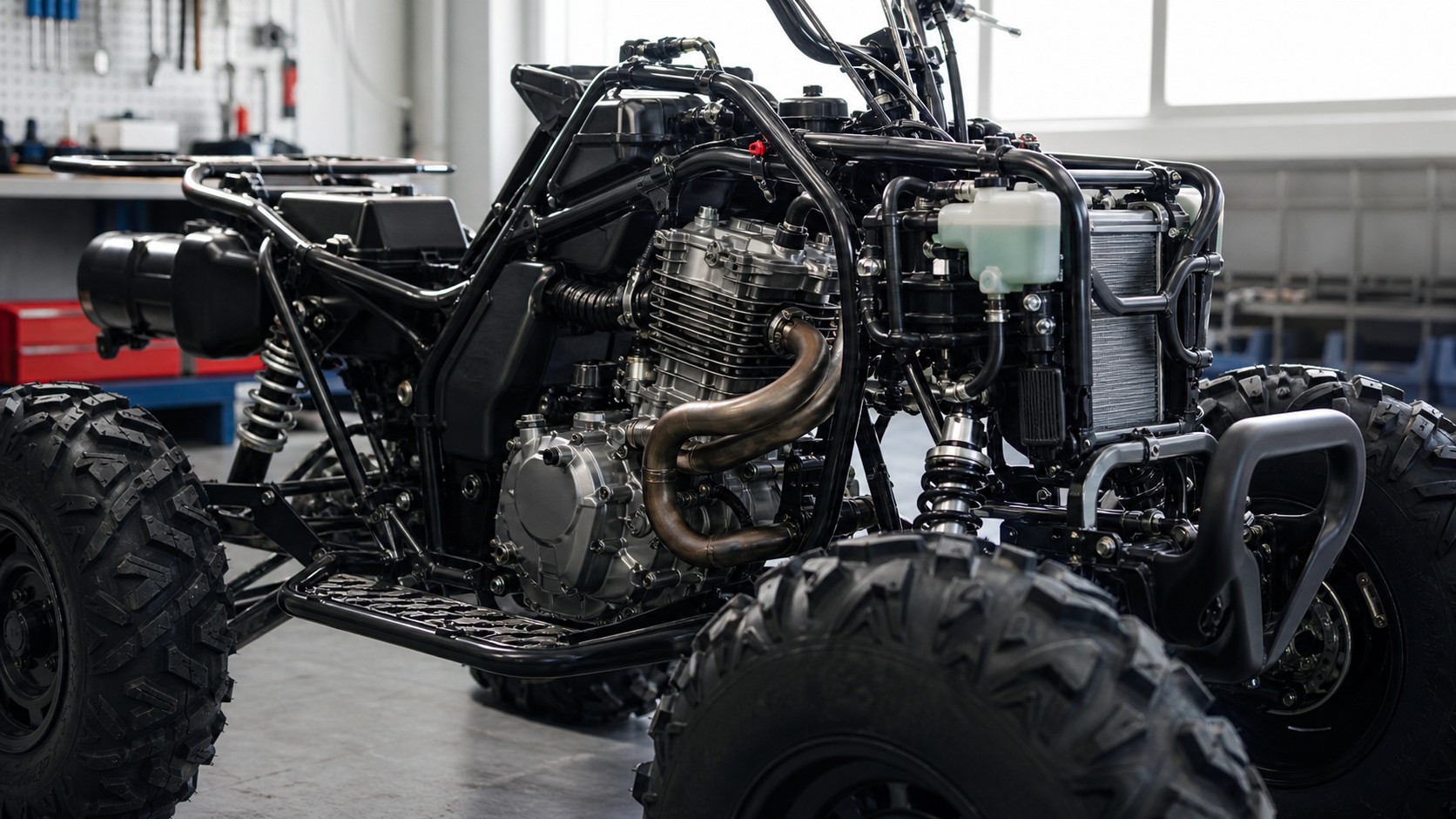
An engine adds mass, heat, vibration, and packaging requirements. Where that mass sits affects center of gravity and balance. A compact design can leave more room for suspension, intake routing, cooling, and rider ergonomics. A heavier engine may support more power but also change steering and recovery.
Handling is not separate from power. When an engine pulls smoothly and sits well in the chassis, the rider can use traction more confidently. When the engine feels abrupt or the machine carries weight awkwardly, rough terrain becomes harder.
Reliability Comes From Heat Control
Heat is one of the central reliability challenges in ATV engines. Slow utility work, mud, sand, high ambient temperature, and heavy loads all make cooling harder. Liquid cooling, fan design, radiator placement, oil capacity, and clean airflow all matter.
Overheating should not be ignored. Warning lights, boiling coolant, power loss, or repeated fan trouble deserve attention. A powerful engine that cannot manage heat in real use is not a reliable design for that rider.
Filtration And Lubrication
Dust and grit can shorten engine life quickly. Airbox sealing, filter quality, and service habits are as important as internal design. Mud and water crossings add more risk because contamination can reach fluids or intake paths.
Lubrication protects the engine under load. Correct oil type, level, and change interval matter, especially for machines used in heat, dust, towing, or racing. Reliability is built through design and maintained through service.
Utility Engine Priorities
Utility ATVs benefit from low-speed torque, smooth throttle, cooling capacity, and durable driveline pairing. The engine should pull steadily without needing constant high rpm. It should tolerate starts, stops, loads, and slow work without overheating or becoming hard to control.
For work riders, durability beats drama. A mild, well-cooled, easy-to-service engine may be better than a high-output engine that requires more attention than the job allows.
Sport Engine Priorities
Sport riding may value lighter weight, quick revs, manual control, and sharp throttle. The engine needs to respond quickly while still being predictable enough for corners, jumps, and rough sections. Race use raises maintenance needs because heat and rpm stay high.
A sport engine should be judged with the chassis. If the suspension, brakes, and tires cannot use the power, the engine is only part of an unfinished package.
How Modifications Change The System
Intake, exhaust, fuel controllers, clutching, gearing, tires, and engine internal changes can all affect power and reliability. A modification that improves one area can hurt heat control, noise, fuel use, or drivability. The system should be tuned as a whole.
Used buyers should be careful with modified engines. Ask what was changed, who did the work, how it was tuned, and whether stock parts are included. A modified ATV without records is harder to trust.
Buying And Ownership
Buyers should compare engine behavior, service access, parts support, and maintenance history. Start the ATV cold when possible, listen for noise, watch smoke, test throttle response, and check for leaks or overheating. A clean test tells more than a spec sheet.
Owners should protect architecture with good habits: clean filters, correct fluids, warmup, cooling inspection, and prompt attention to new symptoms. Good design still needs good care.
Bottom Line
Engine architecture improves ATV power, handling, and reliability when the whole machine is designed around usable output. Torque, weight, cooling, fuel delivery, filtration, and serviceability all matter together.
The best engine is not automatically the biggest or loudest. It is the one that gives the rider controllable power and survives the work or terrain it was built to handle.
FAQ
How does engine design affect handling?
Engine weight, placement, vibration, and power delivery all influence balance, fatigue, and traction.
What engine is best for utility ATVs?
A smooth, torquey, well-cooled, serviceable engine is usually best for utility work.
Are modified engines risky used?
They can be. Records, tuning quality, and maintenance history matter a lot.
Matching Architecture To Terrain
In mud, engine architecture needs cooling, torque, and drivetrain support. A powerful engine that overheats or loads belts badly is not ideal. In sand, engines work against constant drag and need clean filtration. In mountains, throttle control and heat management matter on long climbs and slow technical sections.
Trail riders often benefit from smooth midrange power because the ATV is always changing speed. Utility riders usually need steady low-speed torque. Racing riders may accept more maintenance for quicker response. The right engine is the one whose strengths match the terrain’s repeated demands.
Reliability Is A Design And Ownership Partnership
Manufacturers design for cooling, lubrication, filtration, and durability, but owners decide whether those systems keep working. A clogged radiator, dirty air filter, wrong oil, stale fuel, or ignored warning light can ruin a good engine. Reliability is not only built at the factory.
Good ownership habits are simple: service on schedule, clean filters, inspect cooling, use correct fluids, warm up properly, and investigate changes early. These habits make engine architecture deliver what it was designed to do.
How Architecture Affects Buying Choices
A buyer should ask whether the engine fits the intended use. Does it pull smoothly at low speed? Does it restart hot? Does it vibrate too much for long rides? Is service access reasonable? Are parts and dealer support available? Has it been modified in a way that makes tuning uncertain?
The test ride should include more than acceleration. Ride slowly, climb if possible, restart warm, listen at idle, and feel throttle response over bumps. A useful engine is controlled across the whole ride, not only impressive in a straight line.
Bottom Line For Power And Reliability
Engine architecture improves power, handling, and reliability only when the design suits the ATV’s job. Torque, cooling, weight, placement, fuel delivery, and maintenance all work together.
The strongest choice is not automatically the biggest engine. It is the engine that gives the rider usable power, manageable heat, good balance, and a service routine the owner can keep.
Practical Examples Of Architecture At Work
A ranch rider pulling light trailers across wet grass may benefit from a torquey, well-cooled engine that responds smoothly at low speed. A dune rider may need an engine that can stay in the power against sand drag while keeping the air filter clean. A trail rider may prefer broad, predictable midrange over peak output.
A racer may accept more maintenance for sharper response, while a touring rider may value smoothness and low vibration. These examples show why the best engine is tied to use. Architecture should support the ride, not simply win a number comparison.
When the engine character matches the job, the ATV feels easier. The rider uses less clutch, less throttle correction, and less mental energy to keep the machine doing what it should.
Final Engine Architecture Checklist
When evaluating an ATV, ask how the engine behaves at low speed, midrange, and warm restart. Does it pull without surging? Does it feel too abrupt for the rider? Does it vibrate enough to cause fatigue? Does the cooling fan cycle normally? Does the airbox seal well? Does the owner have service records? These answers make architecture practical.
A buyer should also consider how the engine interacts with tires and terrain. Oversized mud tires may make a mild engine feel strained. Sand may make a powerful engine run hot. Heavy utility loads may reveal weak low-speed cooling. Racing may expose fuel and oil issues that casual rides hide. The engine is always part of a larger system.
The best design choice is the one that feels controlled repeatedly. If the ATV can start, pull, cool, and respond cleanly in normal use, its architecture is serving the rider. If it constantly asks for excuses or workarounds, the spec sheet is less important than the ownership reality.
Practical Examples
Example: a large engine can help in mud, but if the cooling system clogs and the tires overload the clutching, the extra power becomes stress. The complete machine matters more than displacement. Power has to move through tires, drivetrain, cooling, and rider control.
Example: a smooth mid-size engine may be better for new trail riders than a sharper high-output engine. The rider can practice turns, climbs, and throttle timing without feeling rushed. Usable power builds confidence faster than intimidating power.
Example: a long-range rider may value low vibration and predictable fuel use more than peak horsepower. A comfortable engine character can keep the rider fresher, which improves decision-making late in the day.
The best architecture is the one that gives the rider useful power repeatedly. A strong first impression matters less than how the ATV behaves after hours of heat, dust, load, and terrain.
A final ownership check should ask whether the engine still feels good after the ride is warm, dusty, loaded, or slow. Those conditions reveal the difference between impressive output and useful design. An ATV engine earns trust through repeated clean behavior.
That repeatability should guide the purchase more than any single spec number.