ATV Ice Riding Requires Extra Caution Because Traction Can Vanish Instantly
Ice and frozen trails are some of the least forgiving surfaces an ATV rider can encounter. Tires may grip one moment and slide the next. Braking distance grows, steering response changes, and hidden water, thin ice, ruts, or frozen mud can turn a simple ride into an emergency. Safe ice riding depends on conservative speed, appropriate traction equipment, route knowledge, protective gear, and a willingness to avoid questionable frozen surfaces entirely.
A: Follow the manual and inspect sooner after harsh riding.
A: A new feel, sound, smell, leak, heat issue, or warning light.
A: Yes. Mud adds grit, moisture, heat, and hidden wear.
A: No. Restore the baseline first, then decide if upgrades are useful.
A: Yes, especially after water, rocks, towing, heat, or heavy loads.
A: Dates, hours, parts, fluids, settings, and symptoms are all useful.
A: Use caution on safety, sealing, steering, suspension, brake, and drivetrain parts.
A: Working does not mean healthy; inspect when symptoms change.
A: Get help for uncertain brakes, steering, wiring, fuel leaks, or structural issues.
A: Inspect early, fix small problems, and test before riding remote terrain.
Ice Is Different From Snow
Snow can reduce traction, but ice can remove it almost completely. An ATV may steer, brake, and accelerate normally on one patch, then slide suddenly on the next. Frozen trails often mix ice, hardpack, slush, and exposed dirt, which makes traction inconsistent.
Because of that, ice riding should be slower and more conservative than ordinary trail riding. The rider should avoid abrupt throttle, abrupt braking, and sharp steering. Smooth inputs are the rule.
Frozen Water Is A Separate Hazard
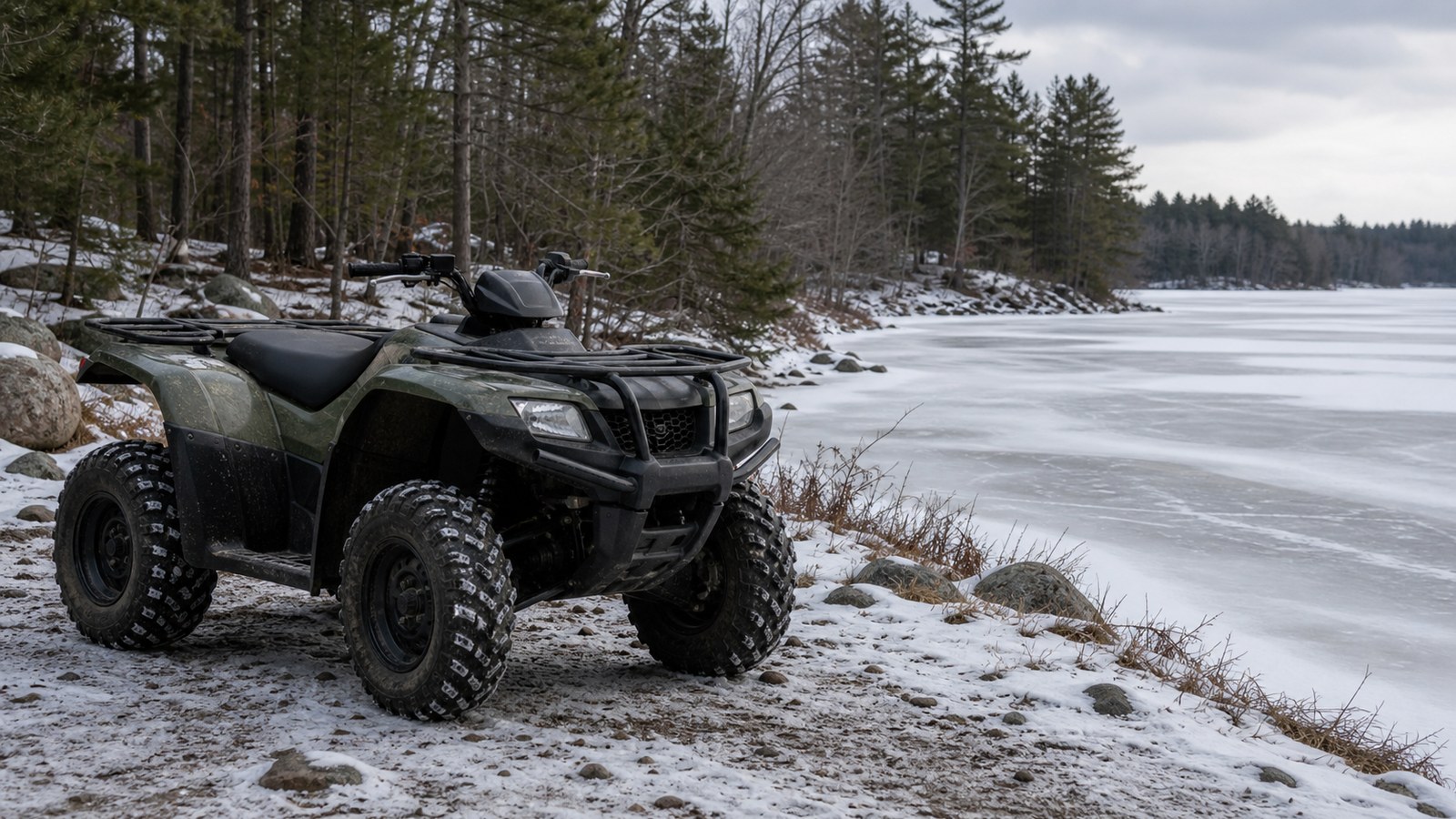
Riding on frozen lakes, ponds, rivers, or flooded areas carries risks that ordinary trails do not. Ice thickness can vary because of current, springs, pressure cracks, vegetation, sun exposure, and temperature swings. An ATV is heavy enough to make weak ice dangerous.
The safest choice is to avoid unknown frozen water. Follow local warnings and closures. If there is any doubt about thickness or conditions, do not ride onto it. No trail shortcut is worth going through ice.
Traction Aids
Studded tires, chains, and other traction aids can help on ice, but they do not create normal grip. They may also be regulated on some trails or surfaces. Installation quality matters because loose chains or poor studs can damage the ATV or change handling unpredictably.
After adding traction aids, test in a controlled area. Practice starting, stopping, and turning slowly. The rider should understand the new feel before joining a group or riding faster trails.
Braking And Spacing
Stopping distance grows on ice. Riders should leave more space than usual and brake earlier. Locking wheels can turn steering into sliding. Engine braking can also affect traction, so the rider should learn how the specific ATV behaves before descending icy sections.
Groups should increase spacing and avoid bunching up at corners or hills. One rider sliding can create a chain reaction if everyone is too close.
Ruts, Frozen Mud, And Hidden Obstacles
Frozen ruts can grab tires and steer the ATV suddenly. Frozen mud can be as hard as rock in one place and slick in another. Snow over ice can hide the surface until the ATV is already committed. Slow speed gives the rider time to react.
If the front tires drop into frozen ruts, avoid panic steering. Ease off, keep inputs smooth, and let the ATV settle before correcting. Fighting the bars aggressively can make the slide worse.
Rider Gear And Emergency Planning
Ice riding requires warm gear that preserves control. Hands and feet need protection, goggles need to stay clear, and layers should allow movement. Carry emergency warmth, communication, and a plan for delay. Cold makes waiting for help more serious.
Riders should avoid remote ice routes alone. A mechanical problem, injury, or stuck machine becomes much harder when temperatures are low and traction is poor. Prepared groups have more options.
When To Skip The Ride
If temperatures have swung above and below freezing, rain has fallen on snow, water is pooling, visibility is poor, or local warnings are active, skipping the ride may be the best decision. Ice conditions can change faster than a rider expects.
A safe rider does not need to prove anything on questionable ice. Choosing another route or another day is part of winter judgment.
Bottom Line
ATV ice riding requires conservative speed, smooth inputs, extra spacing, traction awareness, warm gear, and serious caution around frozen water.
Traction aids can help, but they do not remove the hazard. When ice quality is unknown or changing, the safest setup is the decision not to ride that surface.
FAQ
Is it safe to ride an ATV on frozen lakes?
Only when local conditions are verified as safe. Unknown frozen water should be avoided.
Do chains make ice riding safe?
Chains can improve traction, but they do not make ice safe or predictable.
How should I brake on ice?
Brake early and smoothly, leave extra space, and avoid sudden inputs.
Reading Ice Conditions
Ice is rarely uniform. Sun, shade, current, springs, changing temperatures, vehicle traffic, and snow cover can create weak spots. Frozen puddles on trails may be harmless one day and slick enough to slide the next. Frozen lakes and rivers are a much larger hazard.
Riders should follow local guidance and avoid unknown frozen water. If conditions are uncertain, the correct choice is not a slower crossing; it is no crossing.
How Slides Start
Slides often start with sudden inputs. A quick throttle stab spins tires. A sharp steering correction washes the front. A hard brake locks traction. Once the ATV slides, the rider has fewer options and more distance is needed to recover.
The best prevention is smoothness. Slow before turns, leave space, keep movements gradual, and avoid riding faster than the surface can support. Ice should make the rider conservative by default.
Group Ice Riding
Groups need extra spacing on icy trails. If one ATV slides, the next rider needs room to react. Stops should happen in safe places away from blind corners, hills, and frozen water edges. Riders should communicate surface changes quickly.
A group should also agree that skipping questionable ice is acceptable. Peer pressure around ice is especially dangerous because the consequence can be immediate and severe.
Final Ice Riding Standard
Ice riding requires the strongest version of ATV restraint. The rider should assume traction may disappear and plan every turn, stop, and route with that possibility in mind.
Traction aids help only within limits. Warm gear, communication, spacing, and the willingness to turn around are just as important as chains or studs.
Controlled Practice Before Icy Trails
If a rider expects icy trail sections, practice on a safe, open, low-risk frozen surface away from traffic and water. Practice gentle starts, smooth stops, wide turns, and recovery from minor slides at very low speed. The goal is to learn how little input ice allows.
This practice should not become a challenge to go faster. Ice rewards humility. The rider should feel how braking distance grows and how steering becomes less direct. That experience makes real trail decisions more conservative.
After installing chains or studs, repeat the practice. Traction aids change the feel, but they do not remove the need for smooth control. A rider should know the new behavior before entering narrow or downhill icy routes.
Emergency Thinking Around Ice
Ice routes require a plan for delay. Carry warm layers, communication, water, basic tools, and recovery gear. Ride with people who understand spacing and will stop in safe areas. Avoid routes where one slide could send the ATV toward water, traffic, cliffs, or trees.
If the ATV breaks through crusted snow, slides into a rut, or becomes stuck near questionable ice, slow the situation down. Keep people out of dangerous positions, avoid sudden pulls, and move to safer ground before repairs when possible.
The most important emergency decision may happen before the ride: deciding not to go. If the route depends on unknown ice, poor visibility, or temperatures that have weakened the surface, the safe plan is a different route or a different day.
Final Ice Safety Checklist
Before riding near ice, decide whether the route is necessary and known. Avoid unknown frozen water, respect closures, and check local conditions. Inspect traction equipment, brakes, tires, lights, warm gear, communication, and recovery items. A cautious decision before the ride is the best ice safety tool.
During icy travel, every input should be smooth. Brake early, steer gently, leave large spacing, and avoid abrupt throttle. Watch shaded corners, frozen ruts, bridges, and transitions between snow, dirt, and ice. The rider should expect grip to change without warning.
After riding icy or frozen trails, inspect tires, chains or studs, brakes, steering, and suspension. Impacts with frozen ruts can bend or loosen parts. If the ride included road salt or treated surfaces, clean the ATV carefully to reduce corrosion.
Practical Ice Riding Scenarios
On a shaded corner, ice may remain after the rest of the trail has thawed. The rider should brake before the corner, steer gently, and avoid accelerating until the ATV is pointed straight again. Shade deserves extra caution.
On a frozen rut, the tires may follow the groove instead of the bars. Fighting the steering can make the ATV feel worse. Slow down, keep inputs smooth, and let the machine settle before changing direction.
Near frozen water, the safest assumption is that conditions may vary. Current, springs, changing temperatures, and snow cover can all weaken ice. Unless local conditions are verified and the route is appropriate, avoid the crossing.
In a group, icy sections require extra spacing. One rider sliding or stopping suddenly should not become a pileup. Communication before the icy stretch helps every rider slow down in time.
A final ice rule is worth keeping plain: when traction or thickness is uncertain, do not treat the ATV as the test tool. Choose a known route, a slower plan, or another day.
Ice can make familiar trails feel unfamiliar, so riders should reduce speed before they feel scared, not after. Smooth starts, long braking zones, wide turns, and extra spacing give the ATV the best chance to stay settled on a surface that may change without warning.
If a ride includes repeated icy sections, inspect traction equipment during breaks. Chains can loosen, studs can wear, and packed snow can hide damage. Stopping early to check the setup is better than discovering a problem during a downhill turn.
The safest ice riders are conservative before conditions force them to be. They avoid unknown frozen water, slow before shaded corners, and keep enough spacing that one slide does not become a group problem.