Suspension Geometry And Travel Explain How An ATV Stays Controlled Over Rough Ground
Suspension geometry and travel shape how an ATV steers, absorbs impacts, keeps tires planted, resists bottoming, and feels in turns, rocks, ruts, jumps, and loaded work. Travel numbers matter, but they do not tell the whole story. Arm angles, shock tuning, wheelbase, width, caster, camber, toe, ride height, and maintenance all affect whether the ATV feels stable, sharp, harsh, or vague.
A: Follow the manual and inspect sooner after harsh riding.
A: A new feel, sound, smell, leak, heat issue, or warning light.
A: Yes. Mud adds grit, moisture, heat, and hidden wear.
A: No. Restore the baseline first, then decide if upgrades are useful.
A: Yes, especially after water, rocks, towing, heat, or heavy loads.
A: Dates, hours, parts, fluids, settings, and symptoms are all useful.
A: Use caution on safety, sealing, steering, suspension, brake, and drivetrain parts.
A: Working does not mean healthy; inspect when symptoms change.
A: Get help for uncertain brakes, steering, wiring, fuel leaks, or structural issues.
A: Inspect early, fix small problems, and test before riding remote terrain.
Travel Is Only The Beginning
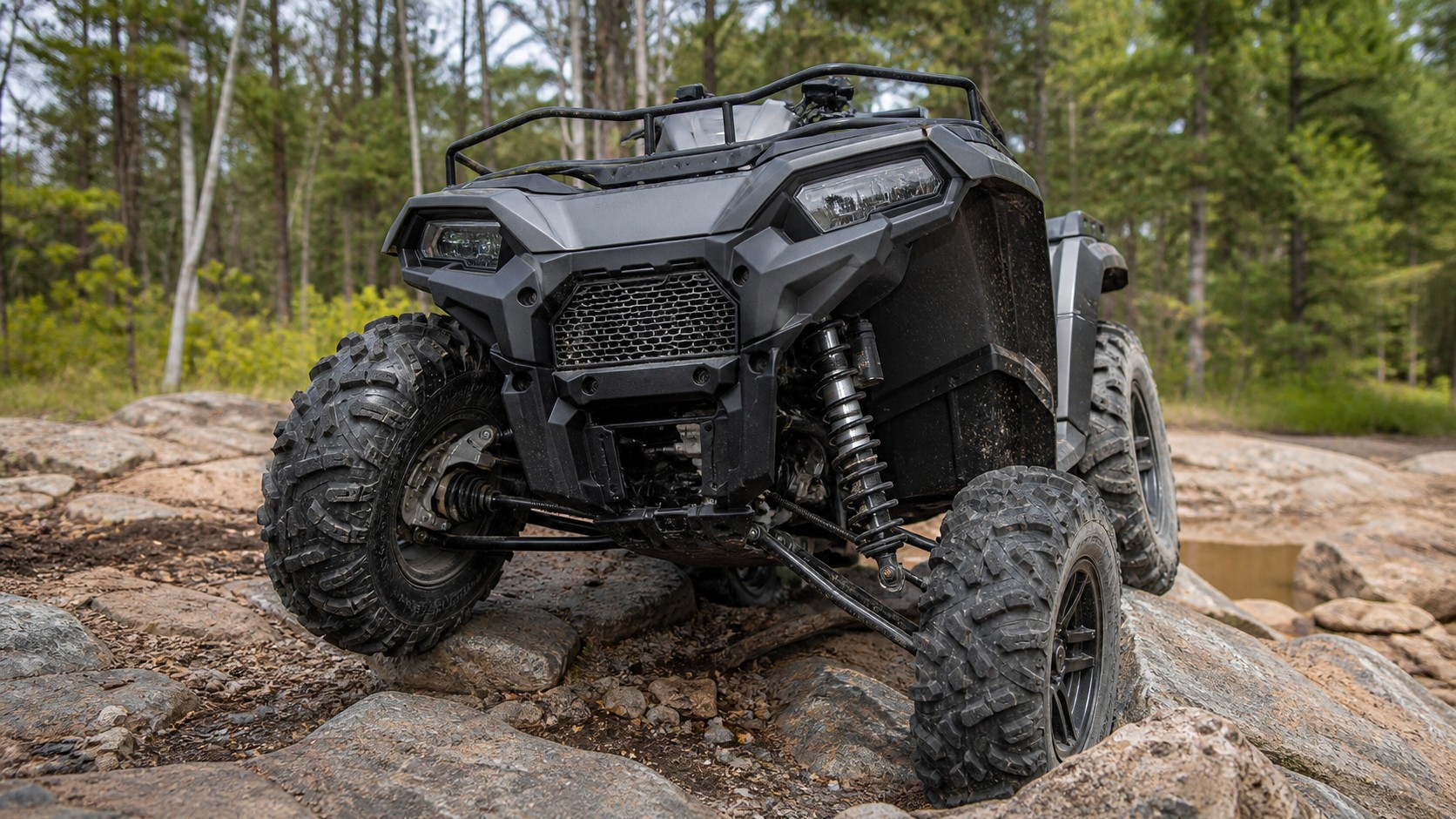
Suspension travel measures how far the wheels can move, but more travel is not automatically better. The quality of control through that movement matters. Springs, damping, linkage, arm angles, chassis width, and ride height decide whether travel feels useful or vague.
An ATV with moderate travel and good damping may feel more controlled than one with big numbers and poor setup. Riders should judge how the machine behaves over real terrain, not only what the brochure says.
Geometry In Plain Language
Suspension geometry describes how parts move and how the wheels meet the ground. Caster, camber, toe, track width, wheelbase, ride height, and arm angles all affect steering, stability, tire contact, and bump response. Small changes can have large effects.
Bent parts or careless lift kits can change geometry enough to make an ATV wander, dart, wear tires unevenly, or feel unstable. If handling changes suddenly, inspect geometry-related parts before assuming the rider is the problem.
Springs And Damping
Springs support the rider, cargo, and ATV. Damping controls how quickly suspension moves and returns. Too little damping can feel bouncy. Too much can feel harsh and reduce grip. Preload affects ride height and how much travel remains available.
Setup should match rider weight and load. A machine used for solo trail riding may need different settings than the same ATV carrying tools or a passenger on a model designed for two-up use.
Width, Wheelbase, And Stability
Wider ATVs can feel more planted, but they may not fit every trail. Longer wheelbases can feel stable but turn less tightly. Shorter, narrower machines may feel nimble but less calm at speed or on sidehills. Geometry is always a tradeoff.
The right dimensions depend on terrain. Woods, rocks, racing, touring, and utility work all ask for different balances. A rider should choose the balance that matches normal use.
Ride Height And Clearance
Ride height affects ground clearance and center of gravity. More clearance can help in ruts and rocks, but too much height can reduce stability. Lift kits should be chosen carefully because they may change axle angles, steering feel, and suspension motion.
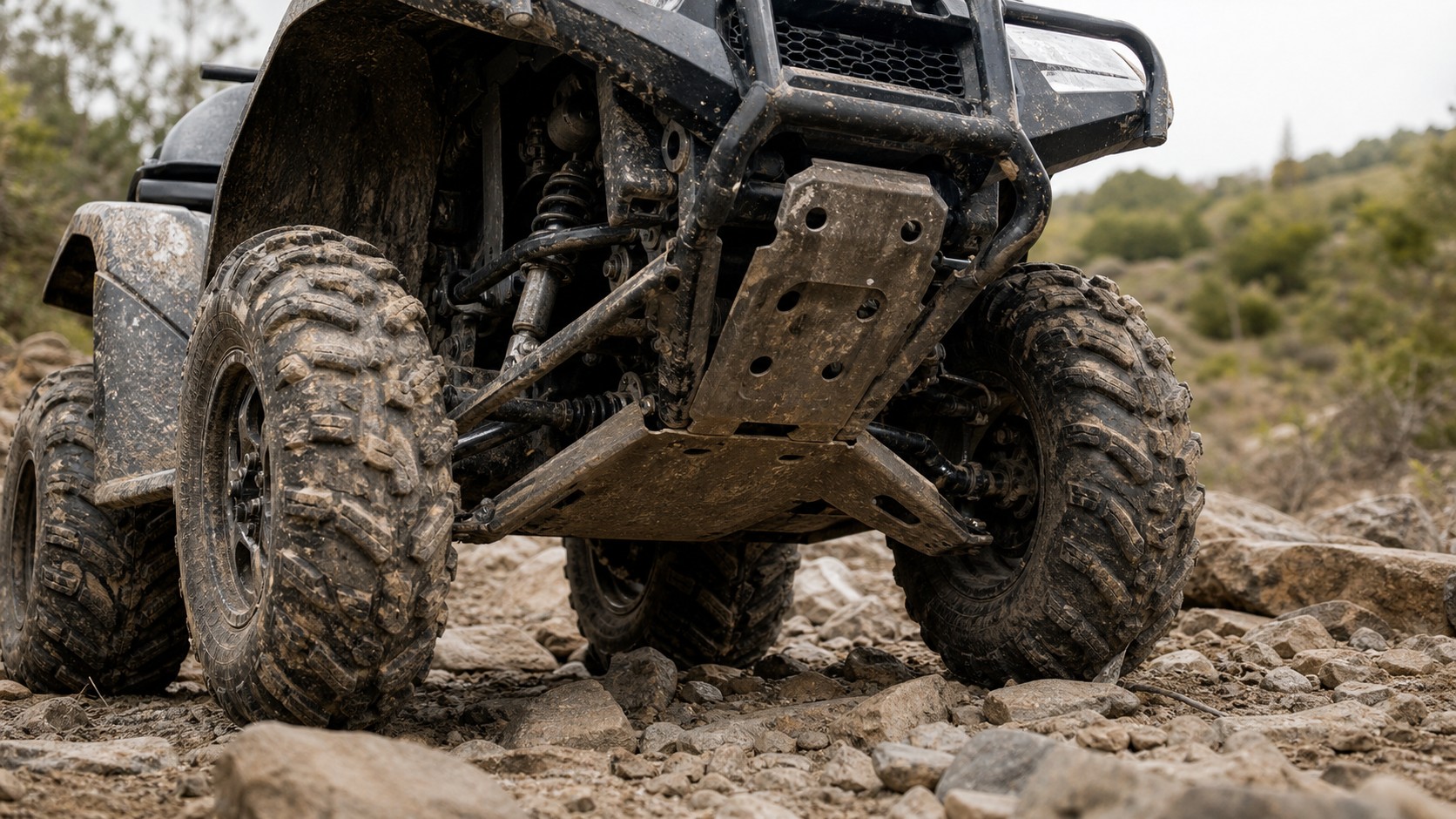
Sometimes better tires, skid plates, or line choice are smarter than more height. Clearance helps only if the ATV remains controllable.
Alignment And Tire Wear
Toe, camber, and worn parts affect how tires contact the ground. Poor alignment can make the ATV pull, wander, or wear tires unevenly. Impacts, hard riding, and worn bushings can change alignment over time.
Owners should inspect after crashes, rock impacts, or sudden handling changes. Correct alignment protects tires and makes steering more predictable.
Terrain Examples
Racing whoops need damping control and bottoming resistance. Rocks need tire contact, clearance, and slow control. Utility work needs load support. Trail riding needs comfort and steering accuracy. Mud needs clearance but still requires stability.
No one geometry setup is perfect everywhere. The best suspension system is the one that supports the terrain the ATV actually rides most often.
Used ATV Inspection
Used buyers should inspect shocks, bushings, ball joints, tie rods, wheel bearings, A-arms, frame mounts, tires, and skid plates. Leaking shocks, clunks, crooked stance, uneven tires, or fresh paint over damaged parts deserve caution.
A short ride should include slow turns, bumps, braking, and straight tracking. Suspension problems often show up when the buyer slows down enough to feel them.
Bottom Line
Suspension geometry and travel explain how an ATV stays controlled over rough ground. Travel provides room for movement; geometry and damping decide whether that movement helps.
Choose predictability first. A stable, well-maintained suspension setup makes every ride safer, smoother, and easier to understand.
FAQ
Is more suspension travel always better?
No. Controlled travel and good geometry matter more than travel numbers alone.
What makes an ATV wander?
Possible causes include alignment problems, worn steering parts, tire issues, bent components, or poor geometry changes.
Should I lift my ATV?
Only when the benefit is real and the change does not harm stability, angles, or handling.
How Geometry Changes With Wear
Suspension geometry is not fixed forever. Worn bushings, ball joints, tie rods, wheel bearings, sagging springs, bent arms, and damaged frame mounts can change how the wheels sit and move. The ATV may begin to wander, pull, clunk, dart, or wear tires unevenly.
Because wear happens gradually, riders may adapt without noticing. A periodic inspection brings the machine back to a known baseline. If the ATV used to steer cleanly and now feels vague, geometry-related wear is a good place to look.
Impacts matter too. A hard hit on a rock, stump, rut, or jump can bend a part enough to change alignment. After a significant impact, inspect before assuming everything is fine.
Why Lift Kits Need Caution
Lift kits can add clearance, but they can also change axle angles, steering feel, center of gravity, and suspension motion. A modest lift used for a specific terrain problem may be reasonable. A tall lift installed for appearance can make the ATV less stable and harder on parts.
Before lifting, ask what problem needs solving. If the issue is scraping on rocks, skid plates and better line choice may help. If the issue is deep ruts, tires and moderate clearance may be enough. Geometry changes should earn their place.
Setting Up For Loads
Cargo and passengers on approved models change ride height and available travel. Preload adjustments can help restore stance, but they do not increase the ATV’s ratings. A loaded machine still needs slower speed and more braking room.
If suspension bottoms often during normal loaded work, the ATV may be overloaded, worn, or poorly matched to the job. Repeated bottoming is not only uncomfortable; it can damage parts and reduce control.
Bottom Line For Geometry And Travel
Suspension travel gives the wheels room to move, but geometry decides how useful that movement is. Alignment, ride height, width, wheelbase, shock control, and maintenance all shape the result.
A predictable suspension setup is worth more than a large number on a spec sheet. Riders should choose and maintain geometry that helps the ATV stay calm in real terrain.
How Riders Feel Geometry Problems
Geometry problems show up through the rider’s hands and body. The ATV may push wide in turns, wander on straight sections, dart over ruts, clunk over bumps, or feel tippy after a lift. These symptoms deserve inspection because they can point to alignment, worn parts, tire pressure, or damaged suspension.
A rider should notice whether the issue appears all the time or only when loaded, braking, climbing, or crossing rough ground. That pattern helps diagnosis. A machine that handles well empty but poorly with cargo may need load adjustment, preload changes, or a different job match.
Good geometry feels calm. The ATV may still move around on rough ground, but it does not surprise the rider with vague steering or unpredictable weight shifts.
Final Suspension Geometry Checklist
Before changing suspension parts, inspect the basics. Tire pressure, tire wear, wheel bearings, bushings, tie rods, ball joints, shocks, springs, A-arms, and frame mounts should all be sound. Adjusting around worn parts creates confusion. A healthy baseline makes every later change easier to judge.
Next, define the problem. Is the ATV bottoming, wandering, diving, pushing wide, feeling harsh, sagging with cargo, or rubbing tires? Each symptom points in a different direction. More travel, more preload, a lift kit, or different tires may help one problem while making another worse. Specific diagnosis prevents expensive guessing.
Finally, test one change at a time on familiar terrain. Ride slowly, brake, turn, cross bumps, and listen. Good geometry should feel predictable and repeatable. The rider should come away with more control, not just a taller or more complicated ATV.
Practical Examples
Example: an ATV that bottoms with normal cargo may not need a lift. It may need preload adjustment, shock service, a lighter load, or a machine with higher ratings. Raising the ATV without solving load support can make stability worse.
Example: an ATV that darts after hitting a stump may have a bent tie rod, damaged wheel, alignment change, or worn joint. Continuing to ride because the plastics look fine can wear tires and make steering less predictable.
Example: a rider who changes tire size should recheck clearance and handling. Taller tires affect ride height and gearing feel, while wider tires can change steering effort and scrub. Suspension geometry reacts to tire choices.
Good suspension understanding helps riders diagnose instead of guess. The goal is not to chase technical terms; it is to keep the ATV stable, aligned, and predictable.
A final setup check should happen with the rider on the ATV and the normal cargo installed. Ride height, steering feel, braking dive, and bump response all change under real load. Suspension geometry should be judged in the conditions the machine actually sees.
If the ATV feels different after an impact, tire change, lift, or heavy work session, inspect it before the next hard ride. Geometry problems are easier to correct early than after tires, joints, or shocks have worn around the new problem.
Common Setup Mistakes
Common suspension mistakes include adding lift before checking worn parts, copying another rider’s settings, ignoring tire pressure, and treating more travel as automatically better. Each shortcut can make the ATV harder to diagnose. A rider should first restore the machine to a healthy baseline, then make changes with a clear goal.
Another mistake is forgetting that cargo changes everything. A setup that feels right empty may sag or bottom with tools, camping gear, or a passenger on an approved two-up model. The correct setup should be judged with the normal rider and normal load.