Mud Tires And All-Terrain Tires Solve Different ATV Problems
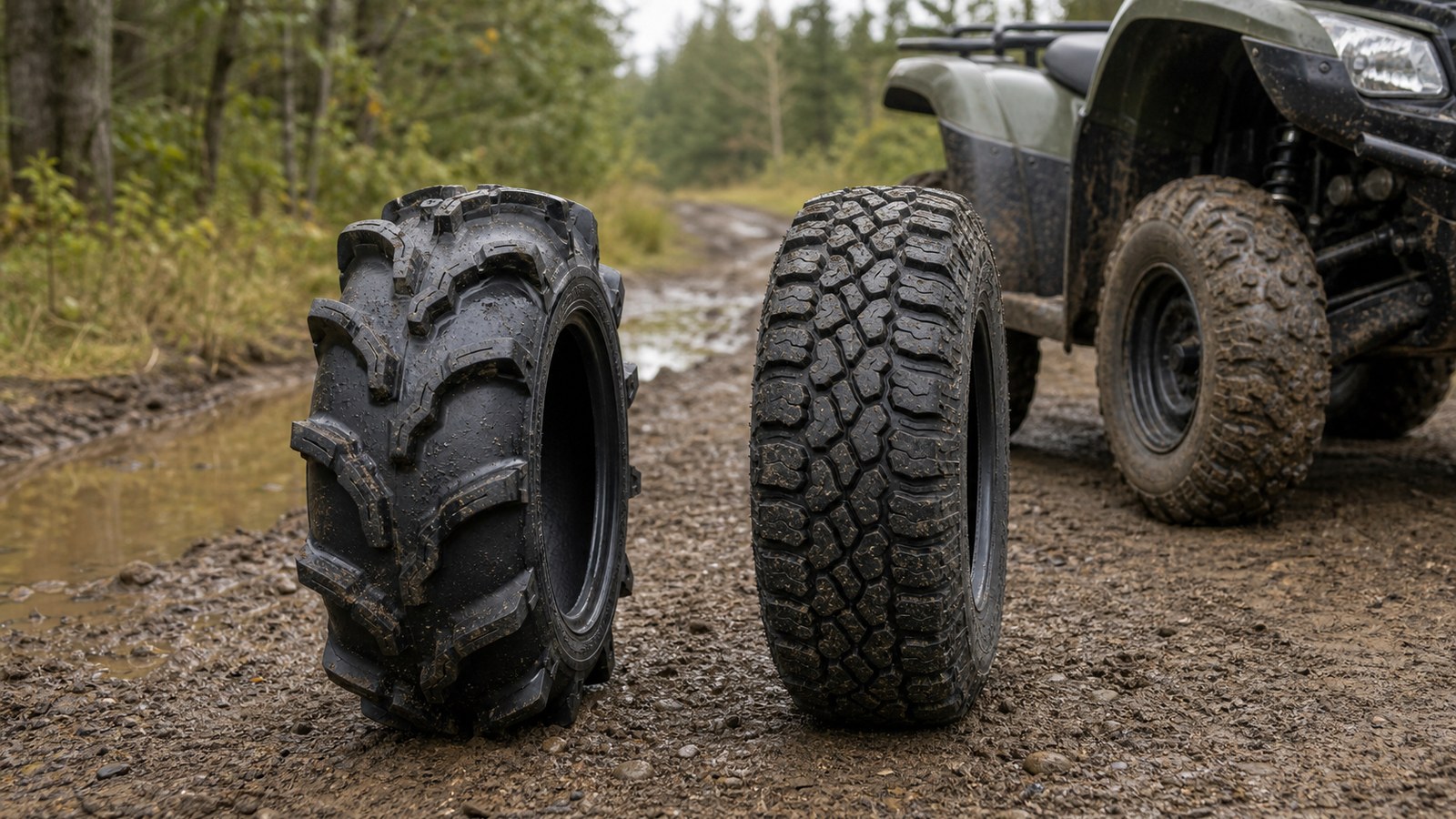
Mud tires are built to dig, clear, and pull through soft ground. All-terrain tires are built to work across a wider mix of dirt, gravel, grass, rocks, hardpack, and mild mud. The best choice depends on how often the ATV truly rides deep slop versus mixed trails. A tire that is excellent in swampy ruts may feel heavy, rough, and less predictable on normal trail days.
A: Follow the manual and inspect sooner after harsh riding.
A: A new feel, sound, smell, leak, heat issue, or warning light.
A: Yes. Mud adds grit, moisture, heat, and hidden wear.
A: No. Restore the baseline first, then decide if upgrades are useful.
A: Yes, especially after water, rocks, towing, heat, or heavy loads.
A: Dates, hours, parts, fluids, settings, and symptoms are all useful.
A: Use caution on safety, sealing, steering, suspension, brake, and drivetrain parts.
A: Working does not mean healthy; inspect when symptoms change.
A: Get help for uncertain brakes, steering, wiring, fuel leaks, or structural issues.
A: Inspect early, fix small problems, and test before riding remote terrain.
The Main Difference
Mud tires are specialists. Their tall, open lugs dig into soft ground and clear muck as the tire rotates. All-terrain tires are generalists. They give more balanced behavior across dirt, gravel, grass, hardpack, light mud, and occasional rocks. Neither is best everywhere.
The decision depends on the percentage of real mud in your rides. If deep slop is the main event, mud tires make sense. If mud is only one part of a varied ride, an all-terrain or hybrid tread may be smarter.
How Mud Tires Feel
Mud tires can transform an ATV in soft ground. They find bite where mild tires spin, and they can help the machine climb out of ruts that would stop ordinary trail tires. They also look aggressive, which is part of their appeal.
The cost is weight and manners. Mud tires can make steering heavier, ride rougher on hard ground, reduce braking smoothness, and stress belts, clutches, axles, and steering parts. Very large mud tires may require clutching or gearing changes.
How All-Terrain Tires Feel
All-terrain tires are often better for riders who see many surfaces in one day. They can steer more predictably on hardpack, ride more comfortably on trails, and put less strain on a mild ATV. They may also be less expensive and easier to live with.
Their weakness is deep, sticky mud. Once the tread packs and stops clearing, traction falls quickly. A rider who spends weekends in deep holes will likely outgrow ordinary all-terrain tires.
Tire Size And Machine Stress
Bigger tires increase ground clearance and contact area, but they also change gearing feel. The engine and clutching must turn more weight. Steering parts see more leverage. Brakes work harder. A tire upgrade that overwhelms the ATV can make it less reliable.
Before upsizing, check clearance at full steering lock and through suspension movement. Look for rubbing near fenders, footwells, brake lines, and suspension parts. A tire that only clears while parked may rub badly on the trail.
Terrain Mix Matters
Some rides include mud holes connected by hard trails, gravel roads, rocks, and roots. In that setting, an extreme mud tire may solve the mud but make every other section worse. A hybrid tread can be a useful compromise for riders who need better mud bite without full mud-tire drawbacks.
Dedicated mud parks are different. If the ATV is trailered to deep mud and rarely sees hard terrain, a more aggressive tire makes more sense. Let the normal ride decide.
Rider Skill And Throttle
A good tire cannot replace throttle control. Spinning wildly digs holes, heats belts, and throws mud without always moving the ATV. Smooth throttle and steady momentum often work better than force. Tire choice gives the rider a tool; technique decides how well it works.
Riders should practice in moderate mud before entering deep ruts. Learn how the tires clean, how the ATV responds to steering, and when to back out. The goal is forward progress without unnecessary abuse.
Buying Advice
Choose mud tires if deep mud is frequent, the ATV has enough power, and you accept added maintenance. Choose all-terrain tires if your riding is mixed and you value predictable handling. Choose a hybrid tread if you need more mud performance but still ride normal trails.
Do not buy the most aggressive tread only because it looks serious. The best tire is the one that improves the ride you actually take most often.
Bottom Line
Mud tires win in deep slop. All-terrain tires win in versatility. Hybrid tires sit between them. The right answer depends on terrain, machine strength, and how much extra steering effort and maintenance you are willing to accept.
A tire upgrade should make the ATV more useful, not just more dramatic. Match the tire to the trail and the machine will feel better everywhere it matters.
FAQ
Are mud tires bad on trails?
They can be rougher, heavier, and less predictable on hard trails, though mild mud tires or hybrids may work for mixed riding.
Do all-terrain tires work in mud?
They work in light or moderate mud, but deep sticky mud usually favors dedicated mud tires.
Will bigger tires hurt my ATV?
They can if they add too much weight, rub, or strain clutching, belts, axles, brakes, or steering.
Hybrid Tire Options
Many riders end up between pure mud tires and basic all-terrain tires. Hybrid tires use deeper tread than ordinary trail tires but avoid the most extreme weight and spacing of dedicated mud designs. They can be a good fit for riders who see wet trails often but still spend plenty of time on hardpack, gravel, and woods routes.
A hybrid tire will not match a true mud tire in deep swampy ruts, and it will not ride as smoothly as a mild all-terrain tire on hard ground. Its value is compromise. For mixed trail riders, compromise may be exactly what keeps the ATV enjoyable across the whole day.
How Tire Weight Changes The Machine
Tire weight is easy to overlook until the ATV feels slower, heavier, or harder to steer. More rotating mass affects acceleration, braking, suspension response, and belt or clutch workload. A tire that looks only slightly larger may feel very different once mounted.
This matters most on smaller or mid-size ATVs. A powerful utility machine may handle added tire weight better than a mild recreational model. Before buying, check real tire weight, not just size. The lightest tire that does the job is often the best long-term choice.
Testing Tires After Installation
After installing new tires, ride familiar terrain first. Check steering effort, braking feel, rubbing, vibration, and how the ATV climbs or turns. Listen for belt strain or driveline noise. Recheck lug nuts and tire pressure after the first ride.
A tire upgrade should make the machine more useful. If it creates constant rubbing, heavy steering, or poor hardpack manners, the setup may need adjustment. Tire choice is not finished when the tires are mounted; it is finished when the ATV feels right in real use.
Bottom Line For Tire Choice
Mud tires are best when deep mud is the main reason the ATV exists. All-terrain tires are best when the ride includes many surfaces. Hybrid tires fit the middle. Choose based on normal terrain, machine strength, and the kind of handling you want every ride.
The right tire helps the ATV work with the rider. The wrong tire makes the rider compensate for weight, vibration, steering effort, or poor grip outside its narrow specialty.
Mud Tire Maintenance
Mud tires can throw more debris into brakes, suspension, and bodywork. After wet rides, inspect tread for cuts, clean packed mud from wheels, check bead areas, and look for rubbing. Larger tires should also prompt more frequent checks of wheel bearings, tie rods, ball joints, axles, and brakes.
All-terrain tires need care too, but they usually create less stress in ordinary trail conditions. Whatever tire is chosen, keeping pressure consistent and inspecting after hard rides will do more for reliability than treating tires as install-and-forget parts.
Cost And Comfort Tradeoffs
Mud tires often cost more, weigh more, and may wear unevenly if used on hard surfaces. They can also increase vibration and steering effort. All-terrain tires usually offer better comfort and may last longer in mixed use. Riders should include those ownership costs in the decision.
A tire that matches normal riding saves money because it wears correctly and protects the machine from unnecessary strain. Buying the most aggressive tire for occasional mud can be like wearing work boots to run every errand: useful in one setting, tiring everywhere else.
How Different Surfaces Expose Tire Choice
On hardpack, all-terrain tires usually feel more predictable because the tread blocks stay supported. On deep mud, they may fill and spin. On wet roots, an overly aggressive mud tire may bite and slide differently than expected. On gravel roads, heavy lugs can feel rough or vague. Every surface tells the rider whether the tire is matched well.
This is why a tire review from another rider is only partly useful. Their soil, machine, speed, and expectations may be different. A tire that works beautifully in southern clay may not be the best choice for rocky mountain trails or dry desert routes. Local terrain matters.
A good way to decide is to list the most common surfaces in order. If deep mud is first, choose mud performance. If hard trails, gravel, roots, and only occasional mud dominate, choose versatility. If the list is mixed, consider a hybrid tread rather than the most extreme option.
Living With The Tire After Purchase
The tire decision continues after installation. Watch for rubbing, steering fatigue, brake feel, belt heat, and ride comfort. Check pressure often, especially after hard impacts or temperature changes. Inspect sidewalls and lugs after rocky or muddy rides. A tire that keeps holding air and behaving predictably is part of a reliable setup.
Riders should also think about resale and replacement. Extreme tires may appeal to a smaller audience and cost more to replace. All-terrain tires may be easier to sell with a general-use ATV. The best choice should fit both the ride and the ownership plan.
Final Tire Decision
When the decision is close, choose the tire that makes the most common ride better. A rider who sees deep mud every weekend should not suffer through weak all-terrain traction. A rider who sees mostly hard trails should not fight extreme mud tires all day for one wet hole.
The best tire is honest about terrain, machine strength, and maintenance. That honesty keeps the ATV easier to steer, easier to service, and more enjoyable across the miles that actually matter.