Deep Mud And Wet Trails Need A Complete ATV Setup
A mud-ready ATV is more than a machine with aggressive tires. Deep mud, swampy routes, and wet trails ask for traction, ground clearance, waterproofing discipline, drivetrain care, cooling awareness, recovery gear, and patient riding. The best setup helps the ATV move through soft ground without destroying belts, bearings, brakes, or electrical parts. It also helps the rider know when to turn around before mud turns into a repair bill.
A: Follow the manual and inspect sooner after harsh riding.
A: A new feel, sound, smell, leak, heat issue, or warning light.
A: Yes. Mud adds grit, moisture, heat, and hidden wear.
A: No. Restore the baseline first, then decide if upgrades are useful.
A: Yes, especially after water, rocks, towing, heat, or heavy loads.
A: Dates, hours, parts, fluids, settings, and symptoms are all useful.
A: Use caution on safety, sealing, steering, suspension, brake, and drivetrain parts.
A: Working does not mean healthy; inspect when symptoms change.
A: Get help for uncertain brakes, steering, wiring, fuel leaks, or structural issues.
A: Inspect early, fix small problems, and test before riding remote terrain.
Start With Real Mud Conditions
Mud setup should begin with the trails you actually ride. A shallow wet field, a clay rut, a swamp crossing, and a deep mud park do not ask for the same ATV. The deeper and stickier the terrain, the more traction, clearance, cooling, belt care, and recovery gear matter.
Overbuilding for rare mud can make ordinary trail riding worse. Extreme tires and lifts add weight and stress. A balanced setup should help in normal wet conditions without making the ATV unpleasant everywhere else.
Tires And Traction
Mud tires use deeper lugs and open tread to bite and clean themselves. They can pull strongly through soft ground, but they also add rotating weight. That extra weight can affect acceleration, braking, steering, belt heat, and axle stress. Choose size and tread with the machine’s power and drivetrain in mind.
Air pressure changes how a tire bites and floats. Too much pressure may reduce grip. Too little can damage tires or increase bead problems. Riders should start with sensible settings and test carefully instead of guessing at the lowest possible number.
Ground Clearance And Lift Kits
Ground clearance helps in ruts, but lift kits are not automatically better. Raising an ATV can change axle angles, steering geometry, brake-line routing, and stability. A small clearance improvement may help, while an extreme lift can make the machine less predictable.
Skid plates, careful line choice, and tire placement may solve more problems than height alone. The best mud ATV still needs to stay controllable on the ride to and from the wet section.
Water And Intake Protection
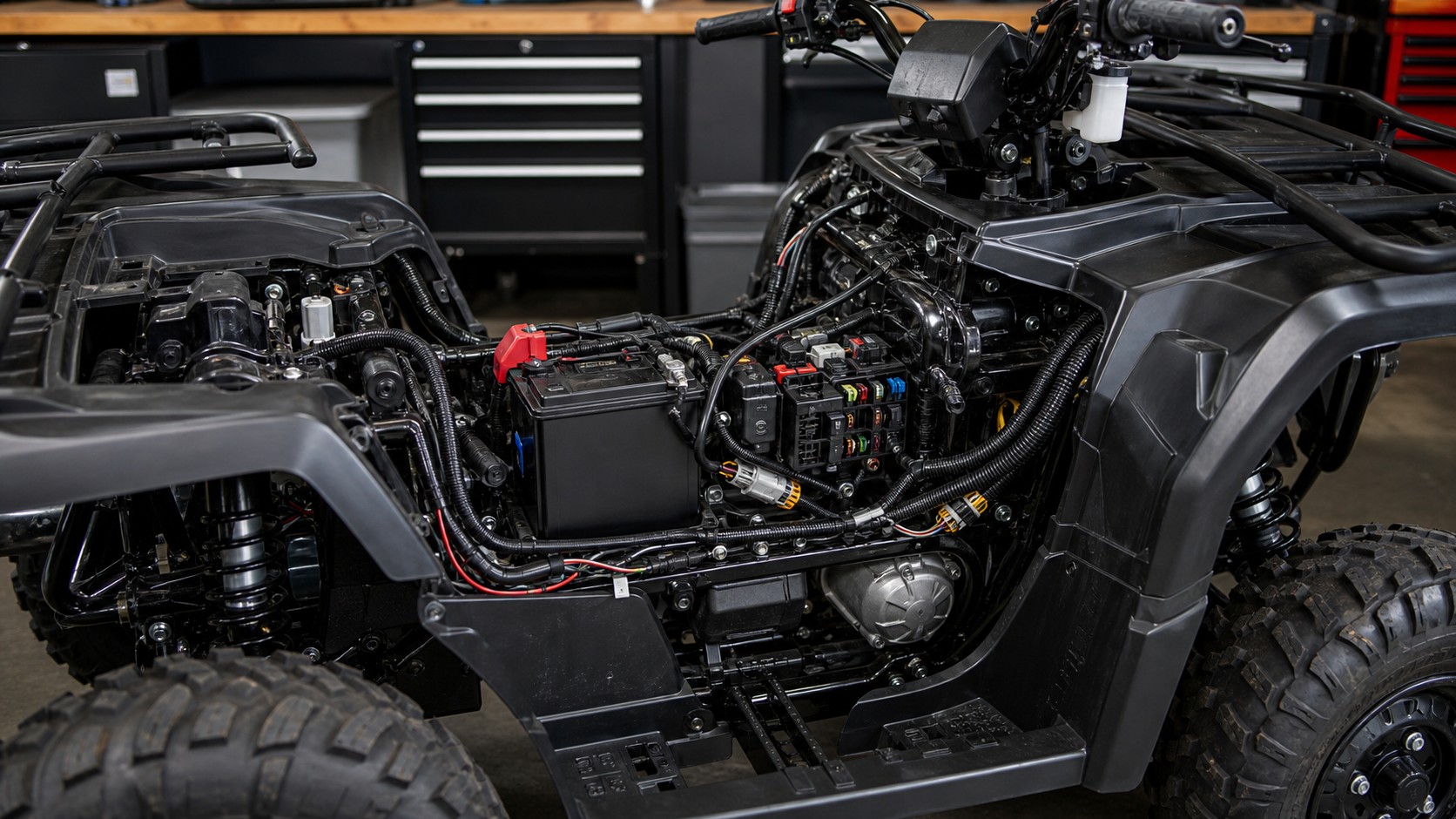
Wet trails require respect for intake height, vent routing, electrical connections, and manufacturer water limits. Snorkels can help when installed correctly, but they do not make an ATV waterproof. Water in the intake, engine oil, differentials, or transmission can cause serious damage.
After deep water or swamp riding, inspect fluids, brakes, bearings, CV boots, and electrical connections. Milky fluid, rough running, or new noises should be handled immediately. The cleanup is part of the ride.
Drivetrain Heat And Low Range
Mud creates drag. Drag creates heat. Belt-driven ATVs can suffer when riders crawl through heavy mud in the wrong range or spin tires aggressively without moving. Low range, smooth throttle, and patient line choice protect the drivetrain.
If the ATV smells like belt, loses drive, or feels grabby after a mud hole, stop and let things cool. Continuing to punish the system can turn a warning into a broken belt or damaged clutch components.
Recovery Gear And Safe Pulling
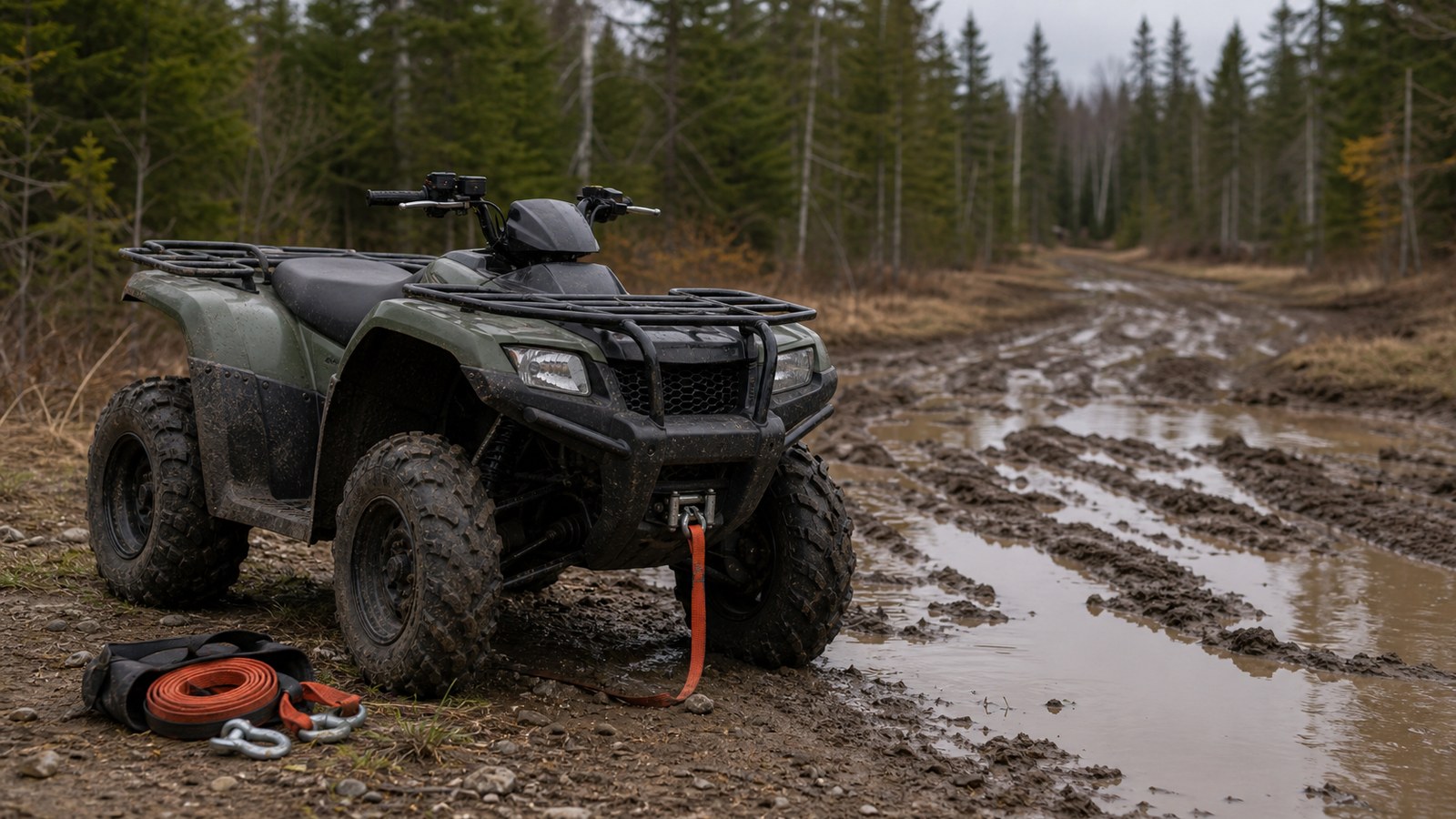
A winch, tow strap, gloves, and proper recovery points are practical mud tools. Riders should keep people clear of tensioned lines and avoid unsafe anchor points. Recovery should be slow and deliberate, not a dramatic tug that breaks parts.
The best recovery is avoiding the worst line. Watch other riders, read ruts, check exits, and turn around when a hole is clearly beyond the machine. A mud setup should improve options, not encourage careless choices.
Cleaning And Maintenance
Mud left packed around brakes, radiators, suspension, and driveline parts traps moisture and grit. Clean carefully after wet rides, then inspect instead of just admiring a clean machine. Bearings, bushings, brake pads, belts, chains, seals, and electrical connectors all live harder lives in mud.
Maintenance frequency should rise with mud use. If the ATV regularly enters deep water or sticky ruts, service intervals may need to be more cautious than a casual trail rider’s schedule.
Bottom Line
The best ATV setup for deep mud balances traction, clearance, recovery, waterproofing discipline, and maintenance. Tires matter, but they are only one piece of the system.
Build for the mud you ride most, keep the machine serviceable, and respect water depth. A reliable ATV that gets home is better than an extreme setup that breaks for show.
FAQ
Do I need a snorkel for mud riding?
Only if your riding and machine justify it. A snorkel does not make an ATV waterproof and must be installed correctly.
Are bigger mud tires always better?
No. Bigger tires add weight and stress. Choose a size the ATV can turn reliably.
What should I do after deep mud?
Clean carefully, inspect brakes, fluids, bearings, belts, boots, and electrical connections, and service anything contaminated.
Choosing A Sensible Mud Build
The most useful mud build starts with restraint. Tires should improve traction without overwhelming the ATV. Clearance should help the machine move through ruts without making it unstable. Recovery gear should be strong enough for real use without becoming an excuse to enter every hole. Riders who build this way usually spend more time riding and less time replacing parts.
A sensible setup also respects the route around the mud. Many wet rides include hardpack, roots, gravel, bridges, and transport roads. Extreme mud parts can make those sections rougher. If the ATV has to handle mixed terrain, the setup should preserve steering, braking, and comfort outside the deepest sections.
Electrical And Brake Concerns
Wet riding can expose weak electrical connections. Dielectric grease, good routing, sound battery terminals, sealed connectors, and careful washing all help. Riders should not assume that because the ATV kept running once, every connector is fine. Intermittent electrical trouble often appears after repeated wet rides.
Brakes also deserve special attention. Mud can pack around calipers, drums, rotors, and pads. It can reduce braking feel and accelerate wear. After a wet trail, test brakes carefully and inspect for grit or dragging. Stopping power matters just as much as getting unstuck.
When To Turn Around
The best mud riders know when not to enter. If the water depth is unknown, the exit is blocked, the group has no recovery plan, or the machine is already running hot, the smart choice may be to stop. Deep mud can hide stumps, holes, rocks, wire, and sudden drop-offs. Walking or probing from a safe position may reveal more than guessing from the seat.
Turning around is not failure. It is part of protecting the ATV and the ride. A machine that avoids one bad hole can still finish the day. A machine with water in the engine or a snapped axle becomes the center of everyone else’s afternoon.
Bottom Line For Wet Trails
Deep mud rewards preparation and punishes shortcuts. Build the ATV around traction, cooling, water awareness, recovery, and post-ride service. Keep the setup matched to the machine’s strength and the terrain you ride most.
A clean, maintained ATV with moderate upgrades and a careful rider will often outlast a more extreme machine used carelessly. In mud, reliability is part of performance.
Mud Setup Mistakes To Avoid
The most common mistake is building for appearance instead of function. Tall tires, loud exhaust, and a big lift can look mud-ready while making the ATV harder to steer, harder to stop, and more expensive to repair. A real mud setup should improve traction and recovery while keeping the machine predictable.
Another mistake is ignoring the ride home. Mud holes may be the exciting part, but the ATV still has to travel trails, loading ramps, camp roads, and turns. If a setup only works in one hole and feels terrible everywhere else, it may be too narrow for normal ownership.
Used Mud ATV Checks
Used mud ATVs deserve extra inspection because water and grit reach expensive parts. Check engine oil, differential fluids, transmission behavior, brakes, wheel bearings, CV boots, electrical connectors, radiator condition, and frame areas. Milky fluid, fresh sealant, rough bearings, and vague seller answers deserve caution.
Ask how the ATV was cleaned and serviced after wet rides. A seller who only talks about tire size may not have maintained the parts that mud damages. The best used mud machine is not the dirtiest-looking one; it is the one with clear service habits.
Rider Technique In Deep Mud
Mud riding is not only a build problem. Smooth throttle, steady momentum, and careful steering often matter more than raw power. A rider who pins the throttle at the first sign of resistance can dig the ATV deeper, heat the belt, and load the drivetrain. A rider who enters with a plan has more options.
Good technique starts before the hole. Look for the entry, the rut depth, the exit, and the safest recovery direction. Avoid sudden steering when the tires are buried. If forward movement stops, back out early when possible instead of spinning until the machine is sitting on its frame.
Group riding helps only when the group is prepared. One stuck ATV can block the route, and one unsafe pull can damage machines or hurt people. Riders should agree on recovery signals, safe standing areas, and who is leading the pull before the line is under tension.
Building For Reliability
Reliability should guide every mud upgrade. A tire that breaks axles, a lift that ruins angles, or a snorkel that leaks is not a good upgrade. Each part should work with the ATV’s engine, clutching, cooling, brakes, and rider skill. The best mud machine is the one that can repeat wet rides without constant repair.
Owners should keep a more aggressive service routine if they ride wet trails often. Differential fluids, brake wear, bearings, belts, air filters, and electrical connectors deserve more attention. Mud is fun, but it is also a maintenance environment. Respecting that fact keeps the ATV alive longer.