ATV Categories Help New Buyers Narrow The Field
Youth, adult, sport, and utility ATVs are not just marketing labels. They describe different rider sizes, safety expectations, controls, power delivery, and ownership jobs. A new buyer should start by matching the ATV to the rider and the main use. After that, details like engine size, transmission, four-wheel drive, suspension, and cargo capacity become much easier to judge.
A: Follow the manual and inspect sooner after harsh riding.
A: A new feel, sound, smell, leak, heat issue, or warning light.
A: Yes. Mud adds grit, moisture, heat, and hidden wear.
A: No. Restore the baseline first, then decide if upgrades are useful.
A: Yes, especially after water, rocks, towing, heat, or heavy loads.
A: Dates, hours, parts, fluids, settings, and symptoms are all useful.
A: Use caution on safety, sealing, steering, suspension, brake, and drivetrain parts.
A: Working does not mean healthy; inspect when symptoms change.
A: Get help for uncertain brakes, steering, wiring, fuel leaks, or structural issues.
A: Inspect early, fix small problems, and test before riding remote terrain.
Why Categories Matter
ATV categories exist because riders and jobs are different. A machine that is perfect for a ranch owner may be completely wrong for a teenager. A sport ATV that feels thrilling on a track may feel useless when asked to haul fencing tools. A youth ATV that fits a young rider may be too small and underpowered for an adult. Category labels help buyers begin in the right section of the market.
The labels are only a starting point. Buyers still need to confirm the exact model, manufacturer guidance, local laws, and owner’s manual. A category tells you what the ATV was designed to do, but fit and use decide whether it is the right machine.
Youth ATVs
Youth ATVs are designed for younger riders and should be chosen with age, size, supervision, and training in mind. Children should not be placed on adult-size ATVs. Adult machines can be too heavy, too powerful, and too demanding even if a child can reach the controls. A youth ATV should fit the rider’s reach, strength, and maturity.
Parents should look for clear labels, working brakes, speed-limiting features where provided, a reliable kill switch, and dependable parts support. Protective gear is nonnegotiable. A helmet, eye protection, gloves, long sleeves, long pants, and boots should be normal from the first ride.
Adult Recreational ATVs
Adult recreational ATVs cover a broad range. Some are mild trail machines for beginners. Others are strong touring or rec-utility models built for comfort and distance. These ATVs are often the best fit for riders who want weekend trails, camping access, and moderate property use without buying a specialized sport or work machine.
Comfort matters more than many new buyers expect. Seat shape, handlebar reach, floorboard space, vibration, suspension, and transmission feel all affect whether an ATV remains enjoyable after the first hour. A machine that fits well will be easier to control and more pleasant to own.
Sport ATVs
Sport ATVs are built for active riding. They tend to be lighter and more responsive, with ergonomics that encourage standing, leaning, and shifting body weight. Many use manual transmissions. Riders choose them for dunes, tracks, fast trails, and performance-focused recreation.
They are less suited to passengers, cargo, towing, and slow work. A sport ATV is not automatically unsafe, but it asks more from the rider. New buyers should be honest about training and terrain before choosing one as a first machine.
Utility ATVs
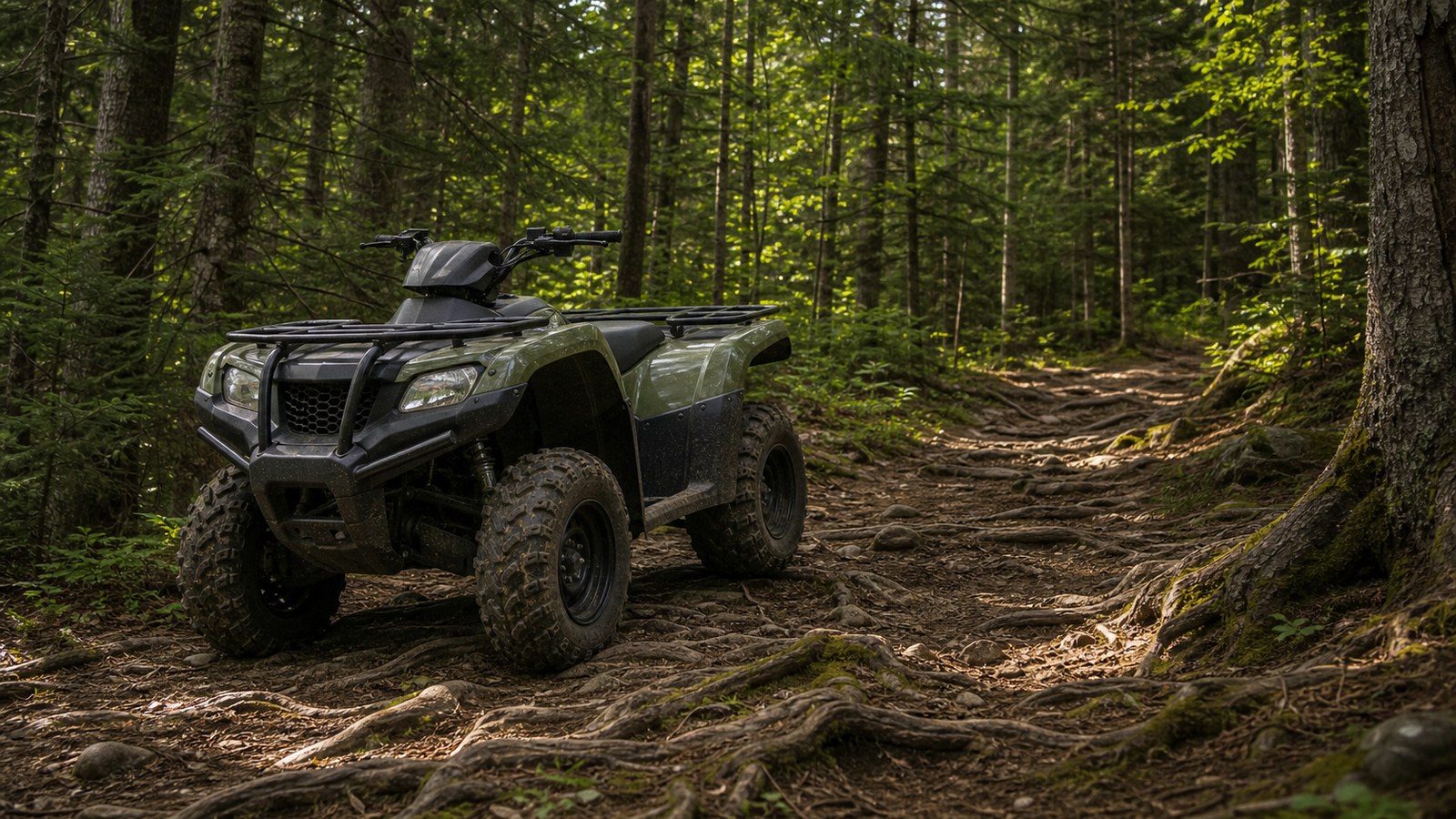
Utility ATVs are the practical choice for many owners. They commonly offer racks, hitch capability, four-wheel drive, automatic transmission, winch compatibility, and enough weight to feel planted during slow work. They are common on farms, hunting properties, camps, and mixed trail systems.
Their strength is versatility. One utility ATV can carry gear in the morning, pull a light trailer in the afternoon, and ride trails on the weekend. The limitation is weight and agility. A large utility machine can feel cumbersome to a small or inexperienced rider.
How To Choose
Start with the rider. Age, height, reach, strength, experience, and confidence narrow the field immediately. Then define the main use. Work, hunting, trail riding, racing, youth training, and long-distance touring do not ask for the same machine. Only after those questions are answered should engine size become central.
Buyers should sit on the ATV, inspect controls, compare owner’s manual limits, and think about storage, transport, service, and local trail rules. A good purchase feels sensible after the excitement fades.
FAQ
Is a utility ATV best for most adults?
Often yes, because it covers the widest range of trail and work uses. Sport-focused riders may prefer a sport ATV.
Can one ATV fit the whole family?
Not safely if children are included. Youth riders need age-appropriate machines and supervision.
Should engine size come first?
No. Rider fit, experience, terrain, and intended use should come first. Engine size is part of the final match.
How New Buyers Should Visit A Dealer
A dealer visit is more useful when the buyer already knows the broad category. Instead of asking for the best ATV, ask to compare youth, recreational, sport, utility, and rec-utility machines that fit a specific rider and job. Sit on each machine, stand on the footrests, reach the controls, and ask about owner’s manual limits. The right model should begin to separate itself through fit and purpose.
New buyers should also ask about service intervals, warranty coverage, parts availability, local trail legality, and transport needs. A machine that seems affordable can become inconvenient if it requires a trailer you do not own, parts that are hard to get, or maintenance support far from home.
When Categories Overlap
Some ATVs intentionally blur categories. Rec-utility machines add recreational comfort to utility features. Touring ATVs add passenger accommodations where the model is specifically designed for two-up riding. Sport-utility machines may offer stronger engines and better suspension while keeping racks or four-wheel drive. These hybrids can be excellent when the buyer understands the compromise.
Overlap becomes a problem when marketing hides limits. A sporty utility ATV may still be too heavy for track-style riding. A comfortable recreational ATV may still have strict towing limits. A youth-style machine may look rugged but still need age-appropriate supervision. The manual and warning labels should settle unclear claims.
Budgeting Beyond Purchase Price
The ATV itself is only part of the budget. Riders need helmets, eye protection, gloves, boots, registration where required, ramps or a trailer, tie-downs, insurance in some cases, maintenance supplies, and storage space. Utility owners may add a winch, storage box, plow, or trailer. Sport riders may spend more on tires, protection, and wear parts.
A realistic budget can change the category choice. A buyer who spends everything on a large machine may delay safety gear or service. A slightly simpler ATV with proper gear, training, and maintenance support is usually the better first ownership experience.
Adult Size Does Not Mean One Size Fits All
Adult ATVs vary widely in height, width, seat shape, steering effort, and weight. A new buyer should never assume that any adult model will fit any adult rider. Shorter riders may need a narrower seat and lower-feeling chassis. Taller riders may need more knee room and handlebar reach. Riders with limited upper-body strength may prefer lighter steering and smoother throttle response.
Fit affects safety because awkward posture makes it harder to react. If a rider cannot stand comfortably, turn the bars fully, or reach the brakes without strain, the ATV is not a good match. The best category choice still needs a model-level fit check.
Two-Up And Passenger Questions
Many new buyers assume any ATV can carry a passenger, but most are single-rider machines unless specifically designed and labeled for two-up use. A passenger changes weight distribution, braking distance, and rollover risk. If carrying another person is a real need, the buyer should look for a model designed for that job or consider whether a side-by-side is the better tool.
This point matters across every category. Youth ATVs should not carry passengers. Sport ATVs are generally not built around passenger comfort or stability. Utility and touring models may offer passenger-ready designs, but only when the manufacturer specifies it.
Choosing For Local Rules
Local trail systems may restrict width, sound, age, registration, spark arrestors, helmets, passengers, or road crossings. A buyer should check those rules before buying. The perfect ATV on private land may be inconvenient or illegal on a public trail system if it misses a required feature or exceeds a size limit.
Rules can also shape category choice. A quiet utility ATV may be welcome on one property, while a sport ATV may fit a designated riding area better. New buyers save money and frustration by confirming access before choosing the machine.
First Ownership Checklist
After choosing a category, the first ownership checklist is straightforward: read the manual, buy protective gear, learn the controls, check tire pressure, inspect brakes, practice loading, and schedule maintenance. New buyers should also keep records from the start. Oil changes, air filter service, belt inspections, and tire replacements become easier to track when the habit begins early.
Good ownership habits make every category safer and more enjoyable. The rider who knows the machine’s limits, service needs, and intended use will get more value than the rider who buys by appearance alone.
Questions To Answer Before Buying
Before choosing a category, a new buyer should answer a few plain questions. Who will ride the ATV most often? Will any youth riders use it? Is the main purpose trail riding, work, hunting, hauling, or learning? Will it need to carry a passenger on a model designed for that? Where will it be stored, transported, serviced, and legally ridden? These answers point toward the right category faster than browsing random listings.
A buyer should also decide what the ATV should not do. If it should not tow, a sport or recreational model may be fine. If it should not go fast, a mild utility machine may be better than a performance model. If it should not intimidate a new rider, size and throttle response matter more than peak power. Good boundaries make the buying process much easier.