A Better ATV Chassis Makes Power Easier To Use And Damage Easier To Avoid
Chassis and frame construction influence far more than whether an ATV feels solid in the showroom. The frame determines how power reaches the ground, how suspension loads move through the machine, how accurately the ATV steers, and how well it survives repeated impacts. A strong engine still needs a chassis that can hold alignment, carry load, protect components, and stay predictable under pressure.
A: Follow the manual and inspect sooner after harsh riding.
A: A new feel, sound, smell, leak, heat issue, or warning light.
A: Yes. Mud adds grit, moisture, heat, and hidden wear.
A: No. Restore the baseline first, then decide if upgrades are useful.
A: Yes, especially after water, rocks, towing, heat, or heavy loads.
A: Dates, hours, parts, fluids, settings, and symptoms are all useful.
A: Use caution on safety, sealing, steering, suspension, brake, and drivetrain parts.
A: Working does not mean healthy; inspect when symptoms change.
A: Get help for uncertain brakes, steering, wiring, fuel leaks, or structural issues.
A: Inspect early, fix small problems, and test before riding remote terrain.
Why Chassis Design Affects Performance
Power is useful only when the chassis can manage it. As the engine drives the wheels, force travels through mounts, driveline parts, suspension arms, tires, and the frame. If the structure flexes, twists, or lets geometry change too much, traction becomes harder to predict.
A good chassis does not simply feel stiff. It supports the suspension and drivetrain so the rider can apply throttle, brake, and steering without the machine giving mixed messages. That is why two ATVs with similar engines can feel different on the same trail.
Keeping Tires Planted
Tires need consistent contact to turn power into movement. Frame construction holds suspension pickup points where they belong so shocks and arms can do their work. When those points stay aligned, the tires follow terrain more accurately and the rider gets better traction.
A damaged or overloaded chassis can make the ATV hop, push, dart, or spin more than expected. The problem may feel like tires or shocks, but the root can be flex, worn mounts, or frame damage that changes how the wheels meet the ground.
Handling Precision
Steering precision depends on the relationship between the handlebars, steering stem, tie rods, front suspension, and frame. If the mounting points are straight and tight, inputs feel clear. If the frame or brackets are bent, the ATV may need constant correction.
Width, wheelbase, and center of gravity are also chassis decisions. A longer, wider machine may feel calmer at speed but less nimble in tight trees. A shorter ATV may turn quickly but require more rider attention on rough descents. Construction turns those dimensions into real behavior.
Reliability Under Repeated Loads
ATVs rarely fail from one gentle ride. More often, reliability is challenged by repeated hits, cargo bounce, towing, mud, water, and vibration. Frame construction decides how those repeated loads are shared. Good gussets, welds, tube placement, and brackets reduce stress concentration.
Cracks often begin where loads meet abrupt edges: shock mounts, A-arm mounts, rack brackets, hitch plates, and repaired areas. Early inspection can catch small cracks before they become a crooked chassis or unsafe failure.
The Role Of Suspension Mounts
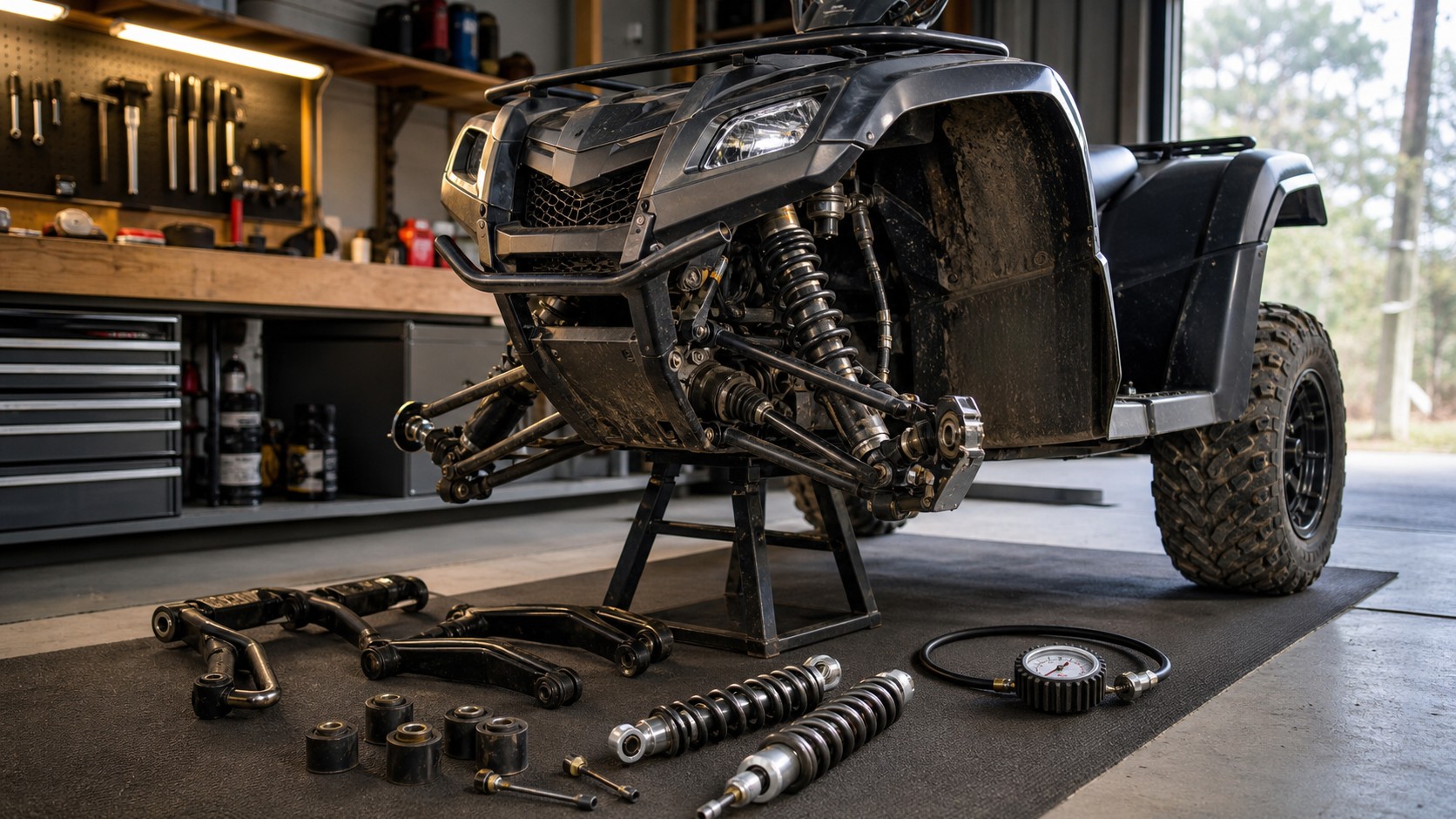
Suspension parts can only perform well if their mounts stay solid. A worn bushing, elongated bolt hole, cracked tab, or bent bracket changes alignment. The rider may feel clunks, vague steering, uneven braking, or tire wear.
This is why chassis condition belongs in any suspension discussion. Upgraded shocks cannot overcome damaged mounting points. Before spending money on performance parts, confirm that the structure they attach to is healthy.
Cargo, Towing, And Accessories
Utility accessories make the chassis work harder. Winches pull from front structures, plows push through mounts, hitches transfer tongue weight and drag, and racks feed cargo bounce into the frame. Quality accessories spread force properly; improvised mounts can stress small areas.
Owners should avoid drilling random holes in structural members or welding brackets without understanding the load path. A small convenience change can create rust points or stress risers. Use hardware and mounts designed for the machine whenever possible.
Terrain-Specific Stress
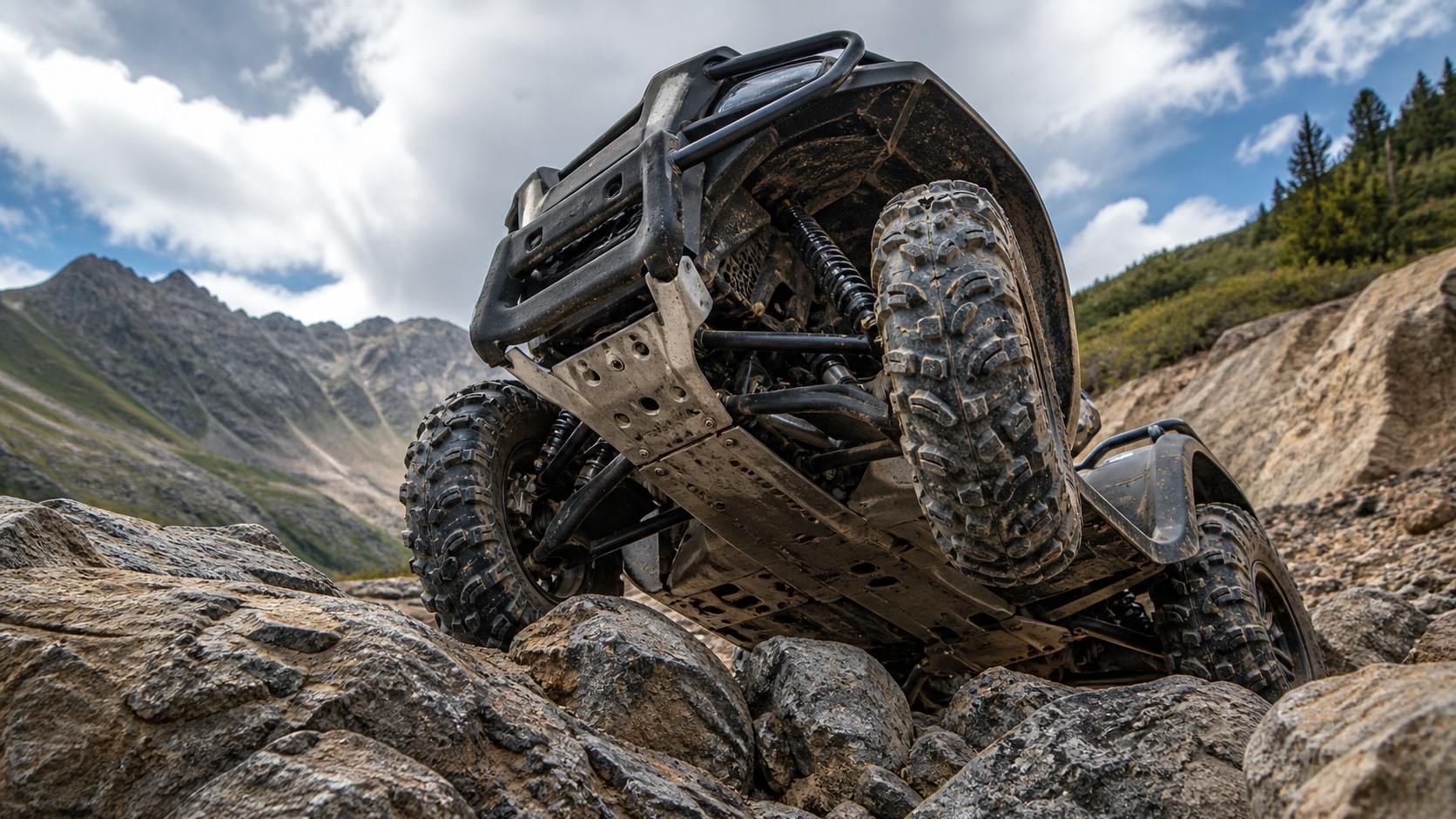
Rock riding strikes skid plates and lower frame areas. Mud holds moisture against tubes and brackets. Sand and whoops create repeated suspension loads. Work use adds low-speed torque, towing, and rack weight. Each terrain tests the chassis differently.
A rider should inspect the areas their riding stresses most. Mud riders should focus on corrosion and packed debris. Rock riders should check lower tubes and mounts. Utility owners should watch racks, hitch points, and plow mounts.
Buying A Used ATV
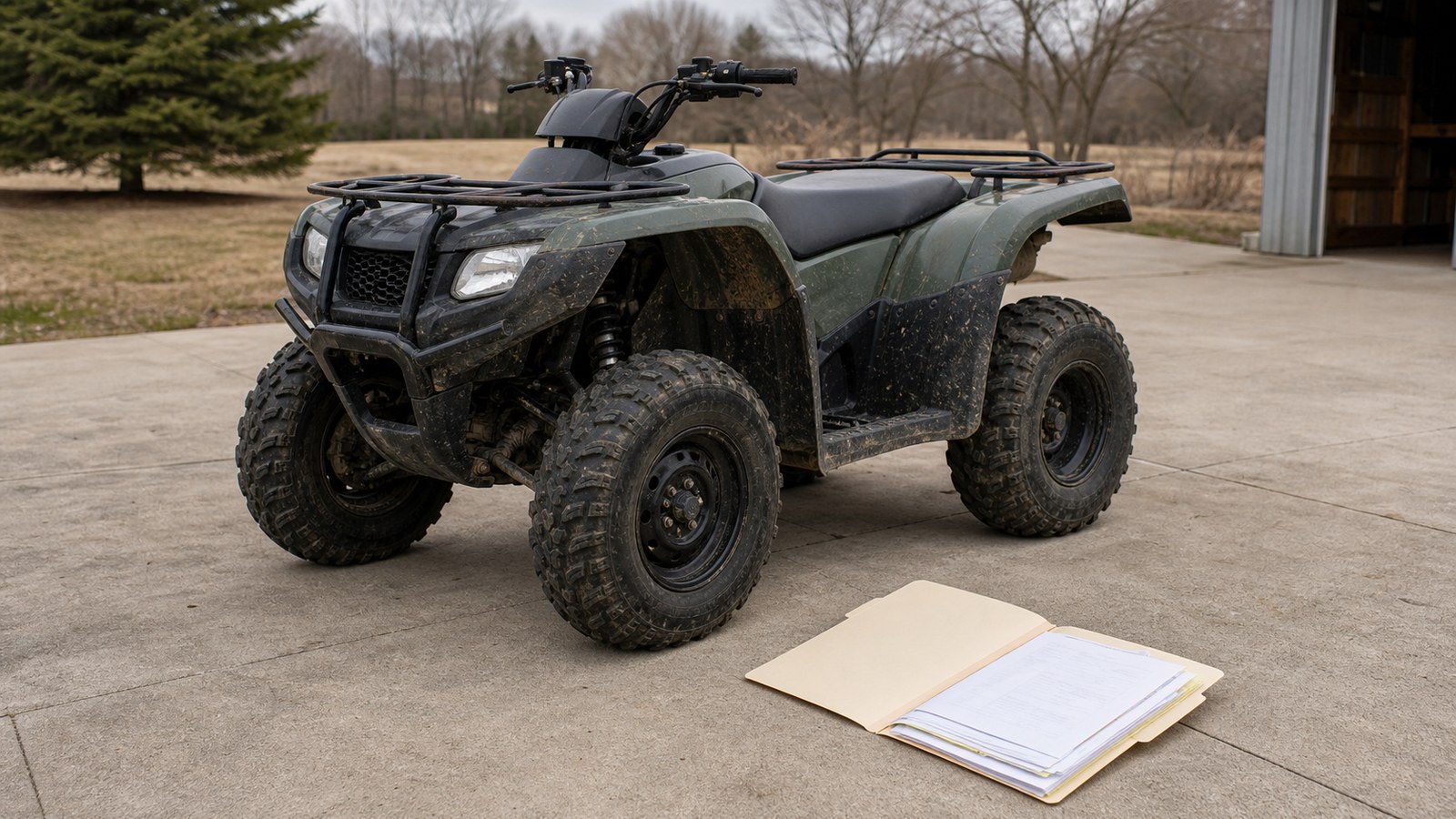
Used buyers should inspect the chassis before being impressed by tires or plastics. Look under the machine, behind wheels, around welds, and near suspension mounts. Fresh paint in one area, missing skid plates, bent racks, or uneven stance are warnings.
A test ride should include straight tracking, braking, turning, and bumps. If the ATV feels crooked, ask why. A cheap machine with frame problems can become expensive quickly because every alignment and suspension issue starts from the structure.
Maintenance That Preserves The Frame
Wash the frame after muddy or salty use, touch up chipped coatings, tighten hardware, and replace worn bushings before movement damages mounts. Listen for clunks and inspect after hard hits. Good chassis maintenance is mostly observation and timely correction.
Do not let accessories rub through paint. Use proper spacers and mounts. Check that cargo boxes, racks, winches, and skid plates remain tight because loose add-ons can damage the frame they were meant to support.
Bottom Line
Chassis and frame construction improve ATV power, handling, and reliability by keeping the machine aligned under load. The frame is the foundation for traction, steering, braking, suspension, and accessory use.
A reliable ATV is not only an engine that starts. It is a complete structure that stays straight, protected, and predictable through the work and terrain it was built to face.
Power Delivery Needs A Stable Platform
When a rider opens the throttle, the ATV squats, transfers weight, loads the drivetrain, and asks the rear tires for grip. Chassis construction controls how calmly that load transfer happens. If the frame and suspension mounts stay true, the tires can dig in instead of hopping or stepping sideways.
This is especially important with larger engines, heavy utility loads, and oversized tires. More power increases the demand on the structure. A machine that feels impressive on flat ground may feel less capable when the chassis is asked to control that power in rough terrain.
Why Reliability Is More Than Engine Life
Many owners think reliability means the engine starts every time. Chassis reliability is broader. It includes rack mounts that do not crack, hitch points that do not bend, suspension tabs that stay square, skid plates that remain secure, and wiring or hoses that are not rubbed through by moving parts.
A strong frame reduces secondary failures. When the chassis holds components correctly, axles, bearings, bushings, shocks, brake lines, and body panels all have a better chance of surviving the same workload.
Frame Flex, Comfort, And Control
Some controlled compliance can help a machine feel less harsh, but uncontrolled flex hurts precision. The rider feels uncontrolled flex as delayed steering, odd noises, panels that shift, or suspension that seems difficult to tune. The issue may not be the shock setting; it may be the structure around the shock.
Comfort is connected to control. If the chassis is predictable, the rider can relax and let the suspension work. If the ATV feels inconsistent, the rider grips harder, tires sooner, and makes rougher inputs.
Inspection After Hard Use
After towing, plowing, racing, rock riding, or mud use, inspect the chassis before storage. Look at welds, brackets, rack mounts, hitch plates, skid plate hardware, and suspension mounts while the dirt pattern is still visible. Fresh scrape marks and rubbed paint often show where forces are moving.
Catching a loose mount or small crack early can prevent a larger repair. Waiting until the ATV will not track straight usually means the problem has already affected more parts.
What A Good Chassis Lets You Do
A good chassis lets the ATV feel composed at normal speeds, carry reasonable loads, steer accurately, and survive repeated trail impacts. It does not make reckless riding safe, and it does not erase manufacturer limits, but it gives every other system a stable foundation.
That foundation is why chassis design belongs beside engine, suspension, and tire choice in any serious ATV comparison. Power, handling, and reliability all start with the structure that holds the machine together.
Real-World Setup Choices
Chassis quality is helped or hurt by setup choices. Oversized tires increase leverage on steering, suspension, wheel bearings, axles, and frame mounts. Heavy cargo boxes raise the center of gravity. Aggressive bumpers and winches add front weight. None of those changes are automatically wrong, but they should be matched to the ATV and riding style.
A rider who wants better handling should begin with the basics: correct tire pressure, healthy bushings, straight wheels, tight steering parts, and proper load placement. Chassis upgrades make more sense after the original structure is confirmed straight and maintained.
Why Good Construction Feels Calm
The best frame construction often feels uneventful. The ATV goes where it is pointed, absorbs bumps without new noises, carries load without odd flex, and keeps suspension adjustments meaningful. That calm feel is easy to undervalue until a rider uses a machine with loose mounts or hidden damage.
For long-term ownership, calm is valuable. It reduces fatigue, protects parts, and lets the rider notice real changes early. A chassis that stays consistent makes the entire ATV easier to trust.
Service Notes For A Stronger Chassis
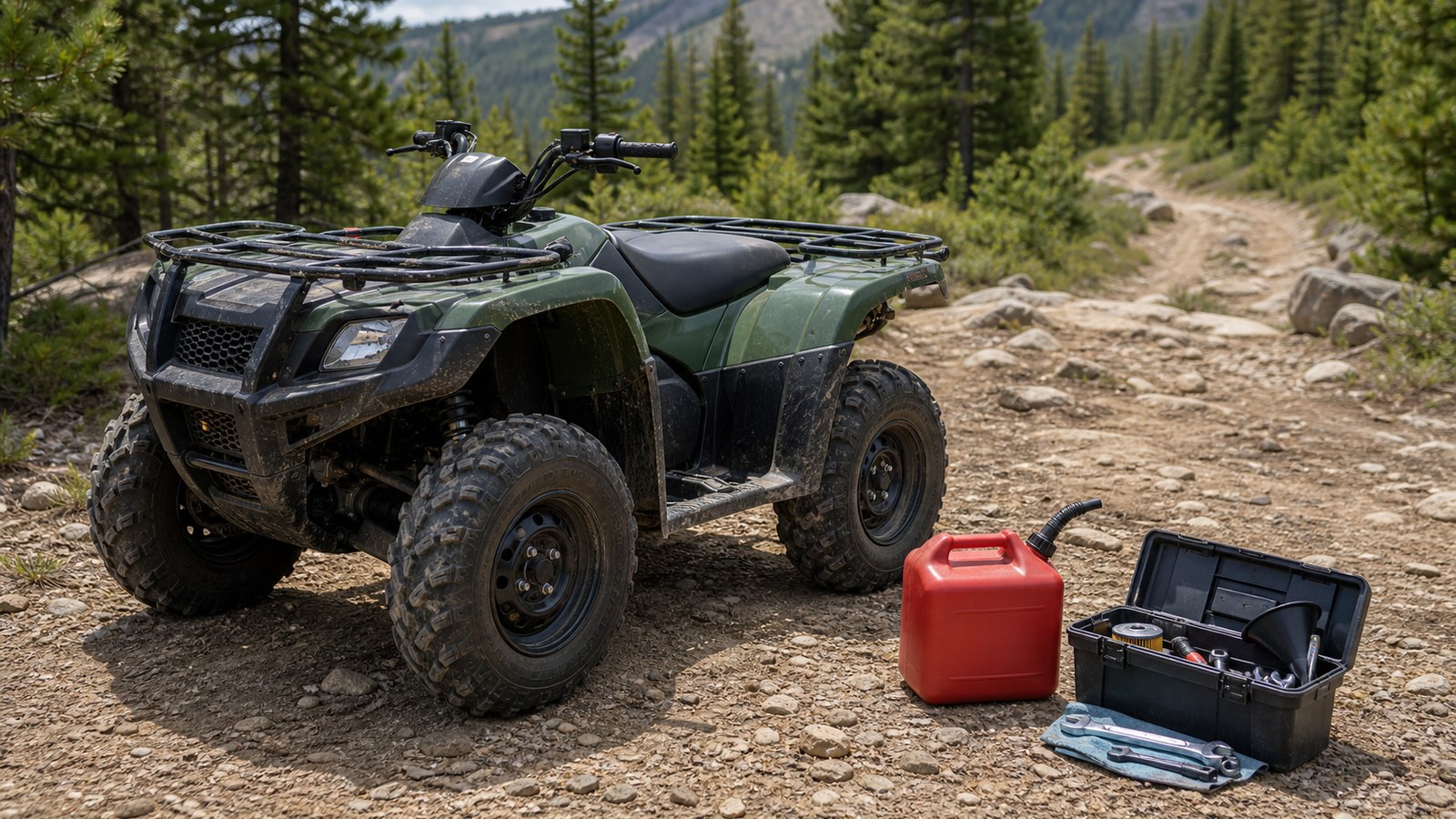
Chassis reliability improves when service work includes the structure, not only the engine. During oil changes or tire service, take a few minutes to look at frame tubes, welds, brackets, skid plate mounts, rack hardware, and hitch points. Small movement marks around bolts, chipped paint near welds, or shiny rubbed areas can reveal stress before a crack opens.
This habit is especially useful on ATVs used for plowing, towing, hunting, or rough trail riding. Those machines may spend less time at high speed, but they carry repeated loads that can fatigue brackets and hardware. A quiet chassis inspection keeps power, handling, and reliability connected.
FAQ
How does chassis construction improve ATV handling?
It keeps suspension and steering points aligned so tires stay predictable under acceleration, braking, turning, and impact.
Can a damaged frame hurt reliability?
Yes. Cracks, bent mounts, corrosion, and overloaded brackets can damage suspension, steering, racks, and driveline parts.
Should I modify frame mounts for accessories?
Use model-specific mounts when possible. Random drilling or welding can weaken structure or create corrosion and stress points.