ATV Fuel Systems Shape Starting, Throttle Response, Range, And Reliability
Fuel systems do more than feed the engine. They affect cold starts, idle quality, throttle response, fuel range, emissions equipment, high-elevation riding, storage, maintenance, and how confidently an ATV performs under load. Whether an ATV uses a carburetor or electronic fuel injection, riders should understand how fuel moves, what can go wrong, and how performance depends on clean air, clean fuel, correct tuning, and steady maintenance.
A: Follow the manual and inspect sooner after harsh riding.
A: A new feel, sound, smell, leak, heat issue, or warning light.
A: Yes. Mud adds grit, moisture, heat, and hidden wear.
A: No. Restore the baseline first, then decide if upgrades are useful.
A: Yes, especially after water, rocks, towing, heat, or heavy loads.
A: Dates, hours, parts, fluids, settings, and symptoms are all useful.
A: Use caution on safety, sealing, steering, suspension, brake, and drivetrain parts.
A: Working does not mean healthy; inspect when symptoms change.
A: Get help for uncertain brakes, steering, wiring, fuel leaks, or structural issues.
A: Inspect early, fix small problems, and test before riding remote terrain.
What The Fuel System Does
An ATV fuel system stores fuel, moves it to the engine, filters it, and meters it in a form the engine can burn. Older or simpler ATVs may use carburetors. Many modern machines use electronic fuel injection. Either way, the system works with the air intake, ignition, exhaust, and engine management to create reliable power.
When fuel delivery is right, the ATV starts cleanly, idles steadily, responds smoothly, and pulls without hesitation. When fuel delivery is wrong, the rider may feel bogging, surging, stalling, hard starting, backfiring, poor range, or weak power under load.
Carburetor Systems
A carburetor meters fuel mechanically through jets and passages. Carbureted ATVs are common on older machines and some smaller models. They can be straightforward to service, but they are sensitive to stale fuel, clogged jets, incorrect choke use, intake leaks, and changes in altitude or temperature.
Storage is especially important with carburetors. Fuel left sitting can leave varnish that blocks small passages. A machine that ran well last season may start poorly after months of neglect. Fresh fuel, clean filters, and proper storage habits prevent many carburetor problems.
Electronic Fuel Injection
Electronic fuel injection uses sensors, a fuel pump, an injector, and a control unit to meter fuel. EFI often improves cold starting and can adjust better to elevation and temperature changes. It is one reason many modern utility ATVs feel easy to start and consistent across conditions.
EFI is not maintenance-free. It needs a healthy battery, clean fuel, working sensors, good electrical connections, and proper diagnostics when faults appear. A clogged injector or weak pump can create performance problems just as surely as a dirty carburetor.
Air, Fuel, And Ignition Work Together
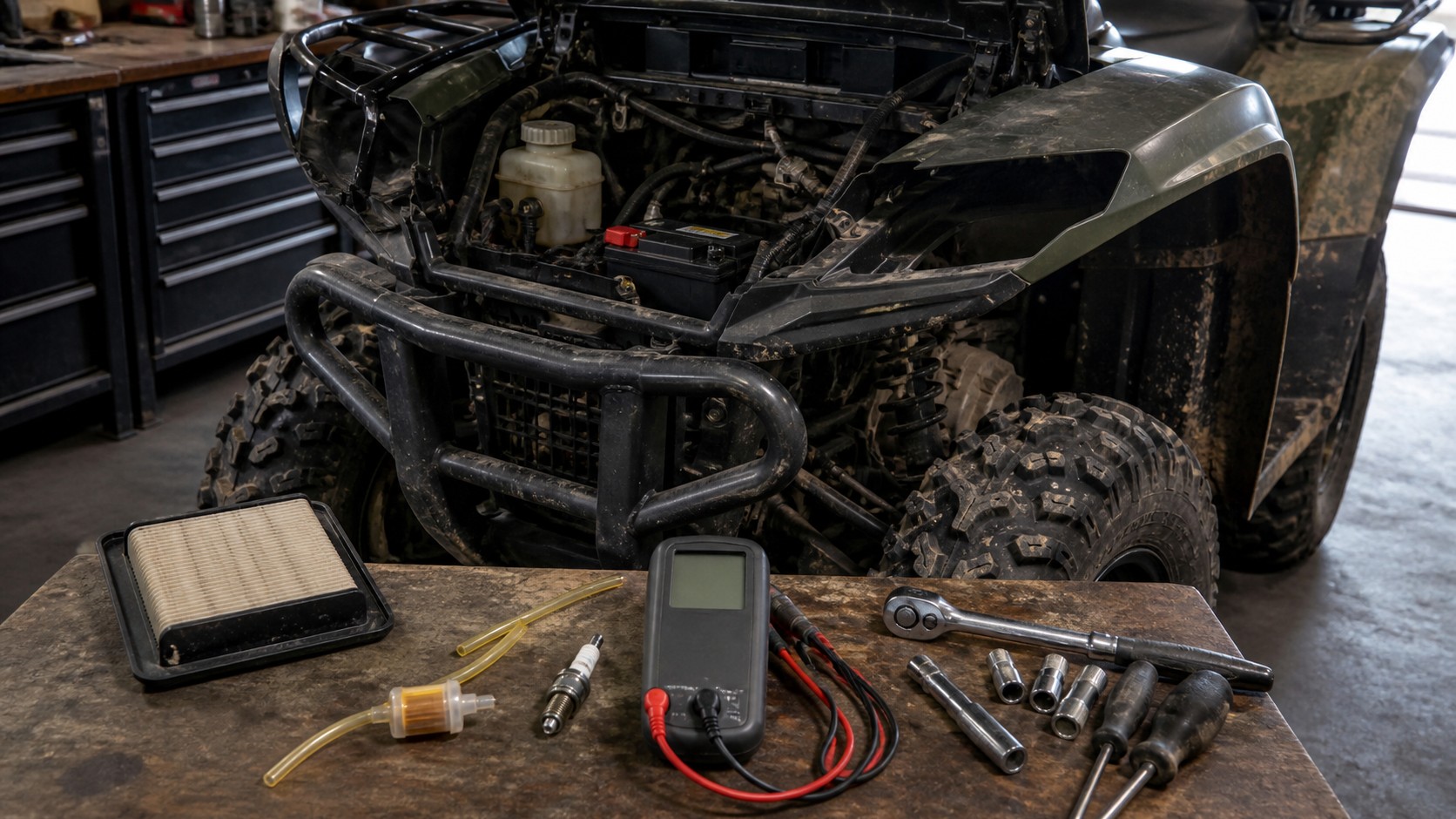
Fuel problems are sometimes blamed when the real issue is air or ignition. A dirty air filter can make an ATV feel weak and rich. A cracked intake boot can make it run lean or erratically. A tired spark plug can mimic fuel hesitation. Good diagnosis looks at the whole combustion system instead of replacing random parts.
Performance upgrades should respect this relationship. Changing intake or exhaust flow can alter how the engine needs fuel. Some ATVs tolerate mild changes, while others need proper tuning. More noise does not guarantee more usable power.
Fuel Quality And Storage
Use the fuel recommended in the owner’s manual. Keep fuel fresh, avoid water contamination, and store the ATV according to the manufacturer’s guidance. Ethanol-blended fuel, long storage, humidity, and dirty cans can all create issues. Riders who use ATVs seasonally should be especially careful before parking a machine for months.
A practical habit is to start each season with inspection rather than hope. Check fuel smell, look for leaks, inspect lines, confirm the air filter is clean, and watch how the ATV starts cold. Small fuel-system issues are easier to fix at home than on a trail.
How Fuel Systems Affect Performance
Performance is not only peak horsepower. It is clean response when the rider asks for power. A work ATV needs steady pull at low speed. A trail ATV needs predictable throttle over bumps and turns. A sport ATV needs crisp response without hesitation. Fuel delivery shapes all of those experiences.
If an ATV hesitates during climbs, stalls at idle, surges at steady throttle, or smells strongly of fuel, the rider should investigate before riding harder. Performance that cannot be trusted is not really performance.
Maintenance Routine
Routine fuel-system care includes clean air filters, fresh fuel, sound fuel lines, a clear tank vent, clean filters where fitted, and attention to manufacturer service intervals. Carbureted machines may need periodic cleaning or adjustment. EFI machines may need diagnostic attention if warning lights or running issues appear.
Owners should also be careful when washing. High-pressure water around electrical connectors, vents, and intake areas can create problems. Clean the ATV thoroughly but thoughtfully, then let it dry before storage.
Bottom Line
A healthy fuel system makes an ATV easier to start, easier to control, and more dependable under load. Carburetors and EFI can both work well when maintained. Both can cause frustration when fuel quality, air filtration, storage, or diagnosis is ignored.
The best performance starts with reliability. Fresh fuel, clean air, correct service, and smooth throttle will do more for most riders than chasing modifications before the basic system is right.
FAQ
Is fuel injection better than a carburetor?
EFI often starts easier and adjusts better to changing conditions, but both systems can work well when maintained.
Why does my ATV bog when I hit the throttle?
Possible causes include dirty fuel, clogged jets or injector issues, dirty air filter, intake leaks, ignition trouble, or clutching problems.
Should I modify my ATV intake or exhaust?
Only with a clear goal and proper tuning plan. Random changes can hurt reliability and throttle response.
Buying A Used ATV With Fuel-System Questions
Used ATV shoppers should treat fuel-system behavior as a window into ownership history. A machine that starts cleanly from cold, settles into a steady idle, and accepts throttle without bogging has passed an important first test. A machine that only runs with the choke partly on, needs repeated throttle to stay alive, or smells strongly of raw fuel needs closer inspection. Those symptoms may be simple, but they are not details to ignore.
Ask how long the ATV has sat, what fuel was used, whether the carburetor has been cleaned, whether the injector or pump has been serviced, and whether the tank has ever had rust, water, or debris. On EFI machines, ask whether warning lights have appeared. On carbureted machines, ask whether jets have been changed for altitude or exhaust modifications. The answers help separate a normal maintenance item from a neglected machine.
Performance Under Load
Fuel delivery problems often appear when the ATV is under load. A machine may idle well in the driveway but stumble on a hill, bog in mud, or hesitate while towing. That is because load asks for more fuel, more air, and stronger ignition at the same time. Weakness in any part of the system becomes easier to feel.
For utility riders, loaded performance matters more than quick acceleration. The ATV should pull smoothly at low speed, restart when warm, and respond predictably when carrying gear. If performance fades as the ride continues, heat, fuel venting, dirty filters, or pump issues may be involved.
Seasonal Ownership
Many ATVs sit for long stretches between seasons. Hunting, snow plowing, farm chores, and summer trail riding may all create different storage patterns. Fuel systems suffer when machines sit with stale gasoline, dirty filters, or moisture in the tank. A little preparation before storage can prevent a hard-starting machine later.
At the beginning of a season, inspect before assuming the ATV is ready. Check the air filter, fuel smell, fuel lines, clamps, venting, battery, and starting behavior. Take a short test ride close to home before relying on the machine for work or a remote trail. A good fuel system should feel ordinary, not dramatic.
Practical Upgrade Order
If a rider wants better performance, the smart order is maintenance first, tires and gearing second, and engine airflow changes only with a proper plan. Clean fuel, a clean air filter, correct valve and spark service where applicable, and healthy clutching can restore power that was already there. Many riders chase modifications before fixing basics.
The best fuel-system upgrade is often consistency. An ATV that starts, idles, and pulls the same way every ride is more useful than one that occasionally feels strong but often needs attention. Reliability is performance in the conditions where ATVs actually work.
Cold Starts, Hot Restarts, And Trail Symptoms
Cold starting tells a rider how well the fuel system, battery, choke or enrichment circuit, and ignition are working together. A carbureted ATV may need the correct choke routine, while an EFI ATV should usually compensate more automatically. If a machine is very hard to start cold, the cause may be stale fuel, dirty passages, weak spark, poor battery condition, valve adjustment, or air leaks. The pattern matters more than one isolated start.
Hot restarts tell another story. An ATV that starts cold but refuses to restart warm may have fuel boiling issues, weak electrical components, sensor problems, idle settings, or venting trouble. A trail rider should pay attention because warm restart trouble often appears at gates, after breaks, or after a hard climb when the machine is far from the truck.
Range, Fuel Economy, And Work Use
Fuel economy depends on engine size, load, terrain, tire choice, throttle habits, and maintenance. Deep mud, low tire pressure, oversized tires, high elevation, and towing all increase demand. A machine ridden smoothly on moderate trails may go much farther on a tank than the same ATV pushed hard through soft ground.
Utility riders should think about range in work cycles. If the ATV checks fences, carries tools, hauls feed, and returns to the barn several times a day, the fuel system needs to be dependable at repeated starts and stops. A small issue that is merely annoying on a joy ride can become a real productivity problem on a property machine.
Safe Handling Of Fuel
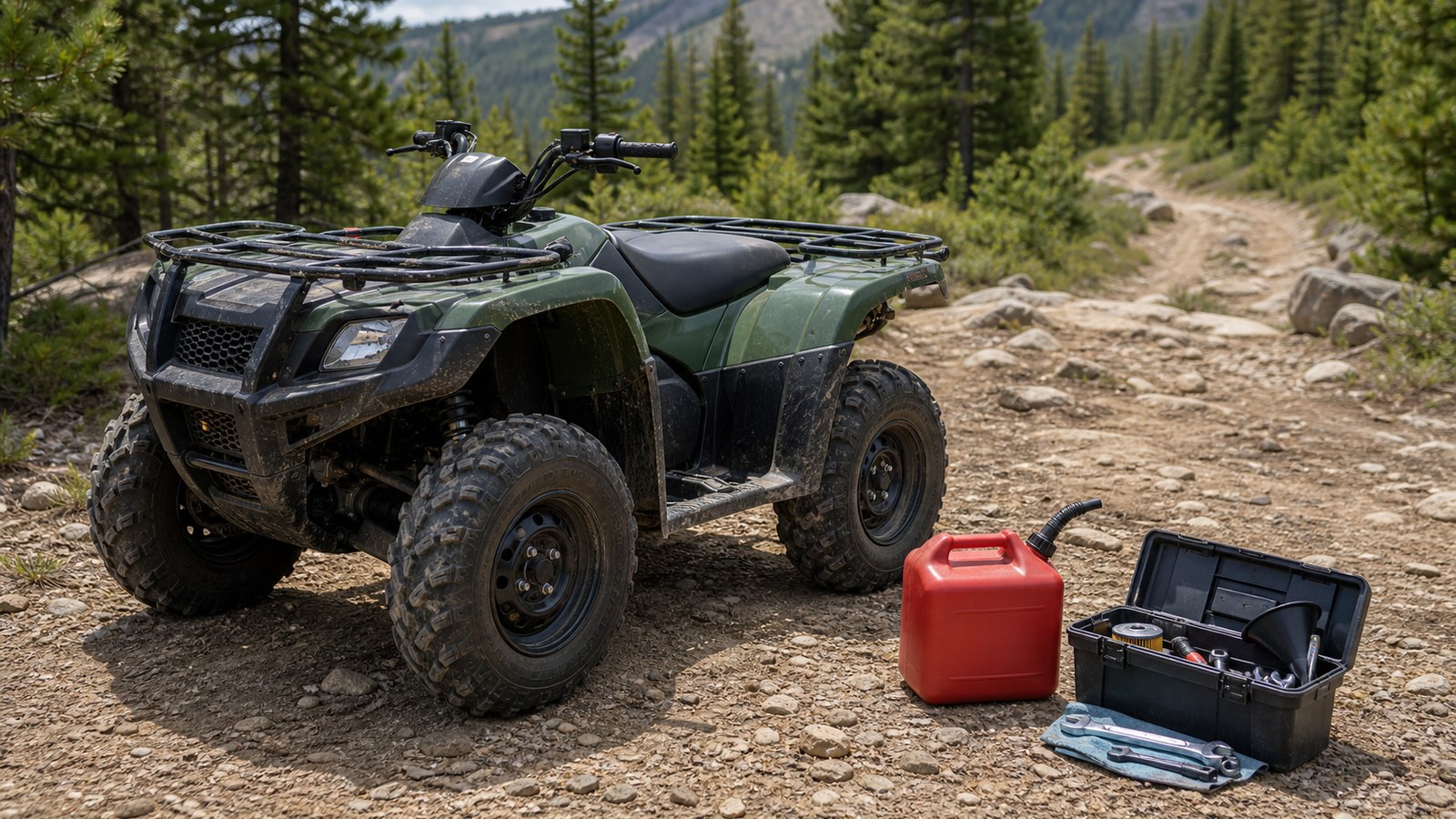
Fuel should be stored in approved containers away from ignition sources. Spills should be cleaned promptly, and leaking tanks, cracked lines, loose clamps, or fuel smell should be handled before riding. ATVs operate near hot engines, electrical parts, and dry vegetation, so fuel leaks are more than a performance problem.
Riders should also avoid opening fuel systems casually in dusty or muddy conditions. Dirt introduced during a rushed repair can create the next problem. Clean work, correct parts, and patience protect both reliability and safety.