Beginners Should Learn ATV Control Systems Before Riding Harder Terrain
Steering, braking, and control systems are the difference between simply moving an ATV and actually riding it well. A beginner needs to know how the bars respond, how the brakes feel, how the throttle changes balance, and how body position affects traction. These basics should be practiced in easy terrain before the rider adds hills, mud, rocks, speed, passengers, or group pressure. Control comes first; confidence follows.
A: Follow the manual and inspect sooner after harsh riding.
A: A new feel, sound, smell, leak, heat issue, or warning light.
A: Yes. Mud adds grit, moisture, heat, and hidden wear.
A: No. Restore the baseline first, then decide if upgrades are useful.
A: Yes, especially after water, rocks, towing, heat, or heavy loads.
A: Dates, hours, parts, fluids, settings, and symptoms are all useful.
A: Use caution on safety, sealing, steering, suspension, brake, and drivetrain parts.
A: Working does not mean healthy; inspect when symptoms change.
A: Get help for uncertain brakes, steering, wiring, fuel leaks, or structural issues.
A: Inspect early, fix small problems, and test before riding remote terrain.
Start With Slow Control
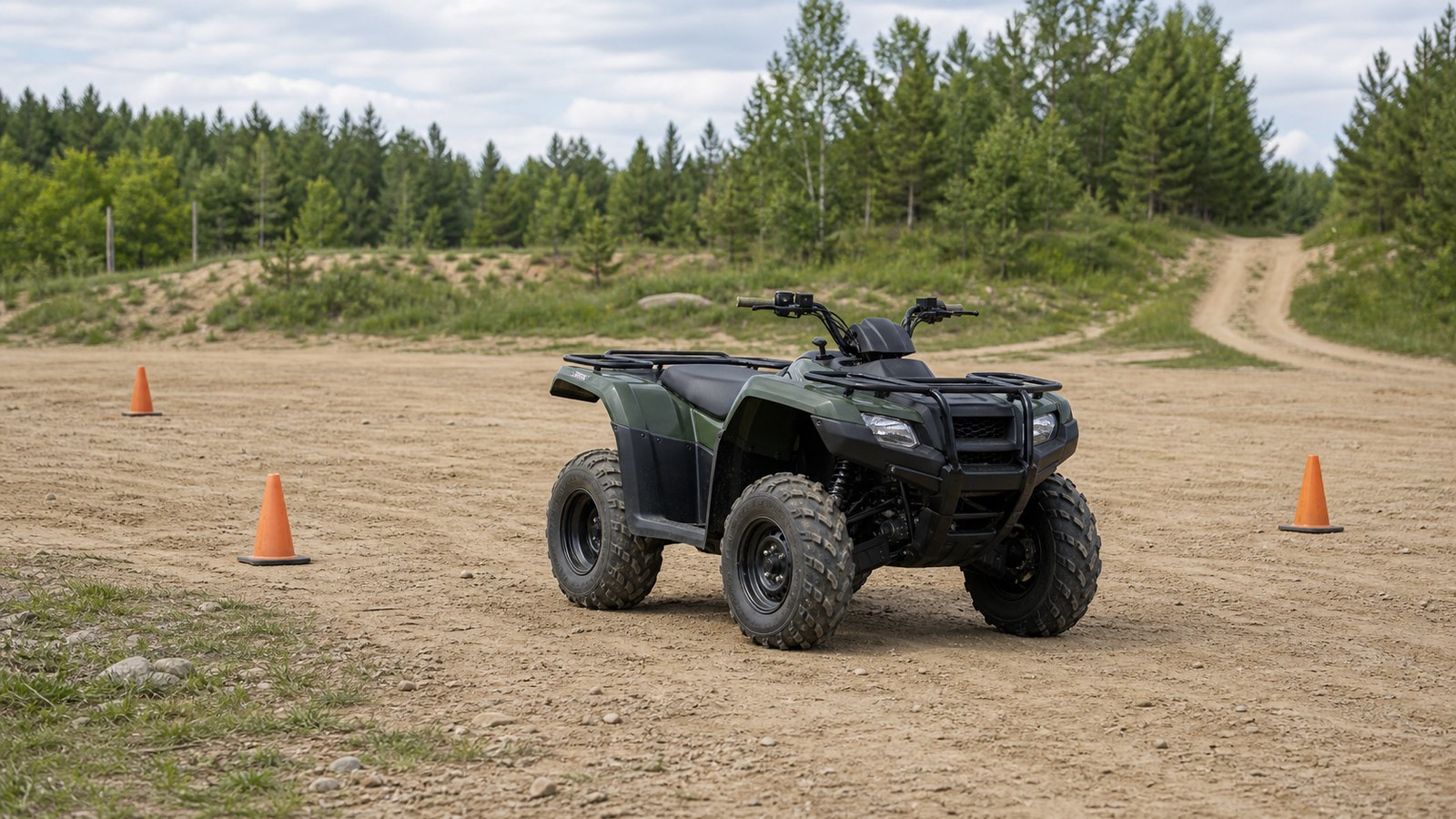
A beginner’s first goal is not speed. It is being able to start, stop, turn, and ride slowly without panic. Slow control teaches the rider how the ATV responds before momentum hides mistakes. Wide circles, figure eights, straight-line stops, and gentle throttle drills are more useful than rushing into a trail ride.
These drills also reveal fit problems. If the rider cannot reach controls comfortably, stand with balance, or turn the bars without strain, the ATV is not helping. Fit should be corrected before difficulty increases.
Learning Steering
Steering begins with the eyes. Look where the ATV should go, not at the obstacle you fear. Turn smoothly and shift body weight early. On rough ground, the bars may tug as tires cross ruts or rocks. A relaxed grip helps the rider guide the ATV without fighting every movement.
Power steering can reduce fatigue, but beginners should still learn proper technique. Turning too sharply at speed, braking hard in a turn, or sitting stiffly can unsettle any ATV. Practice teaches the rider how much input is enough.
Learning Braking
Braking should be smooth and early. Beginners should practice stopping from low speeds on level ground, then gradually add different surfaces. Gravel, grass, mud, and downhill slopes all change stopping distance. A rider who learns this in practice is less surprised on the trail.
Know the controls on the specific ATV. Some systems link brakes; others separate front and rear. The owner’s manual explains proper operation. If brakes feel spongy, weak, grinding, or uneven, the ride should stop until the problem is fixed.
Learning Throttle
Throttle control is where many beginners get into trouble. A sudden input can spin tires, lurch the ATV forward, or make the rider tense. Practice adding power gradually until steady walking-speed control feels easy. That skill matters in loading, tight turns, rough trails, and technical climbs.
The throttle should always return cleanly. Dirt, damage, ice, or cable wear can create unsafe behavior. A beginner should be taught to check throttle return during pre-ride inspection, not only after a problem appears.
Body Position Basics
The rider’s body helps control weight. Stand with knees bent over bumps, lean forward on climbs, move back on descents, and shift carefully on sidehills. These movements do not need to be dramatic. They need to be early, smooth, and matched to terrain.
Beginners should practice body position at low speed before they need it. Waiting until a steep hill or rough rut to learn movement adds stress. Repetition in easy terrain builds habits that appear automatically later.
Common Beginner Mistakes
Common mistakes include looking down, braking too late, grabbing throttle, following faster riders, carrying passengers on single-rider ATVs, riding pavement, and ignoring protective gear. Most of these mistakes come from rushing. A beginner who slows the process down learns faster and safer.
Another mistake is treating the ATV as if it handles like a car, motorcycle, or lawn tractor. It is its own machine. Steering, body movement, throttle, and terrain interact constantly. Respecting that difference is part of becoming a competent rider.
A Simple Practice Plan
A useful first plan is short and repeatable. Spend one session on starting and stopping. Spend another on wide turns and figure eights. Add mild bumps only after those feel calm. Add gentle hills after braking and body position are consistent. Stop before fatigue turns practice sloppy.
The reward for patient practice is confidence that holds up on real trails. Beginners who build control deliberately are less dependent on luck and more able to enjoy the ride.
FAQ
What should a beginner learn first?
Start, stop, turn, and ride slowly with smooth throttle and braking before attempting harder terrain.
Should beginners ride with faster groups?
Not at first. Group pressure can push new riders into terrain and speeds they are not ready for.
How long should beginner practice sessions be?
Short sessions are best at first. Stop before fatigue causes sloppy braking, steering, or throttle habits.
Pre-Ride Routine For Beginners
A beginner should build a short pre-ride routine from the start. Check tire pressure, brake feel, throttle return, steering movement, lights, fuel or charge level, and visible leaks. Make sure the helmet and eye protection fit correctly. Confirm the riding area and the plan before starting the machine.
This routine creates familiarity. Beginners who inspect the ATV learn what normal feels like, so changes stand out. That knowledge reduces anxiety and helps the rider stop before a small mechanical issue becomes a trail problem.
How To Handle Nerves
Nerves are normal for new riders. The answer is not to ride faster until fear disappears. The answer is to make the task smaller. Practice one skill at a time, use open terrain, and repeat simple drills until the rider can breathe, look ahead, and make smooth inputs. Confidence grows from evidence.
A patient riding partner helps. The best partner sets an easy pace, explains the next drill, watches for fatigue, and avoids teasing or pressure. Beginners learn faster when the ride feels controlled enough for real attention.
When A Beginner Is Ready For Trails
A beginner is ready for easy trails when starting, stopping, turning, scanning ahead, and body position feel consistent in practice. They should understand the controls, know how to stop immediately, and be willing to skip obstacles that feel wrong. Trail readiness is about judgment as much as technique.
The first trail ride should be short and familiar, with plenty of stopping points and no pressure to keep up with faster riders. A good first ride ends with the rider wanting to practice more, not wondering why the machine felt overwhelming.
A First-Ride Checklist
A first ride should be planned, not improvised. The rider should know where to ride, where to stop, how to shut the ATV off, and what signals mean slow down or stop. Gear should be fitted before the engine starts. The practice area should be open and free of traffic, steep slopes, and hidden obstacles.
The first session can be simple: start, stop, idle forward, brake smoothly, turn wide, and park. That may sound basic, but those actions are the foundation for every future ride. A beginner who owns the basics will learn trail skills faster.
How To Add Difficulty
Difficulty should increase one layer at a time. Add mild bumps before ruts. Add gentle slopes before steeper hills. Add longer loops before group rides. Add wet or loose surfaces only after braking and steering feel predictable. This keeps the rider from facing too many new problems at once.
A beginner should also learn to say no. Skipping an obstacle, turning around, or asking for another practice session is good judgment. ATV skill includes knowing when conditions exceed the rider’s current ability.
Bottom Line
Beginner ATV control is built through calm repetition. Steering, braking, throttle, and body position should become familiar before the rider asks the machine for more speed or harder terrain.
A rider who practices these systems early gets more than safety. They get a better feel for the machine, more confidence on trails, and a clearer sense of which ATV features matter for the riding they actually want to do.
Beginner Gear And Visibility
Control starts before the ATV moves. A helmet that fits, clear eye protection, gloves with good grip, long sleeves, long pants, and over-the-ankle boots all help the rider operate the machine without distraction. Loose clothing, poor footwear, or fogged goggles can interfere with controls at the worst time.
Visibility matters too. Beginners should practice in daylight when they can see terrain clearly. Dust, glare, rain, and darkness all increase workload. A new rider should build skill in easy visual conditions before adding low light or weather.
After-Ride Review
A short review after practice helps beginners improve. Ask what felt easy, what felt tense, and which control felt least natural. Check the ATV for loose parts, tire changes, mud around brakes, or anything that felt different during the ride. This turns each session into useful feedback.
The goal is not perfection after one ride. The goal is a steady pattern: inspect, practice, notice, adjust, and repeat. That rhythm builds better riders and better owners at the same time.
Bottom Line For Beginners
A beginner who learns control systems early will enjoy ATV riding more. Steering, braking, throttle, and body position become less intimidating when practiced slowly and repeated often. The rider starts to feel what the machine is doing instead of reacting late.
Good instruction, proper gear, a suitable ATV, and patient terrain choices matter more than speed. Once those basics are steady, trails become more fun because the rider has earned confidence the practical way.
Final Practice Reminder
A beginner should repeat basic control drills even after the first successful trail ride. Familiar skills fade when they are not practiced, and ATV terrain changes from day to day. Returning to slow turns, smooth stops, and steady throttle keeps the foundation strong.
That habit also makes future learning easier. When the basics are automatic, the rider has more attention available for hills, obstacles, other riders, and changing trail conditions.
The best early rides end with the rider alert, calm, and curious for the next lesson, because steady confidence is more useful than one dramatic outing.