Cooling And Airflow Systems Keep An ATV Reliable When Speed Drops And Load Rises
ATV cooling is easy to overlook until the machine is crawling through mud, towing slowly, climbing in heat, or idling behind a group. Engines, transmissions, belts, brakes, and riders all depend on controlled heat. Cooling and airflow systems move heat away through radiators, fans, oil, fins, vents, ducting, and clean air paths so the ATV can keep working without turning a hard ride into a mechanical problem.
A: Follow the manual and inspect sooner after harsh riding.
A: A new feel, sound, smell, leak, heat issue, or warning light.
A: Yes. Mud adds grit, moisture, heat, and hidden wear.
A: No. Restore the baseline first, then decide if upgrades are useful.
A: Yes, especially after water, rocks, towing, heat, or heavy loads.
A: Dates, hours, parts, fluids, settings, and symptoms are all useful.
A: Use caution on safety, sealing, steering, suspension, brake, and drivetrain parts.
A: Working does not mean healthy; inspect when symptoms change.
A: Get help for uncertain brakes, steering, wiring, fuel leaks, or structural issues.
A: Inspect early, fix small problems, and test before riding remote terrain.
Why ATVs Run Hot
ATVs often work in conditions that are hard on cooling systems. Slow technical riding reduces natural airflow. Mud blocks radiator fins and engine surfaces. Towing, sand, climbing, plowing, and heavy cargo make the engine work harder at low speed. Heat builds when load rises and airflow drops.
Cooling design exists to manage that mismatch. An ATV may be capable of making strong power, but it needs a way to move heat away when the rider is crawling instead of moving fast enough for easy airflow.
Air-Cooled Engines
Air-cooled engines use fins and moving air to shed heat. They can be simple, rugged, and easy to understand, but they depend on clean surfaces and adequate airflow. Mud packed into fins acts like insulation. Tall grass, debris, and slow work can reduce the cooling they need.
Owners of air-cooled ATVs should clean fins gently, keep oil in good condition, and avoid ignoring hot smells or power changes. Air cooling works best when the engine is not buried under mud or forced to labor slowly for long periods.
Liquid-Cooled Systems
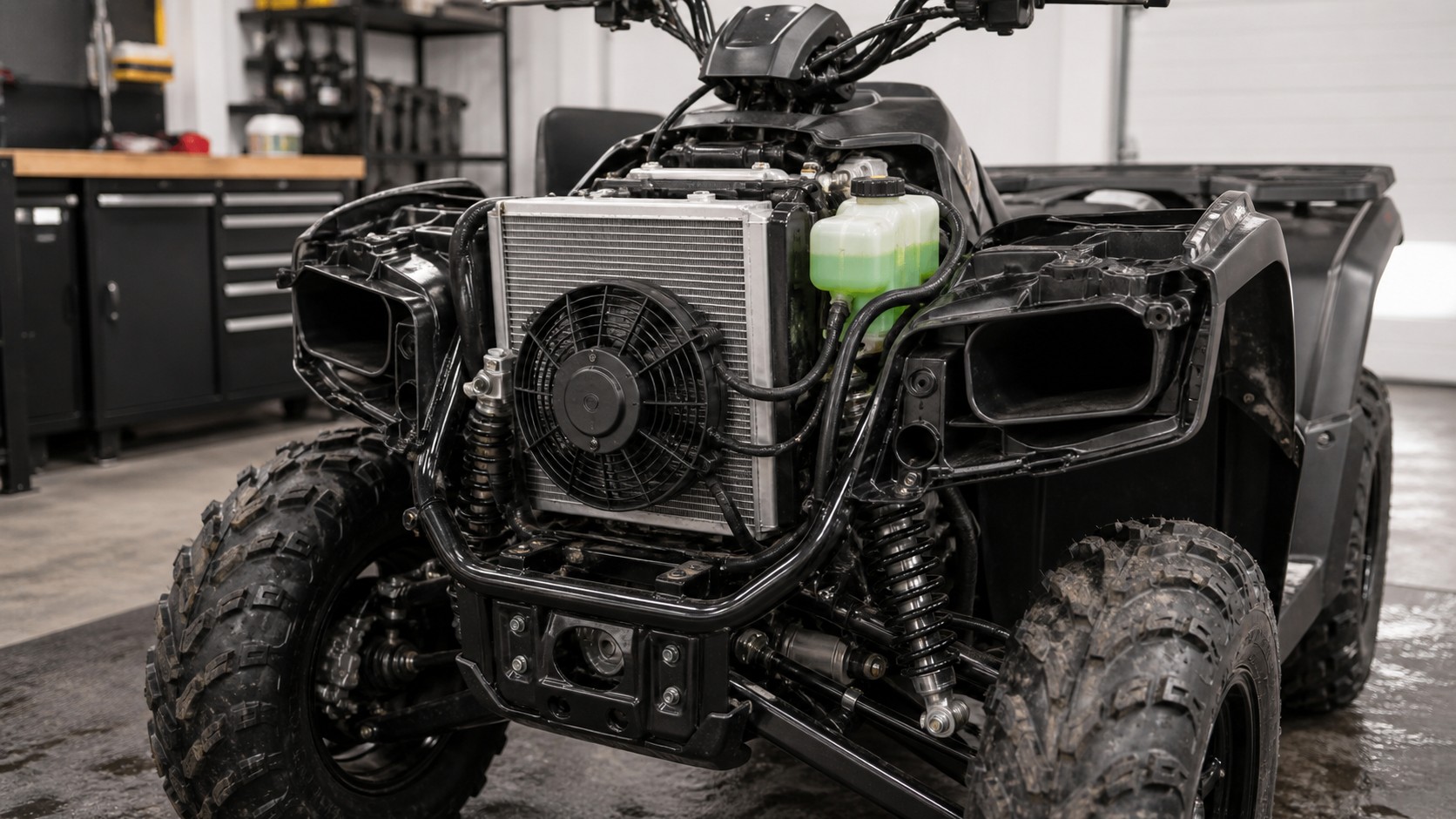
Liquid-cooled ATVs use coolant, a water pump, radiator, fan, thermostat, hoses, and pressure cap to move heat from the engine to the air. This design can control temperature well, especially under heavier loads, but it has more parts that require attention.
A low coolant level, weak cap, clogged radiator, failing fan, stuck thermostat, damaged hose, or air pocket after service can cause overheating. Liquid cooling is effective only when the full loop is clean, sealed, and moving fluid correctly.
Radiators And Fans
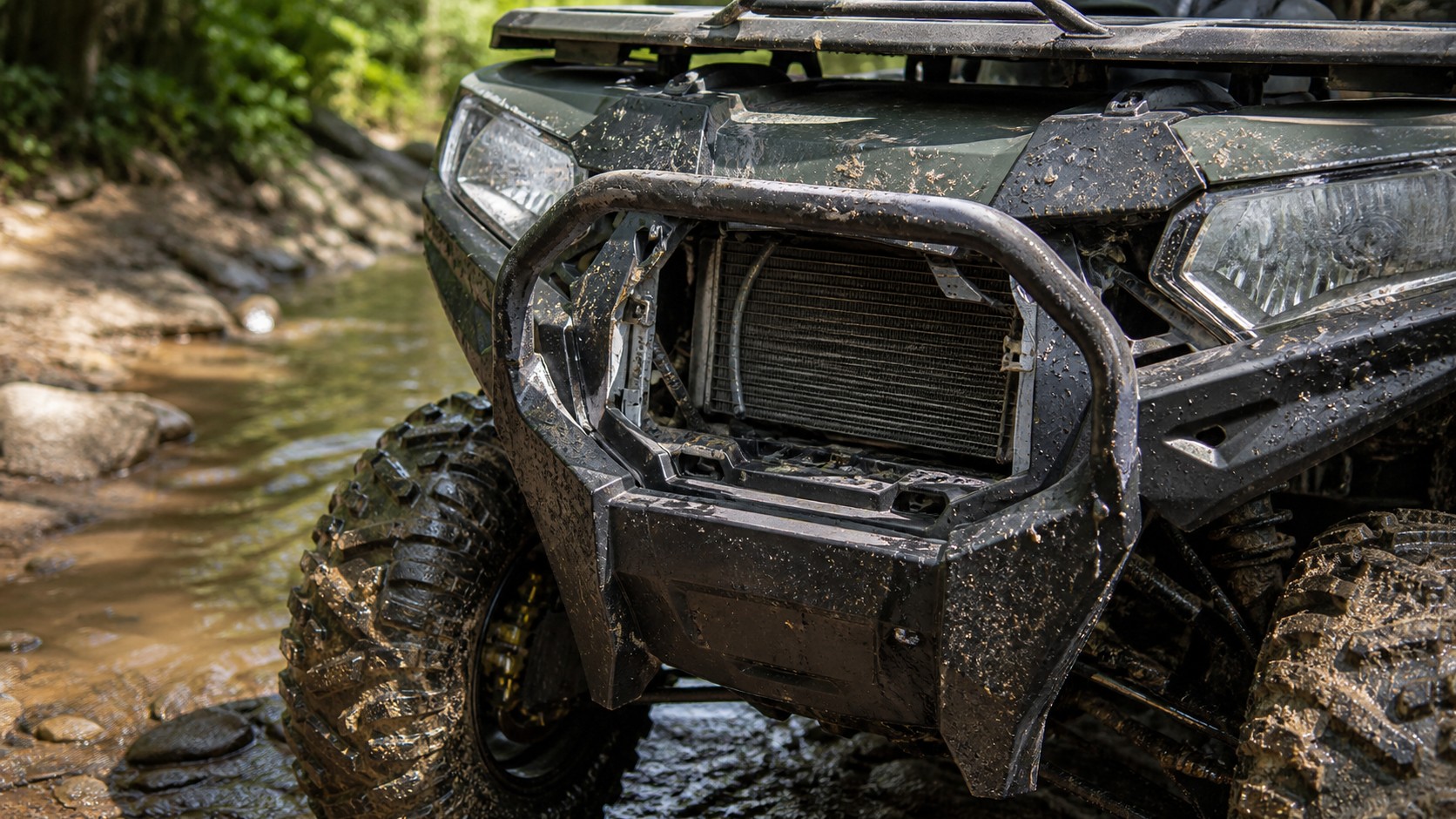
The radiator is a heat exchanger, and it needs open fins to work. Mud, seeds, leaves, and pressure-washing damage can reduce airflow. Fans help when trail speed is low, but a fan cannot overcome a radiator packed solid with debris.
Cleaning should be careful. Blasting fins too aggressively can fold them over. Rinse from the back side when practical, use moderate pressure, and check that the fan spins freely. A clean radiator is often the cheapest cooling upgrade.
CVT And Belt Airflow
Many ATVs use a CVT belt drive, and that system also needs airflow. Belt heat increases during slow crawling, heavy throttle, towing, mud, oversized tires, poor clutching, and water intrusion. CVT intakes and outlets must stay clear.
A hot belt may smell, slip, glaze, or fail early. Riders who add tires or ride deep mud should pay attention to clutching and belt temperatures. Cooling the engine is only part of keeping the ATV moving.
Air Filters And Intake Paths
The engine needs clean intake air for combustion and protection. A clogged air filter can hurt performance and make the engine work harder. A leaking filter or poorly sealed airbox can let dust into the engine, which is far worse than a small loss of airflow.
Snorkels and intake modifications should be done carefully. Raising an intake can help in water or mud, but poor sealing or restrictive routing can create new problems. Clean air matters as much as cool air.
Warning Signs
Temperature lights, boiling coolant, repeated fan cycling, coolant smell, steam, power loss, and unusual hot odors all deserve attention. Do not treat an overheating warning as a suggestion. Continuing to ride can damage gaskets, seals, oil, belts, and electronics.
If the ATV overheats, stop safely, let it cool, inspect for obvious blockage or leaks, and follow the owner’s manual. Opening a hot cooling system can be dangerous because pressurized coolant can burn skin.
Maintenance Routine
Cooling maintenance should include radiator cleaning, coolant level checks, hose inspection, clamp inspection, fan operation, cap condition, and air filter service. Owners should also inspect CVT ducts and remove debris after muddy rides.
Coolant should match the manufacturer’s specification and be replaced at the recommended interval. Mixing random fluids or ignoring old coolant can reduce corrosion protection and heat transfer.
Riding Habits That Help
Choose lines that avoid packing the radiator when possible. Pause after long slow pulls. Downshift or use low range when the ATV has it so the engine and belt are not lugging. Keep speed reasonable when the temperature gauge begins to climb.
After a mud ride, clean the cooling areas before the next trip. Heat problems often appear on the following ride because dried mud has hardened where airflow should pass.
Bottom Line
ATV cooling and airflow systems protect the engine, belt, brakes, and rider confidence. They matter most when the machine is moving slowly, carrying load, or fighting mud and heat.
A clean, maintained cooling system is basic reliability. Before buying upgrades, keep radiators, fins, filters, fans, hoses, coolant, and vents working the way the manufacturer intended.
How Heat Moves Through The Machine
Heat begins in the engine, clutching, belt, brakes, and electrical parts, then has to move into air or fluid before it becomes harmful. Air-cooled engines send heat from metal fins into airflow. Liquid-cooled engines move heat into coolant and then through the radiator. CVT systems move hot air out through ducts.
When any part of that path is blocked, heat accumulates. A clean engine with the wrong coolant level, a good fan behind a plugged radiator, or a strong belt in a blocked CVT cover can still run hot. Cooling is a chain, and every link matters.
Slow Riding Is A Special Challenge
ATVs often do demanding work at low speed. Pulling a small trailer, crawling over rocks, plowing snow, or easing through mud may create more heat than a faster trail section because airflow is low while load is high. The fan becomes more important when natural airflow disappears.
Low range, when available, helps reduce strain during slow work. Lugging an engine or belt in the wrong range can make heat worse. Correct gear selection is part of cooling discipline, not just drivetrain technique.
Cleaning Without Causing Damage
Radiators and cooling fins should be cleaned thoroughly but not carelessly. High pressure too close to the core can bend fins and reduce airflow. Mud should be softened and rinsed out from practical angles rather than blasted deeper into the core.
After washing, inspect with a light. A radiator can look clean from the front while the center remains packed. Mud that dries between fins can be stubborn enough to cause overheating on the next ride.
Cooling And Storage
Storage affects cooling reliability too. Old coolant can lose corrosion protection. Rodents can damage wiring for fans or sensors. Dirt left on the machine can hold moisture against metal. A battery that weakens in storage may not support electric fans and EFI systems properly.
Before the first ride after storage, check coolant, hoses, fan operation, air filter condition, and nests or debris near ducts. A short pre-ride inspection can catch problems before heat builds on the trail.
When To Stop Riding
If an ATV gives a temperature warning, smells hot, steams, boils coolant, or loses power in a way that suggests heat, stop safely and let it cool. Continuing to ride may turn a simple blockage or low-fluid issue into gasket, engine, or belt damage.
The right response is calm and mechanical: find a safe spot, let pressure and temperature drop, inspect for obvious causes, and follow the manual. Heat warnings are there to protect expensive parts.
Common Cooling Mistakes
One common mistake is adding more power or larger tires without thinking about heat. More load can make the engine, belt, and brakes work harder. Another mistake is cleaning only the visible side of the radiator while leaving packed material in the core. A third is ignoring the CVT ducting because the engine temperature light is not on.
Owners also sometimes mistake fan noise for a problem by itself. Fans are supposed to run during low-speed heat buildup. The concern is not that the fan runs, but whether it runs constantly, runs with a clogged radiator, fails to bring temperature down, or stops working when needed.
Planning For Hard Conditions
Before a hot-weather ride, mud event, plow day, or towing job, check cooling items before the machine is under stress. Confirm coolant level on liquid-cooled models, inspect the radiator, check the fan, clean the air filter, and look at CVT vents. These checks take less time than cooling a machine on the trail.
If the ATV is used by more than one person, teach every rider what the temperature warning means. A simple stop at the right time can prevent a very expensive repair.
Cooling Checks For Used Buyers
Used buyers should inspect cooling before trusting a machine. Look for bent radiator fins, dried mud packed behind guards, coolant stains, brittle hoses, bypassed fan wiring, missing shrouds, and belt cover damage. A seller may wash the plastic, but cooling trouble often leaves clues around the radiator, fan, overflow bottle, and CVT ducts.
During a test ride, let the ATV warm fully. Confirm that the fan cycles where appropriate and that the machine restarts hot. A machine that overheats only after ten minutes may look fine during a quick start in the driveway.
FAQ
Why do ATVs overheat at low speed?
Low speed reduces airflow while mud, towing, climbing, heat, or heavy loads increase the amount of heat the system must remove.
What cooling parts should I inspect?
Check the radiator or fins, fan, coolant, hoses, cap, air filter, and CVT intake and outlet paths.
Can mud cause overheating?
Yes. Mud can block radiator fins, engine cooling surfaces, and CVT vents, reducing airflow and trapping heat.