Beginners Should Understand Fuel And Performance Before Chasing More Power
ATV performance starts with a healthy fuel system, clean air, correct maintenance, and smooth rider input. A beginner does not need to become a tuner immediately, but they should know why stale fuel causes starting problems, why dirty air filters hurt power, why carburetors and fuel injection feel different, and why modifications can create new problems. Reliable performance is more useful than a loud or unpredictable machine.
A: Follow the manual and inspect sooner after harsh riding.
A: A new feel, sound, smell, leak, heat issue, or warning light.
A: Yes. Mud adds grit, moisture, heat, and hidden wear.
A: No. Restore the baseline first, then decide if upgrades are useful.
A: Yes, especially after water, rocks, towing, heat, or heavy loads.
A: Dates, hours, parts, fluids, settings, and symptoms are all useful.
A: Use caution on safety, sealing, steering, suspension, brake, and drivetrain parts.
A: Working does not mean healthy; inspect when symptoms change.
A: Get help for uncertain brakes, steering, wiring, fuel leaks, or structural issues.
A: Inspect early, fix small problems, and test before riding remote terrain.
Why Beginners Should Start With Reliability
New riders sometimes think performance means acceleration. For beginners, performance means the ATV starts predictably, idles cleanly, responds smoothly, and does not stall at awkward moments. A reliable machine lets the rider focus on steering, braking, body position, and terrain.
A beginner fighting hard starts, surging, or throttle bogging has too many problems at once. Before chasing speed, make sure the fuel system, air filter, spark plug, battery, and maintenance basics are healthy.
Fresh Fuel Matters
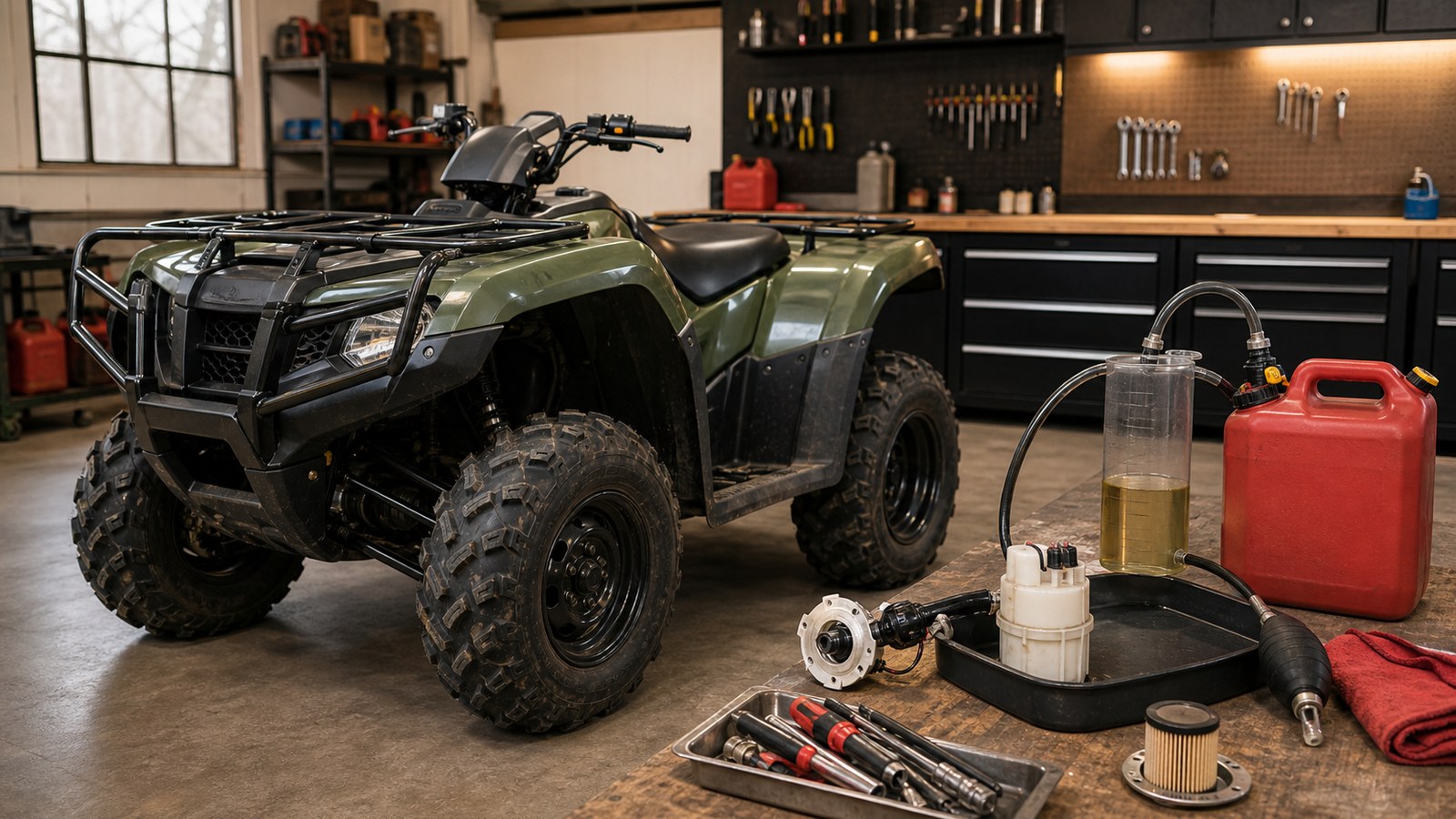
Old or contaminated fuel is a common cause of ATV problems. Gasoline can degrade during storage, and water or dirt can enter through poor containers or neglected tanks. The symptoms may include hard starting, rough idle, hesitation, stalling, or poor throttle response.
Beginners should learn how the owner’s manual wants the ATV stored. Some machines need stabilized fuel, some need fuel drained for long storage, and all need clean containers. Good fuel habits are simple and save a surprising amount of frustration.
Carburetor And EFI Differences
A carbureted ATV may need choke use when cold and can be more sensitive to storage. It may also be easier for a mechanically comfortable owner to clean or adjust. An EFI ATV often starts easier in varied weather and elevation, but it depends on a healthy battery, fuel pump, sensors, and electrical connections.
Neither system is automatically better for every beginner. A clean carburetor can run beautifully. A neglected EFI system can run poorly. The important point is understanding what the machine uses and maintaining it accordingly.
Air Filters And Engine Health
ATVs operate in dust, mud, water spray, and plant debris. The air filter protects the engine from that environment. A dirty filter can reduce power, create rich running, and make throttle response dull. A damaged or poorly seated filter can let dirt into the engine, which is far worse.
Beginners should learn to inspect and service the air filter early. This is one of the best habits an owner can build. It protects performance and engine life at the same time.
Throttle Response And Control
Smooth throttle response is a safety and confidence issue. A beginner needs the ATV to respond gradually when power is added. Bogging, surging, or abrupt modifications make slow control harder. This matters in turns, loading, hill starts, mud, and tight trails.
Practice helps too. Even a perfectly tuned ATV can feel jumpy if the rider grabs throttle suddenly. Beginners should practice steady walking-speed throttle in open terrain until it feels natural.
Modifications Can Create Problems
Exhaust, intake, fuel controllers, clutch kits, and larger tires can all change performance. Some upgrades are useful when chosen carefully. Random upgrades can make an ATV louder, less reliable, harder to tune, or worse for the terrain it actually rides.
Beginners should start with maintenance and appropriate tires before chasing engine changes. If major intake or exhaust changes are made, the ATV may need proper tuning. A machine that sounds stronger but runs poorly is not an improvement.
Diagnosing Common Symptoms
Hard starting can point to fuel, spark, battery, compression, choke use, or EFI issues. Bogging can involve fuel delivery, air leaks, dirty filters, clutching, or ignition. Stalling at idle may involve adjustment, fuel quality, or sensors. Good diagnosis is patient.
A beginner does not need to solve every issue alone. The useful habit is describing symptoms clearly: when it happens, whether the engine is cold or warm, what throttle position causes it, and whether fuel smell, smoke, or warning lights appear.
Bottom Line
For beginners, dependable performance is better than dramatic performance. A clean fuel system, clean air filter, healthy ignition, and smooth throttle create a machine that teaches instead of distracts.
Once the basics are reliable, riders can think about terrain-specific upgrades. Until then, the best performance upgrade is careful maintenance and controlled practice.
FAQ
What performance issue should beginners fix first?
Fix reliability problems first: stale fuel, dirty air filters, weak battery, bad spark plug, leaks, or rough running.
Is EFI easier for beginners?
Often yes because starting and altitude compensation may be easier, but EFI still needs battery and fuel-system health.
Do louder exhausts make ATVs faster?
Not reliably. Noise alone is not performance, and exhaust changes may require proper tuning.
A Beginner-Friendly Maintenance Routine
A beginner can build a simple routine without becoming a mechanic. Before riding, check fuel level, fuel smell, visible leaks, air filter condition, throttle return, and starting behavior. After riding, notice whether the ATV restarted hot, idled normally, or hesitated under load. These small observations create a useful baseline.
The owner’s manual should guide fuel type, storage, filter service, spark plug intervals, and any seasonal steps. Beginners should keep notes because memory gets fuzzy after several rides. A simple log of fuel, service, and symptoms helps a shop diagnose problems quickly if something changes.
Performance For Different Riding Styles
A trail rider needs smooth response across changing speeds. A utility rider needs steady pull while loaded. A mud rider needs power that does not fall apart when the machine is hot and dirty. A beginner needs predictable response more than any of those extremes. That is why performance should be judged by use rather than sound.
For a new rider, a mild ATV that responds cleanly is better than a modified one that surges or stalls. Clean performance reduces stress and lets the rider learn throttle timing, braking, and line choice. A beginner should not have to compensate for poor tuning.
When To Ask A Mechanic
Fuel and performance problems can overlap with ignition, compression, clutching, intake leaks, and electrical issues. If basic checks do not solve the problem, a mechanic is often the fastest path. Replacing parts randomly can become expensive and may create new problems.
A good symptom description helps: cold or warm, idle or throttle, uphill or flat, after storage or every ride, with fuel smell or without, with warning lights or none. Beginners who describe the pattern clearly usually get better help and avoid unnecessary repairs.
Bottom Line For Beginners
Fuel systems and performance should make an ATV easier to ride, not harder. Fresh fuel, clean air, healthy ignition, and smooth throttle response build confidence. Random modifications and neglected maintenance do the opposite.
A beginner who learns these basics will buy smarter, notice problems earlier, and enjoy a machine that behaves consistently. That consistency is the foundation for every later performance upgrade.
A Simple Troubleshooting Mindset
When a beginner notices poor performance, the first step is to describe the symptom instead of guessing the part. Does it happen cold, warm, at idle, at full throttle, uphill, after storage, or after washing? Does the ATV smell like fuel, pop through the exhaust, flash a warning light, or lose power only under load? A clear pattern saves time.
The second step is checking simple items. Fresh fuel, clean air filter, charged battery, tight fuel cap and venting, clean spark plug, and obvious leaks should be reviewed before major repairs. Many poor-running ATVs have basic maintenance problems rather than mysterious engine failures.
Learning Without Over-Modifying
Beginners should spend time riding a healthy stock or near-stock ATV before making performance changes. That baseline teaches what normal throttle response, braking, engine sound, and power delivery feel like. Without a baseline, it is difficult to know whether an upgrade helped or simply made the machine louder.
If upgrades are eventually needed, match them to terrain. Tires may help more than engine parts in mud. Better lighting may help property use more than exhaust. Clutching may matter with oversized tires. A good upgrade solves a specific problem the rider has actually experienced.
Seasonal Storage For New Owners
Seasonal storage is where many beginners accidentally create fuel problems. Parking an ATV with old fuel, a dirty filter, weak battery, or mud packed around components can make the next ride start with frustration. The manual’s storage steps should be followed before long breaks.
Before returning to service, inspect rather than assume. Check fuel condition, battery charge, tire pressure, air filter, visible leaks, and controls. Start close to home and let the ATV prove itself before heading into remote terrain. This habit makes ownership calmer and safer.
Performance That Builds Skill
The best beginner performance is predictable. The ATV should pull smoothly from low speed, accept small throttle changes, and restart without drama. That kind of performance lets a rider practice controlled turns, hill approaches, and careful braking without worrying that the engine will stumble at the wrong moment.
Once the rider has real hours on the machine, performance goals become clearer. Some riders want more range, some want better low-speed pull, and some simply want easier starts. Experience makes those choices smarter than buying modifications before learning the ATV.
Common Beginner Scenarios
A beginner who buys an ATV after it sat all winter may face fuel problems before learning anything else. The smart response is not to keep cranking and hoping. Check the battery, fuel condition, air filter, and starting procedure. If the machine only runs briefly or needs constant throttle, stop and diagnose before riding away.
Another common scenario is a rider installing larger tires and then wondering why the ATV feels slower or harder on belts. Tires are performance parts. They change rotating weight, gearing feel, traction, and steering effort. Beginners should understand that more aggressive equipment can create new demands on the fuel system, clutching, and engine.
Bottom Line
A beginner does not need the fastest ATV to learn well. They need a machine that runs cleanly and responds predictably every time. Fuel-system basics, clean air, fresh gas, and restrained upgrades make that possible.