ATV Weight, Dimensions, And Load Ratings Decide What A Machine Can Safely Do
Engine size gets attention, but weight, width, wheelbase, rack capacity, towing limits, tongue weight, rider capacity, and gross vehicle limits often matter more in real ownership. These numbers affect stability, transport, trail access, braking, suspension, and how an ATV behaves with cargo or a trailer. Understanding dimensions and load ratings helps riders choose a machine that fits the job without exceeding the limits built into the chassis.
A: Follow the manual and inspect sooner after harsh riding.
A: A new feel, sound, smell, leak, heat issue, or warning light.
A: Yes. Mud adds grit, moisture, heat, and hidden wear.
A: No. Restore the baseline first, then decide if upgrades are useful.
A: Yes, especially after water, rocks, towing, heat, or heavy loads.
A: Dates, hours, parts, fluids, settings, and symptoms are all useful.
A: Use caution on safety, sealing, steering, suspension, brake, and drivetrain parts.
A: Working does not mean healthy; inspect when symptoms change.
A: Get help for uncertain brakes, steering, wiring, fuel leaks, or structural issues.
A: Inspect early, fix small problems, and test before riding remote terrain.
Why Weight And Dimensions Matter
ATV weight and dimensions affect nearly every practical decision. A heavy ATV may feel stable but can be harder to maneuver, load, recover, or stop. A wider ATV may feel planted but may not fit a trailer, gate, storage shed, or local trail limit. A longer wheelbase can improve stability but reduce tight turning.
These numbers are not abstract. They decide whether the ATV fits the rider, the property, the trailer, and the trail. Buyers should compare them before falling in love with engine size or styling.
Understanding Curb Weight And Real Weight
Published weight may refer to dry weight, wet weight, curb weight, or another manufacturer-defined measure. The real riding weight includes fuel, accessories, cargo, tools, rider, and sometimes a passenger on models designed for two-up use. Accessories such as winches, plows, storage boxes, and larger tires add more.
This matters for ramps and trailers. A trailer rated near the ATV’s empty weight may be overloaded once gear and accessories are included. Loading safety starts with honest math.
Width, Length, And Wheelbase
Width affects stability, trail access, and storage. Narrow machines can fit tighter trails and trailers but may feel less planted in some terrain. Wider machines can feel stable but may be restricted on certain trail systems. Length affects trailer fit and turning space.
Wheelbase influences how the ATV behaves over bumps and slopes. Longer wheelbases can feel calmer at speed or with touring setups. Shorter machines may turn more easily. Ground clearance helps over rocks and ruts, but a taller-feeling machine may require more rider confidence.
Rack Ratings And Cargo Balance
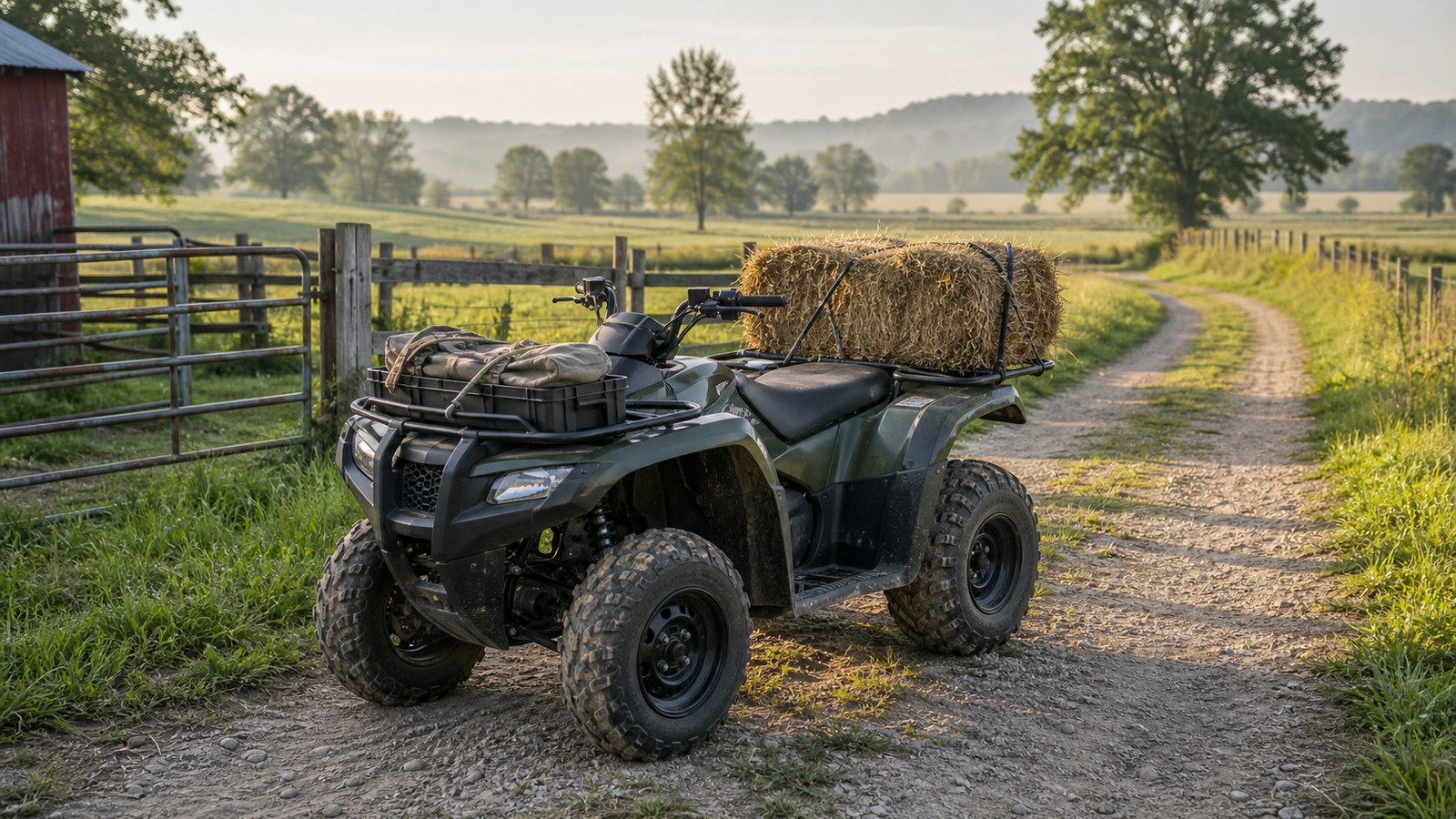
Front and rear rack ratings are limits. They are not suggestions and should not be exceeded because the engine can still move the load. Cargo changes steering, braking, suspension, and rollover risk. A rear-heavy ATV may steer poorly. A front-heavy ATV may feel heavy and plow in turns.
Good cargo practice keeps weight low, centered, and secured. Tools should not slide. Fuel cans and sprayers should be mounted safely. Riders should reduce speed when loaded and avoid steep sidehills with high cargo.
Towing And Tongue Weight
Towing capacity depends on the whole ATV, not just engine power. Brakes, hitch design, cooling, transmission range, tires, and terrain all matter. Tongue weight is the downward force on the hitch, and too much of it can change steering and suspension behavior.
Owners should follow the manual and use the correct hitch point. Pulling from the wrong place can be dangerous. Towing downhill or across slopes requires extra caution because trailers push, swing, and widen the turning path.
Rider Capacity And Two-Up Models
Most ATVs are single-rider machines unless specifically designed for a passenger. Carrying a passenger on a single-rider ATV changes weight distribution and can make control far more difficult. If passenger use is important, choose a model built and labeled for that purpose or consider a side-by-side.
Rider size also matters. A small ATV can be overloaded by a large adult and gear. A large ATV can intimidate a small beginner. Fit and ratings should be considered together.
Buying And Measuring
Before buying, measure trailer width, garage space, gates, storage sheds, and local trail restrictions. Compare those numbers to the ATV’s real dimensions with accessories installed. A machine that is too wide for common use will be annoying every time it leaves home.
Used buyers should inspect racks, hitch points, frame tubes, suspension mounts, and tires for signs of overloading. Bent racks, cracked plastics, sagging suspension, or welded repairs may point to hard utility use.
Bottom Line
Weight, dimensions, and load ratings tell buyers what an ATV can safely and practically do. They affect fit, stability, transport, work capacity, and long-term ownership.
A smart buyer chooses enough capacity for normal tasks without buying a machine too large to handle, store, or transport. The numbers matter because they show where confidence ends and overloading begins.
FAQ
Can I exceed ATV rack ratings for short trips?
No. Rack ratings affect handling and stability even on short trips.
Does a heavier ATV mean a safer ATV?
Not automatically. Heavier machines can feel stable but need more space, strength, and braking room.
Why does tongue weight matter?
Tongue weight affects the rear suspension, steering, and stability while towing.
How Ratings Affect Braking And Steering
Load ratings are closely tied to control. Extra weight increases stopping distance and changes how the tires grip. Rear cargo can reduce front-end bite, while front cargo can make steering heavy. A trailer can push the ATV during braking or downhill turns. These changes can happen even when the engine feels strong enough.
Because of that, riders should slow down before the ATV feels overloaded. The safe speed with empty racks may be too fast with tools, feed, camping gear, or a trailer. Ratings tell the rider where the machine was designed to work; judgment tells the rider how slowly to use that capacity.
Accessories And Real Dimensions
Accessories can change the ATV’s real size and weight. A winch, bumper, plow mount, storage box, gun boot, larger tires, mirrors, and cargo racks may add inches or pounds that matter for storage and transport. A machine that fits a trailer when stock may become tight after common upgrades.
Measure with the ATV as it will actually be used. Include tie-down space, ramp angle, garage clearance, and room to walk around it. A little measuring before purchase prevents a lot of irritation after purchase.
Terrain And Capacity
Ratings are usually easier to manage on flat, firm ground than on hills, mud, snow, or sidehills. A load that feels fine in a driveway may feel unstable on a rutted trail. Towing on slopes adds braking and steering demands. Sprayers and liquid loads can shift weight as fluid moves.
Utility owners should plan the route, not just the load. The safest path may be longer but flatter. A lighter load over two trips may be better than one overloaded trip. ATVs are useful tools when their limits are respected.
Bottom Line For Buyers
Weight, dimensions, and load ratings turn marketing claims into practical limits. They show whether an ATV fits the rider, the trailer, the property, the trail system, and the work.
The best machine has enough capacity for repeated tasks while staying manageable. A buyer who understands the numbers is less likely to overload, oversize, or choose an ATV that becomes inconvenient after the first week.
How To Read A Specification Sheet
A useful specification sheet should be read as a group of limits. Overall length, width, height, wheelbase, ground clearance, seat height, curb weight, rack capacity, towing capacity, and fuel capacity all work together. Looking at only one number can mislead buyers. A wide ATV may be stable but difficult on narrow trails. A tall ATV may clear obstacles but feel intimidating to a short rider.
Buyers should compare specs against real constraints. Measure the trailer, garage, shed, gate, truck bed, and trail width limits. Then compare those measurements to the ATV with accessories installed. A machine that cannot easily be transported or stored will be frustrating even if it performs well.
How Load Changes Suspension
Cargo compresses suspension and changes ride height. Too much rear weight can reduce front traction and make steering vague. Too much front weight can make steering heavy and reduce the suspension’s ability to absorb bumps. Side-to-side imbalance can make the ATV feel crooked or unstable on slopes.
This is why load placement matters as much as load amount. Keep heavy items low and centered when possible. Secure everything. Liquids should be handled carefully because they can slosh and shift weight. If the machine feels different loaded, ride as though it is different, because it is.
Towing In Real Terrain
Towing ratings are easiest to understand on level ground, but real ATV work often happens on slopes, grass, mud, gravel, or uneven paths. A trailer that pulls easily across a driveway may push hard downhill or drag badly through soft ground. The rider should plan stops, turns, and escape routes before committing to a loaded path.
Low range, four-wheel drive, and slow throttle can help when the manual recommends them. Braking early matters more than engine power. A rider who cannot stop and steer the load safely should reduce the load, choose a better route, or use a different vehicle.
Common Ownership Scenarios
A hunter loading gear on both racks should think about balance and access. Heavy items should sit low and be secured so they cannot shift on a sidehill. A property owner pulling a small trailer should think about stopping distance and route, not only whether the ATV can start the load moving. A camper carrying boxes should make sure cargo does not block controls, lights, or the rider’s movement.
A trail rider should check width before visiting restricted routes. Some systems have width gates or posted limits. A machine that is excellent on private land may be too wide for a preferred public trail. Dimensions decide access long before the engine starts.
Bottom Line
The numbers attached to an ATV are there to protect handling and durability. Weight, dimensions, rack limits, towing limits, and rider capacity help owners use the machine for the right jobs without asking it to do unsafe work.