ATV Brake Maintenance Keeps Stopping Power Predictable In Mud, Hills, And Work Use
ATV brakes need routine maintenance because stopping power changes with pad wear, rotor condition, fluid age, mud, water, heat, cable adjustment, and rider habits. A machine that starts and runs well is not ready if it cannot slow predictably. Brake service protects control on descents, loaded rides, wet trails, and tight areas where stopping distance matters.
A: Follow the manual and inspect sooner after harsh riding.
A: A new feel, sound, smell, leak, heat issue, or warning light.
A: Yes. Mud adds grit, moisture, heat, and hidden wear.
A: No. Restore the baseline first, then decide if upgrades are useful.
A: Yes, especially after water, rocks, towing, heat, or heavy loads.
A: Dates, hours, parts, fluids, settings, and symptoms are all useful.
A: Use caution on safety, sealing, steering, suspension, brake, and drivetrain parts.
A: Working does not mean healthy; inspect when symptoms change.
A: Get help for uncertain brakes, steering, wiring, fuel leaks, or structural issues.
A: Inspect early, fix small problems, and test before riding remote terrain.
Why Brake Maintenance Matters
ATV brakes work in conditions that would be hard on any vehicle. Mud, water, grit, steep descents, low-speed work, towing, plowing, and cargo all increase brake stress. Because ATVs are light compared with cars but often ride loose surfaces, predictable brake feel is a major part of control.
Good brake maintenance does not only make the machine stop shorter. It helps the rider choose lines, manage speed before turns, control descents, and avoid panic inputs. A brake system that feels consistent lets the rider focus on terrain instead of wondering whether the next squeeze will work.
Start With Lever And Pedal Feel
Before every ride, squeeze the brake lever and press the pedal where equipped. The feel should be familiar, firm enough, and repeatable. A lever that comes too close to the grip, a pedal that sinks, or a system that feels spongy needs inspection before hard riding.
Feel is not a replacement for measuring parts, but it is an early warning. If the brakes feel different from the last ride, the owner should find out why before assuming the change is harmless.
Pads And Shoes
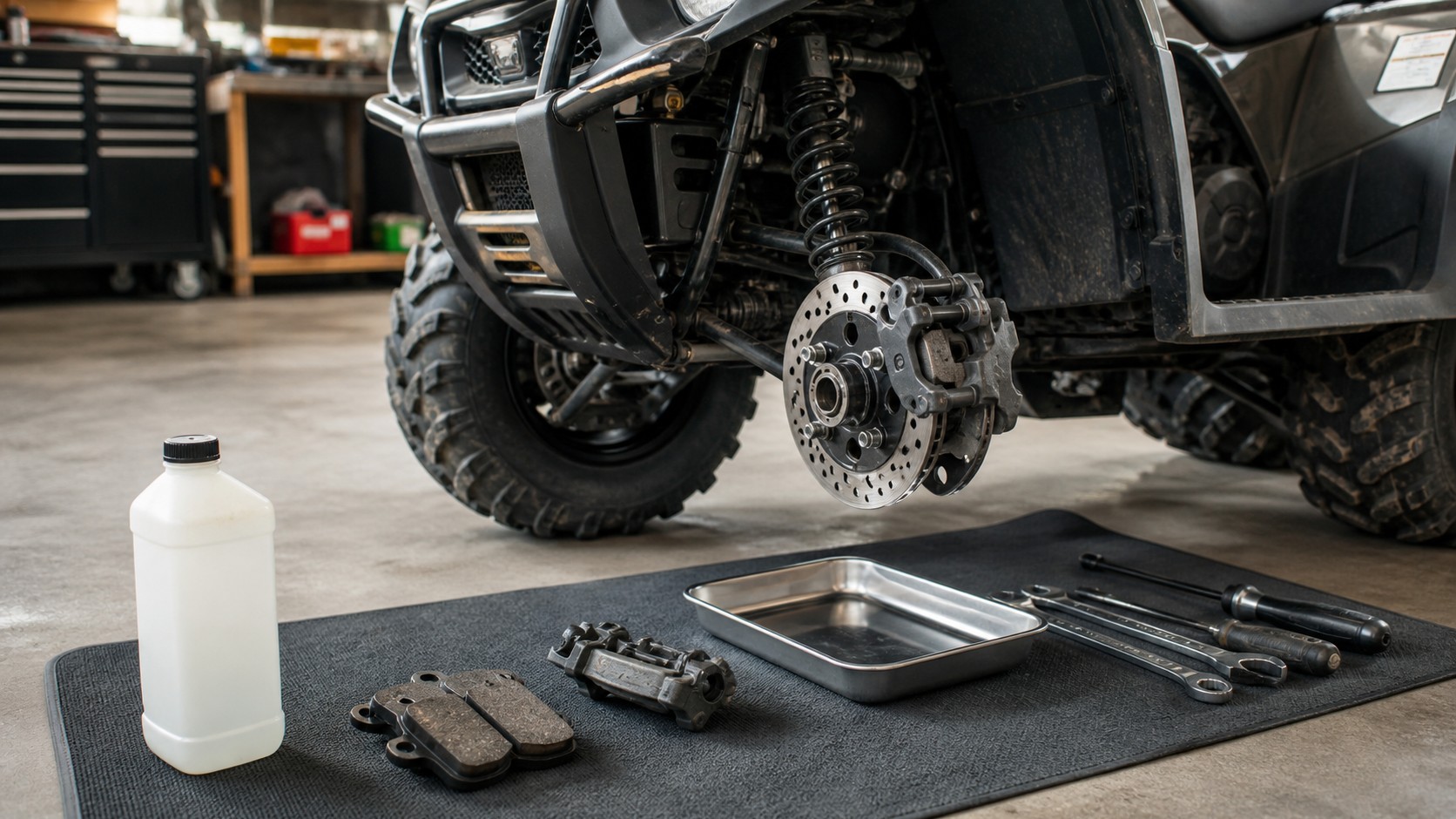
Brake pads or shoes wear with use, and they wear faster in mud, sand, and gritty water. Thin pads reduce margin and can overheat faster. If pads wear down to metal, the rotor or drum can be damaged quickly. Replacing pads on time is much cheaper than replacing extra parts.
Uneven pad wear may point to sticking caliper slides, contamination, damaged hardware, alignment issues, or riding conditions that load one brake more than another. The wear pattern matters as much as the thickness.
Rotors, Drums, And Surfaces
Rotors should be straight, clean, and within service limits. Deep grooves, blue heat marks, cracks, heavy rust, or pulsing during braking should be inspected. Drums, where used, need correct adjustment and surface condition. A clean-looking outside does not prove the braking surface is healthy.
Mud can hide damage, so brake inspection is easier after washing. Owners should avoid spraying harsh chemicals onto pads and should keep lubricant away from friction surfaces. Contaminated pads can lose grip and may need replacement.
Brake Fluid And Hydraulic Systems
Hydraulic brakes depend on correct fluid, sealed lines, healthy master cylinders, calipers, and proper bleeding. Brake fluid can absorb moisture over time, which reduces performance and can corrode internal parts. Low fluid may reflect pad wear, a leak, or poor service history.
Use the fluid type listed by the manufacturer. Mixing incorrect fluids can damage seals. If the system has air, leaks, or spongy feel, bleeding and inspection should follow the service manual.
Cables And Parking Brakes
Some ATVs use cable-operated brakes or parking brake mechanisms. Cables can stretch, corrode, bind, or fall out of adjustment. A parking brake that drags can overheat parts and reduce performance. A parking brake that will not hold can create risk during loading, parking, or work.
Cable condition should be checked during routine service. Smooth movement, proper adjustment, and full release matter. A dragging brake can feel like poor engine power because the machine is fighting itself.
Terrain And Riding Habits
Long descents heat brakes. Mud and sand grind pads. Water can temporarily change feel. Cargo and towing increase stopping load. Fast trail riding creates repeated braking cycles. These conditions should shorten inspection intervals.
Riders can help brakes by managing speed early, using engine braking where available, and avoiding unnecessary dragging. Holding light brake pressure for long periods can build heat. Controlled braking before speed grows is usually better.
After Water And Mud
After deep water or mud, brakes may feel weak until they dry or clear grit. Ride cautiously and test at low speed in a safe area. If grinding, pulling, or poor feel continues, inspect before the next serious ride.
Mud packed around calipers, rotors, drums, or parking brake parts can trap grit and moisture. Careful cleaning protects pads, seals, and hardware.
Used ATV Brake Inspection
Used buyers should inspect pad thickness, rotor condition, fluid color and level, hoses, fittings, calipers, parking brake function, and evidence of leaks. A machine with oversized tires, mud use, or towing history may have worked its brakes harder than stock.
During a test ride, brake gently and firmly at safe speeds. Feel for pulsing, pulling, grinding, or fading. Weak brakes are not a small bargaining detail; they are a safety repair.
Bottom Line
ATV brake system maintenance keeps stopping power predictable. Pads, rotors, drums, fluid, hoses, cables, calipers, and parking brake parts all need attention because terrain and load change braking demand.
Inspect before rides, service sooner after harsh use, and fix weak or noisy brakes before riding hard. Reliable brakes make every other ATV system safer to use.
Brake Maintenance By Riding Style
A work ATV that tows, plows, or carries tools needs brake checks focused on heat and load. Cargo increases stopping distance and can make downhill control more demanding. A hunting ATV may see mud, water, and long slow descents. A sport or fast trail ATV may heat brakes through repeated stops.
The maintenance schedule should reflect that style. A lightly used machine on dry flat trails will not wear brakes the same way as a mud machine or a loaded utility ATV. The rider’s normal terrain is the real service clock.
How Brakes Affect Handling
Brakes do more than stop the ATV in a straight line. They affect how the machine turns, settles on descents, and holds speed through rough terrain. A dragging brake can make the ATV pull. Uneven braking can make the rider compensate without realizing it. Weak brakes can force bad line choices because the rider cannot slow where needed.
This is why brake service belongs with handling, not only safety. Predictable brakes make the ATV easier to place on the trail and easier to manage with cargo.
Common Brake Service Mistakes
One mistake is replacing pads without inspecting rotors, caliper movement, and fluid condition. Another is washing mud off the plastic while leaving grit packed around brake parts. A third is ignoring the parking brake until it drags or fails to hold.
Brake service should look at the system. Pads, rotors, fluid, hoses, cables, calipers, hardware, and rider habits all decide whether stopping power stays consistent.
Final Practical Check
After brake work, test gently in a safe area before returning to normal riding. Confirm lever feel, stopping response, parking brake function, and whether any wheel drags or smells hot. New parts should be bedded or checked according to the manufacturer’s guidance.
The goal is boring confidence. Brakes should feel familiar every time the rider reaches for them.
Hydraulic Brake Details
Hydraulic brakes rely on pressure moving through sealed fluid. When the rider squeezes the lever, the master cylinder pushes fluid through lines to the caliper. Air in that system compresses, which makes the lever feel soft. Moisture lowers fluid quality and can corrode internal parts over time.
This is why fluid service and bleeding matter. A brake system can have good pads and rotors but still feel poor if the hydraulic side contains air, old fluid, or leaks. The correct fluid type and procedure should come from the owner’s manual.
Mechanical And Parking Brake Details
Cable or mechanical brake parts need smooth movement and correct adjustment. A cable that is too tight can drag. A cable that is stretched, corroded, or loose may not apply enough force. Parking brake mechanisms are especially easy to overlook because riders may not use them every trip.
A parking brake should hold when needed and release fully when riding. If it drags, the ATV may feel sluggish, brakes may heat up, and pads or shoes may wear quickly.
Brake Heat And Descents
Descending hills can heat brakes quickly because the system is turning motion into heat for a long time. Cargo, passengers on machines designed for two-up use, trailers, and steep grades increase the demand. Once brakes are overheated, feel and stopping distance can change.
Riders should manage speed early and use engine braking where the ATV provides it. Waiting until speed builds on a descent forces the brakes to work harder and can reduce control.
Contamination Problems
Brake pads can be contaminated by oil, grease, certain cleaners, or leaking fluids. Contaminated friction material may squeal, grab, or lose stopping power. Cleaning the outside of the brake may not restore a pad that has absorbed the wrong substance.
When contamination is suspected, inspect the cause as well as the pad. A leaking axle seal, careless lubricant use, or damaged caliper seal can create repeat problems if only the pad is replaced.
Brake Records
Brake records should include pad replacements, fluid service, rotor or drum work, caliper repairs, hose changes, and parking brake adjustment. These records help owners understand whether brakes are wearing normally or faster than expected.
For a used ATV, brake records also show care. A machine with documented brake service is easier to trust than one with unknown fluid age and thin pads hidden behind muddy wheels.
Final Service Habit
Brake maintenance is easiest when it becomes part of normal cleanup. After washing, look at pad thickness, rotor surfaces, hose routing, caliper areas, and parking brake release while the machine is already clean. Fresh damage and grit are easier to see then.
If anything feels different on the next ride, stop and inspect. Brakes should never be the system a rider hopes will improve on its own.
FAQ
How often should ATV brakes be checked?
Check brake feel before every ride and inspect pads, rotors, fluid, hoses, and parking brake function regularly according to the manual.
Why do ATV brake pads wear quickly?
Mud, sand, grit, water, hills, cargo, towing, and frequent braking can all shorten pad life.
What are signs ATV brakes need service?
Soft lever feel, grinding, pulsing, pulling, leaks, dragging, burning smell, and longer stopping distance all need attention.