ATV Safety Standards And Certifications Help Riders Separate Real Protection From Marketing
ATV safety standards and certifications explain whether equipment, labels, and rider gear meet recognized requirements. They do not make riding risk-free, but they help owners choose machines, helmets, lights, spark arrestors, training, and protective equipment with better judgment. Riders should understand manufacturer warning labels, age guidance, helmet standards, public-land requirements, and why official safety guidance matters more than casual advice from listings or social media.
A: Follow the manual and inspect sooner after harsh riding.
A: A new feel, sound, smell, leak, heat issue, or warning light.
A: Yes. Mud adds grit, moisture, heat, and hidden wear.
A: No. Restore the baseline first, then decide if upgrades are useful.
A: Yes, especially after water, rocks, towing, heat, or heavy loads.
A: Dates, hours, parts, fluids, settings, and symptoms are all useful.
A: Use caution on safety, sealing, steering, suspension, brake, and drivetrain parts.
A: Working does not mean healthy; inspect when symptoms change.
A: Get help for uncertain brakes, steering, wiring, fuel leaks, or structural issues.
A: Inspect early, fix small problems, and test before riding remote terrain.
What Standards Can And Cannot Do
Safety standards create shared expectations for machines, gear, labels, and access requirements. They help riders understand what a helmet label means, why youth ATVs carry age guidance, and why public trails may require registration, sound limits, or spark arrestors. They are a practical tool for better decisions.
Standards do not make riding automatic or risk-free. A certified helmet still needs to fit. A labeled ATV still needs a trained rider. A compliant machine can still be ridden carelessly. Standards support judgment; they do not replace it.
Manufacturer Labels And Manuals
Warning labels are part of the ATV’s safety information. They identify passenger limits, age guidance, load warnings, towing limits, tire information, and operating cautions. Removing or ignoring labels makes it easier for future riders to miss important limits.
The owner manual gives deeper detail than the label can hold. It explains maintenance, controls, safe operation, load ratings, fluid specifications, and model-specific warnings. Riders should treat the manual as equipment, not paperwork to lose after purchase.
Helmet And Gear Certification
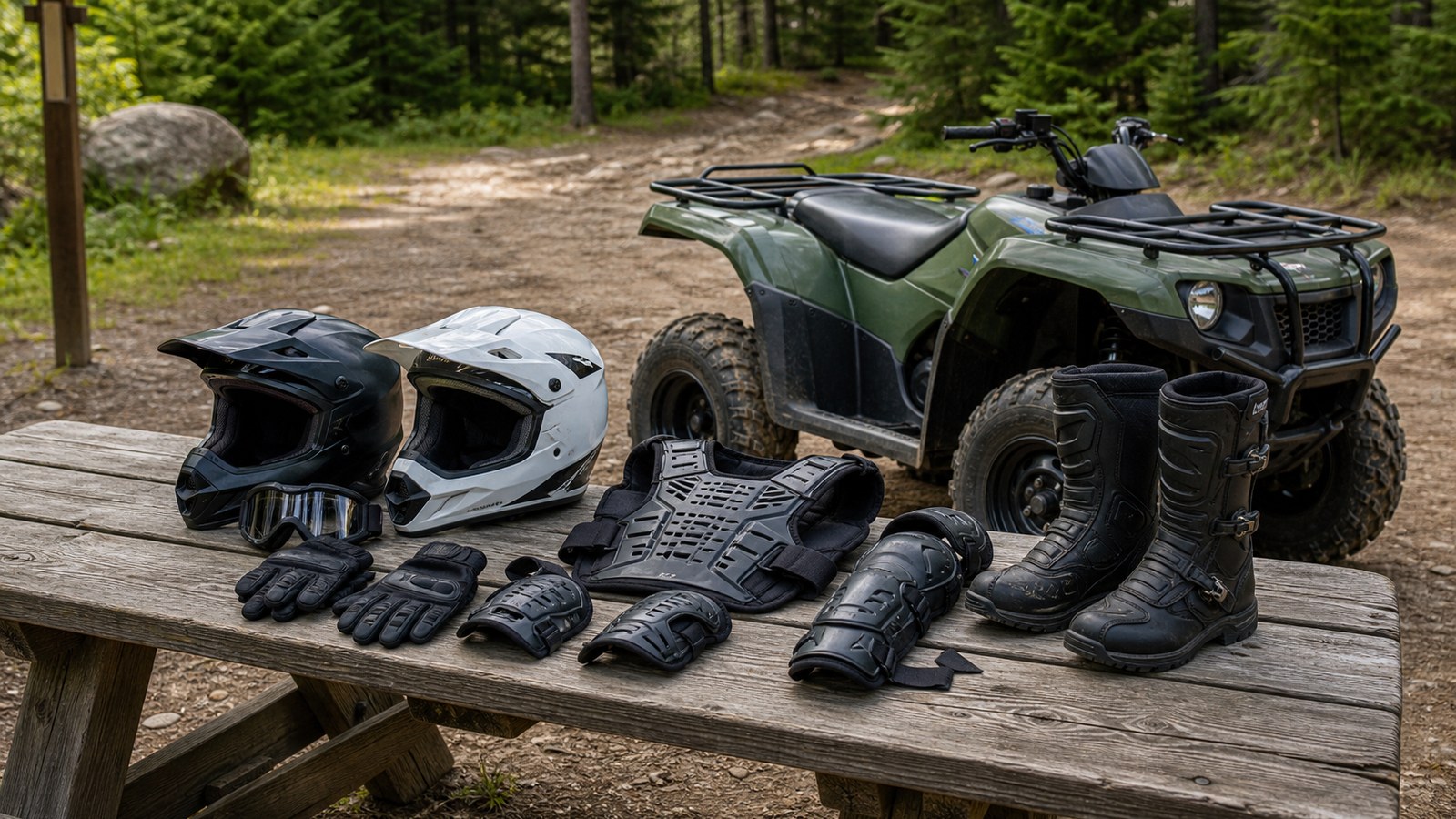
A helmet should meet a recognized motorcycle or off-road helmet standard appropriate for the use and location. In the United States, DOT labeling is commonly referenced, and many riders also look for additional certification marks depending on helmet type. Fit still matters because a poorly fitted helmet cannot protect as intended.
Eye protection, gloves, boots, long sleeves, and long pants are also part of practical protection. These items may not all carry the same kind of certification, but they reduce injury risk and improve control. Gear should be replaced when damaged.
Youth ATV Guidance
Youth ATV standards and labels exist because children are not small adults. Size, strength, reach, judgment, and reaction time all matter. Adult-size ATVs are not appropriate for young riders, even when the child appears confident or can physically sit on the machine.
Speed limiters, remote shutoffs, and smaller chassis designs can help, but they do not remove the need for supervision and training. A youth rider should have proper gear and a controlled riding area every time.
Public-Land Requirements
Public riding areas may require registration, permits, spark arrestors, sound compliance, helmets, lights, flags, insurance, or age restrictions. Some trail systems also have width limits or seasonal closures. These rules protect access, fire safety, and other users.
Riders should check the specific land manager or trail system before arriving. A machine that is acceptable on private land may not be legal on public routes. Compliance keeps the ride from ending at the staging area.
Spark Arrestors And Sound
Spark arrestors are required in many public-land settings because hot exhaust particles can start fires in dry vegetation. Riders should confirm whether the ATV has an approved arrestor and keep the exhaust system maintained. Removing screens or modifying exhausts can create access and safety problems.
Sound limits also matter. Loud machines can close riding areas, annoy neighbors, and attract enforcement attention. A responsible setup respects both the rule and the community that shares the land.
Used ATV Certification Questions
Used buyers should check that safety labels remain readable, the exhaust has required equipment, lights work where needed, and the machine has not been modified in a way that creates compliance problems. A cheap used ATV may cost more later if it needs parts to meet trail rules.
Ask for manuals, service records, and original parts when possible. A machine with missing documents can still be usable, but the buyer should know what information must be replaced before riding or registering it.
Training As A Safety System
Training is one of the most important safety tools because standards and gear work best with skill. Formal ATV training teaches braking, turning, body position, terrain reading, passenger rules, and risk management. It also helps riders avoid learning only from friends who may have casual habits.
Beginners and youth riders benefit most, but experienced riders can learn too. A refresher can correct habits that feel normal but raise risk. Skill is a safety feature the rider carries from machine to machine.
Bottom Line
Safety standards and certifications help riders choose real protection, legal trail access, and appropriate machines. They make labels, manuals, gear, and land-use rules easier to understand.
The best approach is simple: use compliant gear, follow the manual, respect age and passenger labels, check local trail rules, and keep training part of the ownership plan.
FAQ
Do safety standards make ATV riding safe?
They reduce uncertainty and support better choices, but riders still need training, judgment, gear, and maintenance.
What helmet should ATV riders use?
Use a properly fitted helmet that meets recognized requirements for your location and riding use.
Why do public trails require spark arrestors?
Spark arrestors help reduce wildfire risk from exhaust particles in dry vegetation.
How Certifications Help During Buying
Certifications and standards are most useful when comparing real products. A helmet with clear labeling, a machine with readable warning labels, and an exhaust system that still meets trail requirements give the buyer more confidence. Missing labels, unknown gear, or modified safety equipment create questions that should be answered before use.
This does not mean every older ATV is unsafe. It means owners should know what information is missing and replace it where possible. Manuals, dealer support, manufacturer resources, and reputable training organizations can fill gaps left by lost paperwork or worn labels.
Why Age And Passenger Rules Are Serious
Age and passenger rules are among the most commonly ignored safety messages. They are also among the most important. A child on an adult ATV is dealing with adult weight, speed, reach, and rollover consequences. A passenger on a single-rider ATV changes balance and can make the machine much harder to control.
Beginners sometimes treat those rules as overly cautious because the ride is short or familiar. The problem is that accidents often happen during ordinary rides, not only extreme ones. Following the label keeps ordinary rides from quietly becoming high risk.
Maintenance As Compliance
Safety standards are not only about purchase day. A spark arrestor can clog or be removed. Lights can fail. Brake systems can wear. Tires can become unsafe. Labels can become unreadable. A machine that was compliant years ago may not be ready today unless it has been maintained.
Owners should include compliance items in regular inspection. Check exhaust equipment, lights, brakes, tires, reflectors where fitted, registration display, and safety labels. This habit protects both access and safety.
Responsible Trail Access
Public riding areas stay open when riders respect rules. Spark arrestors, sound limits, registration, helmet requirements, and route restrictions are not just bureaucracy. They reduce fire risk, conflict, injury, and environmental damage. Riders who ignore them can create closures that affect everyone.
A responsible rider checks requirements before loading the ATV. If the machine needs an arrestor, quieter exhaust, permit, flag, or registration, handle that at home. Trailhead fixes are rarely pleasant.
Bottom Line For Owners
Standards and certifications give ATV owners a framework for better choices. They help identify proper gear, appropriate machines, legal trail access, and safety information worth following.
The best owner uses those standards as part of a routine: compliant gear, readable labels, correct machine use, training, and maintenance. That routine makes safety practical instead of abstract.
Why Documentation Belongs With The ATV
Manuals, registration papers, service records, helmet information, and accessory instructions should stay with the ATV. Documentation helps future owners understand limits and helps current owners maintain compliance. If a used ATV is missing its manual, the owner should try to replace it through the manufacturer or dealer.
Accessory instructions matter too. Winches, plows, lights, storage boxes, and exhaust parts can affect safety or trail compliance. Knowing how they were installed and what limits they carry helps owners avoid treating every add-on as harmless.
A Practical Safety Audit
A simple safety audit starts with the rider, then the machine, then the trail. Does the rider have proper gear and training? Does the ATV have readable labels, working brakes, correct tires, safe controls, and required equipment? Does the trail require registration, a permit, spark arrestor, sound compliance, or a specific width?
This audit takes only a few minutes once it becomes routine. It turns standards into decisions a rider can actually use. The result is not paperwork for its own sake; it is a more prepared ride.
Applying Standards To Real Rides
On a family ride, standards show up as youth-size machines, helmets, no passengers on single-rider ATVs, and adults supervising the route. On a public-land ride, they show up as registration, spark arrestors, legal routes, and sound compliance. On a work ride, they show up as load limits, towing limits, readable labels, and maintained brakes.
This is why safety information should be treated as practical, not theoretical. It helps the rider make the next decision correctly. The more routine those decisions become, the less likely a rider is to improvise around a rule that exists for a real reason.
Final Ownership Standard
The strongest safety approach is the one an owner can repeat without debate. Before each ride, confirm the rider has the right gear, the ATV is appropriate for the rider, the machine is maintained, and the route rules are understood. Those steps make standards part of ownership rather than something separate from riding.
When owners treat labels, manuals, certifications, and training as ordinary tools, safety becomes easier to manage. The ATV is still an off-road machine that requires judgment, but the rider begins every trip with clearer boundaries and better information.