ATV Maintenance Timing Should Follow Use, Conditions, And The Owner’s Manual
ATV owners should handle routine maintenance on the schedule in the owner’s manual, then shorten the interval when riding is muddy, dusty, wet, loaded, hot, sandy, or used for towing and plowing. The right timing is not one universal number. It depends on hours, miles, season, storage, terrain, and whether the machine is showing early warning signs.
A: Follow the manual and inspect sooner after harsh riding.
A: A new feel, sound, smell, leak, heat issue, or warning light.
A: Yes. Mud adds grit, moisture, heat, and hidden wear.
A: No. Restore the baseline first, then decide if upgrades are useful.
A: Yes, especially after water, rocks, towing, heat, or heavy loads.
A: Dates, hours, parts, fluids, settings, and symptoms are all useful.
A: Use caution on safety, sealing, steering, suspension, brake, and drivetrain parts.
A: Working does not mean healthy; inspect when symptoms change.
A: Get help for uncertain brakes, steering, wiring, fuel leaks, or structural issues.
A: Inspect early, fix small problems, and test before riding remote terrain.
Start With The Manual
The owner’s manual is the baseline for routine maintenance. It lists the service intervals, fluid specifications, torque values, inspection points, and procedures for the exact ATV. That matters because different engines, transmissions, cooling systems, brakes, and drivetrains do not all share the same needs.
A general schedule is useful, but it should not replace the manual. The manual tells the owner what the manufacturer expects under normal use. From there, the owner adjusts based on how the machine is actually ridden.
Every-Ride Checks
Every ride should begin with a quick walkaround. Check tire pressure and condition, wheel damage, lug nuts, brakes, throttle return, steering feel, lights, fuel, leaks, and anything hanging loose. Look under the ATV because skid plates, boots, and drain areas often reveal problems first.
These checks are not busywork. A low tire can change handling, weak brakes can create a safety issue, and a stuck throttle can become dangerous quickly. Catching obvious problems before starting the ride is the easiest maintenance win.
After Mud, Water, Or Dust
Muddy, wet, and dusty rides should shorten maintenance timing. Mud packs radiators, brakes, skid plates, suspension joints, and CV boots. Water can enter bearings, connectors, belt housings, and fluids. Dust loads air filters and can damage engines if sealing is poor.
After harsh conditions, wash carefully, inspect closely, and service sooner. Do not wait for the next scheduled interval if the ATV spent the day in deep mud, heavy dust, or repeated water crossings.
Oil, Filters, And Fluids
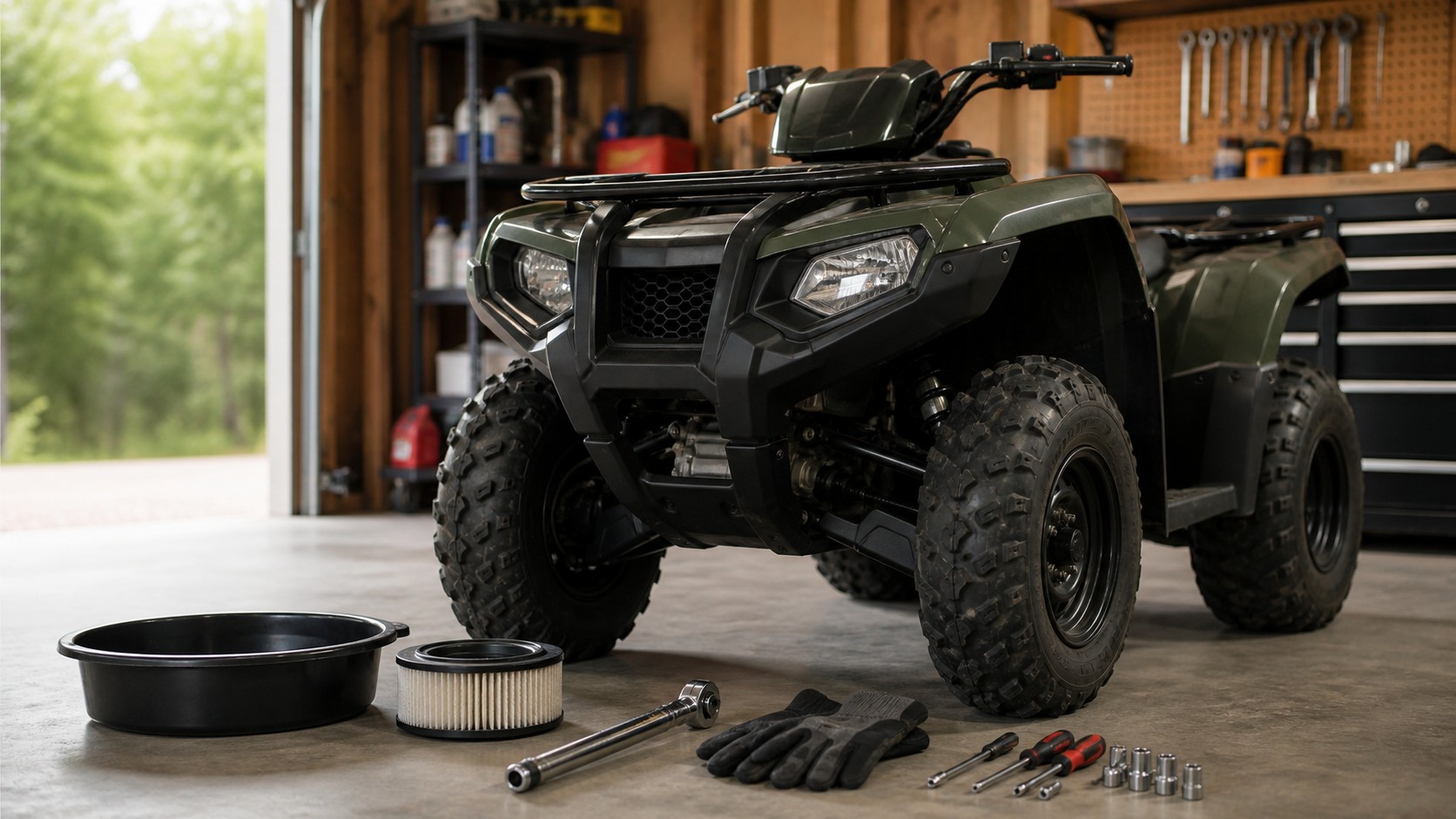
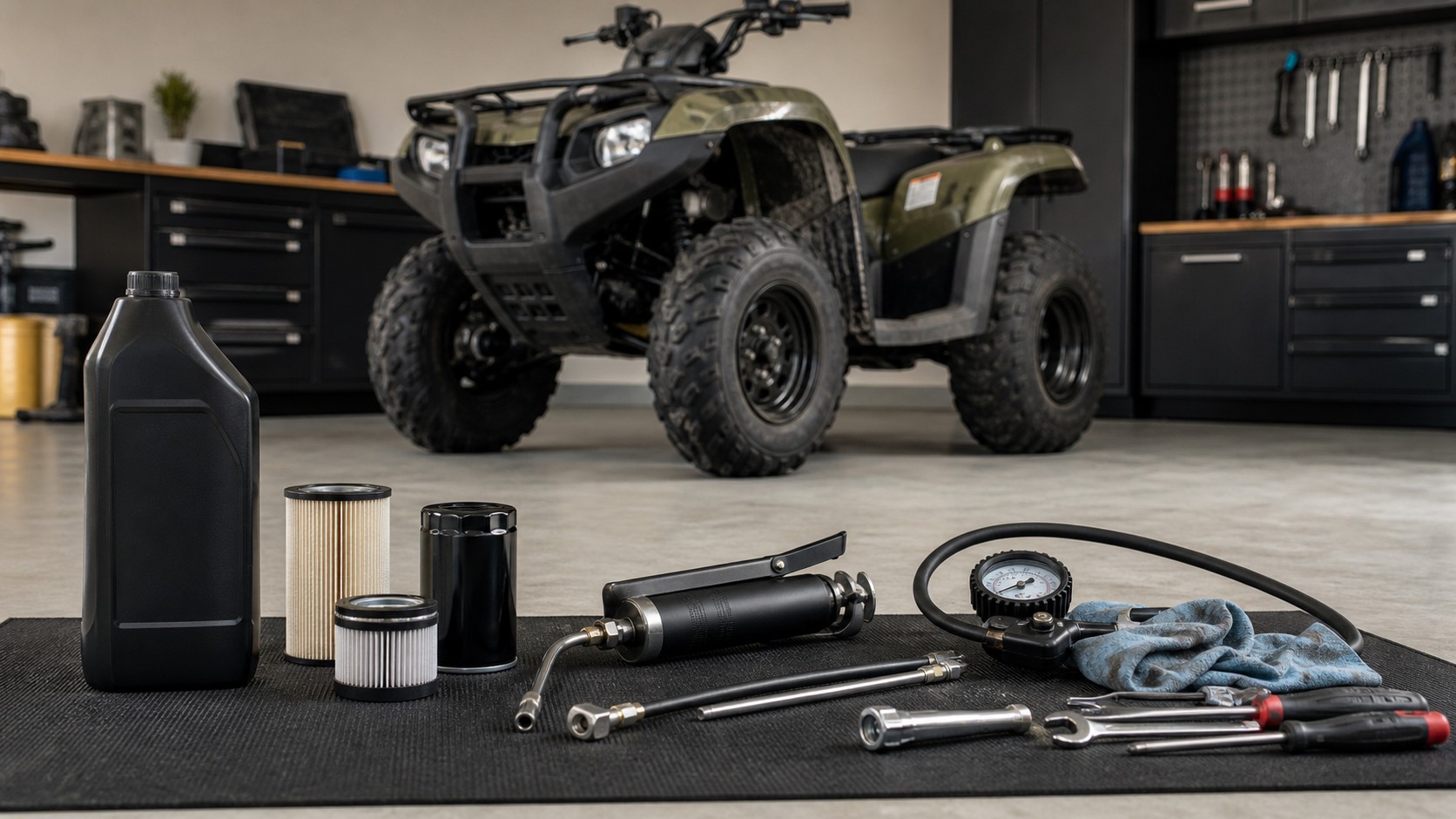
Engine oil should be changed according to the manual, with shorter intervals for severe use. Oil protects against heat, friction, contamination, and wear. Air filters need inspection based on dust, not just mileage. A clogged filter hurts performance; a leaking filter can damage the engine.
Coolant, brake fluid, differential oil, gearbox oil, and other fluids also age or become contaminated. Milky fluid, burnt smell, low level, or leaks should move service forward immediately.
Belts, Chains, And Drivetrain
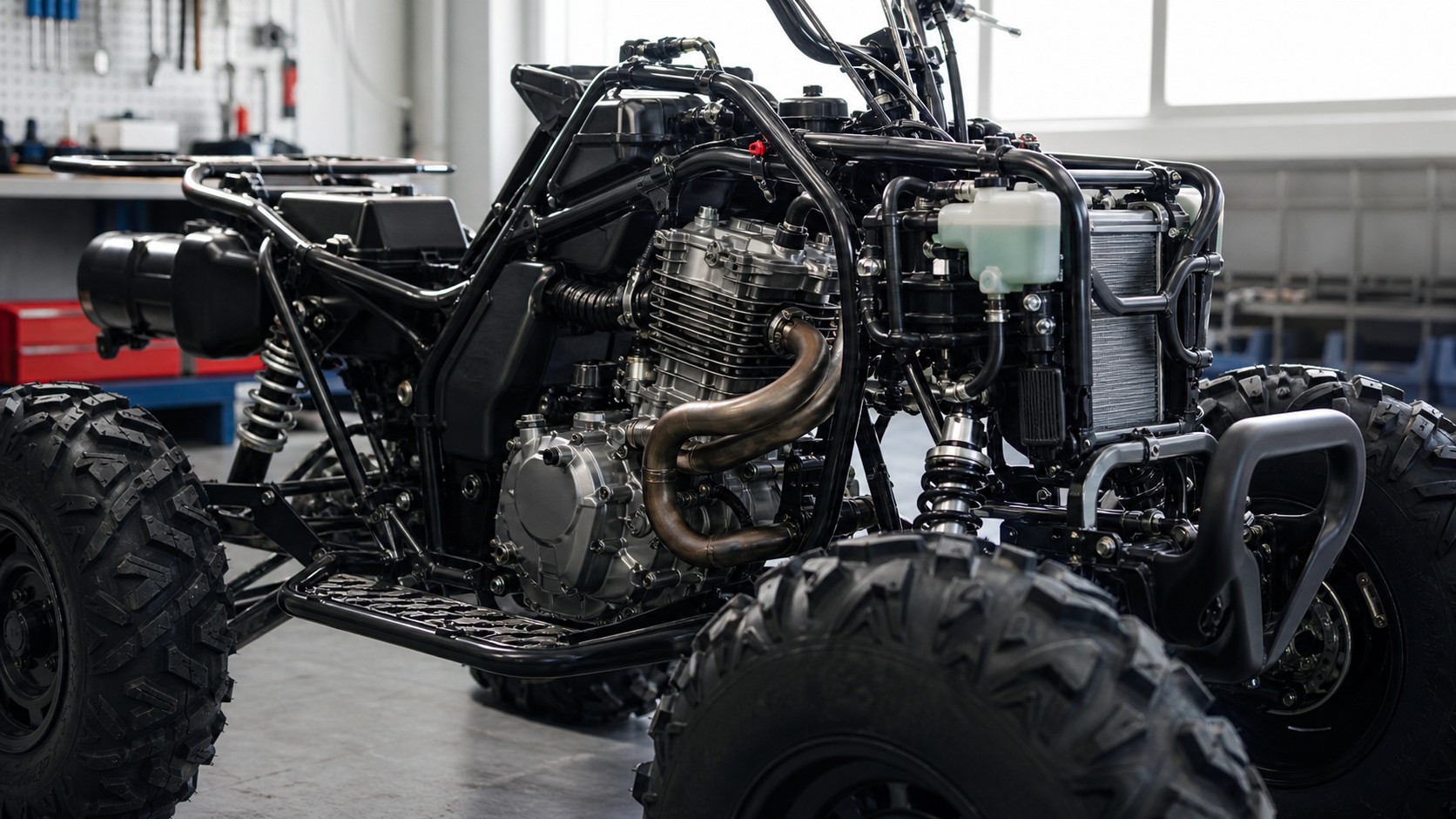
CVT belts, clutch areas, chains, sprockets, differentials, CV boots, and axles need timing based on use. Towing, plowing, mud, oversized tires, and slow heavy work create heat and load. A belt smell, delayed engagement, chain noise, torn boot, or clicking axle deserves attention.
Low range can reduce strain during slow heavy use. Smooth throttle and proper tire choices also help drivetrain parts last longer. Maintenance timing is tied to riding habits as much as the calendar.
Brakes And Suspension
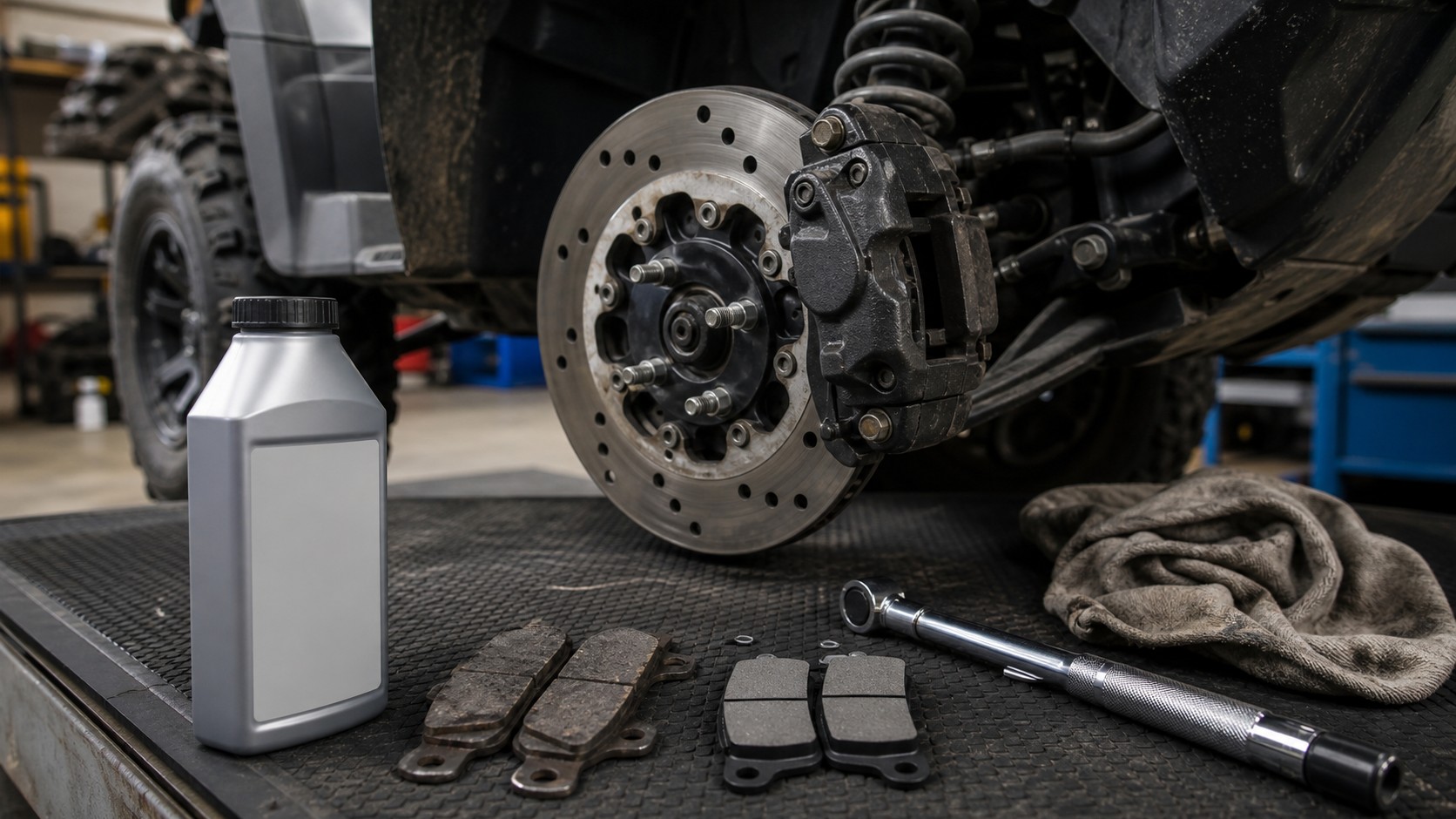
Brake pads, rotors, fluid, lines, and parking brakes should be inspected regularly because mud and water accelerate wear. Brakes should not be run until metal meets metal. A soft lever, grinding sound, or reduced stopping power should be fixed before the next serious ride.
Suspension and steering parts wear gradually. Bushings, ball joints, tie rods, wheel bearings, shocks, and alignment affect control. If the ATV wanders, clunks, pulls, or feels uneven, service should not wait for a seasonal checklist.
Battery And Electrical Timing
Batteries age even when the ATV is parked. Storage, cold weather, vibration, accessory draw, and weak charging systems can all create starting problems. Battery terminals and grounds should be inspected regularly, especially before winter, night rides, or remote trips.
Electrical accessories should be checked after installation and after several rides. Wires settle, zip ties loosen, and vibration can move harnesses toward heat or sharp edges. A quick inspection can prevent intermittent faults.
Seasonal Planning
Seasonal use should guide timing. Before hunting season, plow season, long trips, or heavy work, service early enough for a shakedown ride. Last-minute maintenance can introduce leaks, rubbing, loose fasteners, or installation mistakes that need time to show up.
Before storage, clean the ATV, handle fuel and battery care according to the manual, and inspect for damage. After storage, check for stale fuel, weak battery, cracked rubber, leaks, and rodent damage before heading far from tools.
Keeping Records
Maintenance records make timing easier. Record date, hours, mileage where available, parts used, fluids, filters, and symptoms. Over time, the record shows what wears quickly and which riding conditions demand shorter intervals.
Records also protect resale value. A buyer is more comfortable with an ATV that has documented service than one that depends on memory.
Bottom Line
ATV owners should handle routine maintenance by following the manual and adjusting for real use. Severe conditions shorten intervals, and symptoms should override the calendar.
The best schedule is simple, consistent, and honest about the machine’s life. Maintain before failure, record what was done, and treat safety-related issues as immediate.
Simple Annual Rhythm
A practical annual rhythm helps many owners. Spring can focus on battery, fuel, oil, filters, tires, and shakedown rides. Summer may focus on dust, cooling, tires, and brakes. Fall may focus on hunting loads, lights, winches, and storage planning. Winter may focus on plow loads, battery health, and corrosion control.
The exact season depends on the rider’s climate, but the principle is the same. Maintenance should prepare the ATV for the work ahead, not only react to the work already done.
Final Practical Answer
So how often should routine maintenance happen? Quick checks happen every ride. Cleaning and focused inspection happen after harsh rides. Fluid, filter, drivetrain, brake, suspension, and electrical work follow the manual, adjusted sooner for severe use.
That answer is more useful than a single number because it respects how different ATV lives can be. A dusty ranch machine, a weekend trail ATV, and a mud machine should not all be maintained on the same real-world rhythm.
How To Adjust Intervals For Real Use
A rider who cruises dry trails a few weekends each month can usually stay close to the normal interval in the manual. A rider who plows snow, pulls trailers, rides in mud, crosses water, or works in dust should inspect and service more often. The ATV does not know the calendar; it responds to heat, load, dirt, water, and time.
Hours and miles should be treated as guides. Conditions decide whether the guide is enough. If the air filter is dirty after one dusty day, it should be cleaned or replaced even if the hour interval is not reached. If water enters a differential, the fluid should be serviced immediately rather than waiting for the scheduled date.
Maintenance Timing By System
Engine oil and air filters protect the engine, so they deserve close attention after dust, heat, and hard work. Cooling systems need inspection after mud, slow towing, and hot-weather riding. Drivetrains need extra checks after water, belt smell, larger tires, and heavy loads. Brakes need attention after mud, descents, and gritty conditions.
Suspension and steering should be inspected after impacts, rough trails, and load changes. Electrical systems should be checked before storage, after accessory installation, and after water exposure. Thinking system by system makes maintenance less overwhelming.
The Cost Of Waiting
Waiting too long often turns one service item into several repairs. A torn boot can become a ruined axle. Worn brake pads can damage rotors. A dirty air filter can become engine wear. A hot belt can fail and strand the rider. Loose hardware can enlarge mounting holes.
Routine maintenance feels small because the problem is still small. That is exactly why it works. The least dramatic service is usually the cheapest and most effective one.
Building A Habit
Pick a simple method for tracking maintenance. Some owners use a notebook in the trailer, some use phone reminders, and some write hours on a shop board. The method matters less than consistency. Record dates, hours, mileage, parts, fluids, and anything unusual.
A habit also helps multiple riders. If family members or workers share an ATV, records prevent everyone from assuming someone else checked the oil, battery, tires, or brakes.
Example Maintenance Rhythm
A simple rhythm might look like this: quick inspection before every ride, cleaning after dirty rides, fluid and filter checks monthly during active seasons, and deeper service before major seasonal work. The owner still follows the manual, but the rhythm keeps the machine from being ignored between formal intervals.
For a lightly used ATV, this rhythm may be enough. For a machine that plows, tows, rides mud, or lives in dust, the same rhythm becomes more frequent. The point is to keep maintenance tied to actual stress.
Warning Signs That Move Service Forward
New noises, new vibration, hot smells, soft brakes, slow starting, poor idle, overheating, belt smell, fluid leaks, torn boots, and uneven tire wear should move service forward. These signs matter because they appear before complete failure.
The owner does not need to panic over every small change, but the change should be inspected. A five-minute look after a ride can prevent a weekend-ending repair later.
Maintenance For Shared ATVs
Shared ATVs need clearer records because no single rider may know the whole history. Work machines, family machines, and camp machines often suffer because everyone assumes someone else checked the basics. A visible checklist helps prevent that.
For shared use, record fuel, hours, damage, symptoms, and service. A note that the brakes felt soft or the fan ran constantly can save the next rider from discovering the problem under load.
Final Timing Rule
The best timing rule is conservative: inspect early, service before failure, and shorten intervals whenever conditions are harsh. Routine maintenance is not about making the ATV perfect; it is about keeping known wear from becoming unknown risk.
FAQ
How often should I service my ATV?
Use the owner’s manual as the baseline and shorten intervals for mud, dust, water, towing, plowing, heat, sand, or racing.
What should be checked before every ride?
Check tires, brakes, throttle, steering, lights, fuel, leaks, and obvious loose or damaged parts.
Should symptoms override the schedule?
Yes. New noises, leaks, overheating, weak brakes, or steering changes should be addressed before the next serious ride.