Farm And Ranch ATV Riding Is About Control, Load Awareness, And Repetition
Farm and ranch ATVs do many small jobs: checking fences, carrying tools, moving feed, watching livestock, crossing pastures, pulling light trailers, and reaching places trucks cannot. Riding smarter means treating each trip as work with weight, terrain, animals, gates, slopes, and weather involved. A good rider moves steadily, respects load limits, protects the machine, and avoids turning routine chores into preventable incidents.
A: Follow the manual and inspect sooner after harsh riding.
A: A new feel, sound, smell, leak, heat issue, or warning light.
A: Yes. Mud adds grit, moisture, heat, and hidden wear.
A: No. Restore the baseline first, then decide if upgrades are useful.
A: Yes, especially after water, rocks, towing, heat, or heavy loads.
A: Dates, hours, parts, fluids, settings, and symptoms are all useful.
A: Use caution on safety, sealing, steering, suspension, brake, and drivetrain parts.
A: Working does not mean healthy; inspect when symptoms change.
A: Get help for uncertain brakes, steering, wiring, fuel leaks, or structural issues.
A: Inspect early, fix small problems, and test before riding remote terrain.
Daily Work Starts With Inspection
A farm ATV may be used so often that inspection gets skipped. That is exactly why it matters. Tires, brakes, throttle return, steering, lights, racks, hitch hardware, fuel, and visible leaks should be checked before work begins. The machine may have been used by someone else since the last ride.
A short daily check catches loose tools, low tires, weak brakes, and damaged parts before the ATV is loaded or taken across a pasture. Routine work deserves routine inspection.
Ride Differently With Loads
Cargo changes handling. A toolbox, fencing supplies, feed bag, sprayer, or cooler can make the ATV steer and stop differently. Loads should be secured and kept low. The rider should reduce speed and avoid sidehills when cargo is high or uneven.
Taking two lighter trips is often smarter than one overloaded trip. A farm ATV is useful because it is nimble; overloading removes that advantage and can damage racks, suspension, brakes, and driveline parts.
Towing Smarter
When towing, start slowly, brake early, and turn wide. Use low range when the manual recommends it. Avoid steep slopes, off-camber routes, and soft ground when the trailer is loaded. The rider should know whether the trailer can push the ATV downhill or jackknife in tight turns.
Towing from the wrong point is dangerous. Use the designed hitch and correct hardware. Chains, ropes, and improvised pulls can create unpredictable forces.
Pasture And Field Hazards
Pastures hide holes, rocks, washouts, wire, irrigation parts, stumps, and animal trails. Tall grass can make familiar ground look smoother than it is. Wet grass reduces traction and increases stopping distance. A rider should slow down when visibility of the ground is poor.
Field edges and ditches deserve caution. Turning across slopes with cargo can unsettle the ATV. If a route feels soft, steep, or hidden, choose a safer path even if it takes longer.
Livestock Awareness
Riding around livestock requires patience. Approach slowly, avoid sudden noise, and give animals space. Gates are high-risk places because animals, people, and machines converge. The ATV should be parked where it does not block movement or startle stock.
A rider should never assume livestock will react predictably. Wind, calves, feeding time, dogs, weather, and unfamiliar machines can change behavior. Control speed and keep an exit.
Weather And Seasonal Work
Farm ATV use changes with weather. Spring mud can bury routes. Summer dust loads filters. Fall debris hides holes. Winter cold weakens batteries and changes traction. A smart rider adjusts speed, route, and maintenance to the season.
Seasonal attachments such as sprayers or plows should be inspected before use. Mounts, wiring, hoses, and fasteners can loosen or age while stored.
When To Use A Different Vehicle
An ATV is not the right tool for every job. Heavy towing, large loads, rough road hauling, and passenger transport may call for a tractor, truck, side-by-side, or utility vehicle. Choosing the right machine protects the rider and the ATV.
If the job requires exceeding rack or towing ratings, the answer is not more throttle. It is a different plan. Work decisions should stay inside the equipment’s design.
Bottom Line
Farm and ranch ATV riding is smarter when the rider treats routine chores with respect. Inspect the machine, secure loads, ride slowly around animals, and use the right vehicle for the job.
The best farm ATV rider is efficient because they are careful. Controlled habits prevent damage, injuries, and downtime.
FAQ
How often should a farm ATV be inspected?
A quick daily check is smart when the ATV is used for work, with deeper maintenance on schedule.
Is it safe to carry tools on ATV racks?
Yes if loads stay within ratings, are secured, and do not block rider movement.
Should ATVs be used around livestock?
They can be useful, but riders should move calmly, reduce noise, and avoid crowding animals.
Gate, Fence, And Pasture Habits
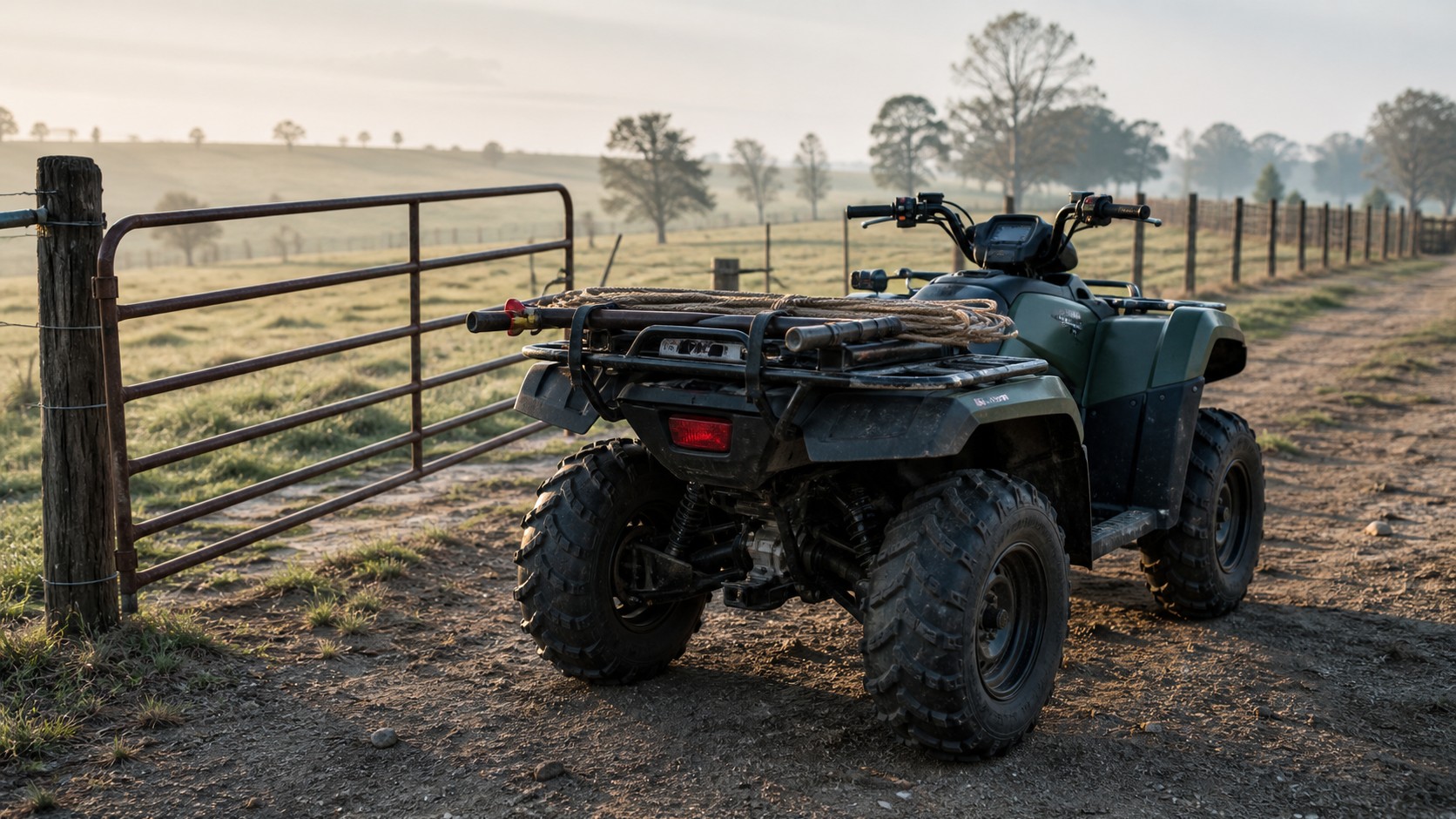
Farm riding often involves stopping at gates, leaning to open latches, turning around in tight spaces, and moving near animals. The rider should park on stable ground, set the brake where appropriate, and avoid placing the ATV where it can roll, block livestock, or trap the rider between a gate and the machine.
Fence routes deserve slower speed because wire, holes, washouts, and hidden debris often sit near edges. A tire puncture or tangled wire can stop work quickly. Carrying basic tools and tire repair makes sense on large properties.
Pastures change with weather and livestock movement. Ruts, hoof holes, irrigation cuts, and wet grass can appear in familiar places. A smart farm rider treats familiar ground as changing ground, especially when carrying cargo.
Shared Work Machines
Many farm ATVs are shared by family, workers, or guests. Shared machines need clear expectations. Riders should report low fuel, weak brakes, damaged tires, broken racks, warning lights, and strange noises immediately. Silence turns small problems into the next rider’s surprise.
A simple log near the storage area can help. Note fuel, hours, service, damage, and upcoming repairs. This does not need to be fancy. It just needs to make machine condition visible to everyone using it.
Shared machines should also have consistent cargo rules. If tools, sprayers, or feed are carried often, keep straps and storage in the same place. A predictable setup reduces rushed improvising during chores.
Final Farm Riding Standard
The safest farm ATV habits are calm and repeatable. Inspect the machine, secure the load, choose the route, move slowly around animals, and avoid overloading. These steps do not slow work down as much as a stuck or broken ATV does.
A rider who treats routine chores as real riding will make fewer mistakes. Farm and ranch terrain may look familiar, but it still deserves attention every time the ATV rolls out.
Planning The Work Route
A farm or ranch route should be chosen before the ATV is loaded. The shortest path is not always the safest path. Wet sidehills, steep ditches, soft creek crossings, loose gravel, and crowded animal areas may be worth avoiding even if the route is longer. A loaded ATV needs more conservative choices than an empty one.
Route planning also matters for repeated chores. If one stretch of pasture always turns soft after rain, create a better path or use another vehicle. If one gate forces an awkward turn with a trailer, change the approach. Small route improvements reduce wear and risk every day.
Riders should avoid letting urgency decide the route. Chores often happen when weather is bad, animals are moving, or daylight is fading. Those are exactly the times when slower, planned riding matters most.
Working Around Attachments
Attachments change how an ATV rides. Sprayers add liquid weight that can slosh. Trailers push and pull. Plows add front weight and repeated impact. Seeders, spreaders, and tool boxes change balance and visibility. The rider should treat every attachment as a new handling condition.
Before using an attachment, inspect mounts, hoses, wiring, hitch pins, straps, and moving parts. Practice empty or lightly loaded first. Make sure the ATV can stop, turn, and reverse safely. A machine that feels stable unloaded may behave differently with a full tank or trailer.
After work, inspect again. Attachments loosen hardware and reveal weak electrical connections. Finding a problem after the job is better than finding it halfway through the next one.
Building A Culture Of Reporting Problems
On a shared farm ATV, the biggest maintenance risk is silence. One rider notices a soft tire, weak brake, or strange noise and plans to mention it later. The next rider loads the machine and discovers the problem under worse conditions. A simple report system prevents that.
The system can be as basic as a notebook, whiteboard, or tag on the key. Record low fuel, damage, service due, warning lights, flat repairs, and parts needed. Everyone who uses the ATV should know where to look before riding.
This habit saves money and protects people. Work machines do not need perfect polish, but they do need honest information. A known problem can be planned around; an unreported one becomes a surprise.
Everyday Farm Riding Examples
When checking fence after a storm, the rider should expect washouts, downed limbs, loose wire, and soft ground. Speed should stay low enough to read the field edge. Tools should be secured so they do not bounce into controls or fall where livestock can reach them.
When hauling feed or mineral, the rider should think about weight and animal behavior. A calm approach matters. Animals may crowd the ATV or move unpredictably, especially near gates or feeding areas. The machine should be parked where it does not trap the rider or block the herd.
When towing a small trailer, the rider should plan wider turns and earlier stops. Wet grass and slopes can change everything. If the trailer pushes the ATV or the steering feels light, the route or load should change before the problem grows.
These examples all point to the same standard: farm ATV riding is controlled work. The rider should use the machine as a tool, not as a shortcut around judgment.
Final Ranch Riding Checklist
Before starting work, confirm the ATV is ready, the route is suitable, and the load is reasonable. Check tires, brakes, steering, throttle, fuel, hitch parts, racks, and cargo straps. Around livestock, plan where the ATV will stop and how animals can move without being crowded.
During work, keep speeds low enough for holes, wire, gates, people, and animals to appear without panic. Take smaller loads when conditions are wet or steep. Use low range for slow heavy work when the manual recommends it. Report problems immediately if the machine is shared.
After work, refuel, clean debris from hot or moving parts, and write down repairs. The next rider should not have to discover a weak brake, loose rack, or damaged tire while carrying a load.