The Big Question Every ATV Buyer Faces
Choosing an ATV often starts with one exciting question: how much engine do you really need? It sounds simple, but the answer depends on far more than a number printed on a spec sheet. A 250cc ATV, a 500cc ATV, and an 850cc ATV can all be the “right” choice for different riders, different terrain, and different jobs. The secret is not chasing the biggest engine. The secret is matching power to purpose. ATV engine size is usually measured in cubic centimeters, or cc. This number describes engine displacement, which gives you a general idea of how much power the machine can produce. Higher cc engines usually create more acceleration, torque, towing strength, and top-end speed. But bigger engines also bring more weight, higher fuel use, more aggressive handling, and greater cost. That means the best ATV engine size is not always the largest one you can afford. For most riders, the ideal ATV engine size sits at the intersection of skill, terrain, comfort, and intended use. Beginners need confidence and control. Trail riders need balance and agility. Hunters and landowners often need torque and utility. Performance riders want acceleration and excitement. Once you understand where you fit, the answer becomes much clearer.
A: Follow the manual and inspect sooner after harsh riding.
A: A new feel, sound, smell, leak, heat issue, or warning light.
A: Yes. Mud adds grit, moisture, heat, and hidden wear.
A: No. Restore the baseline first, then decide if upgrades are useful.
A: Yes, especially after water, rocks, towing, heat, or heavy loads.
A: Dates, hours, parts, fluids, settings, and symptoms are all useful.
A: Use caution on safety, sealing, steering, suspension, brake, and drivetrain parts.
A: Working does not mean healthy; inspect when symptoms change.
A: Get help for uncertain brakes, steering, wiring, fuel leaks, or structural issues.
A: Inspect early, fix small problems, and test before riding remote terrain.
Understanding ATV Engine Size Basics
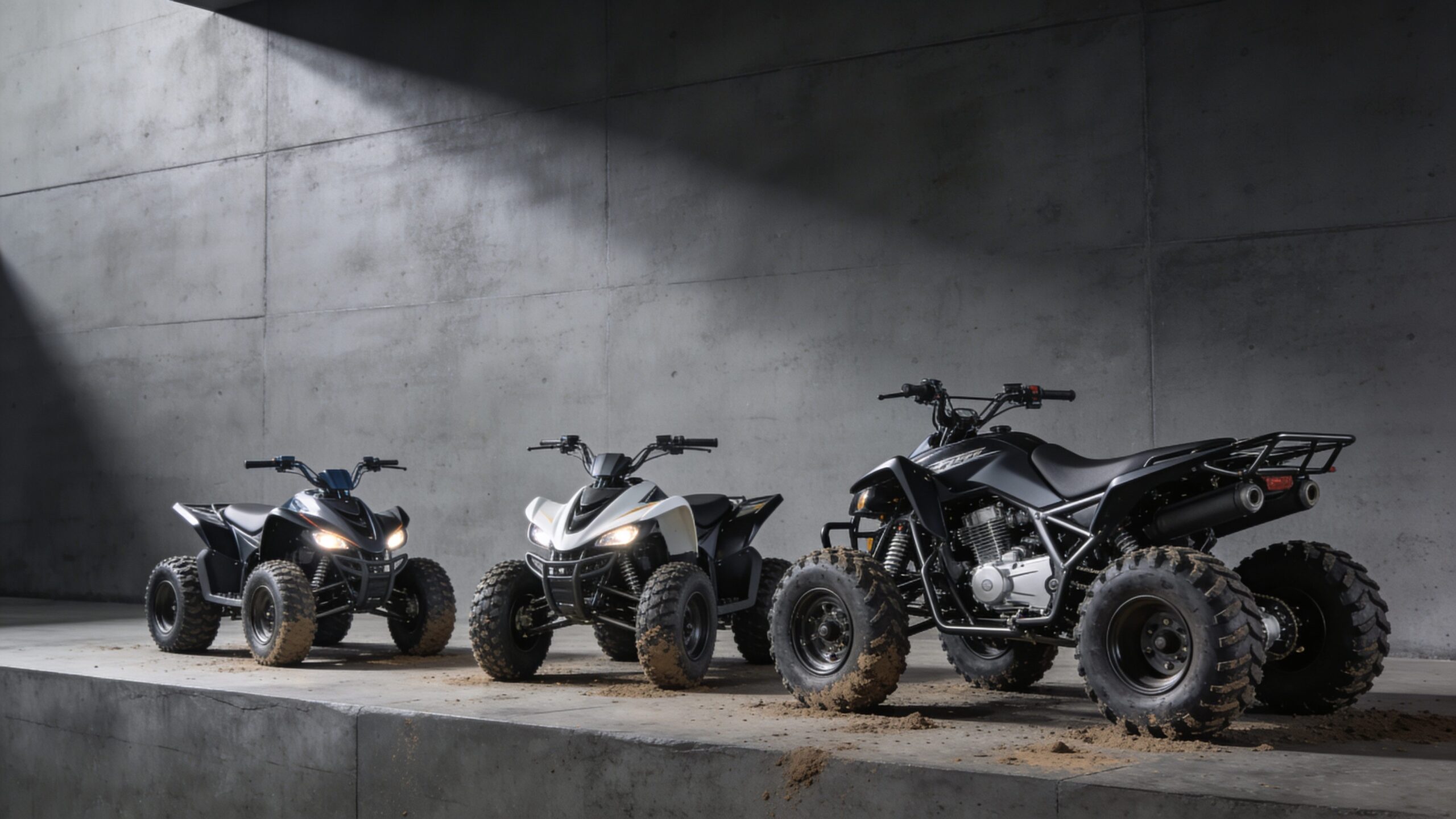
ATV engines come in a wide range of sizes, from small youth models under 100cc to powerful adult machines exceeding 1000cc. Small engines are typically easier to manage, lighter, and more forgiving. Medium engines offer a strong mix of trail performance and practical utility. Large engines deliver serious torque, speed, and work capacity, but they demand more respect from the rider.
A common mistake is assuming that engine size alone determines performance. It does not. Weight, gearing, transmission type, tire size, suspension setup, fuel injection, drivetrain, and rider skill all affect how an ATV feels. A well-designed 450cc ATV can feel sharper and quicker than a heavier 600cc machine in certain conditions. Likewise, a larger utility ATV may feel slower than expected because its power is tuned for pulling and climbing rather than racing.
Still, engine size remains one of the most important starting points. It affects how easily the ATV climbs hills, handles mud, carries gear, tows loads, and accelerates on open ground. Understanding the major size classes helps you narrow your search before comparing individual models.
Small ATV Engines: Best for Beginners, Youth Riders, and Light Trails
Small ATV engines generally range from 50cc to 250cc. These machines are often ideal for younger riders, first-time adults, casual recreation, and light-duty trail use. They are not built to dominate deep mud or haul heavy loads, but they shine where control and simplicity matter most. A small-engine ATV feels less intimidating because the power comes on gradually. That makes it easier to learn throttle control, braking, cornering, and body positioning. For new riders, this matters more than speed. A beginner who starts on a manageable machine is more likely to build confidence and avoid bad habits.
For youth riders, engine size should always be chosen carefully based on age, maturity, physical size, and local safety guidelines. A machine that is too powerful can quickly become dangerous. Smaller ATVs often include speed limiters, automatic transmissions, and lighter frames, which help new riders develop safely. Small ATVs also make sense for tight trails and simple property use. If you ride slowly through woods, cruise around camp, or want something easy to transport, a smaller engine may be plenty. The downside is that these machines can feel limited on steep hills, deep mud, sand, and open terrain. They also may struggle under heavier adult riders or when carrying cargo.
Medium ATV Engines: The All-Around Sweet Spot
Medium ATV engines usually fall between 300cc and 600cc, and this is where many adult riders find their perfect match. This range offers enough power for real trail riding, light work, moderate hauling, and varied terrain without becoming overwhelming. For many people, a 400cc to 500cc ATV is the most practical all-around choice. A medium engine gives you flexibility. It can climb hills, cross rough ground, carry hunting gear, pull small trailers, and still feel manageable on narrow trails. It has enough punch to be exciting but not so much that every throttle input feels dramatic. This is why mid-size ATVs are so popular among recreational riders, property owners, hunters, and weekend explorers.
Medium ATVs also tend to offer better comfort and features than smaller machines. Many include four-wheel drive, independent suspension, electronic fuel injection, cargo racks, and selectable drive modes. These features can matter just as much as engine size because they improve traction, stability, and usability.
If you are an adult beginner who wants a machine you will not outgrow too quickly, this class deserves serious attention. A 300cc machine may be excellent for lighter trail use, while a 450cc or 500cc ATV can handle more demanding terrain and utility tasks. For most riders who want one ATV to do a little of everything, the mid-size category is often the smartest answer.
Large ATV Engines: Built for Power, Work, and Experienced Riders
Large ATV engines typically start around 650cc and can climb past 1000cc. These machines are designed for riders who need serious strength or want high-performance thrills. They are powerful, capable, and exciting, but they are not always the best choice for everyone. Large-engine ATVs excel at heavy-duty work. If you need to tow trailers, haul firewood, carry hunting equipment, manage large acreage, push snow, or ride through difficult mud, the extra torque is valuable. A large engine can keep moving where smaller machines bog down. It also handles bigger tires and heavier accessories more easily.
Performance riders may also prefer larger engines because of their acceleration and top-end power. Open trails, dunes, desert riding, and fast utility riding can all benefit from extra displacement. However, big power changes the way an ATV behaves. A large machine is heavier, faster, and less forgiving. It may require more strength to handle and more judgment to ride safely. For beginners, a large ATV can be too much too soon. The weight alone can be intimidating, and the power can get inexperienced riders into trouble quickly. Even if the machine has smooth power delivery, it still requires respect. Large engines are best for experienced riders, heavy-duty users, and people who truly need the added capability.
Best Engine Size for Beginner ATV Riders
For most beginner adults, the best ATV engine size is usually between 250cc and 500cc, depending on the rider’s size, confidence, and terrain. Lighter adults or cautious beginners may prefer the lower end of that range. Larger adults or riders who plan to grow into the machine may find a 400cc to 500cc ATV more satisfying.
The key is predictability. A beginner ATV should feel stable, controllable, and easy to manage at low speeds. It should not lurch forward aggressively every time the throttle is touched. It should give the rider room to learn without feeling underpowered after a few months.
Automatic transmission is also helpful for beginners because it removes the complexity of clutch control. Four-wheel drive can be useful, but it is not a substitute for skill. A beginner should prioritize control, braking, seating comfort, and confidence before chasing horsepower.
Best Engine Size for Trail Riding
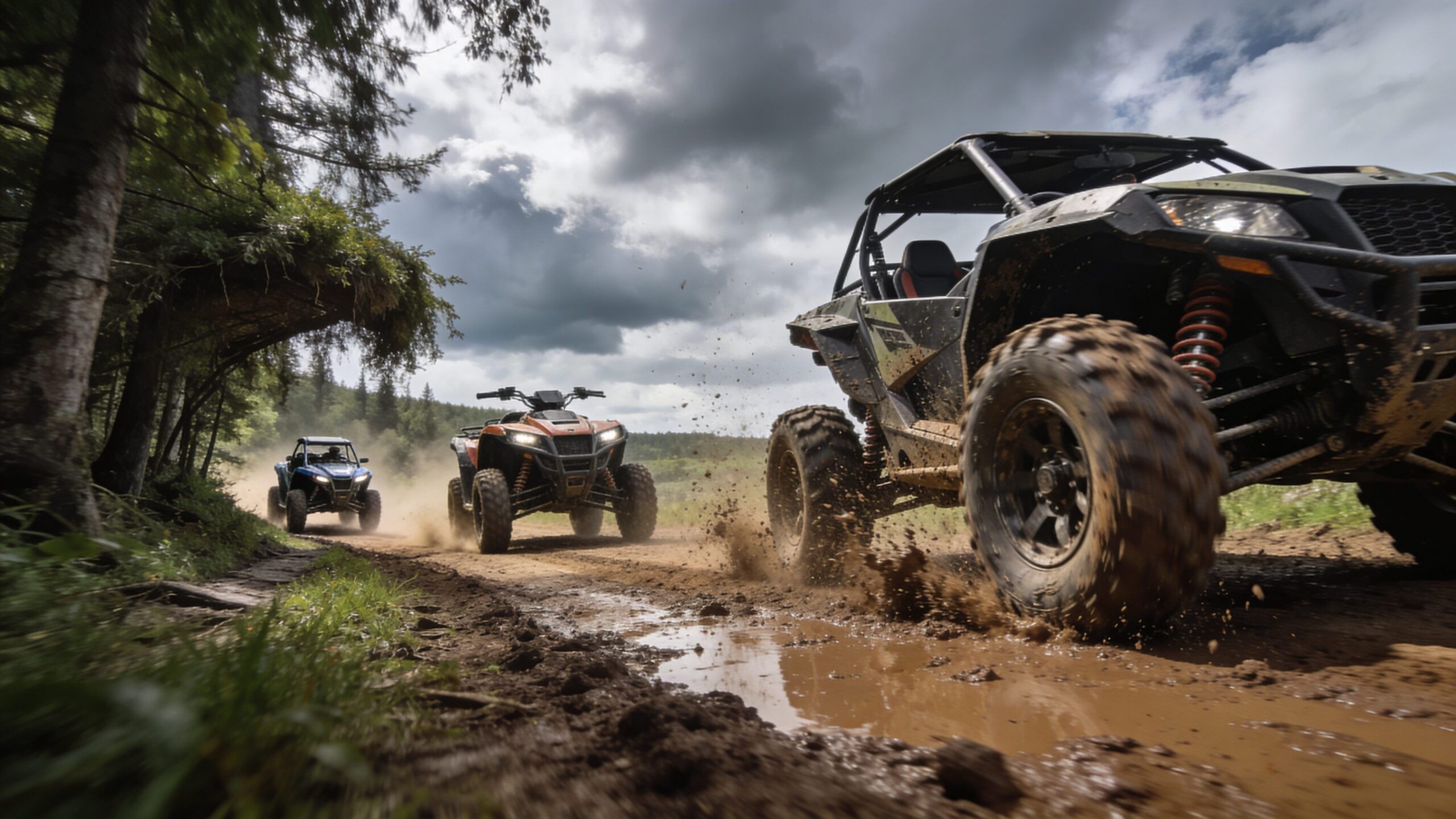
Trail riding is one of the most common ATV uses, and the ideal engine size depends on the type of trail. For tight wooded trails, a smaller or mid-size ATV is often better than a massive machine. Agility matters when you are weaving between trees, crossing roots, and navigating sharp turns.
For general trail riding, the 350cc to 600cc range is hard to beat. It provides enough power for hills and rough sections while remaining manageable in technical terrain. Riders who enjoy relaxed trail exploration may be happy with 300cc to 400cc. Riders who want more speed, stronger climbing power, or occasional mud capability may prefer 500cc to 600cc. Large engines can be fun on wider trails, but they are not always necessary. In tight terrain, extra weight can become a disadvantage. The best trail ATV is not simply the strongest one. It is the one that feels balanced, responsive, and comfortable for the terrain you ride most.
Best Engine Size for Work, Farming, and Property Use
For work-focused ATV use, engine size should be chosen around torque, towing capacity, and durability. If you need an ATV for light chores, property checks, fence lines, or carrying small tools, a 400cc to 500cc machine may be enough. It will offer good fuel economy, manageable handling, and useful utility capability.
For heavier work, a 500cc to 800cc ATV is often a better fit. This range can tow more, carry more, and handle demanding tasks without feeling strained. It is ideal for ranch work, hunting land, small farms, snow plowing, and hauling supplies.
If you regularly pull heavy trailers, climb steep grades with cargo, or use large accessories, a 700cc or larger ATV may be worth considering. Just remember that power is only part of the equation. Look closely at towing ratings, rack capacity, cooling system strength, transmission durability, and four-wheel-drive capability.
Best Engine Size for Mud, Sand, and Rough Terrain
Mud and sand demand more power than simple dirt trails. These surfaces create resistance, which means the engine has to work harder to keep the wheels moving. For occasional mud or sandy trail sections, a 500cc ATV can perform well. For deep mud, large tires, and aggressive riding, 650cc and above becomes more useful.
Large engines provide the torque needed to spin bigger tires and maintain momentum. They also handle tough conditions better when paired with proper gearing, strong suspension, and four-wheel drive. However, power alone does not guarantee success. Tire choice, ground clearance, weight distribution, and rider technique all matter. A common mistake is buying a huge ATV for mud riding without considering weight. A heavy machine can sink faster and become harder to recover. The best mud ATV combines power with flotation, clearance, traction, and smart throttle control.
Best Engine Size for Hunting and Outdoor Adventure
Hunters and outdoor riders often need a practical blend of quiet control, cargo capacity, and terrain capability. For many hunting situations, a 450cc to 700cc ATV is ideal. This range can carry gear, climb rugged trails, and tow small trailers without becoming unnecessarily bulky.
A hunting ATV does not need to be the fastest machine on the market. It needs to be dependable, stable, and capable at low speeds. Smooth power delivery is valuable because riders often move through uneven terrain, forest paths, and remote areas where control matters more than speed.
If you haul heavy game, carry a passenger where legally designed for it, or travel through steep mountain terrain, leaning toward the higher end of the range makes sense. If your hunting property has narrow trails and lighter loads, a mid-size engine may be more practical.
Best Engine Size for Speed and Performance Riding
If your main goal is excitement, acceleration, and sport riding, engine size becomes only one part of the performance equation. Sport ATVs are often tuned differently from utility ATVs. A 450cc sport ATV can feel extremely quick because it is lightweight and designed for aggressive handling. For open terrain, dunes, and high-speed riding, larger engines can deliver thrilling performance. A 700cc or larger machine offers strong acceleration and impressive speed, especially in wide-open spaces. But high-performance riding requires skill. Braking, cornering, body position, and throttle control become more important as power increases.
Riders who want speed should avoid choosing purely by cc. A lighter, better-suspended ATV with sharp handling may be more enjoyable than a heavier machine with a larger engine. Performance is about the whole package, not just displacement.
How Rider Size and Experience Change the Answer
Your body size and experience level matter when choosing ATV engine size. A smaller rider may feel more comfortable on a lighter machine, even if they are experienced. A larger rider may need more engine and suspension support to feel stable and confident. Comfort, reach, seat height, and steering effort all affect the riding experience.
Experience also changes what feels manageable. A 500cc ATV may feel powerful to a beginner but mild to an advanced rider. A 700cc machine may feel exciting to a confident adult but intimidating to someone still learning. The right ATV should challenge you slightly without overwhelming you.
The best test is how the machine feels at low speed, on turns, and during controlled acceleration. If it feels too heavy, too jumpy, or too difficult to stop, it may be more engine than you need.
The Hidden Costs of Too Much Engine
Buying more engine than necessary can increase costs in several ways. Larger ATVs usually cost more upfront. They often use more fuel, wear tires faster, and may require more expensive maintenance. Replacement parts can also be more costly, especially on high-performance or premium utility models.
Too much engine can also reduce enjoyment. If the ATV feels heavy or intimidating, you may ride less often or avoid challenging trails. Power should make the ride better, not stressful. A machine that fits your comfort level will usually bring more long-term satisfaction than one that only looks impressive on paper.
The Risk of Buying Too Little Engine
Buying too little engine can also be frustrating. If your ATV struggles on hills, bogs down in mud, or cannot carry the gear you need, you may quickly regret the purchase. Underpowered machines can work too hard, especially with heavier riders or added accessories. This is why honest planning matters. Think about your real riding conditions, not just your easiest rides. If you occasionally need to tow, climb steep terrain, or carry equipment, choose enough engine to handle those situations comfortably. The goal is not maximum power. The goal is enough power with room to spare.
So, What Engine Size Do You Really Need?
If you are a youth rider or complete beginner, a small ATV under 250cc may be the right starting point. If you are an adult beginner or casual trail rider, 250cc to 400cc can be a smart range. If you want one ATV for trails, hunting, and light utility work, 400cc to 600cc is often the sweet spot.
If you need serious work capability, ride steep terrain, carry heavy cargo, or want stronger mud performance, 600cc to 800cc makes sense. If you are an experienced rider seeking maximum power, heavy towing, deep mud capability, or premium performance, 800cc and above may be the right fit.
The best answer is personal. You do not need the largest ATV to have the best ride. You need the engine size that matches your terrain, your confidence, your workload, and your riding goals.
Final Thoughts: Choose Power You Can Actually Use
The right ATV engine size should make every ride feel more capable, not more complicated. Small engines offer confidence and control. Medium engines deliver versatility and balance. Large engines bring strength and excitement when the rider and terrain call for it.
Before you buy, think carefully about where you ride most, what tasks you expect your ATV to handle, and how comfortable you are with power. A well-matched ATV feels natural. It responds when you need it, stays manageable when the trail gets tight, and gives you confidence instead of second thoughts. That is the engine size you really need.