2-Stroke And 4-Stroke ATVs Make Power In Different Ways
The difference between a 2-stroke and a 4-stroke ATV engine is more than sound. A 2-stroke completes its power cycle in two piston strokes and is known for light weight and sharp response. A 4-stroke completes the cycle in four strokes and is known for broader torque, fuel efficiency, durability, and easier trail manners. Most modern adult ATVs are 4-strokes, but understanding both designs helps buyers read older machines and sport models more clearly.
A: Follow the manual and inspect sooner after harsh riding.
A: A new feel, sound, smell, leak, heat issue, or warning light.
A: Yes. Mud adds grit, moisture, heat, and hidden wear.
A: No. Restore the baseline first, then decide if upgrades are useful.
A: Yes, especially after water, rocks, towing, heat, or heavy loads.
A: Dates, hours, parts, fluids, settings, and symptoms are all useful.
A: Use caution on safety, sealing, steering, suspension, brake, and drivetrain parts.
A: Working does not mean healthy; inspect when symptoms change.
A: Get help for uncertain brakes, steering, wiring, fuel leaks, or structural issues.
A: Inspect early, fix small problems, and test before riding remote terrain.
The Basic Mechanical Difference
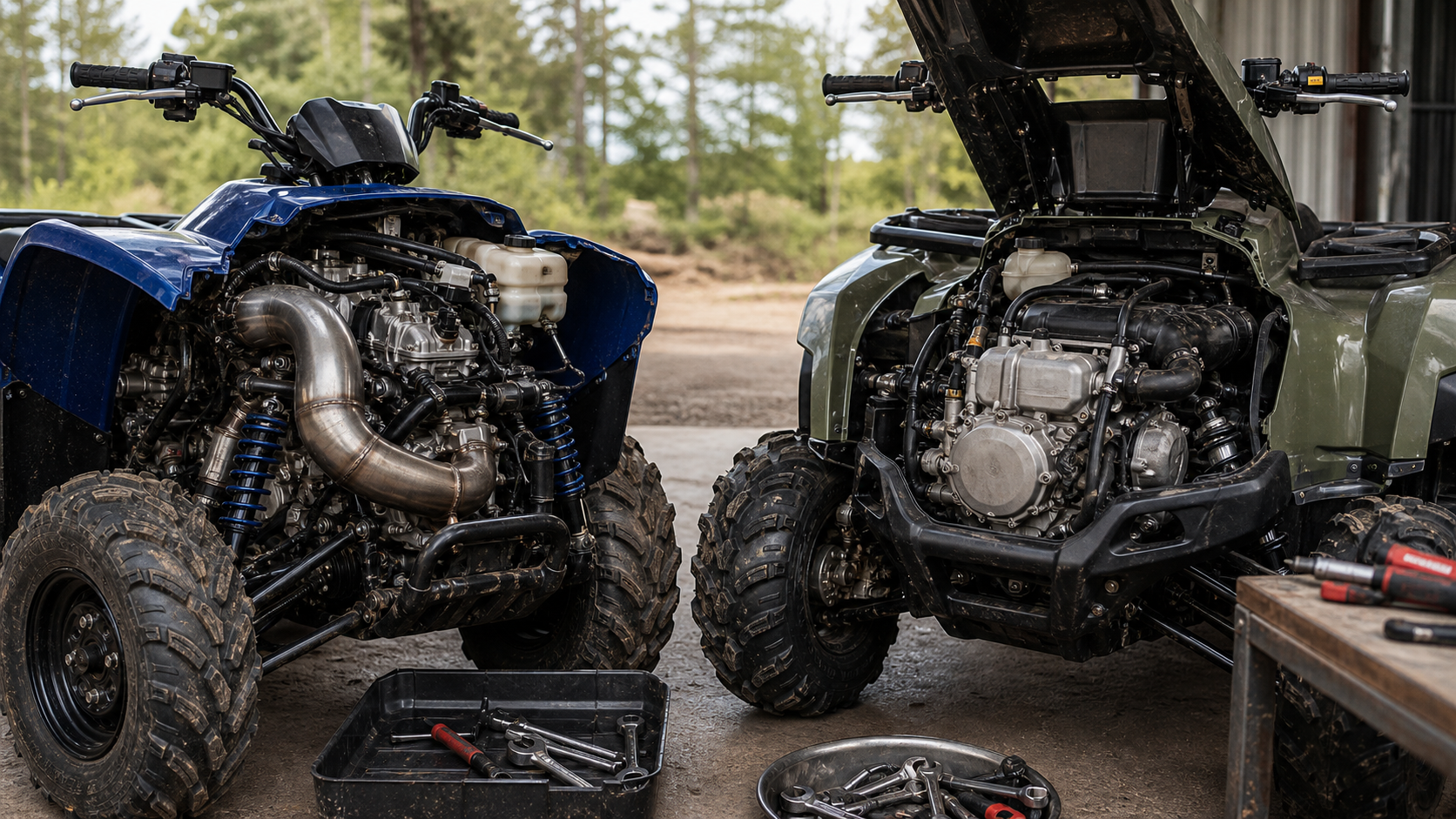
A 2-stroke engine completes intake, compression, combustion, and exhaust in two piston strokes. A 4-stroke engine completes those events across four strokes. That design difference changes weight, power delivery, sound, emissions behavior, maintenance, and the way the ATV feels under throttle.
ATV buyers usually encounter 4-strokes today, especially in utility and recreational machines. Older sport quads and some youth or specialty machines may use 2-stroke designs. Both can be enjoyable, but they suit different owners.
How 2-Stroke ATVs Feel
A 2-stroke ATV often feels light and eager. The engine can rev quickly and deliver a strong hit when it comes into the powerband. That character is exciting for skilled riders and one reason older performance two-strokes still have fans.
The same sharpness can be tiring or intimidating for beginners. Low-speed crawling, slow chores, and technical terrain may be harder if the engine prefers revs and clutch work. A 2-stroke can be brilliant in the right hands and frustrating in the wrong use case.
How 4-Stroke ATVs Feel
A 4-stroke ATV usually delivers broader torque and smoother control. That makes it easier for trails, hills, work, towing within rating, and slow technical riding. Four-strokes also commonly offer engine braking, which can help on descents when used properly.
Modern 4-strokes dominate because they fit how most people use ATVs. They can be sporty, but they are also practical. Fuel injection, electric start, automatic transmissions, and 4WD systems pair naturally with 4-stroke utility designs.
Maintenance Differences
Two-strokes are mechanically simpler in some ways, but they often require more frequent top-end attention and careful oiling. Carbureted two-strokes may also need jetting changes for conditions or modifications. A neglected air filter can damage a two-stroke quickly.
Four-strokes have more moving parts. Oil changes, air filters, valve checks, coolant, timing components, and fuel systems matter. They may go longer between major engine work when maintained, but repairs can be more complex and expensive.
Which Is Better For Trail Riding?
For most trail riders, a 4-stroke is better. Smooth torque, predictable throttle, engine braking, and modern drivetrain options make mixed terrain easier. A 4-stroke utility or recreational ATV is usually calmer in mud, rocks, woods, and hills.
A 2-stroke can still be fun on open trails, dunes, and sport riding areas. It simply asks for a rider who enjoys managing the engine and understands its maintenance needs.
Used ATV Advice
Used two-strokes deserve a careful engine inspection. Compression, starting behavior, crank seals, piston condition, exhaust spooge, intake leaks, and jetting history can all matter. Parts availability should be checked before buying an older model.
Used four-strokes need inspection too. Look for hard starting, smoke, ticking noises, dirty oil, coolant problems, poor valve maintenance, clutch wear, and signs of overheating. A well-maintained engine of either type is better than a neglected machine with the “better” design.
Fuel, Oil, And Starting Behavior
Two-stroke and four-stroke engines also differ in how owners think about fuel and oil. Many two-strokes require oil mixed with fuel or an oil-injection system, depending on the machine. Four-strokes keep engine oil in the crankcase and use a more familiar service routine with oil and filter changes. Either design can fail quickly if the owner ignores the correct oil, air filter, or fuel requirements.
Starting behavior can reveal a lot. A healthy engine should start consistently when the procedure is followed. Hard starting, excessive smoke, weak compression, poor idle, or hesitation under throttle can point to maintenance issues. With older ATVs, carburetor condition, stale fuel, air leaks, and neglected filters are common problems.
Why Emissions And Noise Changed The Market
Modern ATV design moved heavily toward four-stroke engines partly because of emissions, noise, reliability, and broad usability. Four-strokes can be quieter, cleaner, and easier to tune for trail and utility use. They also pair well with fuel injection, automatic transmissions, and the heavier chassis found on many 4WD utility machines.
Two-strokes still have appeal because they are simple, light, and exciting. Enthusiasts may value their sound, snap, and mechanical feel. But for everyday ownership, most riders prefer the smoother torque and lower drama of a modern four-stroke.
Choosing For Parts And Support
Parts availability should shape any engine-type decision. A rare older two-stroke may be fun, but it can become frustrating if pistons, gaskets, ignition parts, carburetor pieces, or exhaust components are hard to find. A common four-stroke utility model may be easier to keep running because dealers, manuals, and aftermarket parts are more available.
Before buying, look up the exact model year and engine family. Check whether owner’s manuals, service parts, and common repair guidance are easy to find. Engine character matters, but support matters when the ATV is sitting in the garage waiting on parts.
Powerband And Riding Style
The biggest riding difference between many 2-stroke and 4-stroke ATVs is the powerband. A 2-stroke often makes its strongest power in a narrower range, so the rider may need to keep the engine spinning and use the clutch actively. When the engine reaches the right range, it can feel sudden and exciting. That is part of the appeal.
A 4-stroke usually spreads torque across a broader range. That makes it easier to crawl, climb, tow lightly within rating, and ride technical trails. The rider can use lower engine speed and smoother throttle. For utility and recreational ATVs, that broad torque is often more useful than a dramatic burst of power.
Sound, Smoke, And Trail Acceptance
Two-strokes often have a sharper exhaust note and, depending on design and condition, more visible exhaust smoke. Some riders love the sound and smell because it reminds them of older performance machines. Other riders and landowners may find it intrusive. Noise and smoke can affect where a machine is welcome, especially on shared trails or private land.
Four-strokes are not automatically quiet, especially with aftermarket exhaust, but they are generally easier to keep civil in trail and utility use. A stock exhaust is often the best choice for riders who care about land access, neighbors, livestock, hunting areas, or long days in the saddle.
Which Engine Type Fits Modern Ownership?
For most modern ATV owners, 4-stroke is the practical answer. It works well with fuel injection, electric start, CVT transmissions, 4WD systems, and utility chassis designs. It supports the way many people actually ride: mixed trails, property use, hunting access, farm tasks, and family recreation.
A 2-stroke is more of an enthusiast choice. It can be lighter, sharper, and simpler in certain mechanical areas, but it asks for an owner who understands its fueling, oiling, tuning, and parts situation. That can be rewarding, but it is not the easiest path for every rider.
Inspection Checklist For Older Two-Strokes
Older 2-stroke ATVs deserve extra attention before purchase. Check compression, cold-start behavior, crank seals, piston history, carburetor condition, intake boots, reeds if equipped, exhaust condition, and whether the airbox is complete. A missing lid, dirty filter, or poorly fitted aftermarket part can reveal a hard life.
Ask what oil was used, how fuel was mixed if applicable, when the top end was last serviced, and whether the machine was stored with old fuel. A cheap older two-stroke can be wonderful when healthy and frustrating when neglected.
Common Misconceptions
One common misconception is that 2-strokes are always unreliable. A maintained 2-stroke can be dependable in the right use, but it is less forgiving of poor air filtration, bad fuel, wrong oil, and neglected top-end service. Another misconception is that 4-strokes are maintenance-free. They are not. Oil, valves, filters, coolant, and timing components still matter.
Another mistake is comparing engines only by displacement. A 250cc two-stroke, 450cc sport four-stroke, and 500cc utility four-stroke can feel completely different. Weight, gearing, compression, tuning, clutching, and chassis design change the ride. Engine cycle is one clue, not the full answer.
Best Fit By Rider Type
A casual trail rider, landowner, hunter, or utility user will usually be happiest with a modern four-stroke. It offers smoother torque, easier support, and better compatibility with common ATV features. A performance enthusiast who enjoys older machines, mechanical involvement, and sharper response may still prefer a two-stroke.
The best choice is honest about temperament. Some riders enjoy tuning, rebuilding, and managing a lively engine. Others want to turn the key, ride all weekend, and follow a predictable maintenance schedule. Both are valid, but they lead to different ATV choices.
Final Buying Filter
Before choosing between a 2-stroke and 4-stroke ATV, decide whether the engine character fits the owner as much as the trail. A two-stroke can be exciting, mechanical, and rewarding, but it often asks for more attention to tuning and engine condition. A four-stroke is usually easier for mixed ownership, especially when utility use, trail comfort, and parts support matter.
The smartest used purchase is the healthiest machine with the best support. A neglected four-stroke can be expensive. A well-kept two-stroke can be a treasure. Compression, starting behavior, service history, air-filter condition, and parts availability should decide more than nostalgia or assumptions.
FAQ
Are 2-stroke ATVs faster than 4-strokes?
Some 2-strokes feel quicker because they are light and sharp, but speed depends on model, tuning, rider skill, gearing, and terrain.
Are most modern ATVs 4-stroke?
Yes. Most modern adult utility, recreational, and sport ATVs use 4-stroke engines.
Is a 2-stroke ATV good for beginners?
Usually not as a first choice. The sharper power delivery and maintenance routine can be demanding.