Farm ATVs Earn Their Keep By Turning Small Jobs Into Short Trips
A farm ATV is valuable because it moves a rider, tools, feed, fencing supplies, sprayers, and light loads across ground where a truck may be too large or too slow. The best farm ATVs are not chosen for speed. They are chosen for traction, racks, towing ability, low-speed control, durability, service access, and safety on uneven land.
A: Follow the manual and inspect sooner after harsh riding.
A: A new feel, sound, smell, leak, heat issue, or warning light.
A: Yes. Mud adds grit, moisture, heat, and hidden wear.
A: No. Restore the baseline first, then decide if upgrades are useful.
A: Yes, especially after water, rocks, towing, heat, or heavy loads.
A: Dates, hours, parts, fluids, settings, and symptoms are all useful.
A: Use caution on safety, sealing, steering, suspension, brake, and drivetrain parts.
A: Working does not mean healthy; inspect when symptoms change.
A: Get help for uncertain brakes, steering, wiring, fuel leaks, or structural issues.
A: Inspect early, fix small problems, and test before riding remote terrain.
Why Farms Use ATVs
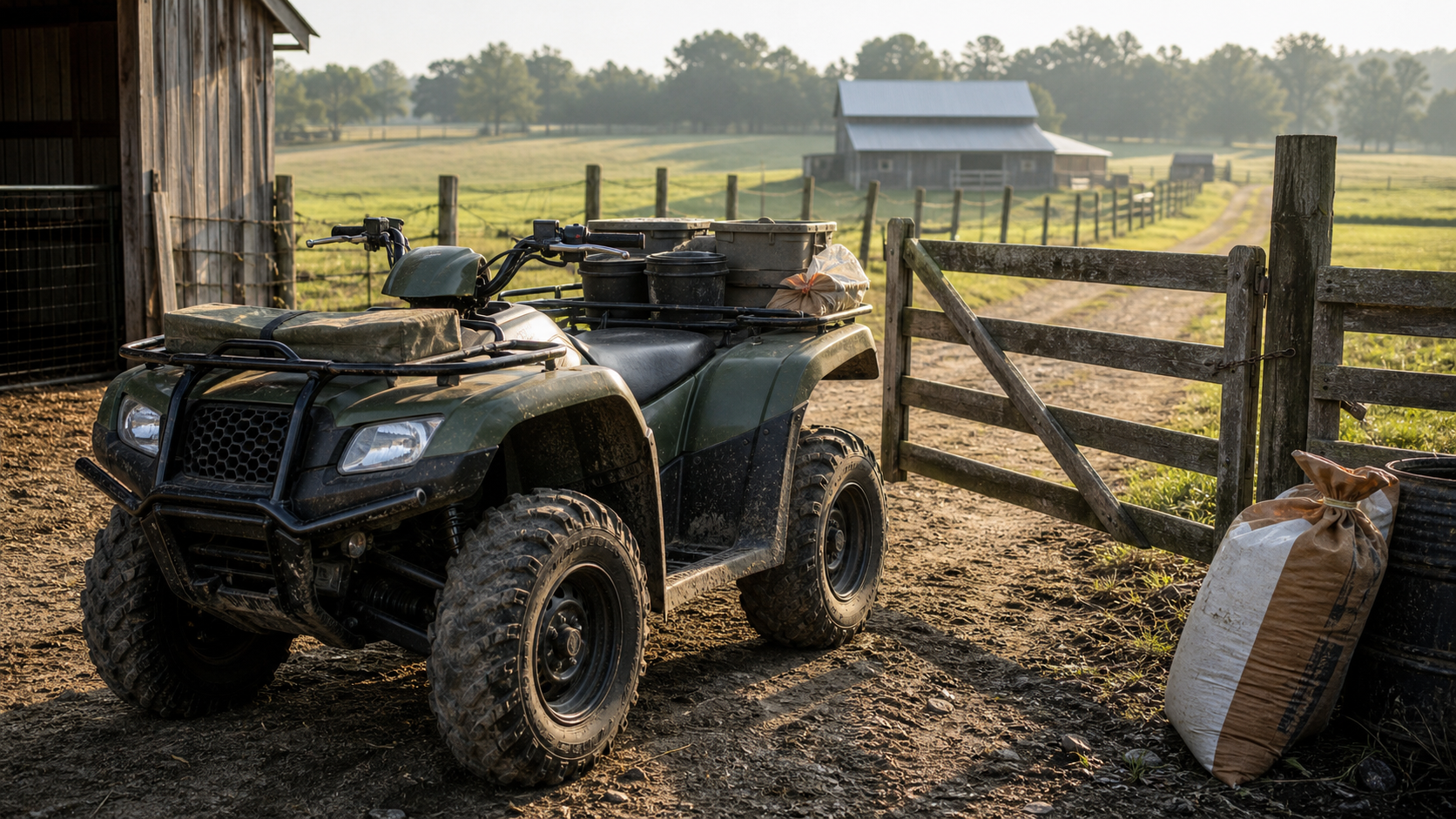
ATVs fit the gap between walking, using a tractor, and driving a pickup. They can cross fields, lanes, woods, and rough ground quickly while carrying enough gear for small jobs. For checking fence, moving between livestock areas, inspecting water, carrying tools, or scouting damage after a storm, a utility ATV can save real time.
The best farm ATV is not the fastest machine on the lot. It is the one that starts in bad weather, crawls smoothly at low speed, carries what it is rated to carry, and can be serviced without drama. Reliability matters because a farm ATV is often used in the middle of a workday, not just on weekends.
Utility Features That Matter
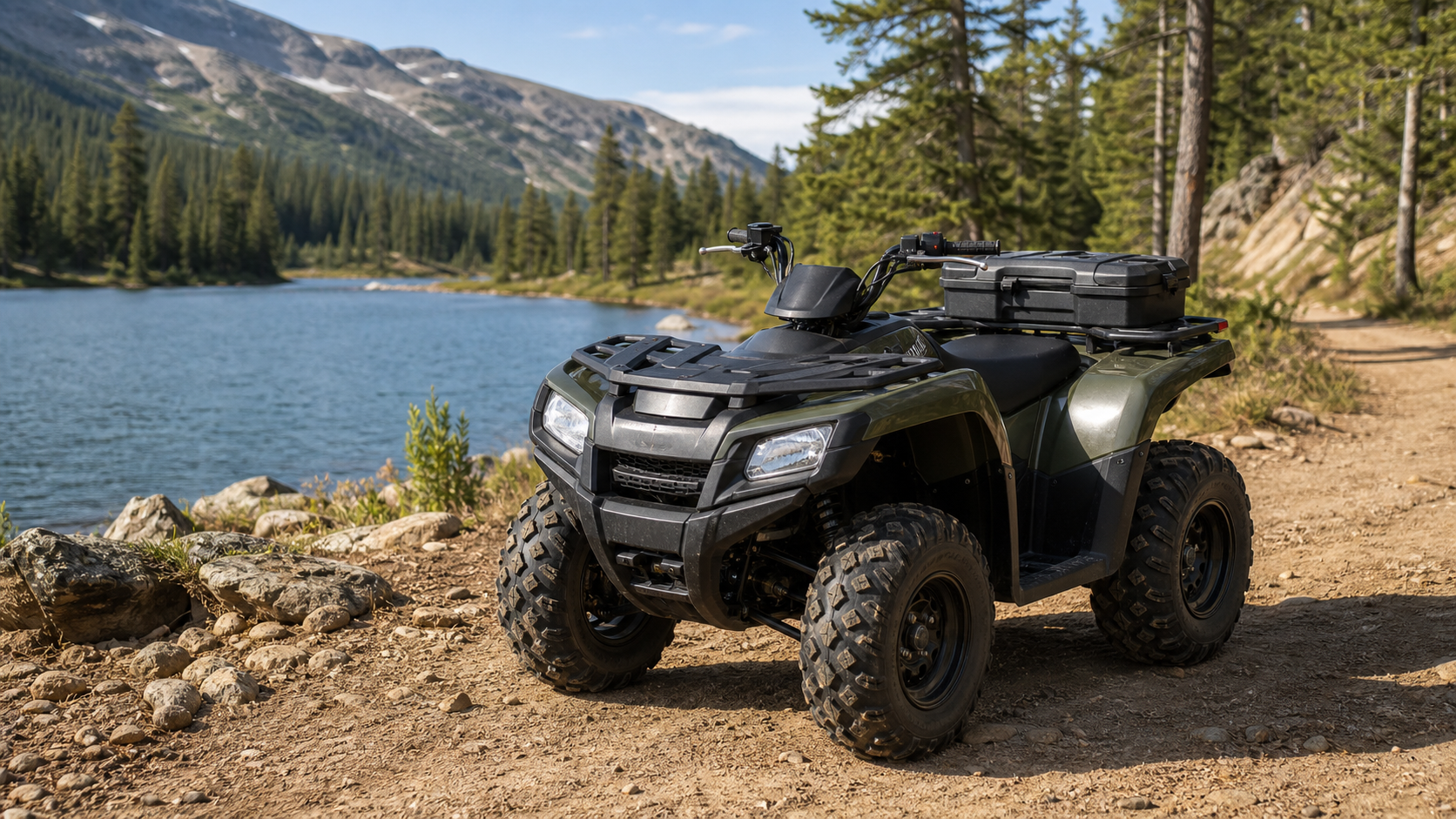
Farm ATVs usually need racks, hitch points, 4WD, low range, durable tires, skid protection, and good lighting. A winch can be useful for recovery, pulling small obstacles, or helping with chores, but it should be mounted and used correctly. Power steering is also valuable because slow loaded work can involve constant turning.
Storage should be practical rather than excessive. A front box, rear box, or tool rack can keep supplies organized, but too much weight high on the machine can hurt stability. Every accessory should earn its place.
Traction And Low-Speed Control
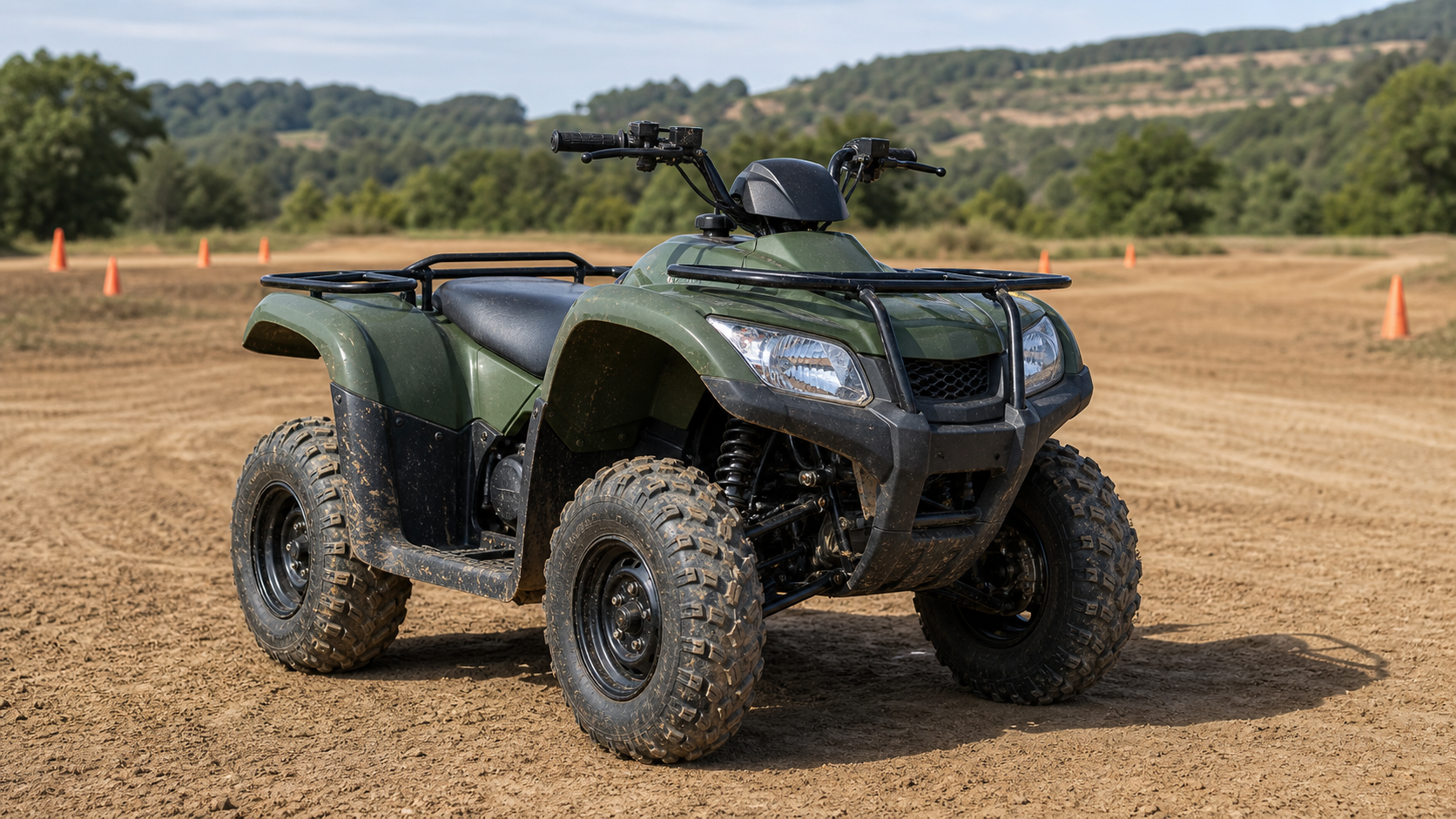
Farm ground changes with weather. Wet grass, clay, snow, manure, loose gravel, ruts, and slopes can all reduce traction. Selectable 4WD helps an ATV move smoothly without spinning the rear tires. Low range matters when towing, climbing slowly, or carrying heavier loads because it reduces strain on the belt or drivetrain.
Smooth throttle is more important than peak horsepower. A jumpy throttle can make gate work, trailer positioning, livestock areas, and tight turns harder. A farm ATV should feel predictable when the rider is moving slowly with something on the racks.
Loads, Towing, And Sprayers
Manufacturers publish rack and towing limits for each model. Those limits matter. A heavy rear load can lighten the front end and reduce steering control. A loaded trailer can push the ATV downhill or lengthen stopping distance. A liquid sprayer can slosh and shift weight in a way that feels different from a solid load.
Good farm use means staying within ratings and slowing down. The ATV may pull a small trailer or carry a sprayer, but it is not a tractor. When a job requires heavy drawbar pull, large implements, or stable passenger seating, another machine may be safer.
Safety On Farm Terrain
Farm routes can feel familiar, which is exactly why they deserve attention. Ditches, side slopes, washouts, hidden rocks, downed wire, irrigation pipe, livestock movement, and soft shoulders can surprise a rider. ATVs are active-riding machines, so the operator still needs to shift weight and choose lines carefully.
Protective gear matters even during chores. A short ride to a gate can still involve a rollover, collision, or thrown object. ATVs are also designed for off-highway use, so paved-road travel should be avoided except where crossing is legal and done carefully.
Maintenance For Working ATVs
Farm ATVs often run in dust, mud, chaff, manure, heat, and stop-and-go conditions. That is hard on air filters, brakes, bearings, bushings, tires, belts, cooling systems, and electrical connectors. A quick daily walkaround can catch small problems before they interrupt work.
Check tire pressure, brake feel, throttle return, fluid leaks, lights, steering, racks, hitch points, and obvious damage. Follow the owner’s manual for oil, differential fluid, coolant, belt, air filter, and brake service. Hard farm use may justify more frequent inspections than casual trail use.
ATV Or Side-By-Side?
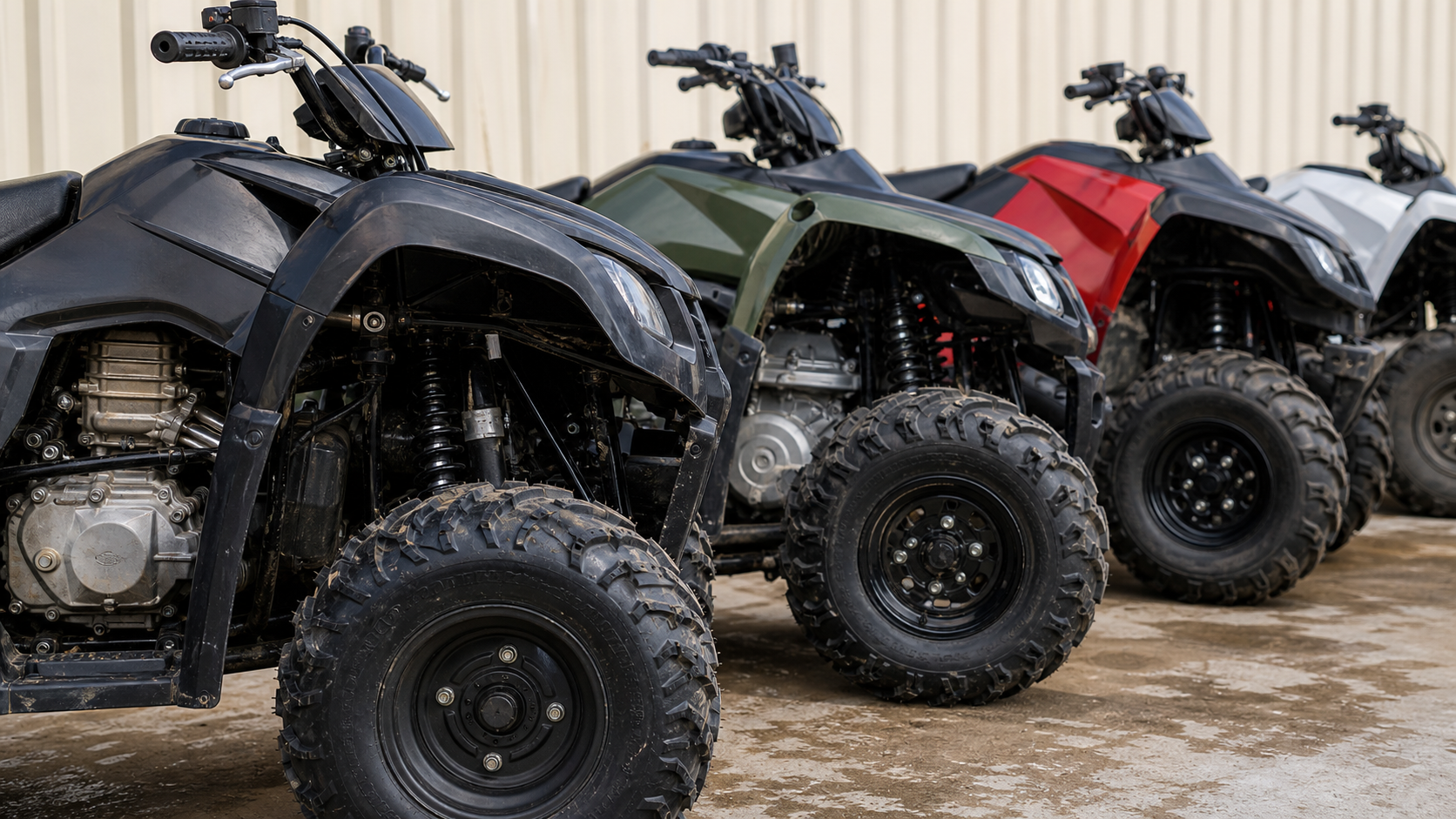
A farm ATV is narrow, nimble, and efficient for one rider with moderate gear. A side-by-side is better when the job regularly involves passengers, larger cargo, seatbelts, a steering wheel, or more stable hauling. Many farms use both because they solve different problems.
If the machine will mostly check fences and carry hand tools, an ATV may be perfect. If it will carry two workers, fencing rolls, feed, dogs, and larger tools every day, a side-by-side may be the more practical investment.
FAQ
What size ATV is best for farm work?
Many farms use mid-size or large utility ATVs, but the right size depends on terrain, load, towing needs, rider comfort, and manufacturer ratings. Bigger is not automatically safer or better.
Can an ATV replace a tractor?
No. An ATV is useful for light hauling, inspection, and mobility, but it does not replace a tractor for heavy pulling, implements, or stable high-load work.
Is 4WD necessary on a farm ATV?
It is strongly useful for wet grass, mud, snow, hills, and loaded starts. Flat dry properties may not need it as often, but selectable 4WD gives a farm ATV more margin.