ATV Size Classes Are About Rider Fit, Control, And Use
ATV size classes are usually described by engine displacement, such as 90cc, 250cc, 450cc, 700cc, or 1000cc. That number matters, but it does not tell the whole story. Rider age, experience, weight, strength, terrain, throttle response, vehicle weight, and intended use all affect whether an ATV is a sensible fit.
A: Follow the manual and inspect sooner after harsh riding.
A: A new feel, sound, smell, leak, heat issue, or warning light.
A: Yes. Mud adds grit, moisture, heat, and hidden wear.
A: No. Restore the baseline first, then decide if upgrades are useful.
A: Yes, especially after water, rocks, towing, heat, or heavy loads.
A: Dates, hours, parts, fluids, settings, and symptoms are all useful.
A: Use caution on safety, sealing, steering, suspension, brake, and drivetrain parts.
A: Working does not mean healthy; inspect when symptoms change.
A: Get help for uncertain brakes, steering, wiring, fuel leaks, or structural issues.
A: Inspect early, fix small problems, and test before riding remote terrain.
Why CC Is Only The Starting Point
ATV engine size is measured in cubic centimeters, or cc. In simple terms, a larger number often means more displacement and more potential power. But two ATVs with similar displacement can feel very different because of gearing, weight, throttle tuning, transmission type, tire size, and intended use.
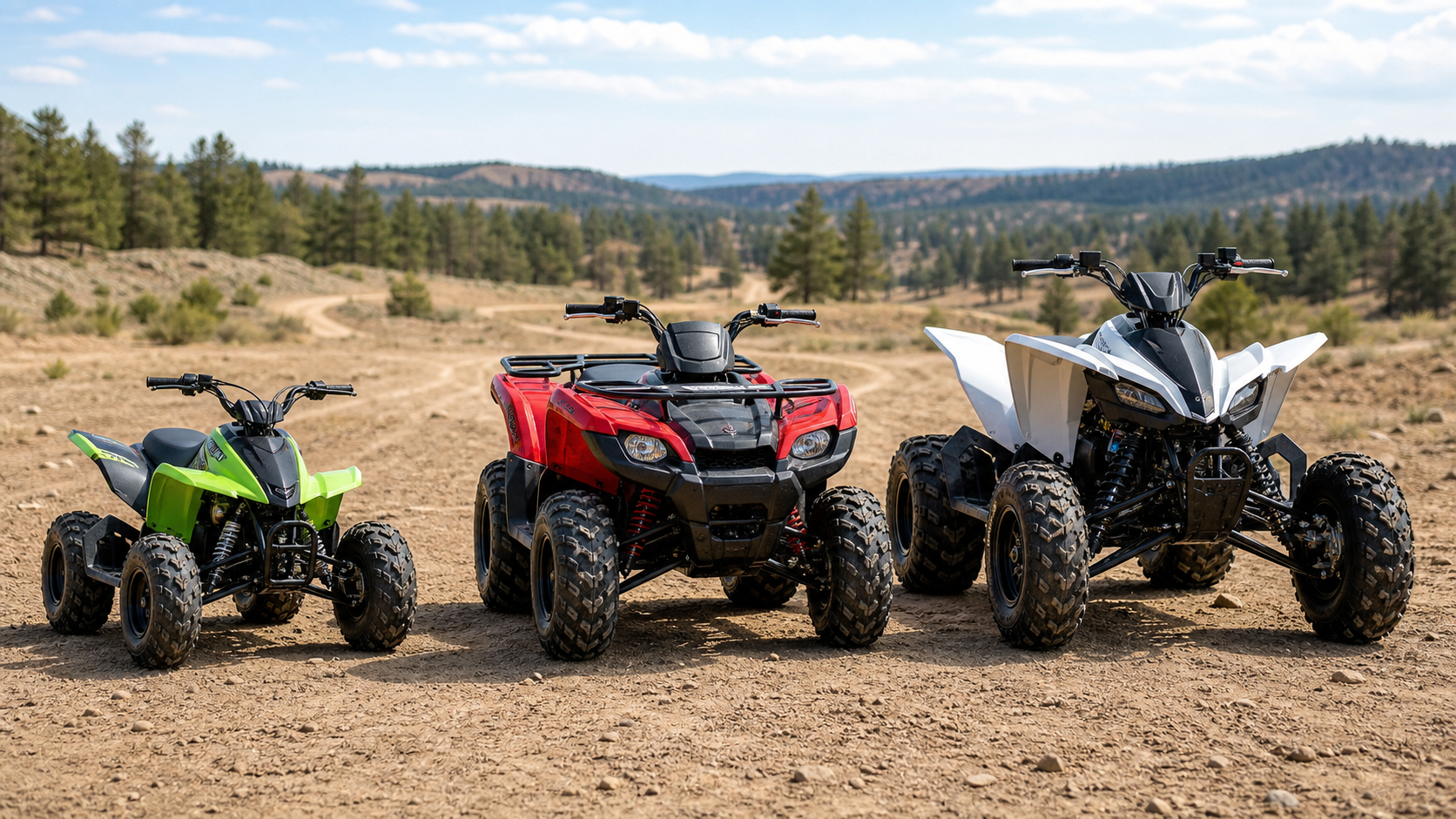
A 450cc sport ATV can feel sharper and more demanding than a larger utility ATV because it is lighter, lower, and tuned for fast response. A 700cc utility ATV may feel calmer because it uses an automatic transmission and softer power delivery. Size class should be judged in context.
Youth ATV Classes
Youth ATV sizing is the most safety-sensitive category. Safety organizations and manufacturers warn that riders under 16 should not operate adult-size ATVs. Youth machines use smaller engines, speed-limiting features, and labels tied to age ranges. Parents should follow the exact model guidance rather than guessing from a child’s confidence.
Training and supervision matter as much as engine size. A young rider needs a properly fitting helmet, eye protection, boots, gloves, long sleeves, long pants, and a controlled riding area. A machine that is too large or too fast can overwhelm a child before they have the strength and judgment to recover.
Small Adult ATVs
Small adult ATVs can be excellent for new riders, smaller properties, light trail use, and owners who value control over power. They are often easier to load, steer, store, and maintain. A smaller ATV can also be less tiring on tight trails where weight matters.
The downside is capacity. Smaller machines may not tow as much, carry as much, or power through deep mud as confidently. That is not a flaw if the machine matches the job. A good small ATV is better than a large machine the rider cannot handle.
Mid-Size ATVs
Mid-size ATVs are often the practical center of the market. They may offer automatic transmission, selectable 4WD, racks, power steering, fuel injection, and enough torque for mixed trail riding. Many recreational riders and hunters are well served by this class.
The reason is balance. Mid-size machines can handle real terrain without the weight and cost of the largest models. They are often easier to recover when stuck and easier to maneuver in tight woods, around trailers, or near camp.
Large-Displacement Utility ATVs
Large ATVs make sense when the work or terrain justifies them. Farm use, snow plowing, heavy accessories, high elevation, big tires, and long rugged rides may benefit from extra torque and stronger chassis components. Comfort features such as power steering and independent suspension are common in this class.
More power also creates responsibility. Large ATVs weigh more, accelerate harder, and can be expensive to repair. They require more respect on hills, turns, and loaded rides. Buying the biggest model is not the same as buying the best model.
Sport ATV Size Classes
Sport ATV sizing should be read differently from utility sizing. A performance quad is designed around quick response, rider movement, suspension control, and acceleration. Even a moderate displacement sport quad can be intense for a new rider if the clutch, throttle, and chassis are aggressive.
Used sport machines need careful inspection. Look for bent frames, worn chains and sprockets, tired clutches, leaking shocks, cracked plastics, and evidence of hard impacts. The way a machine was ridden matters as much as its size class.
How To Choose A Size
Start with the rider. Can they reach the controls? Can they stand comfortably? Can they steer at full lock? Can they manage throttle smoothly? Then consider terrain and job. A trail rider, ranch owner, dune rider, hunter, and youth beginner need different machines.
Finally, check the owner’s manual, warning labels, and local rules. Size class is a useful shorthand, but the real decision is fit, training, control, and use.
FAQ
Is a 450cc ATV good for beginners?
It depends on the ATV type. A 450cc sport quad can be demanding, while a calmer utility model may be manageable for some trained adults.
What ATV size is best for trail riding?
Many trail riders like mid-size ATVs because they balance power, weight, comfort, and control. Terrain and rider experience still matter.
Can children ride adult ATVs?
No. Children should ride age-appropriate youth ATVs with supervision, training, and protective gear.