A Mud ATV Is Built To Keep Moving When The Ground Stops Cooperating
A mud ATV is not just a regular ATV with aggressive tires. Deep mud changes traction, cooling, belt load, steering effort, braking, and recovery risk. A real mud-focused ATV needs tires that clean out, enough clearance, protected intake and vent routing, strong driveline parts, cooling that can survive slow dirty riding, and a rider who knows when to stop before the machine becomes buried.
A: Follow the manual and inspect sooner after harsh riding.
A: A new feel, sound, smell, leak, heat issue, or warning light.
A: Yes. Mud adds grit, moisture, heat, and hidden wear.
A: No. Restore the baseline first, then decide if upgrades are useful.
A: Yes, especially after water, rocks, towing, heat, or heavy loads.
A: Dates, hours, parts, fluids, settings, and symptoms are all useful.
A: Use caution on safety, sealing, steering, suspension, brake, and drivetrain parts.
A: Working does not mean healthy; inspect when symptoms change.
A: Get help for uncertain brakes, steering, wiring, fuel leaks, or structural issues.
A: Inspect early, fix small problems, and test before riding remote terrain.
What Separates A Mud ATV From A Trail ATV
A mud ATV is built around one difficult problem: keeping traction and cooling while the machine is moving slowly through heavy resistance. Ordinary trail setups can handle wet patches, but deep mud creates a different load. Tires spin, belts heat, radiators clog, brakes grind, and the machine’s weight begins working against the rider.
The best mud machines are not only powerful. They are protected. They have tires, clearance, intake routing, driveline strength, cooling capacity, and recovery equipment that work together. One huge upgrade cannot compensate for every weak point.
Tires Are The First Visible Difference
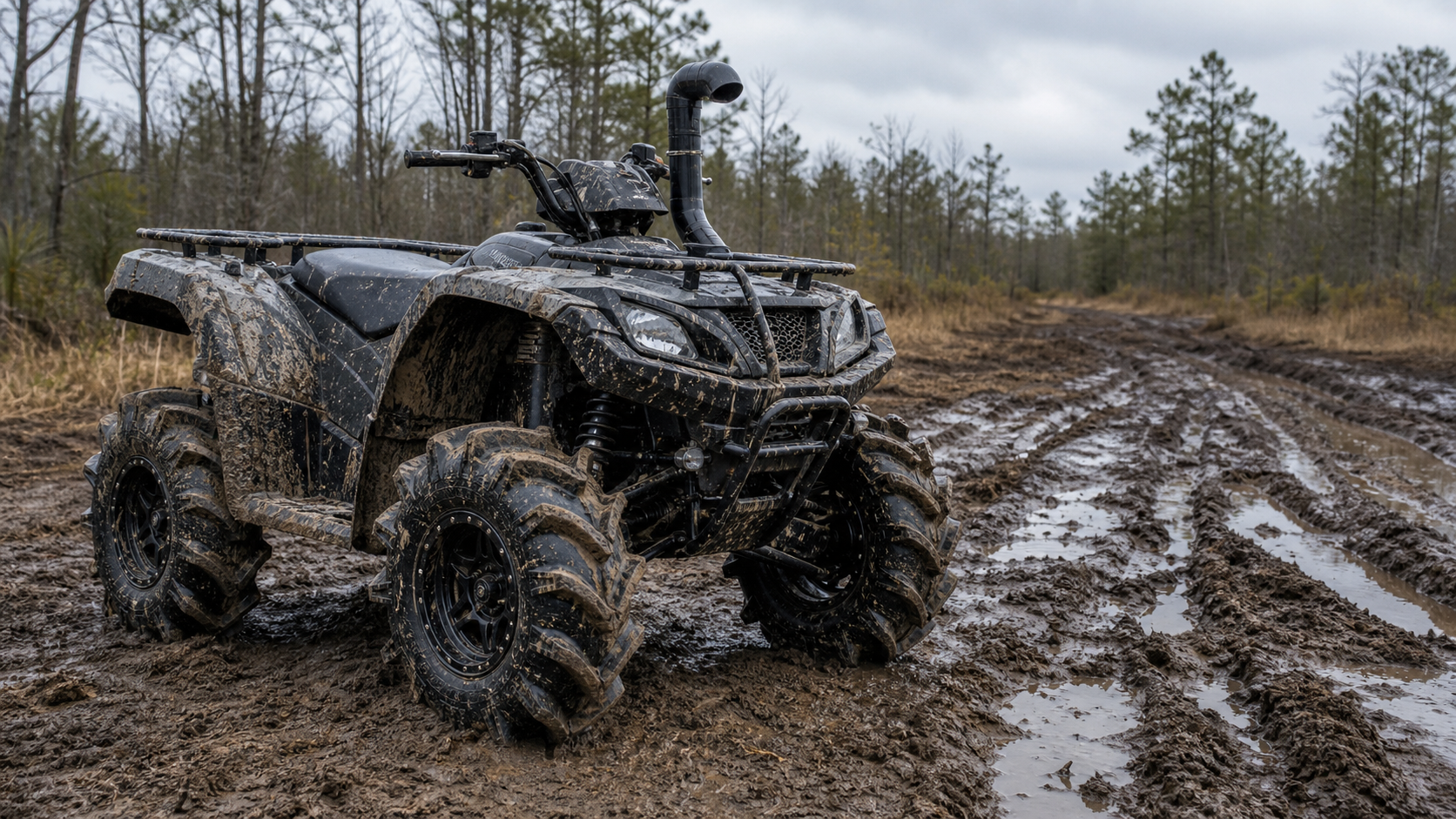
Mud tires use deep, widely spaced lugs that can dig and clean themselves. That open tread pattern helps the tire shed mud instead of turning into a slick. Tire height can increase ground clearance and help the machine climb out of ruts.
The tradeoff is stress. Bigger mud tires are heavier, harder to turn, harder to stop, and harder on belts, axles, bearings, steering parts, and suspension. A mild trail ATV may not be ready for extreme tire size without clutching, gearing, or driveline upgrades. A smart mud setup uses enough tire for the terrain without creating a fragile machine.
Clearance, Skid Protection, And Lift
Ground clearance helps an ATV avoid dragging its frame, footwells, and skid plates through ruts. Skid protection matters because mud holes often hide rocks, roots, stumps, and sharp debris. A machine that looks high enough at the trailhead can still high-center once the tires sink.
Lift kits and larger tires can improve clearance, but they also change handling. Raising the ATV can make it feel less stable on side slopes and turns. Steeper axle angles can shorten CV joint life. For serious mud builds, every clearance change should be judged against reliability, not just appearance.
Snorkels And Water Are Not Magic
Snorkels move air intakes and vent points higher so the engine and CVT system are less likely to ingest water. They are common on mud ATVs, but they do not make the machine a submarine. Poorly sealed connections, low vent lines, cracked boots, or careless riding can still let water reach places it should not.
Water in engine oil, differential fluid, or the CVT housing should be treated seriously. Milky oil, slipping belts, rough running, and electrical problems after a deep crossing are warning signs. The owner’s manual and service manual matter here because each machine routes vents and intakes differently.
Cooling Is A Major Mud Problem
Mud riding loads the engine while reducing airflow. Radiators can pack with mud, fans can struggle, and slow speed means less natural cooling. That is why some dedicated mud ATVs use relocated radiators mounted higher on the machine.
Even without a radiator relocation, riders should check cooling carefully. Clean the radiator gently, inspect fan operation, watch temperature warnings, and avoid idling a hot machine while buried. Overheating can damage an engine faster than many riders expect.
Drivetrain And Belt Stress
Deep mud asks the drivetrain to move heavy tires through thick resistance. CVT belts can overheat if the rider uses high range when low range is needed, pins the throttle while stuck, or repeatedly loads the belt at low speed. Axles, CV joints, differentials, and wheel bearings also see more abuse.
Good mud riding is smoother than it looks. Enter with a plan, keep steady throttle, avoid violent steering inputs, and stop before the ATV is buried to the frame. Spinning harder is not always progress. Sometimes it only creates a deeper hole and a hotter belt.
Recovery Gear Is Part Of The Build
A winch is one of the most useful mud ATV tools. A tree saver, gloves, proper anchor points, and safe winching habits are just as important. Riders should learn recovery before they need it in waist-deep mud, fading light, or cold weather.
Riding with another machine is safer than riding alone in deep mud. A stuck ATV can be heavy, unstable, and difficult to access. Recovery should protect people first, then machines, then the trail.
After-Ride Maintenance
Mud riding requires more inspection than ordinary trail riding. Check brakes, wheel bearings, suspension bushings, CV boots, axle seals, differential fluid, air filter, radiator, and belt housing. Abrasive mud can wear brake pads quickly and hide torn boots until the damage spreads.
Washing matters, but pressure washing carelessly can drive water into bearings, seals, and electrical connectors. Clean the machine thoroughly, then inspect it once the mud is gone. Many mud problems are easier to fix when caught right after the ride.
FAQ
Can any ATV be used in mud?
Most ATVs can handle light mud, but deep mud requires the right tires, clearance, protection, cooling, and maintenance. Repeated mud riding can wear parts quickly.
Do snorkels make an ATV waterproof?
No. Snorkels help protect air and vent routing, but seals, fluids, electronics, and riding depth still matter. An ATV can still be damaged by water.
Are bigger mud tires always better?
No. Bigger tires can improve clearance and bite, but they add stress to belts, axles, steering, brakes, and suspension. The tire should match the machine and terrain.