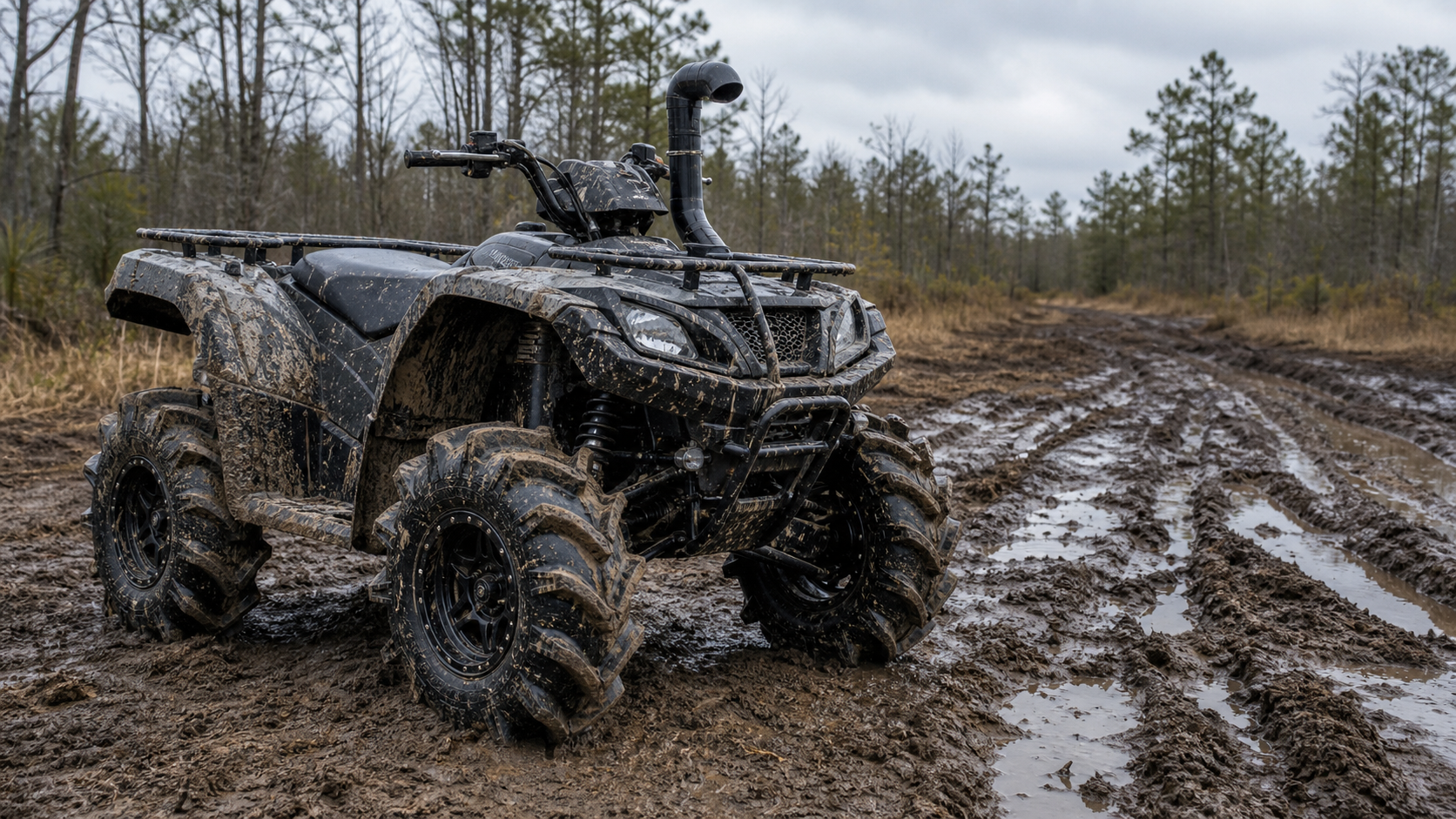
Four-Wheelers And ATVs Usually Mean The Same Thing, But Context Matters
In everyday conversation, “four-wheeler” and “ATV” often refer to the same machine: a handlebar-steered off-highway vehicle with four low-pressure tires and a straddle seat. ATV is the broader formal term, while four-wheeler is the casual name many riders use. The important distinction is that side-by-sides, UTVs, dirt bikes, and road vehicles are not the same thing even if they also have wheels or go off-road.
A: Follow the manual and inspect sooner after harsh riding.
A: A new feel, sound, smell, leak, heat issue, or warning light.
A: Yes. Mud adds grit, moisture, heat, and hidden wear.
A: No. Restore the baseline first, then decide if upgrades are useful.
A: Yes, especially after water, rocks, towing, heat, or heavy loads.
A: Dates, hours, parts, fluids, settings, and symptoms are all useful.
A: Use caution on safety, sealing, steering, suspension, brake, and drivetrain parts.
A: Working does not mean healthy; inspect when symptoms change.
A: Get help for uncertain brakes, steering, wiring, fuel leaks, or structural issues.
A: Inspect early, fix small problems, and test before riding remote terrain.
The Short Answer
Four-wheeler and ATV usually mean the same thing in casual speech. If someone says they ride a four-wheeler, they probably mean a four-wheel ATV with handlebars, a straddle seat, and off-highway tires. ATV is the more formal term used by manufacturers, safety groups, manuals, and many trail rules.
The confusion comes from context. Some people use ATV loosely for many off-road vehicles. Others use four-wheeler for anything with four wheels. When safety, registration, passenger rules, or buying paperwork matter, the exact vehicle class matters.
What ATV Means
ATV stands for all-terrain vehicle. In common powersports use, it refers to an off-highway vehicle with handlebars, a seat the rider straddles, and tires designed for dirt, trails, mud, sand, snow, or work terrain. ATVs can be utility, sport, youth, two-up, electric, or specialized machines.
Manufacturers and owner’s manuals use more precise language because ratings and warnings depend on the model. A single-rider ATV, for example, should not be treated like a two-up ATV just because the seat looks long.
What Four-Wheeler Means
Four-wheeler is the everyday name many riders use for a four-wheel ATV. It is common in rural areas, family riding, used listings, and casual conversation. The term is understandable, but it is less precise than ATV.
That lack of precision can matter. A seller may call a worn utility ATV a four-wheeler without listing the drivetrain, engine size, passenger capacity, title status, or service history. Buyers should ask for the make, model, year, VIN, and manual information rather than relying on the casual name.
ATV vs Side-By-Side
A side-by-side, also called a UTV by many people, is different from a typical ATV. It has side-by-side seats, a steering wheel, foot pedals, seatbelts, and a wider vehicle layout. It is often better for passengers and cargo, but it does not fit every ATV trail.
This distinction matters for trail access. Some trails allow ATVs but restrict width or vehicle type. Others allow side-by-sides on specific routes. Always check the local rule for the exact vehicle class.
Safety Rules Still Apply
Whatever name you use, ATV safety basics do not change. ATVs are designed for off-highway use, not normal paved-road traffic. Riders should wear helmets, eye protection, gloves, long sleeves, long pants, and over-the-ankle boots. Training is strongly recommended.
Passenger rules are especially important. Most ATVs are built for one rider. A passenger on a single-rider ATV changes balance and can block the operator’s movement. If a passenger will ride, choose a factory two-up ATV or a different vehicle built for passengers.
Buying Advice
When shopping, search both “ATV” and “four-wheeler” because sellers use both terms. Then get specific. Ask for the model name, engine size, 2WD or 4WD, title or registration status, service records, hours or mileage, and how the machine was used.
Inspect brakes, tires, steering, suspension, racks, frame, engine, fluids, CV boots, and signs of mud or water abuse. The label on the listing matters far less than the condition of the machine.
Why The Name Can Matter In Real Life
The casual word four-wheeler is harmless in conversation, but official wording matters when money, safety, or access is involved. Registration offices, insurance companies, trail systems, and owner’s manuals may use ATV, OHV, ORV, UTV, or other categories. Those labels can affect where the machine can be ridden and what paperwork is required.
A buyer should never assume that a listing title tells the full story. A seller may call a machine a four-wheeler even if it has title problems, missing VIN information, unsafe modifications, or passenger use that does not match the warning label. The name gets you to the conversation; the details decide whether the machine is a good buy.
How To Describe The Machine Clearly
When clarity matters, describe the controls and layout. A traditional ATV has handlebars and a straddle seat. A side-by-side has a steering wheel, seats, foot pedals, and seatbelts. A two-up ATV has ATV controls but is factory designed for an operator and one passenger. A youth ATV is built around age-appropriate operation and supervision.
This kind of description prevents confusion. If someone asks whether a trail allows four-wheelers, the next question should be what the trail rules mean by that term. Some areas separate ATVs from side-by-sides by width, weight, tire type, or registration class.
Used Market Search Tips
In the used market, search both ATV and four-wheeler because sellers use different language. Also search by brand and model names such as Honda Rancher, Yamaha Grizzly, Polaris Sportsman, Can-Am Outlander, Suzuki KingQuad, or Kawasaki Brute Force when those machines fit the budget and use case.
Once a listing looks interesting, move from broad terms to specifics. Ask for the VIN, title status, hours or mileage, service history, tire condition, brake condition, drivetrain type, and whether the ATV was used in deep mud or water. Clear details matter more than the word in the headline.
How Rules Use Vehicle Language
Trail systems and state agencies often use legal categories rather than casual rider slang. One area may refer to ATVs, OHVs, ORVs, UTVs, ROVs, motorcycles, snowmobiles, or off-road vehicles as separate classes. Those definitions can control registration, permitted trails, road crossings, width limits, helmet rules, passenger rules, and age restrictions.
This is why “four-wheeler” is not always enough when planning a ride. A trail sign may allow ATVs but exclude wider side-by-sides. Another route may allow multiple off-highway vehicle classes with different permit requirements. Riders should check the official local rule before assuming a casual name is accepted.
Why Passenger Capacity Creates Confusion
Passenger capacity is one of the most important places where language gets sloppy. A seller may call a machine a four-wheeler and say it has room for two because the seat is long. That does not mean the ATV is built for a passenger. Most ATVs are single-rider machines, and the seat length gives the operator room to move.
A true two-up ATV has a factory passenger position with handholds, footrests, chassis design, and suspension choices for an operator and one passenger. A side-by-side carries passengers in a different way, with seats and seatbelts. These distinctions matter for safety and for many trail rules.
Communication Tips For Buyers And Riders
When talking with a seller, ask specific questions: Is it a single-rider ATV, two-up ATV, or side-by-side? Is it 2WD or 4WD? What is the engine size? Does it have a title or registration? Are the VIN and model year clear? Has it been used in deep mud, water, racing, or plowing?
When talking with a riding group, clarify the route and vehicle limits. A friend saying “bring the four-wheeler” may mean a narrow ATV trail, not a wide side-by-side route. Clear language prevents wasted trips and helps keep riders legal.
Why Terminology Helps New Riders
Clear terminology helps new riders learn faster. If a beginner understands the difference between an ATV, a two-up ATV, a youth ATV, and a side-by-side, they can ask better questions and avoid unsafe assumptions. They can also read owner’s manuals, warning labels, and trail signs with less confusion.
This matters because off-road vehicles can look similar to people outside the sport. A parent shopping for a youth machine, a landowner setting access rules, or a buyer comparing used listings may use the wrong word without meaning to. Good language reduces mistakes.
When To Correct Someone
In casual conversation, there is no need to correct every use of four-wheeler. Most riders understand the term. Correction becomes useful when the details affect safety, legality, or purchase decisions. If someone plans to carry a passenger, ride public trails, register a machine, or buy a used vehicle, precise terms matter.
A friendly correction can be practical: “Do you mean a handlebar ATV or a side-by-side?” That one question clears up width, seating, controls, trail access, and passenger expectations. It is a simple way to prevent confusion without turning language into a lecture.
Final Takeaway
Four-wheeler is the friendly word. ATV is the precise word. In most casual situations, they point to the same kind of machine, but precision matters when the conversation turns to safety, passengers, laws, buying, or trail access. That is when riders should slow down and name the actual vehicle type.
The clearest description is usually better than either label alone: handlebar ATV, two-up ATV, youth ATV, sport quad, utility ATV, or side-by-side. Those terms tell people how the machine is controlled, who it is built to carry, and where it may belong.
FAQ
Is a four-wheeler an ATV?
Usually yes. Most people use four-wheeler as a casual name for a four-wheel ATV.
Is a side-by-side a four-wheeler?
Some people may call it that casually, but it is different from a typical ATV because it has seats, a steering wheel, and a wider layout.
Which term should I use?
Use ATV for manuals, rules, safety, and paperwork. Four-wheeler is fine in casual conversation if everyone understands the vehicle being discussed.