Adult Beginner ATVs Should Build Confidence Before Speed
The best ATV type for a new adult rider is usually a manageable trail or utility-style machine with smooth power, predictable brakes, comfortable ergonomics, and enough capability for the terrain without becoming intimidating. Adult beginners do not need the biggest engine or the sharpest sport quad. They need an ATV that helps them practice throttle control, braking, turning, body position, and safe trail judgment.
A: Follow the manual and inspect sooner after harsh riding.
A: A new feel, sound, smell, leak, heat issue, or warning light.
A: Yes. Mud adds grit, moisture, heat, and hidden wear.
A: No. Restore the baseline first, then decide if upgrades are useful.
A: Yes, especially after water, rocks, towing, heat, or heavy loads.
A: Dates, hours, parts, fluids, settings, and symptoms are all useful.
A: Use caution on safety, sealing, steering, suspension, brake, and drivetrain parts.
A: Working does not mean healthy; inspect when symptoms change.
A: Get help for uncertain brakes, steering, wiring, fuel leaks, or structural issues.
A: Inspect early, fix small problems, and test before riding remote terrain.
What New Adult Riders Actually Need
Adult beginners often think they should buy enough ATV to avoid outgrowing it. That can lead to machines that are too heavy, too powerful, too expensive, or too specialized. A first ATV should make practice easier. It should start reliably, turn predictably, brake confidently, and let the rider learn without fear.
Good beginner riding is built from basics: smooth throttle, controlled braking, looking ahead, standing when needed, shifting body weight, choosing lines, and stopping before terrain gets too difficult. The ATV should support those habits.
Best Type For Most Adult Beginners
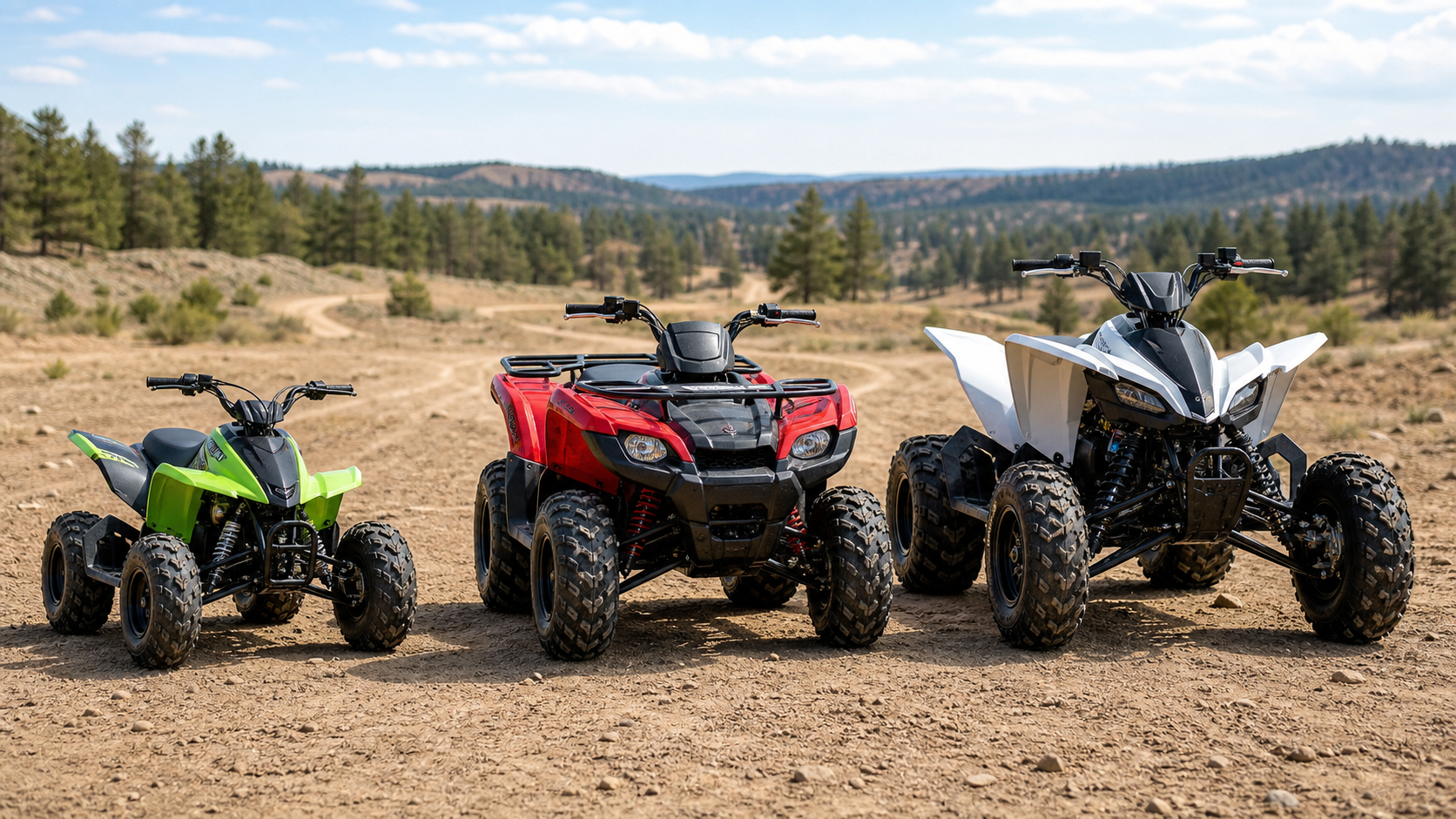
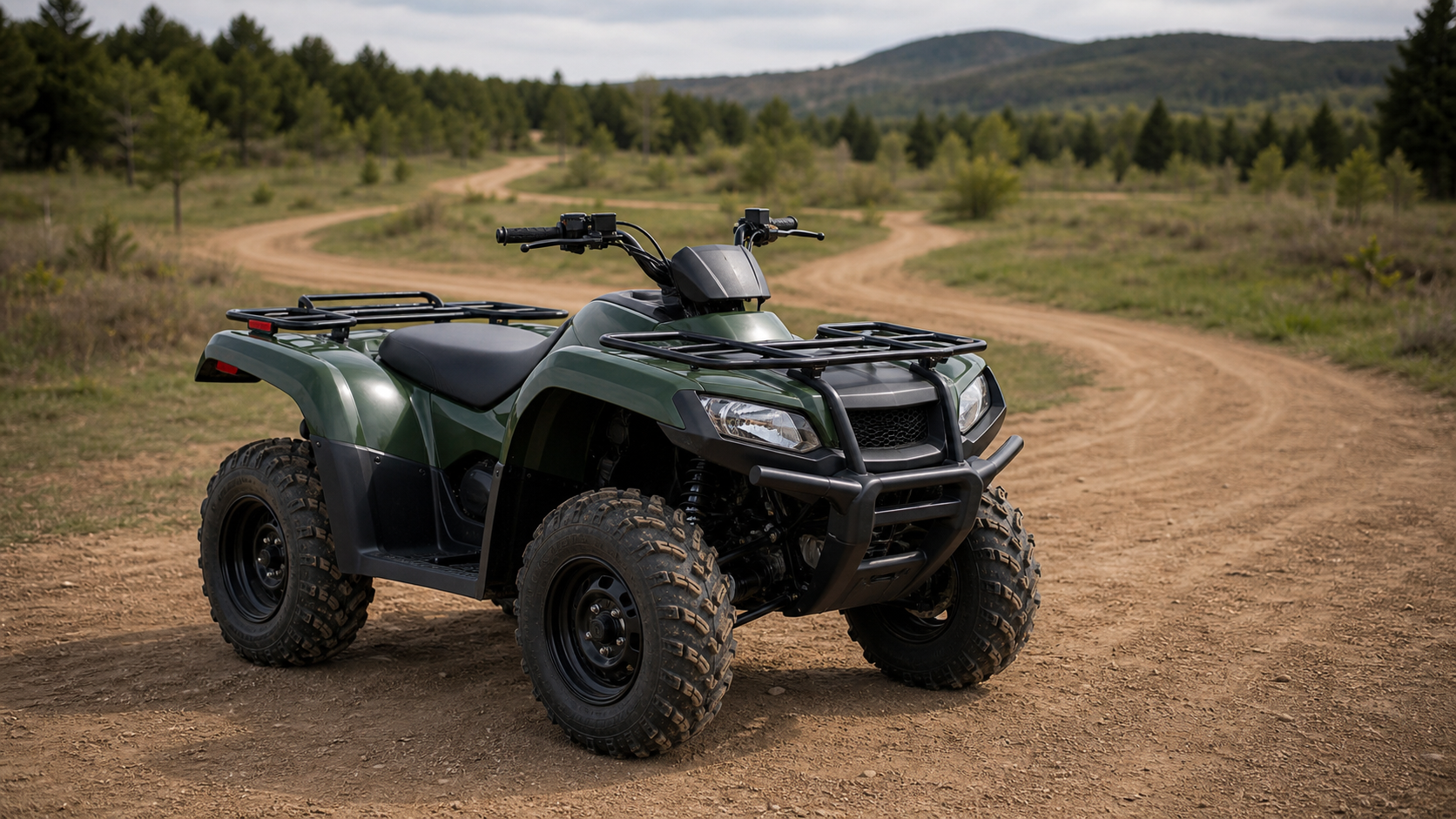
A small or mid-size recreational utility ATV is often the best match. These machines usually have automatic transmissions, reverse, comfortable ergonomics, manageable power, and enough utility for real trails or light property use. They are practical without being extreme.
Selectable 4WD is useful if the rider will see mud, snow, hills, or wet trails. Power steering can also help because new riders often grip too tightly and get tired. A calmer machine keeps the rider focused on learning instead of wrestling the ATV.
When A Sport ATV Makes Sense
A sport ATV can work for an adult beginner only when the rider specifically wants sport riding and learns in the right environment. Manual clutch, quicker throttle, lower stance, and active body movement make sport quads more demanding. They can be rewarding, but they are not the easiest path for general trail use.
If the rider wants dunes, tracks, or aggressive riding, training matters. Start with a manageable sport model and practice clutch control, braking, cornering, and body position away from traffic and obstacles. Do not start with a race-bred machine just because the price is tempting.
Engine Size For Adult Beginners
There is no single perfect engine size. A mid-size utility ATV may feel friendly because the power is smooth and the chassis is stable. A smaller machine may be better for tight trails or smaller riders. A large-displacement ATV may be manageable for some adults, but it adds weight, heat, speed, and repair cost.
The best test is control. Can the rider move slowly without jerky throttle? Can they stop smoothly? Can they turn at full lock? Can they stand comfortably? If the answer is no, the ATV is not beginner-friendly no matter what the engine size says.
Buying Used As A Beginner
Used ATVs can save money, but beginners may not know what problems feel like. Bring an experienced rider or mechanic if possible. Inspect brakes, tires, steering, suspension, frame, racks, fluids, CV boots, chain or belt behavior, lights, battery, and throttle return. Verify paperwork before buying.
Be careful with heavily modified machines. Lift kits, oversized tires, loud exhaust, snorkels, engine tunes, and mystery wiring can create maintenance problems. A clean stock ATV with records is usually a better first machine than a flashy build with unknown history.
Safety Gear And First Rides
Protective gear belongs in the beginner budget. A DOT-compliant helmet, eye protection, gloves, long sleeves, long pants, and over-the-ankle boots should be ready before the first ride. Training is also worth seeking because ATV control is physical and different from driving a car.
First rides should happen on flat open ground. Practice starting, stopping, turning, braking, and standing before trail riding. Add hills, mud, rocks, and group rides slowly. A patient pace builds skill faster than trying to keep up with experienced riders.
Common Beginner Mistakes
The biggest mistake is buying for ego instead of control. Too much machine can make a new rider tense, and tense riders make abrupt inputs. Another mistake is ignoring maintenance because the ATV “runs fine.” Weak brakes, worn tires, old fluids, and loose steering can make learning harder and less safe.
New riders should also avoid carrying passengers on single-rider ATVs, riding on paved roads, riding under the influence, or following experienced groups into terrain beyond their skill. The goal is steady progress, not proving something on the first weekend.
FAQ
What ATV size is best for an adult beginner?
A small or mid-size recreational utility ATV is often best, but rider fit, terrain, and throttle smoothness matter more than a single cc number.
Should a beginner choose automatic or manual?
Most beginners do better with automatic because it reduces workload. Manual can work for riders specifically learning sport-style control.
Is 4WD useful for beginners?
Yes, if terrain includes mud, snow, hills, or wet trails. It helps traction, but it does not replace training or careful riding.
How Adult Beginners Should Shop
An adult beginner should shop from the seat, not from the spec sheet. Sit on the ATV, reach every control, stand on the footrests, turn the bars, and imagine slow maneuvers on uneven ground. The machine should feel manageable before the engine starts. If it feels huge, top-heavy, stiff, or intimidating in the showroom, it will not feel smaller on a rutted trail.
Power should be smooth and easy to meter. A beginner ATV does not need to be weak, but it should respond predictably when the rider adds a little throttle. Automatic transmission, selectable four-wheel drive, engine braking, good lights, and a comfortable riding position can all help new riders focus on terrain and body position instead of fighting the machine.
First Month Ownership Plan
The first month should be about building habits. Start with short rides in open areas, then practice braking, wide turns, slow figure eights, standing position, scanning ahead, and controlled stops. Add hills, mud, rocks, and tighter trails gradually. Riders should also practice loading and unloading, checking tire pressure, inspecting fluids, and understanding basic warning lights before depending on the ATV far from home.
Protective gear should be bought with the ATV, not after the first close call. A DOT-compliant helmet, eye protection, gloves, long sleeves, long pants, and over-the-ankle boots should be normal. New riders should avoid paved roads, alcohol, passengers on single-rider ATVs, and group pressure. Learning slowly is usually faster in the long run because the rider is not recovering from scares or broken parts.
When To Upgrade
A beginner is ready to upgrade when the current ATV is limiting real use rather than pride. That might mean more towing capacity for work, better suspension for long trail days, more ground clearance for rocky routes, or better ergonomics for a taller rider. It should not be because a friend bought a faster machine.
The right first ATV teaches control and confidence. After a season of clean starts, smooth braking, careful line choice, and basic maintenance, the rider will understand what they actually need from the next machine. That experience is worth more than buying too much ATV on day one and spending the first year trying to survive it.
Best Beginner Terrain
The first rides should happen where mistakes have room to fade harmlessly. Wide, dry, open terrain is better than narrow woods, deep mud, steep climbs, or crowded trail systems. A new adult rider should practice smooth throttle, progressive braking, gentle turns, and standing posture before dealing with ruts or off-camber ground. Confidence should come from repeatable control, not from surviving difficult terrain.
Group rides can be tricky for beginners because the pace is often set by experienced riders. A new rider may follow into hills, water crossings, or rough trails before they are ready. The better first group ride has patient partners, planned stops, and permission to turn around. Learning is much easier when the rider is not trying to keep up.
Maintenance Confidence For New Owners
Adult beginners do not need to become mechanics overnight, but they should learn basic checks immediately. Tire pressure, lug nuts, oil level, coolant where equipped, brake feel, lights, controls, and visible leaks should be familiar before every ride. The owner’s manual explains service intervals and fluid specifications, and it should be read early rather than left under the seat.
A beginner-friendly ATV is one the owner can maintain consistently. Easy access to the air filter, battery, oil drain, and basic service points can make ownership less intimidating. Dealer support matters too. The best first ATV is not only comfortable on the trail; it is understandable in the garage after the ride.
What Makes A Beginner ATV Forgiving?
A forgiving ATV gives the rider time to think. Smooth throttle response, stable steering, predictable brakes, comfortable ergonomics, and manageable weight all matter. A beginner should be able to correct a poor line, stop before a rut, and turn around without feeling like the machine is taking over. Four-wheel drive can help in slippery terrain, but it should be used as traction support rather than an excuse to enter terrain beyond the rider’s skill.
Suspension setup also affects confidence. A machine that bucks harshly over small bumps can make a new rider tense, while a planted chassis encourages relaxed control. Tires matter as well. Extremely aggressive mud tires can make steering heavier and handling less predictable on ordinary trails. A balanced recreational setup is often better for learning.
Buying For The Rider You Are Now
Adult beginners sometimes buy for the rider they hope to become. That can work if the machine is still manageable today, but it becomes a problem when the ATV is too powerful, too tall, or too specialized. A first ATV should make practice inviting. If a rider avoids using the machine because it feels intimidating, the purchase is working against skill development.
The best beginner choice leaves room to grow while still feeling friendly on the first ride. After a season, the rider will know whether they want utility work, trail comfort, mud capability, hunting access, or sport handling. That knowledge leads to a smarter second ATV if an upgrade is needed.