Youth ATV Classes Are Safety Categories, Not Upgrade Levels
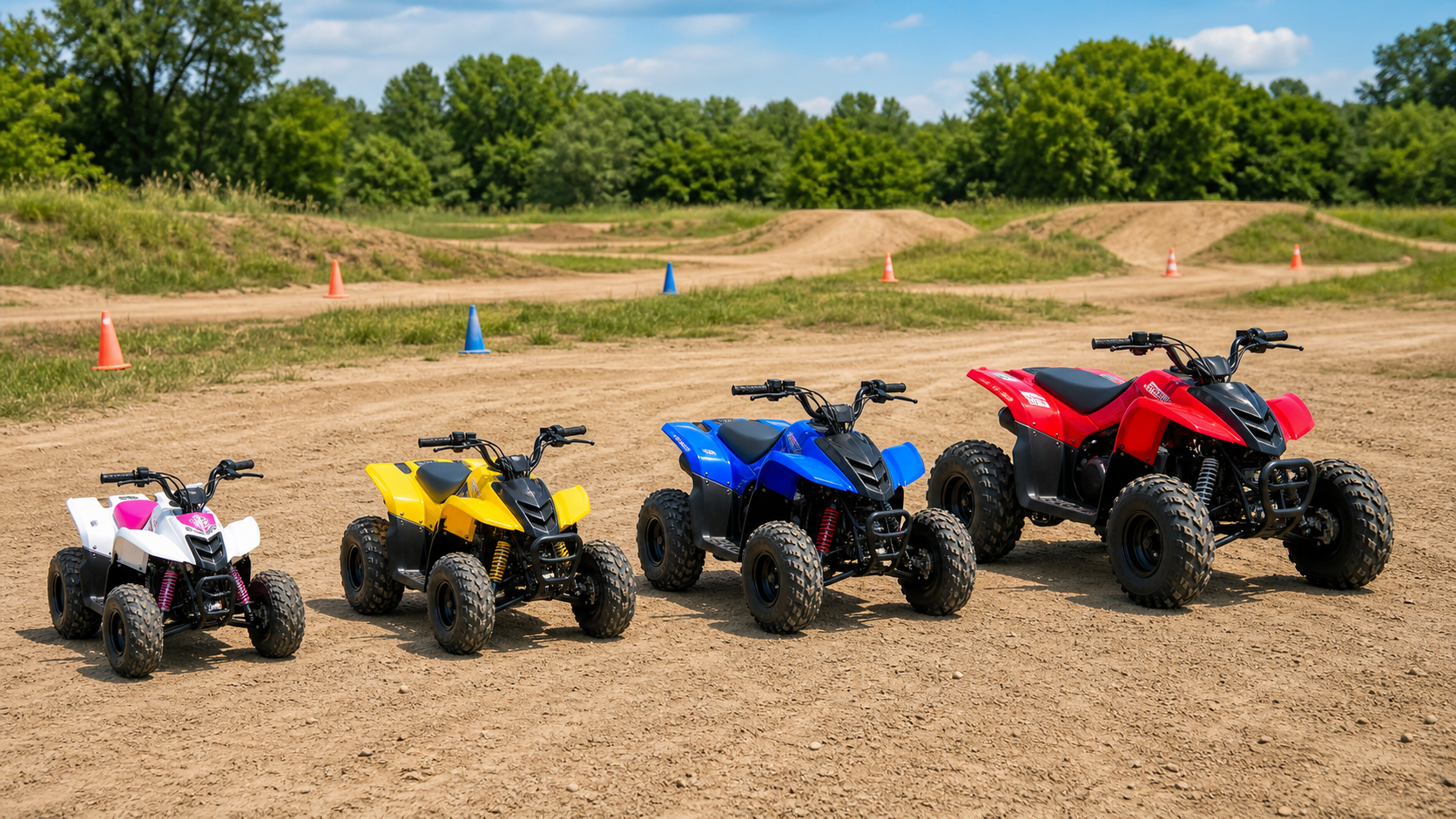
Youth ATV classes help match young riders with machines designed for their age, size, strength, speed, and supervision needs. They should never be treated as a ladder to rush through. A child should ride only an age-appropriate youth ATV, with protective gear, adult supervision, hands-on training, and a controlled riding area. Adult-size ATVs are not appropriate for riders under 16.
A: Follow the manual and inspect sooner after harsh riding.
A: A new feel, sound, smell, leak, heat issue, or warning light.
A: Yes. Mud adds grit, moisture, heat, and hidden wear.
A: No. Restore the baseline first, then decide if upgrades are useful.
A: Yes, especially after water, rocks, towing, heat, or heavy loads.
A: Dates, hours, parts, fluids, settings, and symptoms are all useful.
A: Use caution on safety, sealing, steering, suspension, brake, and drivetrain parts.
A: Working does not mean healthy; inspect when symptoms change.
A: Get help for uncertain brakes, steering, wiring, fuel leaks, or structural issues.
A: Inspect early, fix small problems, and test before riding remote terrain.
Why Youth ATV Classes Matter
Youth ATV classes exist because children are not small adults. They have different strength, judgment, reach, reaction time, and risk awareness. A machine that feels manageable to an adult can be too heavy or too fast for a young rider. Matching the machine to the rider is one of the most important safety decisions a parent can make.
Safety groups and manufacturers consistently warn that riders under 16 should not operate adult-size ATVs. Parents should use the manufacturer’s label, owner’s manual, training guidance, and local laws as the starting point. A child’s enthusiasm should never override those limits.
Age Guidance Is A Starting Point
Youth ATV labels often reference age ranges, but age is not the only factor. A rider also needs proper size, strength, coordination, and maturity. They need to understand instructions, stop when told, and ride within a defined area. Two children of the same age may not be equally ready.
That does not mean parents should move a child to a larger machine early. It means age guidance is the floor, not the entire decision. If the child does not fit or cannot control the machine, the ATV is not appropriate even if the label appears close.
Engine Size And Speed
Engine size is one way youth ATVs are separated, but speed control matters just as much. Some youth models include throttle limiters, speed settings, or remote shutoff systems. These features can help adults create a controlled learning environment.
They are not substitutes for supervision. A young rider can still crash a slow machine if they ride near roads, passengers, steep terrain, water, obstacles, or adult traffic. The safest learning area is flat, open, legal, and free from hazards.
Fit And Control
A youth rider should be able to sit naturally, stand on the footrests, turn the handlebars fully, reach the brakes, and operate the throttle without stretching. They should be able to shift body weight and look where they are going. If the machine feels awkward, it is not a good fit.
Control strength matters too. Brakes should not require more grip or foot force than the child can repeat. Steering should not exhaust them. A sticky throttle, weak brake, or loose steering part should be fixed before any ride.
Protective Gear For Youth Riders
Youth riders need properly fitting protective gear every time. That includes a DOT-compliant helmet, eye protection, gloves, long sleeves, long pants, and over-the-ankle boots. Gear should fit the child now, not be sized for growing into later.
Private property does not remove the need for gear. Many crashes happen close to home because riders relax. A short practice ride deserves the same basic protection as a longer trail ride.
Training And Supervision
Hands-on ATV training is strongly recommended. A child should learn starting, stopping, turning, braking, body position, looking ahead, and following boundaries before moving to more complex terrain. Adults should supervise actively, not from far away or while distracted.
Group riding with adults can be risky for youth riders because pace and terrain may be chosen for larger machines. Youth practice should happen at youth speed, on youth-appropriate terrain, with clear rules.
What Not To Do
Do not buy an adult ATV for a child to grow into. Do not carry a child as a passenger on a single-rider ATV. Do not assume a small machine is safe because it is quiet or electric. Do not let a child ride on paved roads except where legal crossings are handled safely by trained riders.
Also avoid unknown machines with poor documentation. Youth ATVs need parts, brakes, tires, batteries or fuel systems, kill switches, and service support just like larger machines.
FAQ
Can a child ride an adult ATV if they are experienced?
No. Riders under 16 should not operate adult-size ATVs. Experience does not remove the size, weight, and speed risks.
Is a youth ATV safe without supervision?
No. Youth ATV riding requires active adult supervision, proper gear, training, and a controlled riding area.
Are electric youth ATVs safer?
They can offer useful speed controls and quiet operation, but they are still motorized vehicles and require the same safety habits.
How Parents Should Read Youth ATV Labels
Youth ATV labels are guidance and warnings, not decorations. They identify the age category, passenger restrictions, helmet requirements, and operating limits the manufacturer expects owners to follow. Parents should read those labels before a child ever rides, then compare them with the owner’s manual and local riding rules. If the seller’s claims conflict with the label, trust the label and manual.
Age categories do not mean every child in that age range is automatically ready. A rider also needs enough coordination, strength, attention, and judgment to manage throttle, braking, steering, stopping, and body position. Some children need more practice before moving up. Others may be physically large enough but still lack the judgment to handle speed, hills, or group riding.
Training Before Trail Miles
The safest youth ATV progression starts away from traffic, obstacles, spectators, and steep terrain. Early sessions should focus on starting, stopping, gentle throttle use, wide turns, looking ahead, and listening to instructions. Only after those habits are consistent should a rider practice tighter turns, mild grades, uneven ground, and longer loops.
Formal training is valuable because it separates real technique from family shortcuts. Young riders often copy adults, including adults who have developed casual habits over years. A training course reinforces protective gear, no passengers on single-rider ATVs, avoiding pavement, scanning ahead, and respecting machine limits. Those basics are not exciting, but they are what keep a fun day from becoming a preventable emergency.
Moving Up Too Soon
The most common mistake is treating the next class as a reward. A larger ATV may feel like a birthday milestone, but it adds weight, speed, reach, braking demand, and rollover consequences. A rider should move up only when fit, skill, maturity, and manufacturer guidance all point the same direction.
Parents should be willing to say no to adult machines, borrowed quads, and group rides that do not match the child’s ability. A child who rides well in a flat yard may not be ready for crowded trails, sand, mud, or steep descents. Youth ATV classes work best when adults treat them as boundaries that protect learning rather than hurdles to rush past.
Building A Youth ATV Progression
A good youth progression is gradual. Start with basic control in a flat, open area. Add turning drills, stopping drills, and body-position practice. Then introduce gentle slopes, uneven ground, and longer rides only after the rider has shown calm control. The adult supervisor should set the pace, even when the child wants to move faster.
Progression also includes responsibility. Young riders can learn pre-ride checks, helmet care, tire awareness, brake checks, and why passengers are not allowed on single-rider ATVs. These habits make the machine feel less like a toy and more like equipment that deserves respect. That mindset matters as much as throttle skill.
Choosing Between New And Used Youth ATVs
A new youth ATV gives parents clearer history, current labels, warranty support, and a known starting point. A used youth ATV can save money, but only if it has been cared for and has parts support. Because youth machines are often outgrown, the used market can be useful. It can also hide machines that have been jumped, crashed, modified, or neglected.
Before buying used, check whether the throttle limiter works, the brakes stop firmly, the steering is smooth, the kill switch works, and the frame is straight. Confirm the exact model and age category. If the machine has been modified for more speed or has missing safety equipment, keep looking. A youth ATV should make learning easier, not add mystery to an already serious responsibility.
House Rules For Youth Riders
Every family should have riding rules before the engine starts. The rules should be simple enough to remember: helmet and eye protection every ride, no passengers, no pavement, no riding without an adult present, no leaving the practice area without permission, and no racing friends on machines that are not matched in size and speed. Clear rules help children understand that ATV riding is fun because it is controlled.
Adults should enforce rules consistently. Letting a young rider bend the rules on an easy day teaches the wrong lesson for a harder day. The child should know where to ride, when to stop, how to signal for help, and what to do if the machine feels wrong. A youth ATV class is only useful when the surrounding supervision is just as serious as the machine choice.
Why Smaller Is Often Better Longer
Parents sometimes worry that a child will outgrow a youth ATV too quickly, so they buy more machine than the child needs. That can create the exact problem youth categories are meant to prevent. A slightly smaller, calmer ATV allows the rider to practice clean lines, steady throttle, and controlled braking without being overwhelmed by weight or speed.
Staying on an appropriate machine a little longer is usually better than moving up early. Skill transfers. A rider who learns patience and control on the right youth ATV will be better prepared for the next size when the time truly comes.