Gas And Electric ATVs Solve Different Riding Problems
Gas ATVs remain the familiar choice for long range, quick refueling, broad dealer support, and heavy-duty use. Electric ATVs offer quiet operation, smooth torque, simpler engine-free maintenance, and strong appeal for short predictable rides. Neither powertrain is automatically better. The right choice depends on range, charging, terrain, load, budget, support, and whether the owner values silence or flexibility more.
A: Follow the manual and inspect sooner after harsh riding.
A: A new feel, sound, smell, leak, heat issue, or warning light.
A: Yes. Mud adds grit, moisture, heat, and hidden wear.
A: No. Restore the baseline first, then decide if upgrades are useful.
A: Yes, especially after water, rocks, towing, heat, or heavy loads.
A: Dates, hours, parts, fluids, settings, and symptoms are all useful.
A: Use caution on safety, sealing, steering, suspension, brake, and drivetrain parts.
A: Working does not mean healthy; inspect when symptoms change.
A: Get help for uncertain brakes, steering, wiring, fuel leaks, or structural issues.
A: Inspect early, fix small problems, and test before riding remote terrain.
The Basic Difference
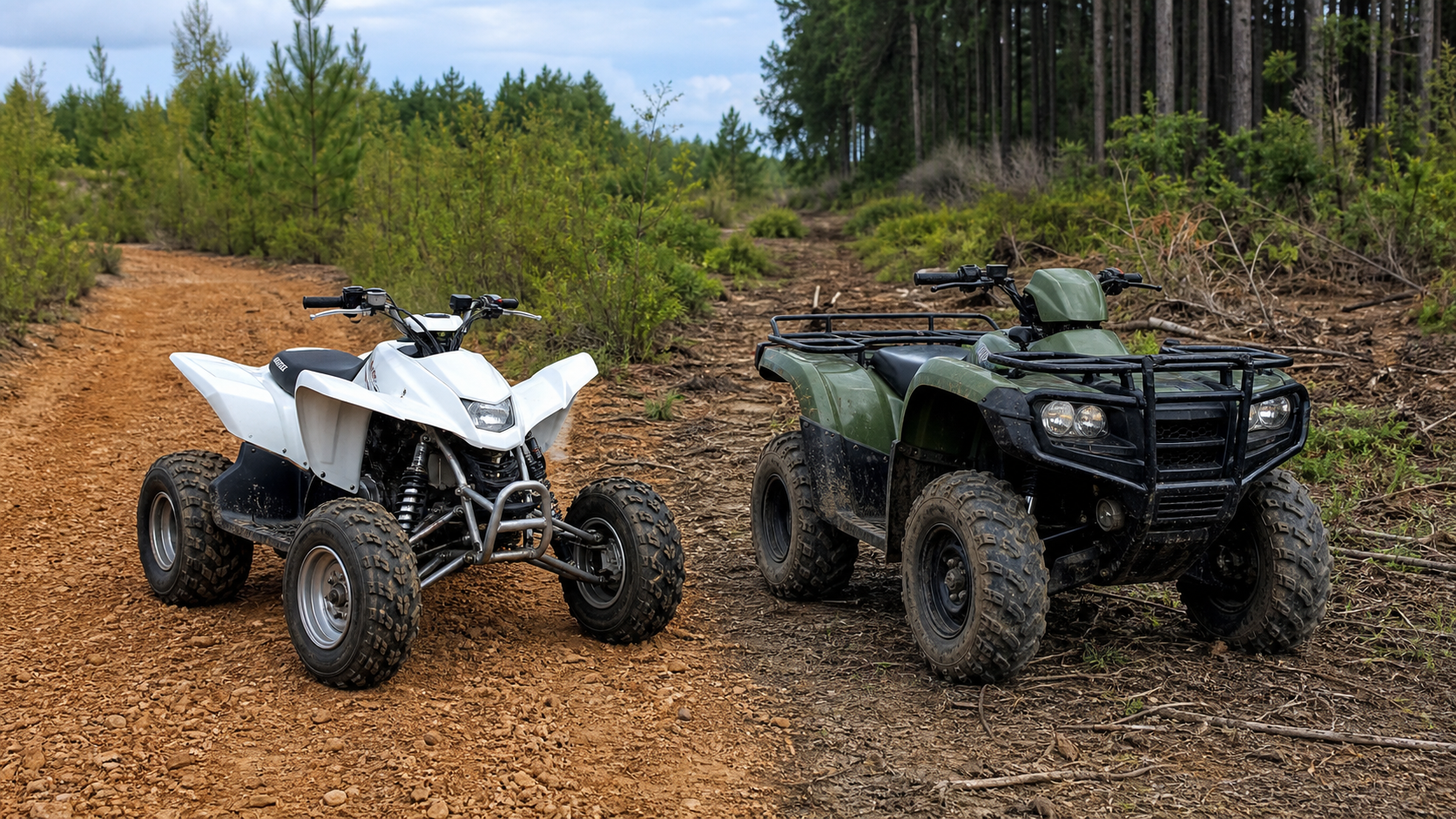
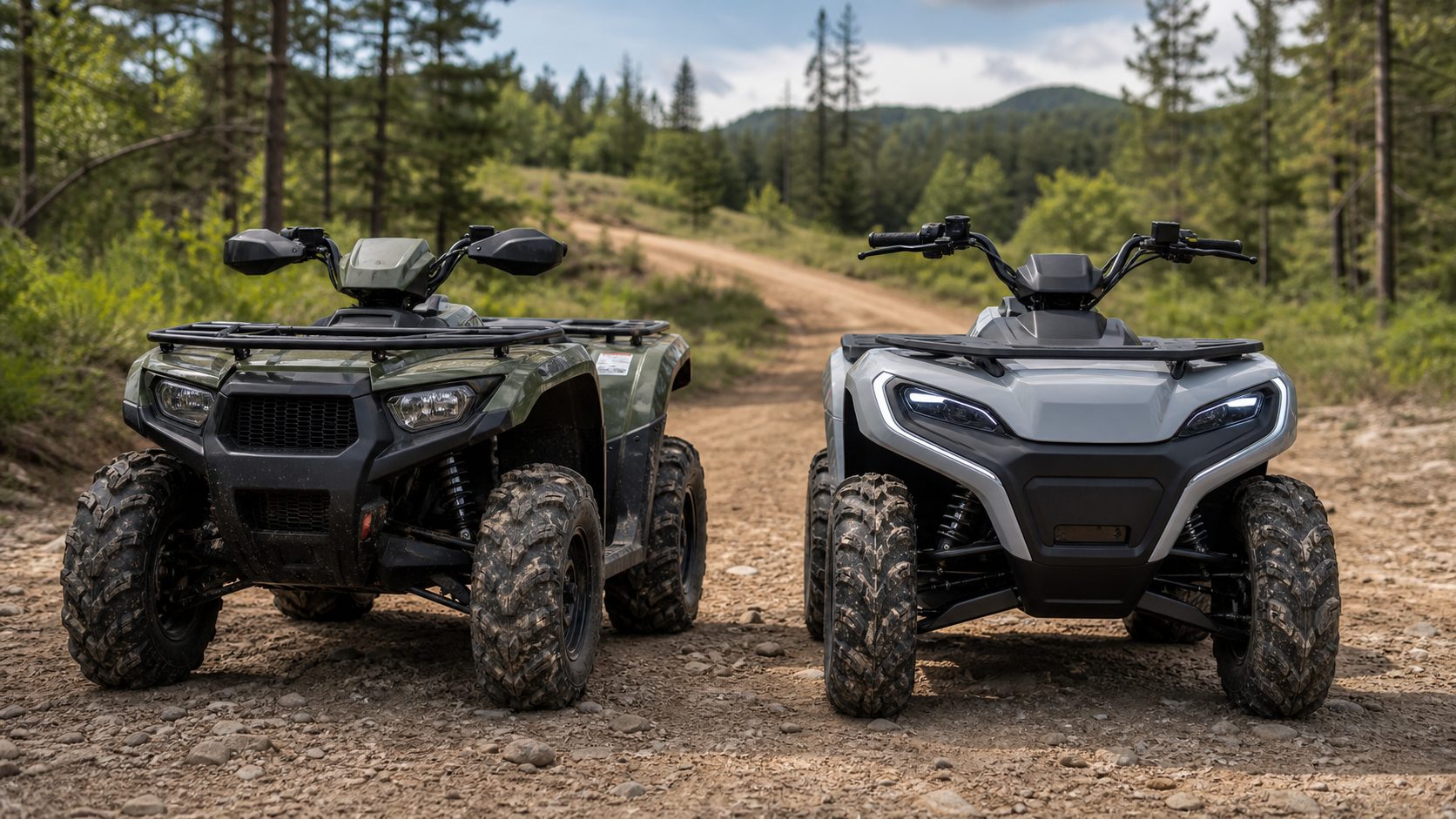
A gas ATV uses an internal combustion engine and fuel tank. An electric ATV uses a battery pack and electric motor. That difference changes sound, range, refueling, maintenance, heat, weight distribution, and long-term ownership. It also changes how a rider plans a trip.
Gas ATVs are familiar because they dominate the market. Electric ATVs are growing because quiet operation and smooth torque solve real problems for some riders. The best choice depends less on technology preference and more on repeated use.
Range And Refueling
Gas ATVs are still easier for long remote rides. When fuel is available, refueling takes minutes. Riders can also carry approved extra fuel when appropriate and legal. Range varies by machine, load, tires, speed, and terrain, but the planning habits are familiar.
Electric ATVs need more careful range planning. Battery use changes with hills, mud, snow, cold weather, cargo, tire choice, and speed. Charging takes longer than filling a tank. Electric works best when routes are predictable, charging is nearby, and the owner keeps a reserve instead of using the full battery.
Noise And Riding Experience
Electric ATVs are much quieter than gas machines in many situations. That can be useful around livestock, neighborhoods, campgrounds, hunting land, and private property. Less engine noise can make the ride feel calmer and reduce disturbance.
Gas ATVs provide the sound and feel many riders already know. Some riders like engine feedback because it tells them what the machine is doing. Others prefer quiet torque. Neither feeling is wrong, but buyers should understand how much sound matters in their riding area.
Power And Torque
Electric motors can deliver torque immediately, which helps with smooth low-speed movement. That can be useful around gates, barns, camps, and technical slow sections. The power can feel easy to use because there is no traditional shifting on many models.
Gas ATVs offer a wide range of engine sizes and drivetrains. Large utility models can be excellent for towing within rating, plowing, mud, snow, and long trail days. Sport gas ATVs can deliver a more aggressive, mechanical riding experience. The variety is one of gas power’s strongest advantages.
Maintenance Differences
Gas ATVs need engine oil, air filters, spark plugs, fuel-system care, coolant on liquid-cooled models, exhaust inspection, and sometimes valve service. CVT belts, brakes, tires, bearings, suspension, and fluids also need attention. Owners have many manuals, parts, and service shops available for major brands.
Electric ATVs avoid many engine tasks but still need maintenance. Batteries, chargers, wiring, connectors, brakes, tires, suspension, steering, bearings, and chassis parts matter. Battery care is especially important because replacement cost can be significant.
Cold, Mud, And Water
Cold weather affects both powertrains, but electric battery range can drop noticeably. Gas machines may face cold-start, fuel, and oil-viscosity issues. Winter users should check the manual for storage, oil, battery, and starting guidance either way.
Mud and water are hard on both. Gas machines can ingest water through intakes or vents. Electric machines can suffer connector, controller, motor, or battery problems if used beyond their design limits. Neither type should be treated as waterproof.
Cost And Support
Gas ATVs have a larger used market and broader dealer network. That makes it easier to compare prices, find parts, and get service. Electric ATVs can be cheaper to charge and simpler in some service areas, but battery cost and brand support deserve close attention.
Before buying electric, ask about warranty, battery replacement, charger availability, parts supply, and local service. Before buying gas, inspect maintenance history, engine condition, fuel system, fluids, brakes, and driveline wear. The better powertrain is the one the owner can support.
Which Should You Choose?
Choose gas if you ride long distances, explore remote trails, tow or plow often, need broad parts support, or want the widest model selection. Choose electric if your rides are shorter, quieter operation matters, charging is easy, and the route stays within realistic battery range.
The smartest buyer compares the real week of ownership, not the idea of the technology. Where will the ATV be stored? Where will it be serviced? How far will it ride? What happens if it breaks? Those answers make the decision clearer.
FAQ
Are electric ATVs better than gas ATVs?
They are better for quiet local use and predictable routes. Gas ATVs are usually better for long range, heavy utility work, and broad support.
Do electric ATVs save maintenance?
They remove some engine maintenance, but they still need battery, brake, tire, suspension, steering, and chassis care.
Which is better for hunting?
Electric can be useful because it is quiet, but gas may be better for long distances, cold weather, or remote areas where refueling is easier than charging.
Daily Ownership Differences
The gas-versus-electric choice becomes clearer when riders picture a normal week. A gas ATV can be refueled quickly, carried farther from home, and repaired by many small-engine shops. It needs fuel care, oil changes, air filter service, spark plug attention, exhaust awareness, and more noise tolerance. For remote riding, ranch work, hunting leases, and long trail days, that familiar infrastructure is a major advantage.
An electric ATV can be easier to live with near the house. It starts without choke routines, creates less noise, and avoids gasoline storage. It may suit short, repeated trips where the machine returns to the same charging location. The tradeoff is planning. Charging takes time, replacement batteries can be expensive, and range depends heavily on conditions. The machine may be wonderfully simple until the battery is low far from an outlet.
Performance Is More Than Peak Power
Gas ATVs often build power with rpm and have a familiar sound that helps riders sense load. Electric ATVs can deliver strong low-speed torque immediately. Either can feel quick or slow depending on gearing, throttle calibration, weight, tire size, suspension, and traction. A spec sheet does not fully explain how the ATV behaves on roots, wet grass, loose climbs, or tight turns.
For utility work, the important question is whether the ATV can repeat the job without overheating, draining too quickly, slipping belts, or overloading suspension and brakes. For recreation, the question is whether the rider can control the power comfortably for the terrain. A beginner may be safer and happier on a milder machine that responds predictably than on a high-output model that looks better in a comparison chart.
Which One Holds Value Better?
Resale depends on brand support, condition, local demand, battery health, and parts availability. Established gas ATVs often have strong used markets because buyers understand how to inspect and repair them. Electric ATV resale can be excellent when the brand is supported and the battery is healthy, but buyers may be cautious if battery replacement costs are unclear.
Used shoppers should inspect both types carefully. On gas models, cold starts, smoke, fluid leaks, drivetrain noise, and air filter condition tell a story. On electric models, battery age, charge behavior, charger condition, fault codes, and replacement support are central. The better choice is the one that fits the riding pattern and can be supported locally, not the one that wins every debate online.
How To Decide Without Brand Loyalty
The fairest comparison starts with use, not identity. Write down where the ATV will live, how far it will go in a normal ride, whether it must tow or haul, who will service it, and where it can refuel or recharge. A gas ATV often wins when the route is long, the work is heavy, or remote support matters. An electric ATV often wins when trips are shorter, quiet operation matters, and charging is easy at home.
Riders should also consider who else will use the machine. A family ATV may need predictable manners more than maximum output. A work ATV may need durability and parts availability more than novelty. A hunting ATV may prize quiet movement, but only if range and charging match the property. The better technology is the one that removes friction from real rides.
Future-Proofing The Purchase
Gas ATVs have the advantage of a mature repair network. Many riders know how to inspect them, many shops can service them, and used parts are often available. Electric ATVs are improving quickly, but support varies more by brand and model. That makes warranty, dealer access, battery replacement policy, and diagnostic support especially important.
A buyer choosing electric should favor a company with clear documentation and long-term support. A buyer choosing gas should still avoid neglected machines with poor maintenance history. Neither powertrain forgives careless ownership. The smart comparison is not old versus new; it is supported, suitable, and maintainable versus inconvenient after the first season.