Sport And Utility ATVs Are Built Around Different Priorities
Sport ATVs and utility ATVs are not separated by style alone. A sport ATV is tuned for speed, rider movement, cornering, jumping, and quick response. A utility ATV is tuned for traction, carrying loads, towing, slow control, and mixed chores. The right choice depends on whether the rider wants a performance machine, a work partner, or a comfortable trail ATV that borrows from both sides.
A: Follow the manual and inspect sooner after harsh riding.
A: A new feel, sound, smell, leak, heat issue, or warning light.
A: Yes. Mud adds grit, moisture, heat, and hidden wear.
A: No. Restore the baseline first, then decide if upgrades are useful.
A: Yes, especially after water, rocks, towing, heat, or heavy loads.
A: Dates, hours, parts, fluids, settings, and symptoms are all useful.
A: Use caution on safety, sealing, steering, suspension, brake, and drivetrain parts.
A: Working does not mean healthy; inspect when symptoms change.
A: Get help for uncertain brakes, steering, wiring, fuel leaks, or structural issues.
A: Inspect early, fix small problems, and test before riding remote terrain.
The Core Difference
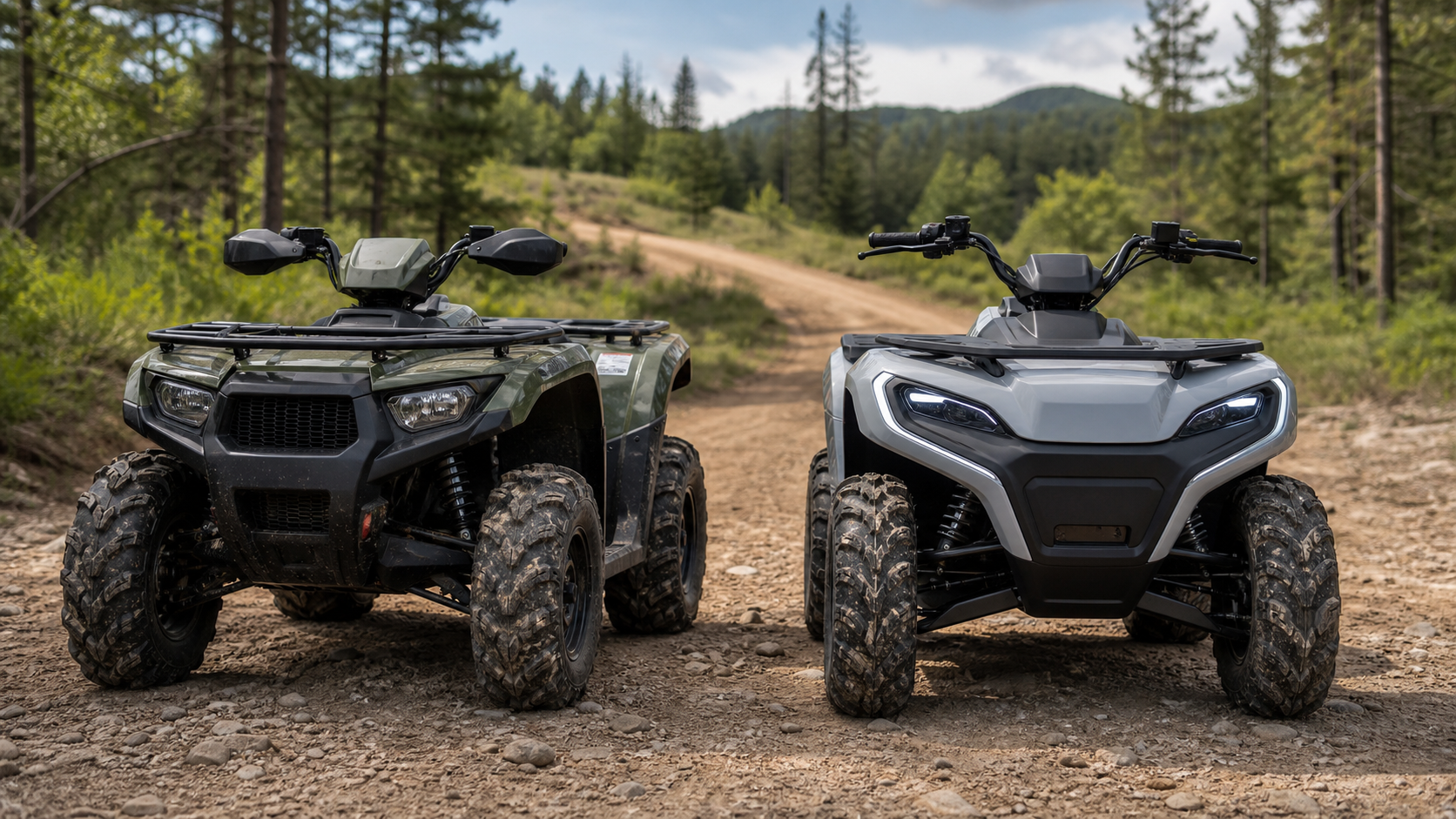
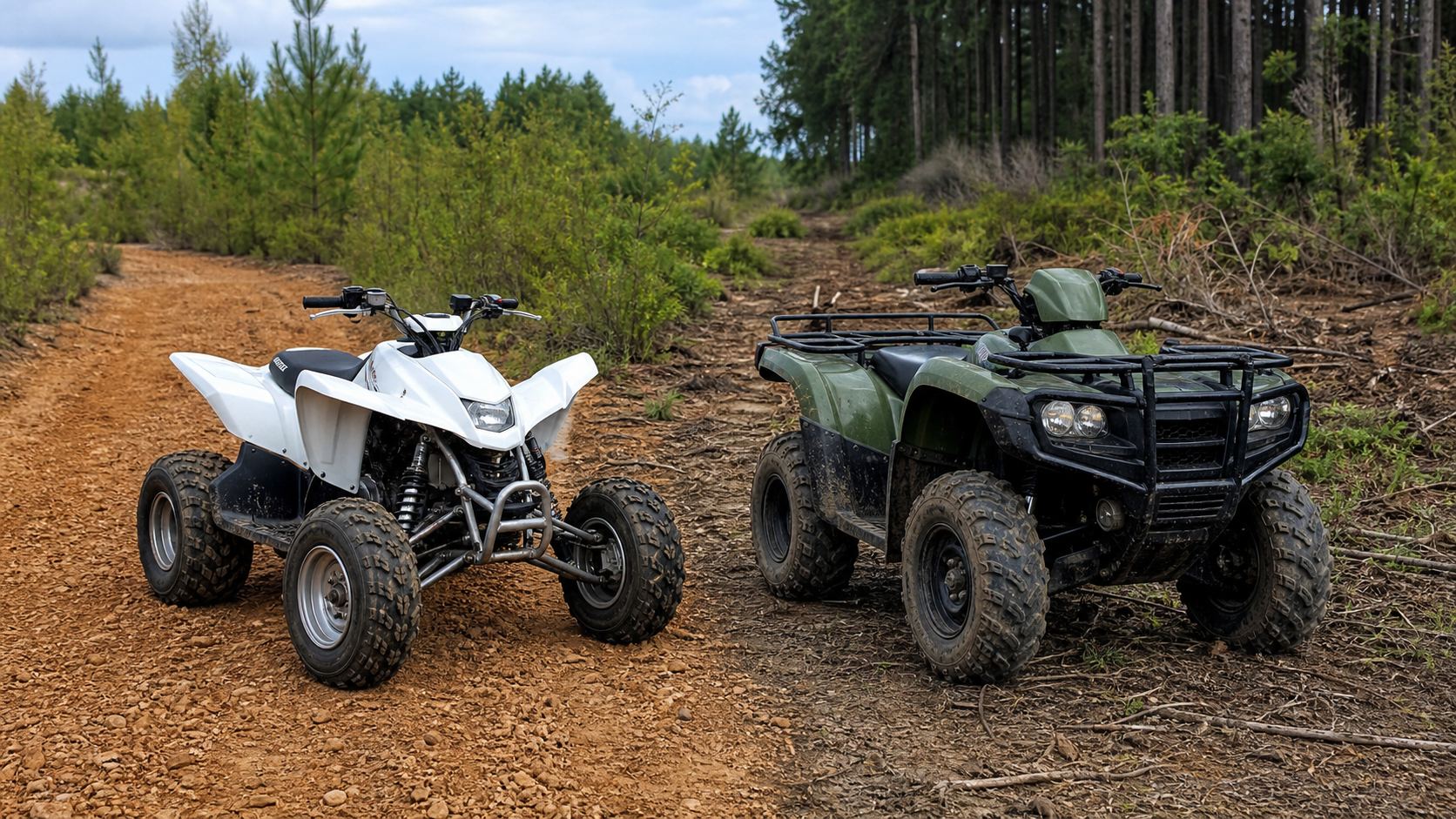
The difference between a sport ATV and a utility ATV begins with purpose. Sport ATVs are built to feel alive under an active rider. They accelerate quickly, change direction fast, and reward body movement. Utility ATVs are built to do more kinds of work. They carry cargo, pull small trailers, crawl through rough ground, and stay manageable when the rider is moving slowly.
Neither type is automatically better. A sport ATV can be the wrong machine for a ranch, hunting property, or slow wooded trail. A large utility ATV can be the wrong machine for a rider who wants lightweight handling on a track or open dune. The better choice is the one whose strengths line up with the riding.
Engine And Transmission Feel
Sport ATVs often use engines that like to rev and transmissions that keep the rider involved. Many performance quads use a manual clutch, which gives excellent control for experienced riders but adds learning curve for beginners. Power delivery may feel sharp because the machine is designed to respond quickly when the rider exits a turn, climbs a dune, or clears rough ground.
Utility ATVs commonly use automatic CVT drivetrains. A CVT can be easier for chores because the rider can focus on throttle, braking, steering, and line choice rather than clutch timing. Many utility models also offer selectable two-wheel drive and four-wheel drive, and some add locking differentials for technical situations. Those features matter more when traction is poor or the ATV is carrying weight.
Suspension, Weight, And Handling
A sport ATV usually feels lighter and more direct. The chassis is shaped for standing, leaning, sliding, and moving over the machine. Suspension travel and damping are aimed at impacts and fast terrain. That setup can feel harsh or impractical when the job is slow hauling, snow plowing, or carrying tools.
A utility ATV usually weighs more because it carries racks, driveline parts, protective bodywork, larger tires, and work hardware. That weight can help the machine feel settled on uneven ground, but it can also make it harder to lift, turn around, or recover after getting stuck. Power steering can reduce steering effort, especially with 4×4 engaged or heavier front tires.
Work, Gear, And Accessories
Utility ATVs win the work category. They are designed for racks, boxes, sprayers, winches, plows, gun boots, chainsaw mounts, and small trailers. A good utility setup can turn an ATV into a practical land-management tool. The key is staying within the manufacturer’s load and towing limits and remembering that weight changes braking and handling.
Sport ATVs are cleaner and lighter because they are not trying to be cargo platforms. You can add small bags or protective parts, but turning a sport quad into a work machine defeats much of its purpose. If the ATV needs to carry fencing tools, seed, firewood, hunting gear, or recovery equipment, utility is the better starting point.
Safety And Rider Skill
Both types require training, protective gear, and off-highway judgment. ATVs use rider body position as part of control, so sitting passively like a car passenger is not enough. Sport ATVs can punish sloppy inputs because they react quickly. Utility ATVs can punish overconfidence because their weight and traction can hide speed until the rider has to stop or turn.
Passenger rules matter. Most ATVs are single-rider machines. A passenger on a single-rider ATV changes balance and can interfere with the rider’s ability to shift weight. If carrying a passenger is part of the plan, choose a factory two-up ATV built for that purpose.
Which One Should You Buy?
Buy a sport ATV if the main goal is performance riding, dunes, track use, fast trails, and a more physical riding style. Buy a utility ATV if the machine will work, tow, haul, plow, explore, hunt, or handle mixed terrain at controlled speeds. Buy neither extreme if the real need is casual recreation; a mid-size rec-utility ATV may provide the best balance.
The smartest choice is not the one with the biggest engine. It is the one that fits the rider’s training, terrain, maintenance habits, storage, budget, and local trail rules. A machine that feels predictable will usually make a rider faster, safer, and more confident than a machine that only looks impressive.
FAQ
Is a sport ATV faster than a utility ATV?
Usually yes in handling feel and acceleration response, but speed depends on model, terrain, gearing, tires, and rider skill. Sport ATVs are generally designed for faster, more active riding.
Can a utility ATV be fun on trails?
Yes. Many utility ATVs are excellent trail machines because they offer comfort, traction, storage, and predictable handling. They just do not feel as light or sharp as sport quads.
Can a sport ATV tow or plow?
Sport ATVs are not the right platform for towing or plowing. If those jobs matter, a utility ATV with proper hitch points, cooling, gearing, and manufacturer-rated capacity is the better choice.